
-
Architects: CAAM Arquitectos
- Area: 750 m²
- Year: 2019
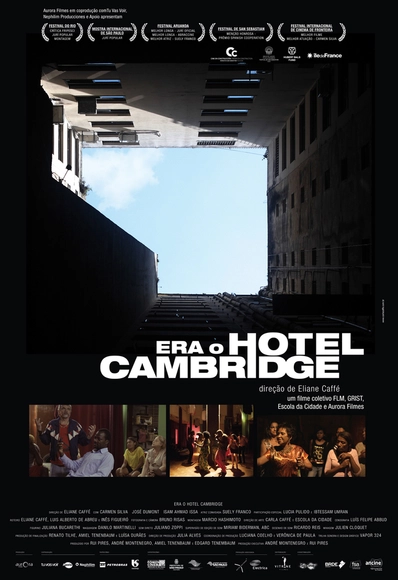
The award-winning film directed by Eliane Caffé chronicles the journey of refugees newly arrived in Brazil who, alongside homeless workers, occupy an old abandoned building in downtown São Paulo.
The film ‘Era o Hotel Cambridge,’ directed by Eliane Caffé and winner of numerous awards, will be screened for free this Thursday, July 4th, at 7:00 PM at Espaço Itaú de Cinema, in an event hosted by Escola da Cidade and Arq.Futuro. The feature film, which premiered commercially in 2017 and inspired a book published by Edições Sesc São Paulo, follows the journey of refugees newly arrived in Brazil who, together with homeless workers, occupy an old abandoned building in downtown São Paulo. Amidst the daily tension of the threat of eviction, the film reveals personal dramas, comedic situations, and diverse worldviews.
The screening will take place at Espaço Itaú de Cinema (Rua Augusta 1475), Room 1, starting at 7:00 PM. Following the screening, at 8:30 PM, there will be a panel discussion with guest speakers on the topic of the ‘Right to the City.’ Admission is free.
The debate will feature Claudete Lindoso, representative of the MSTC (Movimento Sem Teto do Centro); Tomas Alvim, co-founder of Arq.Futuro; Carla Caffé, professor at Escola da Cidade; and Mariana Chiesa Gouveia Nascimento, who holds a master’s and doctorate in State Law.
The film’s art direction was developed in partnership with students from the Escola da Cidade – Faculty of Architecture and Urbanism, a pedagogical and artistic experience that explored the boundaries between architecture and cinema, and between art and education.
The project’s preparation took two years and was managed by a collective that transformed the entire building—a real-life conflict zone—into the creative set for the film. This collective was composed of four main groups: architecture students from Escola da Cidade, the film’s production team, leaders from the FLM (Frente de Luta pela Moradia), and the group of refugees. Through workshops held within the occupation, the raw material for refining the script and art direction emerged. The boldness of this experiment ensured the film’s authenticity and dramatic power.
The experience led to the book ‘Era o Hotel Cambridge: arquitetura, cinema e educação,’ by architect, art director, and Escola da Cidade professor Carla Caffé. Written in graphic novel format and featuring interviews and essays, the book portrays the process of creating the film’s art direction, costumes, and set design with the participation of the school’s students, extending the pedagogical process beyond the school’s walls.
Cinema with Architecture
The partnership between architecture and cinema in this film is evident not only in the script but also in the approach to the film set, representing an unprecedented way of combining filmmaking with architectural practice.
The sets were not designed to be dismantled, but rather to last as long as the occupation exists. In the script, the occupied building breathes like a character; the film unveils the subtleties of vernacular design, born from improvisation and the limits of survival.
The building’s maintenance serves as one of the backdrops for the relationships between the characters. Conflicts are intertwined with the need to care for the space, such as the natural spring in the building’s basement, which still flows daily as it is located on the former bed of the Saracura River, one of the major tributaries of the Anhangabaú Valley.
Recently, the Cambridge building was declared an area of social interest by public authorities, awaiting a retrofit for low-income housing. However, the highlight of this experience was strengthening the students' political engagement and helping them grasp the importance and social responsibility of the architect, working at the margins, influencing and provoking transformative situations and perspectives.
Some of the film’s sets were designed to address not only the script’s requirements but also the needs of the Cambridge community. The students held open presentations for the residents of the occupation so that everyone could understand and provide feedback on the projects to be implemented.
“The set design, understood as ephemeral architecture, was treated as a way to equip the meeting points and interaction areas of the building’s common spaces to encourage the movement’s spirit of collectivity,” comments professor Carla Caffé.
The collaborative nature of the practical activities was extended through workshops by the Spanish collective Basurama (www.basurama.org), which develops architecture and urban resignification projects by utilizing discarded materials collected from recycling points throughout the city of São Paulo.
The team was sensitized to the abundance and disposal of reusable materials, such as fruit crates, pallets, abandoned furniture, and tires, transforming them into shelves, armchairs, work tables, and objects that would be used both as set elements for the film and by the occupation itself.
List of Festivals and Awards:
– 8th Cinemigrante International Film Festival | Best International Feature Film (Periférica Cine Award) and Best Latin American Feature Film (CineMigrante/IOM Award) – Argentina, 2017
Best International and Latin American Feature Film
– International Film Festival and Forum on Human Rights | Honorable Mention (International Jury) – Switzerland, 2017
– 2nd Brazilian Cinema Week | National Cinematheque of Mexico – Mexico, 2017
- Cine Brasil Marginal Exhibition – Switzerland, 2017
– 33rd Reflections of Iberian & Latin American Cinema | Villeurbanne Festival – France, 2017
– 29th Cinélatino Film Festival | Toulouse Meetings – France, 2017
– 39th Créteil International Women's Film Festival – Maison Des Artes | Films de Femmes – France, 2017
– 20th Tiradentes Film Festival – 2017
– Dominican Global Film Festival – Dominican Republic, 2017
– 40th Göteborg Film Festival – Sweden, 2017
– 9th Bengaluru International Film Festival – India, 2017
– 5th Diaspora Film Festival – Korea, 2017
– 35th Munich International Film Festival | International Independents – Germany, 2017
– 21st Résistances Film Festival – France, 2017
– 40th São Paulo International Film Festival | Best Film (Audience Award) – 2016
– 18th Rio de Janeiro International Film Festival | Première Brasil | FIPRESCI Critics' Award, Best Film (Audience Award), and Best Editing – 2016
– 64th San Sebastián International Film Festival | Horizontes Latinos | Spanish Cooperation Award | Honorable Mention – Spain, 2016
– 8th Border International Film Festival | International Competitive Section | Best Film and Best Performance (Carmen Silva) – 2016
– 11th Fest Aruanda of Brazilian Audiovisual | Best Feature (ABRACCINE Jury), Best Feature (Official Jury), and Best Actress (Suely Franco) – 2016
- 7th Pachamama International Film Festival | Border Cinema | Closing Session – 2016
– 18th Tbilisi International Film Festival – Georgia, 2016
- 20th Tallinn Black Nights Film Festival – Estonia, 2016
– 63rd San Sebastián International Film Festival | Industry Award | Cine en Construcción 28 | Finishing Support – Spain, 2015
– Hubert Bals Fund | Post-production Support – Netherlands, 2015
CREDITS (FILM):
Era o Hotel Cambridge
Director: Eliane Caffé
Produced by: Rui Pires, André Montenegro, Edgard Tenembaum, and Amiel Tenenbaum
Art Director: Carla Caffé and students from Escola da Cidade
Director of Photography and Camera: Bruno Risas
Editing: Márcio Hashimoto
Cast: José Dumont, Carmen Silva, Isam Ahamad Issa, and Guylain Mukendi
Guest Actress: Suely Franco
Special Appearance: Lucia Pulido and Ibtessam Umran
Genre: Drama
Production: Aurora Filmes
Co-production: Tu Vas Voir (France), Nephilim Producciones (Spain), and Apoio (Brazil)
Distribution: Vitrine Filmes

The relationship between the human body and architecture has always been a fundamental element of architectural design and practice, yet it was only in recent history that this connection was formally documented, let alone fully accepted. The question today is: how is the human body interpreted in the contemporary era, and how do these perceptions shape the way we design buildings and spaces? Ergonomics is often viewed as a discipline that highlights the separation between body and object; in reality, however, it not only bridges the two, but also serves as a blueprint designed to maximize and synchronize efficiency between them. At its core, ergonomics is a technical discourse concerning an increasingly mechanized human habitat.

At the 2019 AIA Conference on Architecture, Turkish architect Emre Arolat (EAA) shared insights with ArchDaily regarding architectural technology, how the future role of the architect will evolve, and the significance of building materials in his projects.
.jpg?1563170000)
China's unique social development has provided a distinctive breeding ground for contemporary Chinese architecture. As one of the country's primary design hubs, Shanghai can be seen as an ideal entry point to understanding this landscape. Shanghai-based architect Liu Yuyang, who was born in Taiwan and raised in the United States, has forged a unique architectural trajectory shaped by his rich life experiences and multicultural background. Through an extensive portfolio of built work, he has established a distinct voice within the broader professional landscape. In the following excerpt from an interview with author Zhang Yifan (YF), Liu discusses his design approach, the origins of his philosophy, and his professional ethos.




























.jpg?1563171407 "Tongji Experimental Primary School Affiliated to Jiading, Shanghai. Image © CreatAR Images")
.jpg?1563170000)