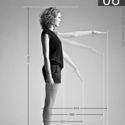
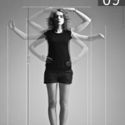
The relationship between the human body and architecture has always been a fundamental element of architectural design and practice, yet it was only in recent history that this connection was formally documented, let alone fully accepted. The question today is: how is the human body interpreted in the contemporary era, and how do these perceptions shape the way we design buildings and spaces? Ergonomics is often viewed as a discipline that highlights the separation between body and object; in reality, however, it not only bridges the two, but also serves as a blueprint designed to maximize and synchronize efficiency between them. At its core, ergonomics is a technical discourse concerning an increasingly mechanized human habitat.