As one of the oldest building materials, dating back to at least 7500 BCE, brick is often thought of as a traditional, classic option for a building facade. Throughout its long history, however, the brick industry has changed and modernized to remain architecturally relevant. Innovations in brick construction continue to provide new opportunities for designs that combine the warmth and character of a natural material with the efficiency and aesthetics of a modern building.
Robotics and automation are a staple of any vision of how we will live in the future. Among architects and designers, this trend crosses a variety of scales, from smart cities to smart kitchens. As we outlined in our Trends That Will Influence Architecture in 2019, recent years has seen a strengthening in how interior spaces are being transformed by technologies, with searches for Domotics soaring by 450% in twelve months.
Concealed City, mixed-media composite drawing by Monica Hutton.
Deception, concealment, camouflage. Nature's numerous examples of disguising as a strategy to survive have provided humankind with plenty of inspiration for military unobtrusiveness throughout history. Today, disguise appeals as a way to protect one's private life in the City with Eyes. In a time when monitoring and surveillance systems are increasingly pervasive, Monica Hutton reflects on concealment strategies that are being developed, and which agencies they can deploy as part of complex urban ecologies.
IE School of Architecture and Design and ArchDaily would like to invite you to join this outstanding online masterclass by Xiaolin Gu, currently Ideation Workplaces Strategist at Haworth.
A systematic concept of workplace strategy advances with the times. It’s closely related to the evolvement of technology and the work patterns of the new generation workforce.
On Design with Justyna Green brings you insightful conversations with the arts & design's most inspiring figures - from designers to architects, editors to creative directors and everybody in between. If you want to know what inspires them, how they work and how they see the world, this is the podcast for you. Listen to the On Design podcast now on Apple Podcasts, Spotify and Google Play.
On Design podcast host, Justyna Green met Adam Nathaniel Furman at his apartment in the vicinity of Regent's Park. In their conversation, they discuss Furman’s multicultural upbringing and its effects on his notions of identity. With roots in Argentina, Japan and Israel, Furman’s views on design, aesthetics and the society derive from numerous cultures, traditions, and religions, resulting in an open mind and a wealth of informed viewpoints.
The stories of the buildings of the United States have been built by the undeniable culture that its inhabitants have been creating. That is why architecture is more than a physical object, it evokes moments that express the wishes of its inhabitants in different political and economic contexts. In all cases, these buildings represent the daily struggle that comes with a monumental legacy of those who lived there.




.jpg?1581563559 "Fredrikstad office. Image © Randers Tegl")
.jpg?1581563494 "Mosevænget. Image © Randers Tegl")
.jpg?1581563220 "Eufemia. Image © Randers Tegl")









.jpg?1583027759)
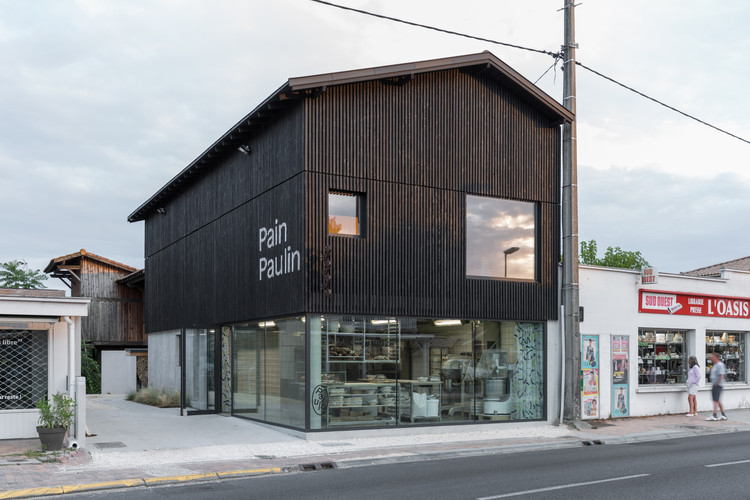
.jpg?1583027567 "© Raphaël Thibodeau")
.jpg?1583027431 "© Raphaël Thibodeau")
.jpg?1583027461 "© Raphaël Thibodeau")
.jpg?1583027733 "© Raphaël Thibodeau")
.jpg?1583027759)

.jpg?1511345825&format=webp&width=640&height=580)
.jpg?1511345798 "© Alex Attard")
.jpg?1511345850 "© Alex Attard")
.jpg?1511345988 "© Alex Attard")
.jpg?1511345871 "© Alex Attard")
.jpg?1511345825)










.jpg?1582658058&format=webp&width=640&height=580)




.jpg?1582052291)