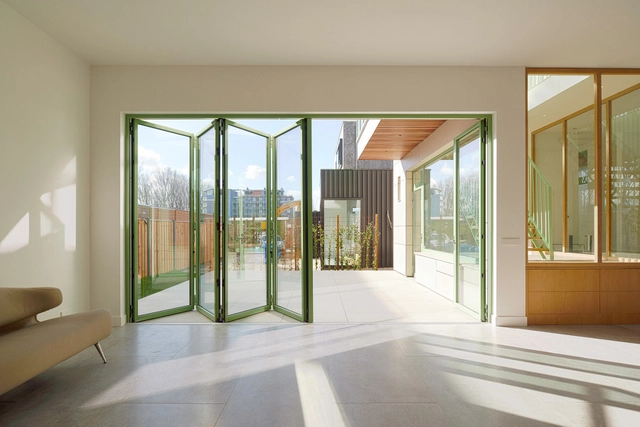
Flexibility is the buzzword of our time, confronting us in all aspects and challenging both us and our spaces on a daily basis. Today’s living and working environments are defined by fluid and adaptable layouts rather than rigid structures—from the urban multifunctional home to the variable open-plan office that operates as agilely as our work philosophy.
Real-time rendering has revolutionized the world of architectural visualization, allowing designers to explore their ideas like never before. That's why we are proud to announce theEnscape 4 All Real-Time Rendering Awards, where we will honor the best real-time renders of the year.
Real-Time rendering has become a powerful tool that allows architects and designers to envision the future of architecture by simultaneously leveraging speed, render quality and performance. With this competition we aim to find the most talented artists from around the world and discover who is setting trends with their work and aesthetics, shaping the future of architecture.
Videos
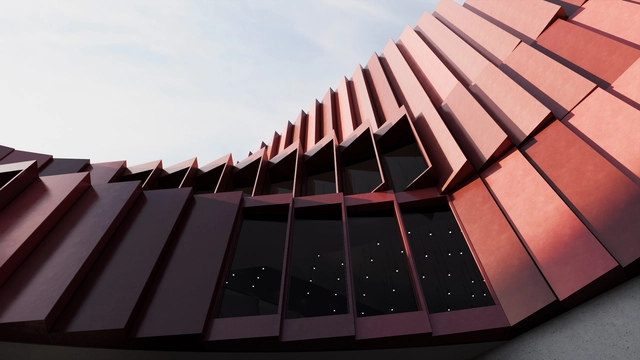
Meeting room with Pyrymyd DECO. Visualization: Studio Spacer. Image Courtesy of Intra Lighting
We talk a lot about designing for the senses these days; about human engineering, ergonomics, people-centric products. It’s particularly a hot topic when it comes to looking at the modern working environment. If today’s office is to compete with home, it needs to bring similar feelings of comfort, but promote productivity and collaboration at the same time. Designers and architects are responding with increased attention towards auditory comfort, finely-tuned lighting, and cosseting touches via texture, color and shape.
https://www.archdaily.com/1017114/a-multi-tasking-ceiling-system-for-both-sound-and-light-controlEmma Moore
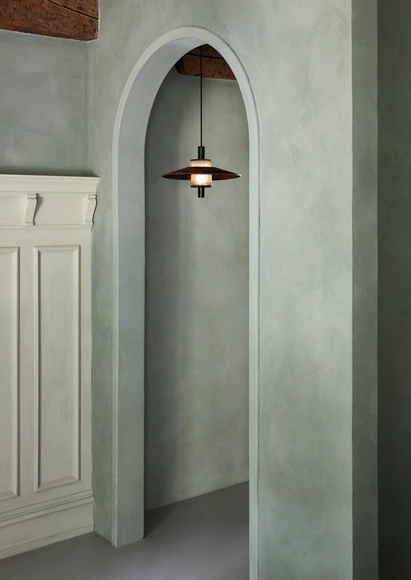
In his first collaboration with Forestier, David Fabbri has designed the captivating Thésée collection taking inspiration from nature. Image Courtesy of Forestier
It’s a paradox that as our society becomes increasingly connected through global travel and digital realms, we often feel more disoriented and disconnected than ever before. The power of interiors to ground us in the present and help us reconnect with what we value should not be underestimated. One way to bring authentic emotional depth to space is through atmospheric lighting, which, in combining illumination and form, can transcend practical function to perform a vessel for mindfulness.
Videos
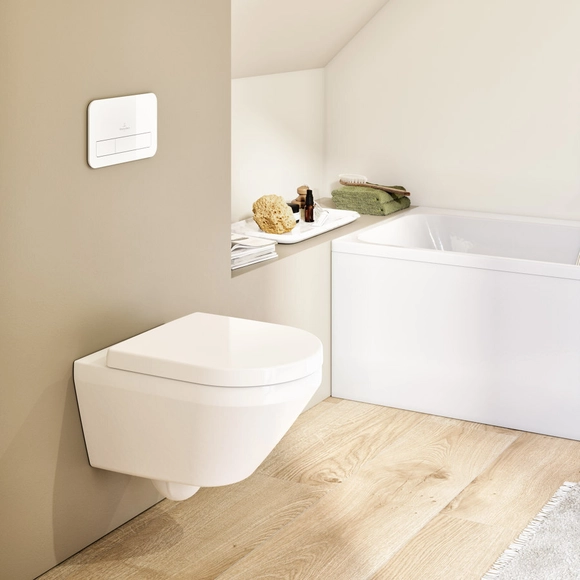
Optimised flushing technology: TwistFlush[e³] has been specially developed for use in housing projects as well as in public and commercial sanitary facilities. Image Courtesy of Villeroy & Boch
For three years now, Villeroy & Boch has been implementing the TwistFlush vortex flush technology in selected toilets. This innovative flushing technology harnesses the physical force of the swirl to optimize flushing performance and toilet hygiene. Two nozzles generate a powerful water vortex, which cleans nearly the entire inner surface of the toilet and pulls all dirt residue into the drain with its strong suction. Coupled with the conical geometry and extra-smooth walls of the bowl, this makes repeated flushes and the use of the toilet brushes practically unnecessary. Compared to conventional flushes, this innovation is also particularly water-saving, making a significant contribution to resource conservation.
The DÉCA faucet has a minimalist, sculptural form with a unified body and geometric 10-edged grip. Image Courtesy of TONI Copenhagen
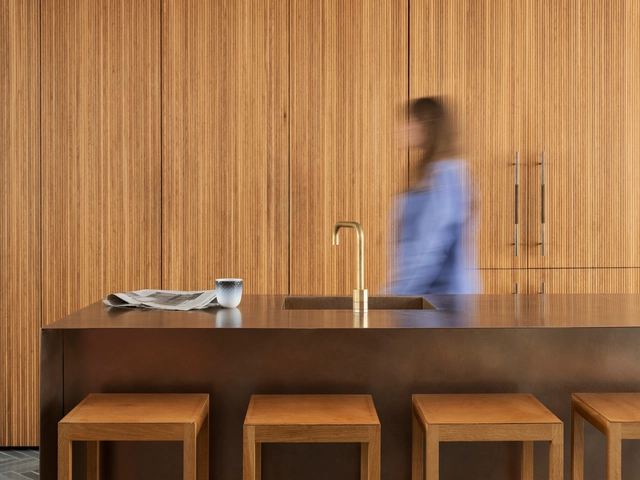
For designers seeking to evoke a sartorial expression of "quiet luxury" through an interior, a necessity to a minimalist palette is the addition of a sculptural object—one that catches the eye, glints like a jewel, and nods towards understated refinement. For kitchens and bathrooms where functionality reigns, how about capturing that moment of chic tension—that je ne sais quoi—with a radical faucet?
Reggiani’s Mood Pro spot lights lend themselves to clean architectural arrangements, while the luminosity they bring can be controlled to help shape atmospheres. Image Courtesy of Reggiani
We talk a lot about how the success of an interior leans on the layout of its walls, doors and windows, and maybe the shade of paint or degree of cushioning on the chairs placed inside. The truth is, it will probably live or die by the quality of its light.
It’s not news that light tends to lift the spirits, while long shady days of winter can bring a dip in mood; the power of light has always had a bearing on architecture. Talk to the British architect John Pawson for five minutes and you realize that light is perhaps his favorite material—he shapes interiors with light by controlling its entry points meticulously. But today the power of lighting goes deeper than the management of daylight in a space; growing intelligence about the precise impact of different qualities of light means we can start to mold moods with artificial illumination in our interiors to great effect.
https://www.archdaily.com/1015846/shaping-moods-reggiani-and-the-stimulating-effects-of-controlled-lightEmma Moore
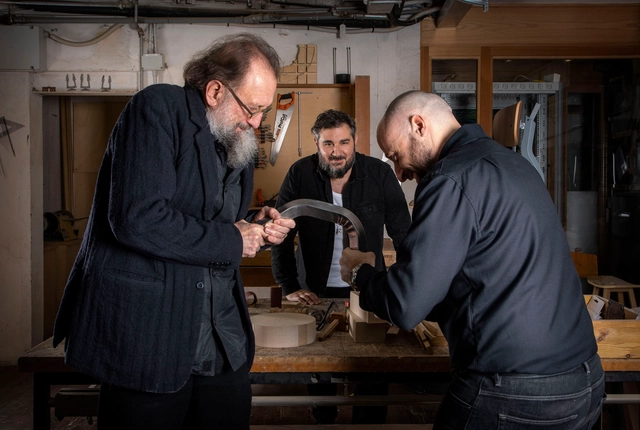
Driven by a forward-thinking spirit, AMDL CIRCLE, the team of Michele De Lucchi, has partnered with Mara to design a new chair, TYPO. Image Courtesy of Mara
Anyone who knows me knows that I love to ask questions. Probably too many. But when you meet with Italian architecture and design grandee Michele De Lucchi, you’re all ears, such is the caliber of his thought and the eloquence of his expression, built on the back of over half a century of experimental, and sometimes iconoclastic, creative practice. From his participation in such avant-garde design collectives as Studio Alchimia and Memphis to his authorship of the Compasso d’Oro-winning Tolomeo lamp and Pulcina coffee pot, he’s seen a lot and done a lot.
Videos
UIA 2030 Award - 2nd cycle, official poster
The International Union of Architects, in collaboration with UN-Habitat, has announced the launch of the second cycle of the UIA 2030 Award. This biennial award promotes the work of architects contributing to the delivery of the UN 2030 Agenda for Sustainable Development together with the New Urban Agenda.
Join Shannon Vos, an Interior Designer, Renovator, and one-half of the winning team from 2014's 'The Block', for an insightful discussion on the dos and don'ts of renovating at the DECO Innovation Centre.
This year, the call for applications will feature two possible themes for the university-level courses: seminal solutions for cities or adaptation as it refers to coastal resilience.
2024 OBEL Award Teaching Fellowship program is accepting joint applications from potential fellows and host universities.
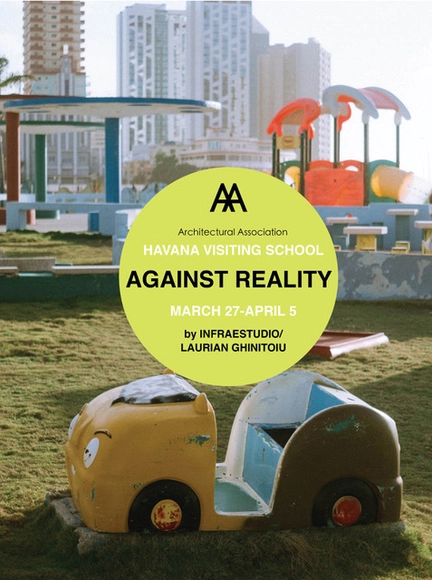
Havana seems to be frozen in time by centralized economic and political controls. Its inhabitants face constant material challenges in their lives. Cuban society responds by thriving with idealism, stoicism, and resilience. This dynamic interplay between myriad limitations and boundless creativity is the subject matter of our programme.
The fifth edition of the internationally renowned FABRICATE conference will take place April 4 – 6, 2024 in Copenhagen at The Royal Danish Academy - Architecture, Design, Conservation.
Co-Chaired by Professors Mette Ramsgaard Thomsen and Phil Ayres of Centre for Information Technology and Architecture, FABRICATE 2024 will build upon and extend its legacy as a prime place of exchange on the cutting-edge of new forms of design and construction and material thinking in architecture, engineering, and building. FABRICATE 2024 asks how rethinking architectural methods, technology, and construction can create a new societal position for the built environment, placing a particular focus on questions of resource consciousness and bio-based design and fabrication strategies.
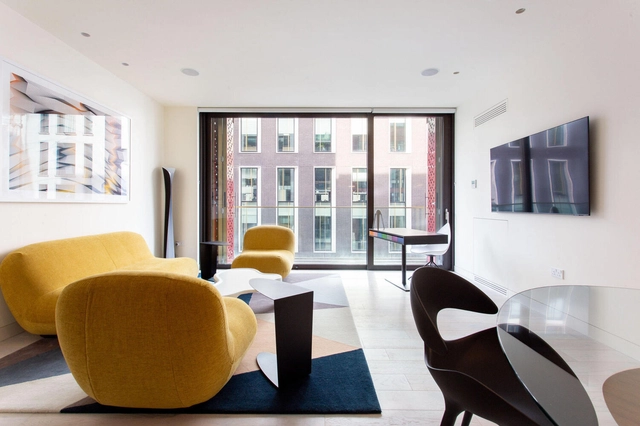
The living space of a brand-new timeshare apartment located in the centre of London, entirely designed and conceptualised by award-winning designer Karim Rashid. Image Courtesy of BoConcept
Contemporary and fresh, luminous and colorful, intriguing and surprising; the interior design of a newly finished apartment project in London speaks the visual language of its maker, award-winning designer Karim Rashid. Having spent the past four decades in the field of design and architecture, Rashid has manifested both his talent and approach with an always recognizable design DNA.
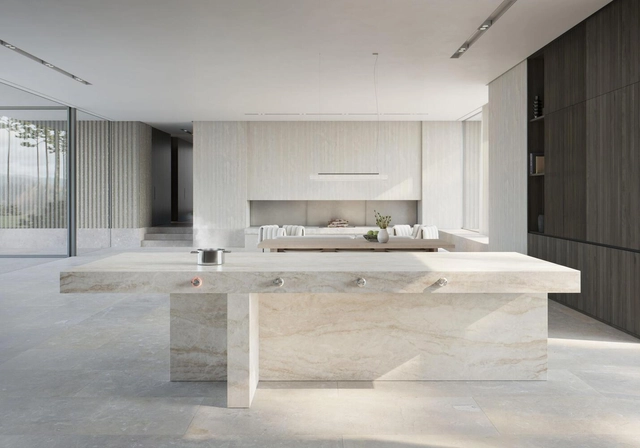
The new Essential Induction revolutionizes kitchen design with a hob that is all but invisibly integrated into a Dekton work surface, arming architects with total freedom of expression. Image Courtesy of Gaggenau
Gaggenau’s commitment to innovation and eye-soothing aesthetics in the kitchen is well known; its appliances aim to please the most demanding cook and meet the rigor of the dedicated minimalist. Its latest launch, however, turns the idea of appliance design on its head.
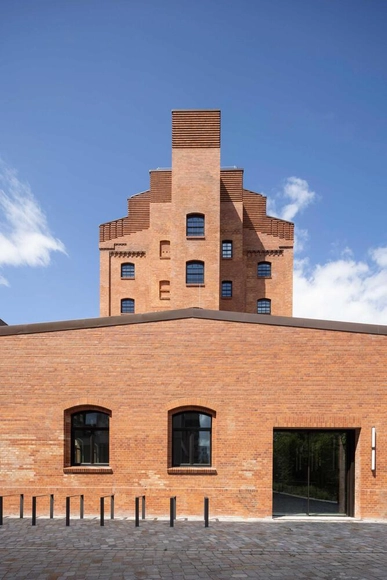
In order to secure the food supply for Berlin's rapidly growing population at the end of the 19th century, the Kornversuchsspeicher was built in 1898 on the former site of the Hamburger and Lehrter freight depots. A building with a scientific mission, it served to research new storage methods for grain. After years of vacancy and then interim use as a creative space, the brick building has been carefully renovated in recent years by AFF Architekten, extended with the addition of a seventh floor and transformed into a modern event, gastronomy and office building, with a focus on fully preserving its industrial charm. This was a project that called for great expertise in all areas, including from Solarlux, the specialist called upon for customized window and facade solutions.
It could've been so kitsch. When you hear that a former prison has been transformed into a hotel, you'd be forgiven for imagining an incarceration-themed novelty destination, replete with door handles in the shape of handcuffs and complimentary striped pajamas.
Grüntuch Ernst Architekten's sensitive adaptation of a women’s jail in Berlin-Charlottenburg is anything but, however. The landmark building, originally completed in 1896, has been carefully honed into a place of light and tranquility and has already managed, since its opening last year, to cultivate a loyal community of discerning –and returning– guests in search of restorativeness rather than restorative justice.