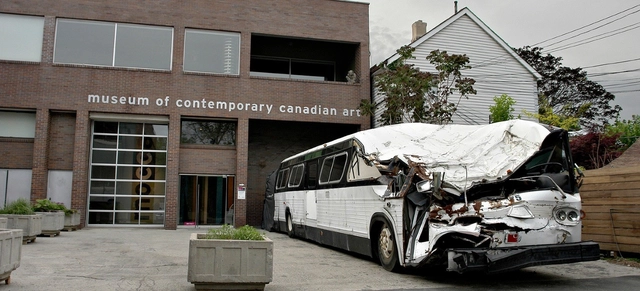
The Museum of Contemporary Canadian Art (MOCCA) is calling for submissions that respond to the thematic of an upcoming exhibition, entitled TBD, that will be on view September 5 to October 25, 2014 in Toronto, Canada.
The exhibition proposes that the definition of a museum is not fixed but rather “to be determined.” By asking, “what is a contem- porary art gallery?” the exhibition questions our fundamental assumptions concerning the role and importance of museums in so- ciety and their associated architectural forms. MOCCA’s galleries will become a place of inquiry and discussion featuring artworks and activities that destroy existing paradigms and offer projections about the shape of museums in the future. This is a particularly timely topic given the proliferation of museum architecture in Canada and abroad and the current juncture in MOCCA’s existence which sees the institution searching for a new and permanent venue.
A collection of 41 interviews conducted by students at the Strelka Institute, entitled Future Urbanism, is now available online. The interviews feature architects, urban planners, sociologists, researchers, and other professionals from fields related to urban studies, emphasizing the Strelka Institute's mandate for interdisciplinary thinking. To take a look at the interviews, see here.
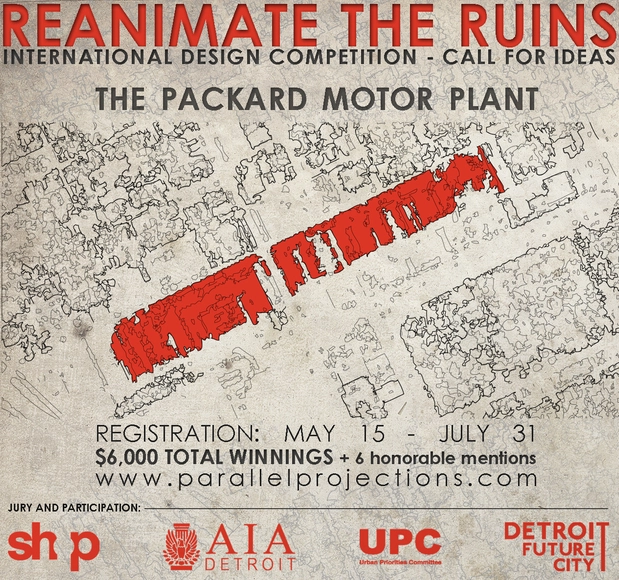
Once the fourth largest city in America, Michigan’s primary Metropolis, Detroit has recently filed the largest municipal bankruptcy in the history of the United States. Among the many reasons for Detroit’s decline, two stand out: an undiversified economic model, reliant on the production and sale of automobiles, and an unprecedented degree of sprawl. Currently more than 77% of jobs in the metropolitan area reside more than ten miles from the city center, making Detroit the most job-sprawled city in the US and stretching city services beyond capacity. Detroit’s deterioration is just as much about urban decline as it is about industrial decline. Detroit is located in the Midwest portion of the United States and is part of a larger band of cities known as the Rust Belt which have gone through a process of decline over the past decades.
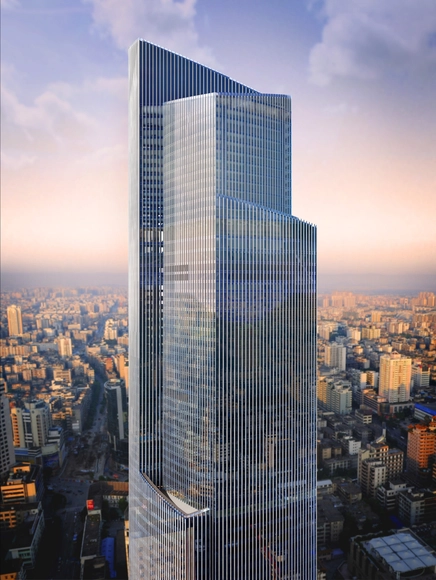
The days of elevator small talk could be coming to an end with Hitachi planning to deliver the world's fastest elevator by 2016. Capable of travelling at speeds of 72km/h (44m/h), the record-breaking lifts will be able to hoist passengers up 95 floors in less than 40 seconds. Khon Pedersen Fox's 530-meter Guangzhou CTF Finance Centre will be the first to house the super-speed elevators, amongst 13 other high-speed elevators and 28 double-decker elevators. Currently, the world's fastest elevator is by Toshiba and only capable of reaching speeds of 61km/h (38m/h) within Taipei 101. You can learn more about the super-speed elevators, here.
https://www.archdaily.com/500944/worlds-fastest-elevator-coming-soon-to-guangzhouStephen Stanley
The Noguchi Museum will be honoring architect Norman Foster and contemporary artist Hiroshi Sugimoto as the first recipients of the Isamu Noguchi Award on Tuesday, May 13. The award acknowledges individuals whose work relates to landscape architect and artist Isamu Noguchi, who promoted a multi-disciplinary, collaborative approach to the arts and was committed to innovation, global consciousness, and Japanese/American exchange. For more information on the benefit, see here.
The Royal Institute of British Architects' (RIBA) latest Future Trends Survey indicates a small drop from February's index, "down to +35 from its all-time high of +41." Despite this, "confidence levels about an improvement in future workloads for architects remain very solid." All types of practice size, ranging from those with fewer than 10 employees to those with over 50 staff, are "reporting positive balance figures." The strongest future workload forecasts came from Scotland and the North of England, suggesting that "the recovery in confidence levels is now widespread across the UK and has spread beyond London and the South East."
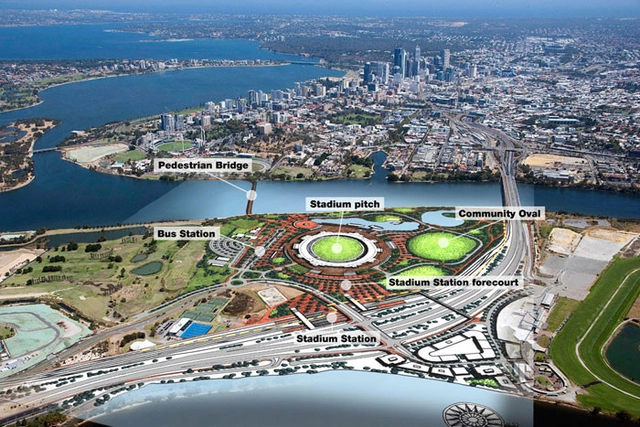
Burswood Peninsula Master Plan. Image Courtesy of Government of Western Australia
The West Australian government has confirmed, HASSELL, COX Architecture and HKSwill collaborate to design Australia’s largest ever stadium project. The $900million project will see Perth’s Burswood Peninsula transformed into a world-class sporting precinct by 2018. Included in the master plan is a new stadium that will hold some 60,000 spectators, a public tennis facility, significant transport infrastructure upgrades, such as a new train and bus station, and large public parklands. As negotiations continue between the firms and the West Australian Government, we should expect to see detailed drawings of the scheme by at least July with construction expected to begin by the end of this year.
https://www.archdaily.com/500468/hassell-cox-architecture-hks-to-design-australia-s-largest-sporting-precinctStephen Stanley
French culture minister Aurélie Filippetti has revealed that negotiations for a “pop-up” Pompidou in Mexico City are underway. “The Centre Pompidou is exploring the possibility of establishing a temporary space here, a ‘pop up’ Pompidou,” Filippetti told the Mexican newspaper Reforma. “It will come with their exhibitions, their expertise, not only the brand.”
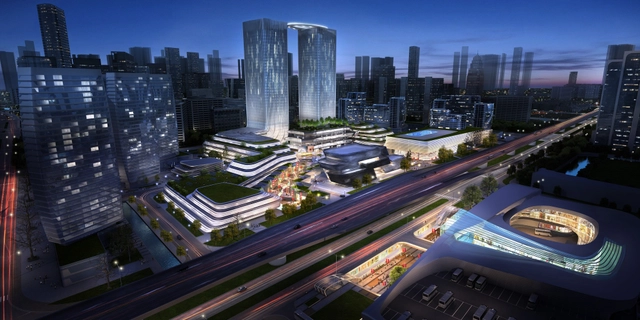
amphibianArc has been announced as winner of the Ningbo Yinzhou Southern CBD Portal Planning competition. Commissioned by the same developers of the Ningbo Museum designed by Wang Shu, the "transit-oriented" proposal aims to become the "driving force" of urban life in the masterplan's fourth and final phase.
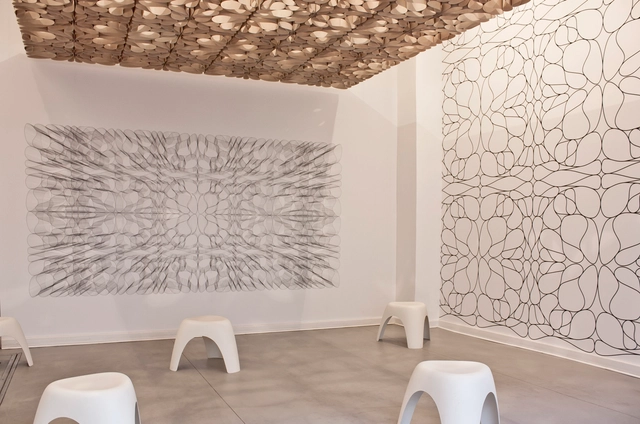
Only 5 more days on the exhibition 2D:3D, an installation by Barkow Leibinger at the BDA Berlin Gallery. Covering the wall surfaces of the small gallery space with “tapete” or wallpaper the façade of the storefront gallery frames what Leon Battista Alberti described as a fenestra aperta. In this configuration the space of the gallery is a projection/ extension of the streetscape in the bourgeois residential historical Mommsenstrasse neighborhood.
Playing with the concept directive 2D 3D, the wall paper on one side of the gallery is a two dimensional pattern: an organic looping structure which repeats and mirrors itself that is both ornamental and geometrically structural in its architectural implication. On axis with the street front façade at the back of the gallery is a wallpaper “portrait” of this system in black and white but now projected as a one-point perspective optically extending the perspective of the gallery itself.
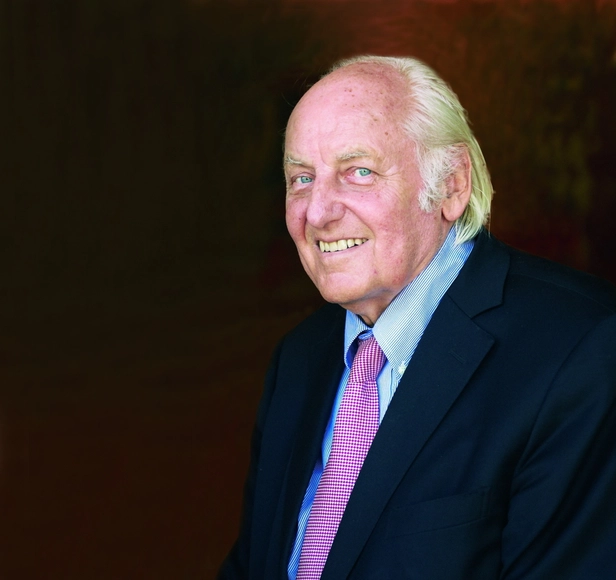
Austrian artist, architect, designer, theoretician and Pritzker Prize laureate Hans Hollein has passed away twenty five days after he celebrated his eightieth birthday. Hollein, particularly known for his museum design, including Vienna’s Haas House (1990) and Frankfurt's Museum of Modern Art, was once described by Richard Meier as an architect whose "groundbreaking ideas” have “had a major impact on the thinking of designers and architects."
See a selection of Hollein's work, from architecture to furniture, jewelry to glasses, to a high-rise in China, after the break...
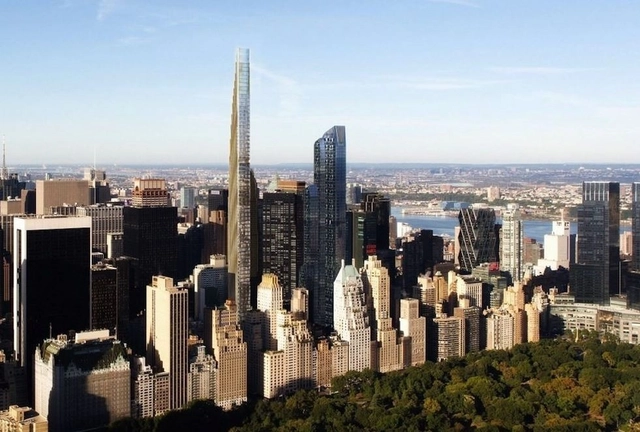
In a compelling opinion piece on the Guardian, Lloyd Alter argues that our current obsession with increasing the density of our cities - mostly by building ever-taller skyscrapers - might be severely misguided. Alter believes that, without tall buildings, cities can achieve a "Goldilocks Density" - just dense enough to support lively streets, but not so dense that they become inhabitable. You can read the full article here.
The City-County Building Plaza Design Competition is seeking a final conceptual design that would be implemented on an existing 1.94 acre open space on the City-County Building Property also known as the City-County Building Plaza (CCB Plaza).
Henning Larsen Architectshas won an invited competition to design a new headquarters for the Central Bank of Libya in Tripoli. Inspired by Libyan vernacular architecture, the structure will occupy two existing site excavations. The first, and largest, excavation will be transformed into a “shaded oasis” that serves both the bank and Gurji district by providing areas for operations, an education center, restaurant and hotel. The second will allow vehicular access to the treasuries.
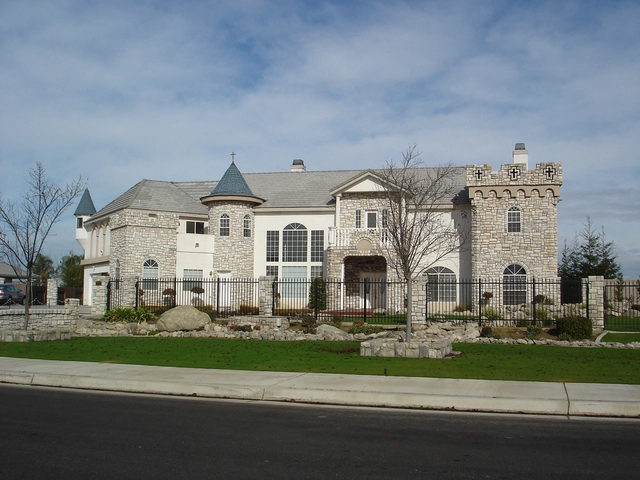
In this fascinating post for Salon, Thomas Frank holds nothing back on the topic of so-called "McMansions". Charting their history from the 1980s to today, he reveals the economics and government policies which made them possible, concluding that they are not just a symptom of the inequality in modern US society, but the very cause of it: "Everything we do seems designed to make this thing possible... This stupendous, staring banality is the final outcome for which we have sacrificed everything else." You can read the full article here.
Latrobe City Council is pushing an initiative that would put “wood first.” If implemented, the “Wood Encouragement Policy” would educate architects and industry professionals about the structural and environmental benefits of wood in an effort to promote the local timber industry and use of sustainable building materials. Following the lead of the United States and New Zealand, both of which recently established “wood encouragement” policies, the council hopes that this will set a precedent that can be applied throughout the rest of Australia.
https://www.archdaily.com/499157/wood-encouragement-policy-coming-to-australiaStephen Stanley
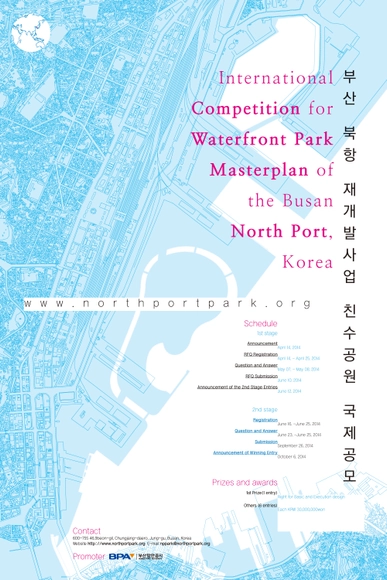
BPA (Busan Port Authority) has just announced an international competition for the Waterfront Park Master Plan of the Busan North Port, South Korea. The deadline for registration is June 10. To download all the necessary requirements to participate in the competition, please go to the official website.