The Asia Pacific Architecture Festival (APAF) has announced its return to Brisbane from 7 to 20 March 2020. APAF is a collaboration between founding partners Architecture Media and State Library of Queensland.
The Asia Pacific Architecture Festival (APAF) has announced its return to Brisbane from 7 to 20 March 2020. APAF is a collaboration between founding partners Architecture Media and State Library of Queensland.
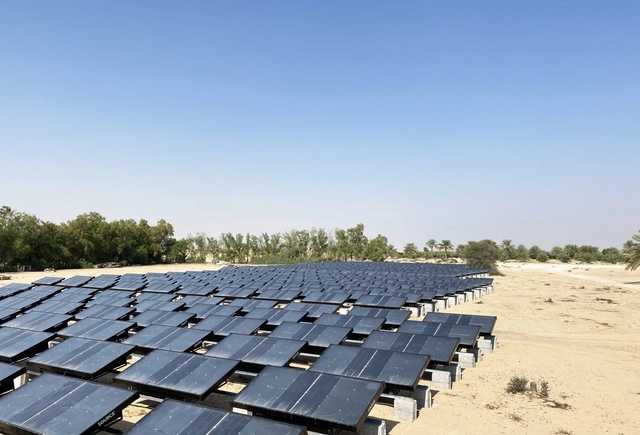
As the climate crisis continues to unfold, professionals in architecture, engineering, and sustainable design have relentlessly searched for new ways to mitigate the negative effects of modern industrial production. One group of such innovators, Zero Mass Water, have contributed to this effort through their creation of ‘the world’s first and only hydropanel’ - an apparatus called SOURCE.
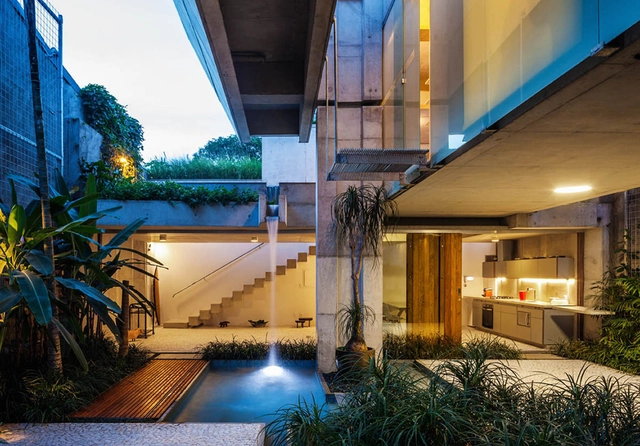
From playful indoor pools to tranquil exterior fountains to soaring waterfalls and grand lakes of enormous proportions, architecture throughout the centuries has engaged with water in endlessly innovative ways. Sometimes serving aesthetic purposes, but just as often acting as centers of activity or promoting sustainability, water features can take countless different forms and serve multiple different purposes. Below, we synthesize a series of water features espoused by innovative contemporary architectural projects, ranging from single-family residential homes to vast commercial complexes.
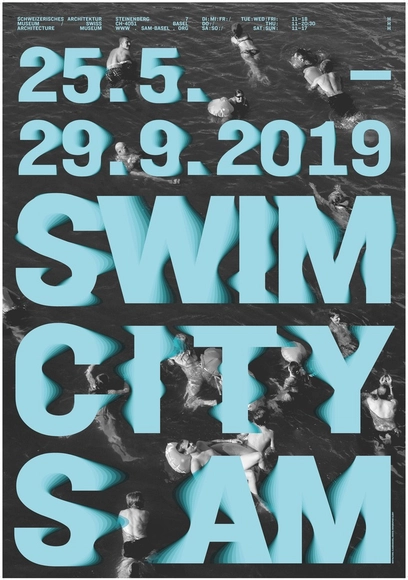
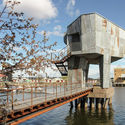
The exhibition «Swim City», held at the S AM Swiss Architecture Museum from the 25th of May to the 29th of September 2019, is the first to draw attention to a particular contemporary phenomenon in urban space: river swimming as a mass movement. Swiss cities have played a leading role in the development of this activity over the last few decades, gradually opening up the river as a natural public space within the built environment. The river has thereby become a place of leisure, open to all, located right in front of residents’ doors and seamlessly integrated into everyday life. The rest of the world looks on in awe at this bathing culture, seeing it as an example of how waterways in cities can be reclaimed for the people in order to sustainably improve the quality of life in urban centers.
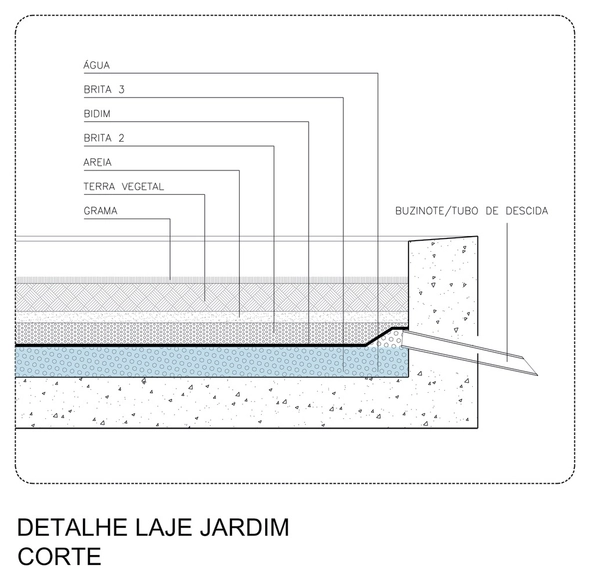
During the modern period, the buildings that used the traditional sloping roofs with tiles, draining the waters as quickly as possible, have begun to give way to the well-known 'waterproof flat roofs.' In spite of delivering a clean aesthetic to the project, allowing the use of the last slab as a space for living and contemplation, this solution can become a headache for its occupants if its execution and design are not careful. It is no accident that there have been infiltrations in famous modern buildings, such as the Vile Savoye or the Farnsworth House, designed by great masters of architecture. Currently, the civil construction industry has developed more sophisticated products and techniques that drastically reduce the chances of subsequent infiltration. However, we could say that waterproof flat slabs continue to be fragile points in buildings. The architects from Brasil Arquitetura have improved an inventive and very simple solution to avoid infiltrations in flat slabs, much used in the 70's by architects like Paulo Mendes da Rocha and Ruy Ohtake, filling them with vegetation.

The 2°C Symposium is an opportunity to learn essential technologies, strategies and tools that address climate change at a critical time for our collective future.
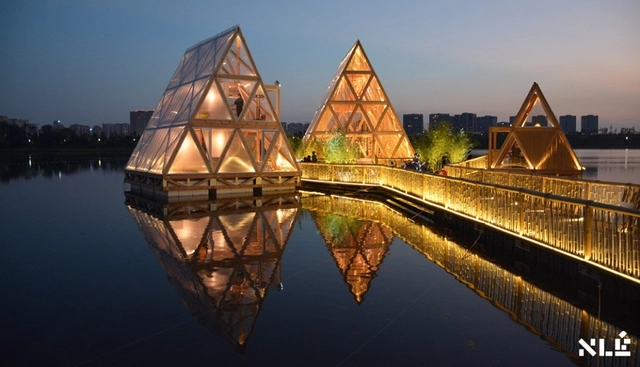
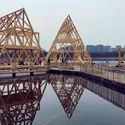
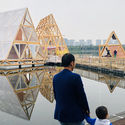
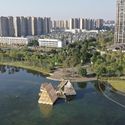
As part of a collaboration between the Centre Pompidou and the Mao Jihong Arts Foundation, the Cosmopolis #1.5: 'Enlarged Intelligence' exhibition features the developments of NLÉ Makoko Floating School. The Minjiang Floating System (MFS IIIx3), the fourth prototype and the third iteration of the prefabricated self-built system for water, investigates methods to counter the challenges posed by urbanization and climate change.
Earlier prototypes of the Makoko Floating School include the Waterfront Atlas (MFS II) launched in Venice, Italy and the Minne Floating School (MFS III) in Bruges, Belgium. The project, initially developed for the water in Lagos, is now usable in all these sites including the Jincheng Lake in Chengdu.
Water – an element in nature that life is constantly surrounded by; an element that has given birth to life on Earth and continues to support it. Although we made our shift to land, our bond with water still remains significant as ever; it is an element that is a basic necessity for our survival.
The life on Earth is today plagued by adverse climate changes, global warming, the increasing toxic emissions, rising population, and scarce land resources. With various countries, such as Holland , fighting rising water levels for decades and with the current trends, it is now time to brace ourselves against the unseen future and design solutions to cope with the ever-changing community on Planet Earth.
Today, the discourse of ‘smart cities’ has overtaken every conversation discussing the future of architecture. It is a glaring question as to how are we going to address the equation between the contrasting aspects of ecological crises and technological advancement for building our futures.
Covering 71% of the Earth, it is now time to look at the water again as a harbinger of life in the near future; a place where human life can again thrive in its original glory. Creating living spaces on water will soon become a need to survive as a
“What happens in the Arctic, does not stay in the Arctic”
Extract - Greenpeace report on melting ice in Arctic paradigms of nature.
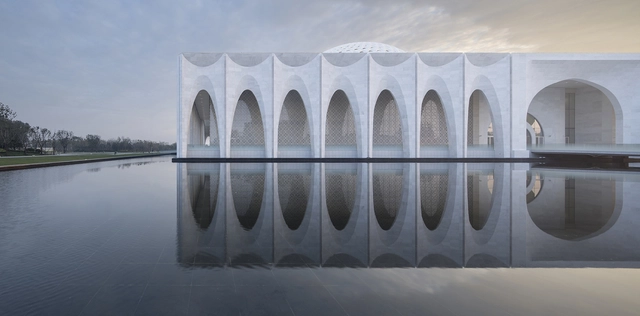
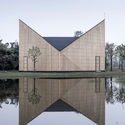
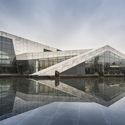
This week we have prepared a selection of photographs in which reflections in water is used as the main compositional element. In these images, the surface qualities of the water play a fundamental role in giving the composition its final effect—either acting as a perfect mirror or giving a diffuse touch. Below is a selection of 10 images from prominent photographers such as Lu Hengzhong, Yao Li, and Nico Saieh.
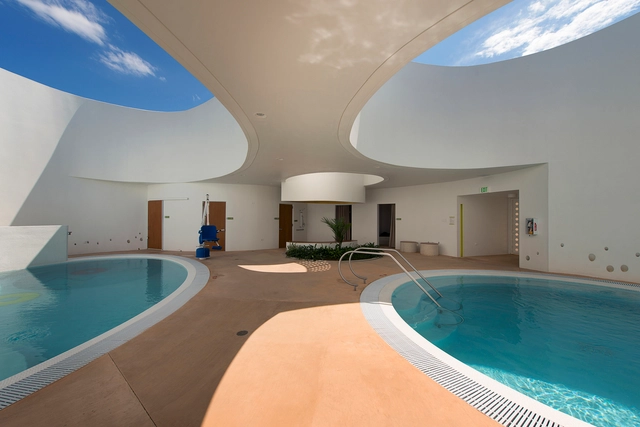
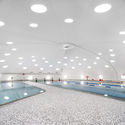
There is something about water that continually captures our imagination. Tranquil, dramatic, or ever-changing, the architecture of public baths and swimming pools can enhance the inherent qualities of water. Bathhouses were traditionally meeting-spaces where social differences bled away into skin and steam. Even in contemporary architectural projects, spaces for swimming and bathing often feel like a separate world, therapeutic and intimate.
Below are 12 projects that display stunning spaces for communal bathing and swimming.

March 22 is World Water Day, an annual international celebration launched and organized by the United Nations. The goal of the day is to raise awareness about a wide range of water-based issues from around the world. This year’s theme is “Nature From Water”, which invites everyone to think about how nature can provide solutions to the water challenges we face today.
To celebrate World Water Day this year, we’ve rounded up 20 of our favorite projects that utilize water as a central design feature. Whether it be Zumthor's Thermal Vals or Chritso and Jeanne-Claude's Floating Piers, water has been playing an important role in architectural design and in demarcating the boundaries of nature against our built environment.
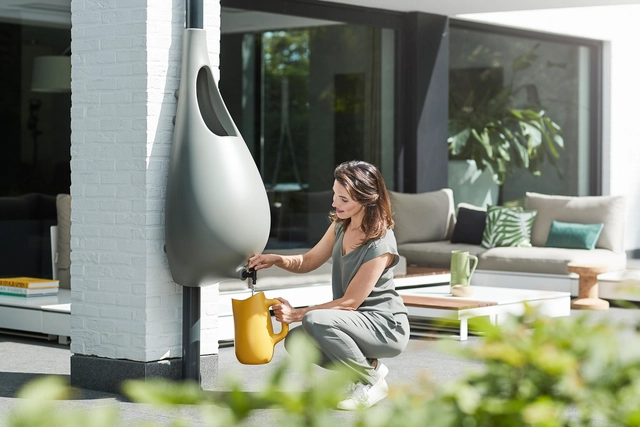
Earlier this month, Studio Bas van der Veer, the Dutch product design studio, unveiled its design for a rain barrel at the three-day fair, spoga+gafa 2017, in Cologne. Van der Veer, a graduate of the Design Academy Eindhoven, initially designed the product – then titled ‘A Drop of Water’ – as part of his thesis in 2009, for which he not only won the prestigious René Smeets Award for best project at the school’s Graduate Galleries exhibition but was also shortlisted for the Melkweg Award. Over the years, the design won numerous accolades, including the Journées des Collections Jardin - Innovation Award, and the Tuinidee Award.
.gif?1504720547)
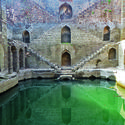
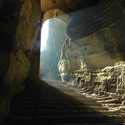
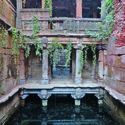
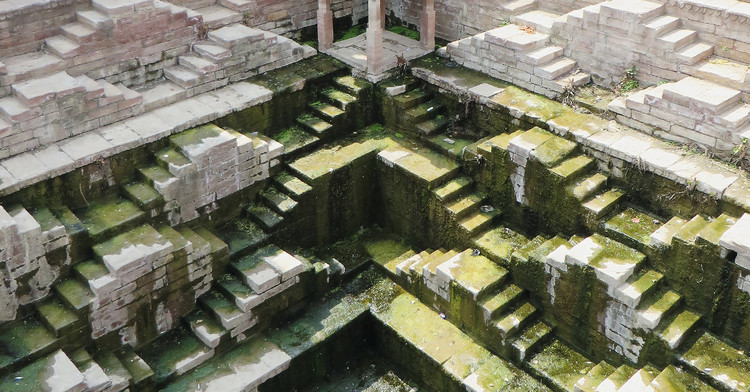
Thirty years ago, on my first visit to India, I glanced over an ordinary wall. The ground fell away and was replaced by an elaborate, man-made chasm the length and depth of which I couldn’t fathom. It was disorienting and even transgressive; we are, after all, conditioned to look up at architecture, not down into it, and I had no clue as to what I was looking at. Descending into the subterranean space only augmented the disorientation, with telescoping views and ornate, towering columns that paraded five stories into the earth. At the bottom, above-ground noises became hushed, harsh light had dimmed, and the intense mid-day heat cooled considerably. It was like stepping into another world.

Jurors:
Introduction
Architects play a crucial role in addressing both the causes and effects of climate change through the design of the built environment. Innovative design thinking is key to producing architecture that meets human needs for both function and delight, adapts to climate change projections, continues to support the health and well being of inhabitants despite natural and human-caused disasters, and minimizes contributions to further climate change through greenhouse gas emissions. Preparing today’s architecture students to envision and create a climate adaptive, resilient, and carbon-neutral future must be an essential component and driving force for design discourse.
This year’s collaboration with Architecture 2030 – INNOVATION 2030 – is a design-and-ideas competition focused on addressing and designing for the future impacts of climate change.
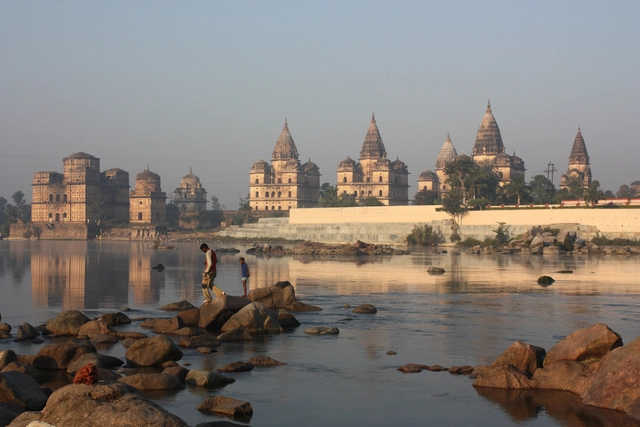
Against the backdrop of an ever-increasing number of its farmers committing suicides, and its cities crumbling under intensifying pressure on their water resources—owing to their rapidly growing populations—India has revived its incredibly ambitious Interlinking of Rivers (ILR) project which aims to create a nation-wide water-grid twice the length of the Nile. The $168 billion project, first envisioned almost four decades ago, entails the linkage of thirty-seven of the country’s rivers through the construction of thirty canals and three-thousand water reservoirs. The chief objective is to address India’s regional inequity in water availability: 174 billion cubic meters of water is proposed to be transported across river basins, from potentially water-surplus to water-deficit areas.
The project is presented by the Indian government as the only realistic means to increase the country’s irrigation potential and per-capita water storage capacity. However, it raises ecological concerns of gargantuan proportions: 104,000 hectares of forest land will be affected, leading to the desecration of natural ecosystems. Experts in hydrology also question the scientific basis of treating rivers as “mere conduits of water.” Furthermore, the fear of large-scale involuntary human displacement—an estimated 1.5 million people—likely to be caused by the formation of water reservoirs is starting to materialize into a popular uprising.

This month marks the 150th anniversary of the birth of acclaimed American architect, visionary, and social critic Frank Lloyd Wright -considered by many to be one of the greatest architects of his time.
As a pioneer of the term 'organic architecture', one of his most iconic representative works is Fallingwater, set upon a waterfall in rural Pennsylvania. From its unveiling, the scheme has evoked enduring reflection on the relationship between man, architecture, and most prominently in Frank Lloyd Wright's mind - nature.

How much effort are you willing to put in to attract that special someone? The humble Japanese pufferfish, just twelve centimeters long when un-puffed, almost certainly has you beat. To attract the best fish in the sea, male pufferfish spend at least seven 24-hour days completing an intricate mating ritual that involves swimming their bodies into and through the seafloor to form ridges and trenches in the sand. If they pause too early, the entire ordeal gets washed away by currents.

Ideasforward wants to give young creative people from around the world the opportunity to express their views on the future of societies through their innovative and visionary proposals. We are an experimental platform seeking progressive ideas that reflect on emerging themes. The eco design, sustainable architecture, new materials, concepts, and technologies are compelling issues in the societies of the future and the involvement of the whole community is imperative. In an era of globalization where communication was dominated by the technological revolution, there is the need to rethink the cities and how Man relates in a global World as well as rethink the economic, social and cultural patterns of contemporary societies.






Ortmeyer.jpg?1528984759 "© Klemens Ortmeyer")