Neighborhood Next / 15 Minute City by Gehl Architects. Image Courtesy of 3XN
The planning and design of mixed-use neighborhoods and individual mixed-use developments are on the rise. Many of the places we frequent most feature a variety of programs, bringing many of life's daily conveniences to one place. But mixed-use spaces do more than just create a diverse array of experiences in cities- they might also help contribute to lower crime rates.
There’s something magical about seeing a city from the very top. To have a new vantage point, and look across a skyline instead of looking up at it is one of the most powerful and awe-inspiring feelings. Observation decks are not just architectural marvels, but also a sort of civic icon and sense of pride for a city. In the present day, it’s not just their height that draws people in, but the additional programming of sky-high bars, rides, and bungee jumping as well.
Today, one of the most popular initiatives regarding public space, participatory design and activism in the city is the so-called citizen urbanism or tactical urbanism. The approach proposes to trigger, through limited and low-cost interventions, long-term changes in public space, i.e. short-term action, long-term change (Street Plans, 2013).
The strategy used is to create temporary scenarios that make visible a specific problem and the formation of specific interventions to solve it, seeking to incorporate the community to give it relevance and promote its sustainability over time and, in this way, raise the discussion about the benefits of the projects for the quality of life in the context in which they are inserted.
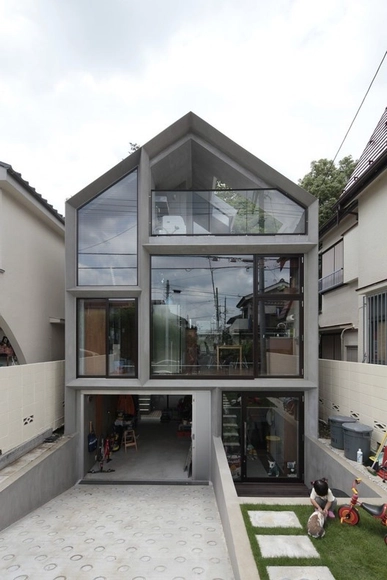
In most countries around the world, value is placed on older buildings. There’s something about the history, originality, and charm of an older home that causes their value to sometimes be higher than newly constructed projects. But in Japan, the opposite is almost always the preference. Newly-built homes are the crux of a housing market where homes are almost never sold and the obsession with razing and rebuilding is as much a cultural thing as it is a safety concern, bringing 30-year-old homes to a valueless market.
The stage is set in one of the most iconic “end of the world” movie scenes: Citizens of New York City are scrambling on top of taxis, quickly attempting to escape the slow-moving giant tsunami heading their way. In the rear-view mirror of a bus, a giant wave can be seen rushing up the narrow city grid. Searching for higher ground, the main characters, Sam and Laura, run up the famed stairs into the famed New York Public Library, and just as the revolving doors shut behind them, the pressure of the water smashes the windows, and water begins to rise. Without seeing it, we know that New York City and its iconic architecture will soon be destroyed.
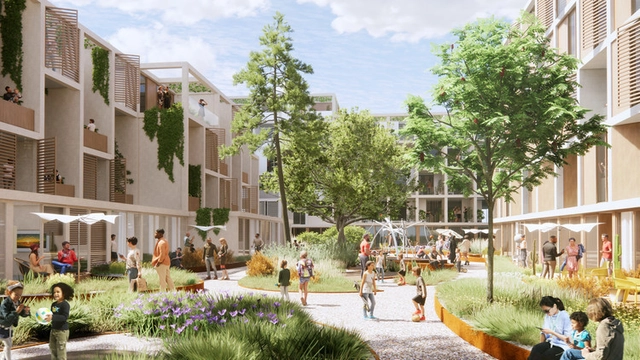
15-minute cities are a trending urban planning topic that has long been discussed academically and is now slowly being implemented across existing cities in Europe. But now, the first 15-minute city is being designed and built from scratch in Utah. Dubbed “The Point”, the new 600-acre city will be located just outside Salt Lake City, and will be a redeveloped former state prison site where new jobs, housing, public spaces, amenities, and transportation will serve almost 15,000 people in an attempt to explore a prototype for how innovative urban planning concepts can improve the public health and wellness.
Still from 'Spirited Away' (2001). Image Courtesy of Studio Ghibli
Writers in film and animation, specifically pertaining to the genre of anime, endeavor to incorporate varied architectural backdrops to assist them in telling their stories, with influences ranging from medieval villages to futuristic metropolises. Architecture as a subject includes a wide array of elements to study, with each architectural era further inferring its context and history through its design alone. However, in film and anime, all of the contexts behind a building’s design can be condensed into a single frame, powerful enough to tell a thousand stories.
In the early 1980s, when I first saw the film The Social Life of Small Urban Spaces and then read the book, both by William H. Whyte, I was enthralled. I had met Holly, as he was affectionately known, while I was still a reporter at the New York Post in the 1970s, and we had great discussions about New York City, what planners got wrong, what developers didn’t care about. By the 1980s I was at work on my first book, The Living City: Thinking Small in a Big Way, and having conversations with Jane Jacobs, who would become my good friend and mentor. Jacobs had validated the small, bottom-up community efforts around New York City that I was observing and that would be the too-often-unacknowledged sparks to jumpstart the slow, steady rebirth of the city. My observations were resoundingly dismissed—even laughed at—by professional planners and urban designers, but they were cheered and encouraged by both Whyte and Jacobs, and today they are mainstream.
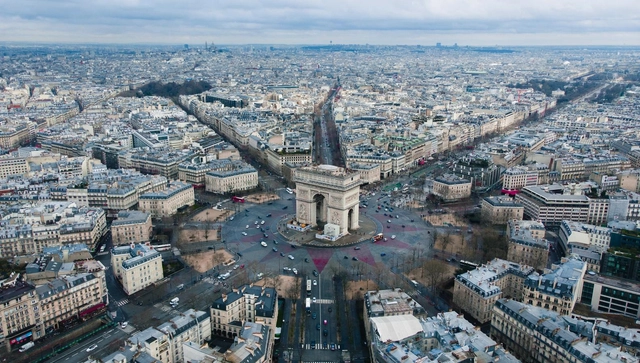
Paris has been making headlines for years with its aggressive steps to anti-car, pro-pedestrian urban improvements. Faced with increasing issues around air pollution and an attempt to reclaim streets for alternate modes of transit, as outlined in their proposed plan for a 15-minute city, the French capital is seen as a leader in future-forward urbanist strategies. Recently, their department of transportation set a deadline for their lofty goals of eliminating traffic from its roads. In just two years from now, in time for the French capital to host the Olympics, Paris plans to ban non-essential traffic from its city center, effectively eliminating around 50% of vehicular mobility. What does this plan look like? And how might other cities use this strategy to eliminate their own urban issues?
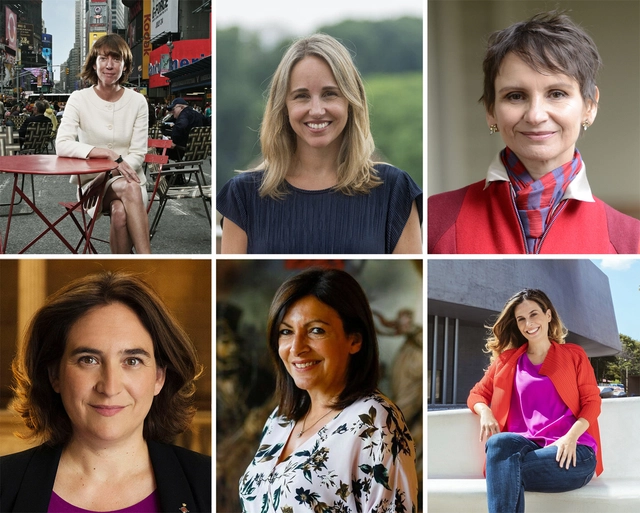
In different parts of the world, women are transforming cities and taking up spaces in urban planning and management as never before. Paris, Barcelona and Rome, for example, in addition to being cities where almost anyone would like to live, are now cities managed by women for the first time in their history, all in their second term. Major changes and currently celebrated plans, such as the “15-minute city” in Paris, the opening of Times Square to the people in New York, and the urban digitization of Barcelona as a smart city, were led by women.
Artificial intelligence systems endeavor to replicate or mimic human intelligence by combining datasets with iterative processing algorithms to learn from patterns and experience. From Siri, Alexa and other smart assistants to conversational bots and email spam filters, what once seemed like a technology pulled from science fiction has become ubiquitous in our daily lives.
'Future Cites' exhibition was recently inaugurated at the Future Design Arts Centre in Chengdu, examining how the work of Zaha Hadid Architects has redefined urban landscapes around the world. The monographic show highlights the trends and innovations shaping contemporary urbanism and traces the ideas and concepts that defined ZHA's body of work. The exhibition displays the office's ongoing research and various urban design approaches, presented through visualizations, architectural models and video projections.
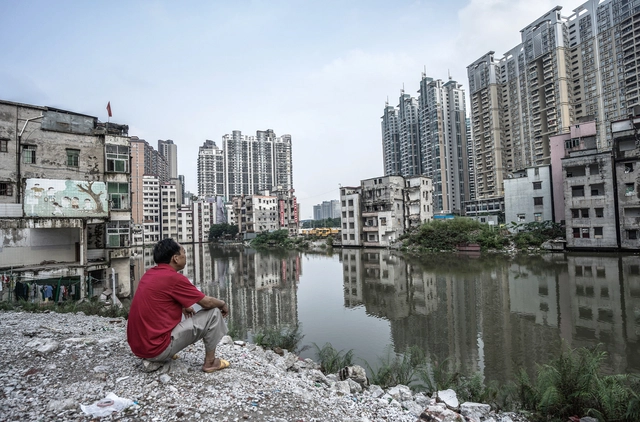
As is obvious to anyone with even a passing interest in demographics, cities are becoming denser—much denser. Rural life continues its steady emptying-out as urban life accelerates its explosive filling-in. The tilt has been apparent at least since the middle of the last century when the French geographer Jean Gottmann invented the word “megalopolis” to describe the continuous urbanization from Boston to Washington, D.C., then containing one-fifth of the United States’ population. But nowhere has the shift from countryside to city been more dramatic than in present-day Asia.
Interior Urbanism describes interior spaces so large that they behave like cities. These kinds of constructions can develop either as an adoc growth over time, or as a planned and cohesively designed set of volumes. Each approach has its own opportunities and problems when it comes to efficiency and architectural integrity. This video explores both and uses Chicago’s Pedway and John Portman’s Hyatt Regency near O’Hare airport as examples. Stewart Hicks visits these examples, discusses the implications of bringing our urbanism indoors, and compares and contrasts the spatial qualities of each — the contingent and gritty urbanism of the Pedway, with the pristine perfection of the hotel lobby and conference center.
Kinetic Cities, courtesy RMA Architects. Image Courtesy of RMA Architects
Rahul Mehrotra is an urbanist, educator, and founding principal of Mumbai- and Boston-based Rahul Mehrotra Architects (RMA Architects). Across India, Mehrotra has designed projects that range from master plans to weekend houses, factories, social institutes, and office buildings. Over decades, his endeavors in urban activism have culminated in the founding of the firm’s Architecture Foundation, which focuses on creating “awareness of architecture in India” through research, publication, exhibitions, and inclusive public dialogue surrounding architectural ethics and values.
After a year delay due to the Covid-19 pandemic, Tokyo Olympics started at the end of July. In this edition, three new modalities debuted in the biggest competition in the world: 3x3 basketball, surfing and skateboarding. Bringing medals to countries such as Japan, United States, Brazil, Australia, Russia, Serbia, China and Latvia, and involving a large number of athletes and nations, these sports carry urban culture in their movements and histories and are an important part of relationships in the city.
Over the last century, cars have been the dominant element when designing cities and towns. Driving lanes, lane expansions, parking garages, and surface lots have been utilized as we continue our heavy reliance on cars, leaving urban planners to devise creative ways to make city streets safe for pedestrians and cyclists alike. But many cities, especially a handful in Europe, have become blueprints for forward-thinking ideologies on how to design new spaces to become car-free and rethink streets to make them pedestrian-friendly. Are we experiencing the slow death of cars in urban cores around the world in favor of those who prefer to walk or ride bikes? And if so, how can it be done on a larger scale?
_Credit_Santiago_Calatrava.jpg?1652412911&format=webp&width=640&height=580)








.jpg?1644868215&format=webp&width=640&height=580)