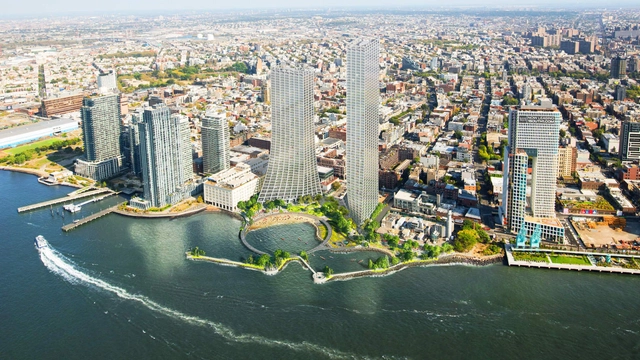
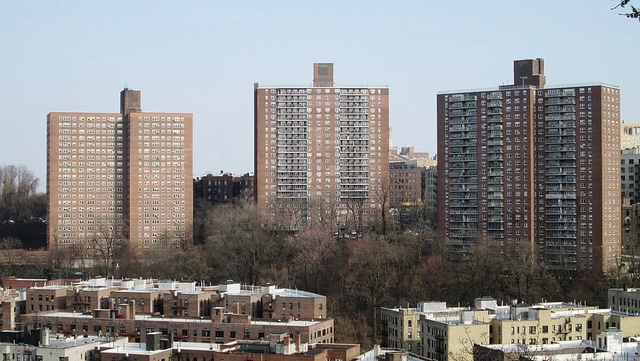
In this week's reprint from the Architect's Newspaper, author Patrick Sisson tackles the implication and participation of communities in New York in shaping their built environment, especially their waterfront. He also asks about the roles of representation and if "the city’s community boards and Uniform Land Use Review Procedure act more like gatekeepers than catalysts for equitable development?" especially that a lot of new developments are labeled as housing projects.
Architectural photographer and short filmmaker Kevin Siyuan released his latest architectural short film titled "A Wes Anderson-ish Singapore", a short motion picture that features buildings by world renowned architects built around the country. The 30-minute documentary was released as part of Singapore Archifest's virtual exhibition: Singapore Through My Eyes, and focuses on the urban planning, architecture, neighborhoods, parks, and green spaces, and how the people of Singapore have adapted to the pandemic.
The concept of equity is different from equality; equity means everyone needs support, but not necessarily in the same way. Therefore, the concept of urban equity allows us to preserve the uniqueness of each region of a municipality, protecting diversity and richness without overlooking infrastructure needs, which directly affect the quality of public space and the basic services required for a private residence - it allows us to design and invest in the city fairly, regardless of the region.
Planning cities and the way that we comfortably live in them is often a pull between many things. From creating affordable housing for all, enhancing community facilities and amenities, and designing walkable neighborhoods, all aspects of urban design have trade-offs, or do they? While there are many reasons why cities are becoming increasingly more expensive, dense, and less pedestrian-friendly, one of the key drivers behind the increase in unaffordability has to do with the way that outdated zoning codes drive the lack of available housing that they regulate.
The way our world looks like today is a result of centuries and centuries of human migration, of complex natural phenomena that has resulted in the geographic appearance of the world’s continents today. We understand this world through our lived experiences, but we also understand this world through a two-dimensional man-made invention – maps. Maps define the many contested borders of the world and have been used in an oppressive capacity, in particular places, for example, segmenting off sections of a place from marginalised societal groups.
Cities we live in today have been built on principles designed decades ago, with prospects of ensuring that they are habitable by everyone. Throughout history, cities have been catalysts of economic growth, serving as focal points for businesses and migration. However, in the last decade, particularly during the last couple of years, the world has witnessed drastic reconfigurations in the way societies work, live, and commute.
Today’s urban fabric highlights two demographic patterns: rapid urbanization and large youth populations. Cities, although growing in scale, have in fact become younger, with nearly four billion of the world’s population under the age of 30 living in urban areas, and by 2030, UN-Habitat expects 60% of urban populations to be under the age of 18. So when it comes to urban planning and the future of cities, it is evident that the youth should be part of the conversation.
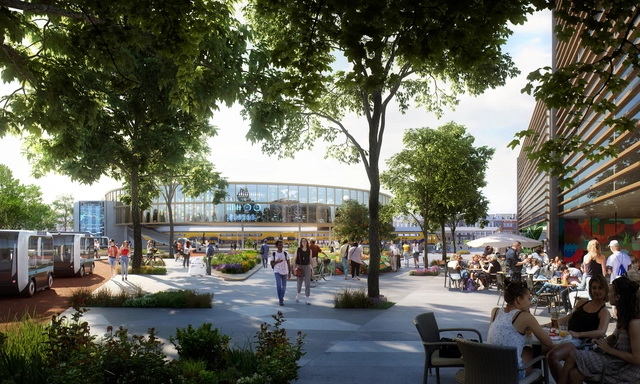
Brainport Smart District Master Plan. Image Courtesy of UNSense
UNStudio has recently published a report exploring the broader scope of community building and placemaking in the post-pandemic urban environment. Through examples from their practice, UNStudio highlights various design strategies currently incorporated in architecture and urban planning that cater to the universal and crucial need to connect socially. In addition, the practice stresses the importance of “ third spaces” and human-scale connectivity, as well as the blending of digital and physical spaces of interaction.
Celebrating the 500th anniversary of the Fuggerei social housing in Augsburg, Germany, MVRDV has collaborated with Fugger Foundation to initiate a conversation about the future architectural and urban plans of Fuggereien, the world’s oldest social housing complex. Throughout the upcoming months, the Fugger Foundations are hosting interdisciplinary debates that highlight Fuggerei’s guiding urban principles and discuss challenges about the field of architecture, politics, culture, and sciences, by notable individuals in each respective field.
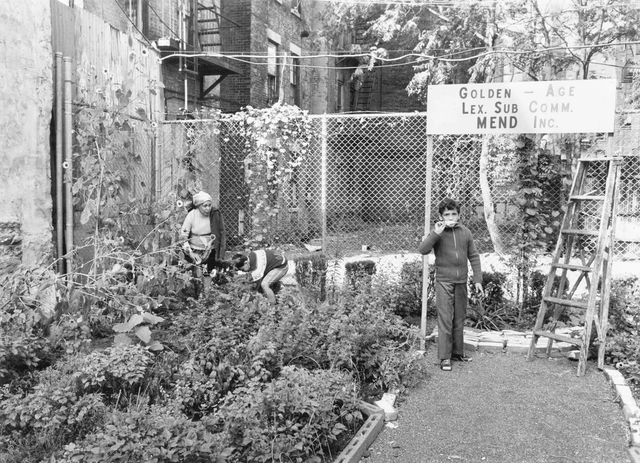
Mogilevich’s study of how the Lindsay administration leveraged political and on-the-ground will to build pocket parks, stump for closing streets and introducing outdoor dining, and reducing racial economic inequality could point the way forward for modern architects and planners. Image Courtesy of Minnesota Press
In this week's reprint from the Architect's Newspaper, author Karen Kubey, an urbanist specializing in housing and health questions if the invention of Public Space is "Invented Or Agreed Upon?" Basing her ideas on a book by Mariana Mogilevich, The Invention of Public Space, the article asks if public spaces are a product of negotiation in the city.
In the world of design and urban planning, aesthetics and functionality seem to take the spotlight, especially in how large-scale housing projects are developed. While this can be a good thing that continuously pushes the modern boundary of what we consider to be a dwelling, in some aspects, it has shined a negative light on how we perceive and stigmatize “bad design” in public and affordable housing, the socioeconomic factors that have created the need for it, and the types of residents who benefit most from these types of housing policies.
"For more than a generation, federally funded historic tax credits (HTCs) have been instrumental in incentivizing developers to revive and reuse historic buildings and keep them economically viable, rather than replace them with shiny new objects. These credits create jobs, promote responsible development, and leverage billions in private investment to enable income-generating buildings". Read the interview between Justin R. Wolf and Meghan Elliott, founding principal of New History, a firm specializing in adaptive reuse.
https://www.archdaily.com/966687/why-use-is-the-best-form-of-preservationJustin R. Wolf
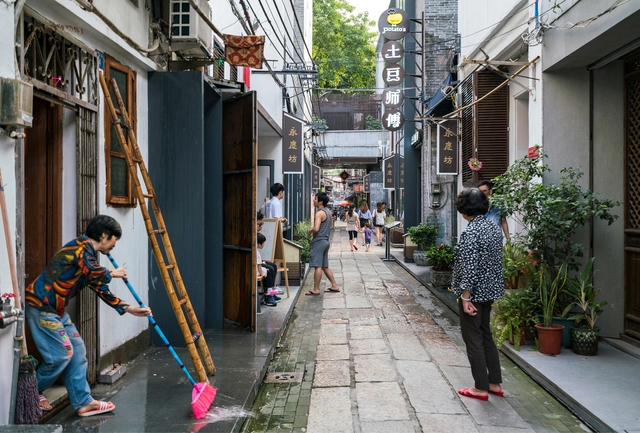
ASLA 2020 Urban Design Honor award. Yongqing Fang Alleyways: An Urban Transformation. Guangzhou, China. Lah D+H Landscape and Urban Design. Image Courtesy of The Dirt
People living in dense cities are among the least happy. Their rates of depression are 40 percent higher than other populations, and their rates of anxiety are 20 percent higher. Why? Because the built environment is directly linked with happiness and well-being, and too often urban environments fail to put people at ease.
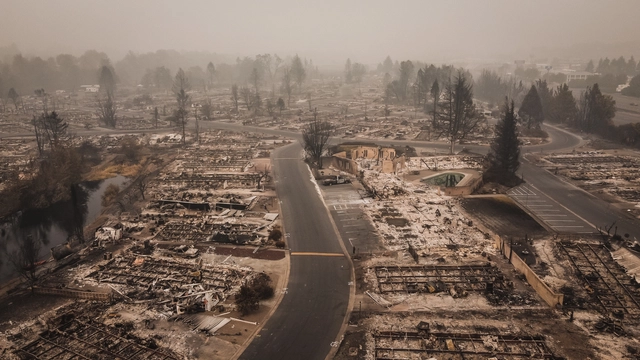
via Shutterstock by ArboursAbroad. ImageAerial View of the Almeda Wildfire in Southern Oregon
The Intergovernmental Panel on Climate Change, the UN's body for assessing the science related to climate change, has recently published a comprehensive report documenting the extent of global warming. The paper provides new time estimates for crossing the 1.5 degrees Celsius threshold, urging immediate and large-scale action to reduce greenhouse gas emissions. Following the publication of the report, UK Architects Declare has issued a statement inviting decision makers to a dialogue on how to collectively address the climate crisis while at the same time calling for the design professionals to re-evaluate their practice to support meaningful change.
Although disability laws have been put in place decades ago, architects are still struggling with disability requirements. A recent article by CityLab explored how the rise of speed and efficiency-driven cities have overlooked accessibility, neglecting the needs of people who are physically unable to live or keep up with these dense neighborhoods. And while the "15-Minute City", one that allows people to walk or bike to most essential services within 15 minutes of their home, may seem as the future of built environments, it does not cater to disabled individuals or their movements.
Recent extreme weather events and the acceleration of climate change, paired with decarbonization efforts that are not on track, make climate-related disruption unavoidable for urban environments, raising the issue of climate-risk adaptation. Moving past what can be done to prevent climate change, there is a strong imperative to develop strategies to prepare urban environments to cope with inevitable challenges such as sea-level rise, floods, water scarcity or extreme heat. The following discusses how cities can build resilience and adapt to undergoing and expected future climate threats.
Jeffry Burchard explores in his essay the "opportunity found by extending the life and purpose of viable existing buildings", that have shaped our cities. Arguing that "we have an abundant supply of buildings", the author proposes four essential steps to transform existing buildings.
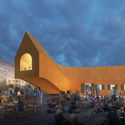
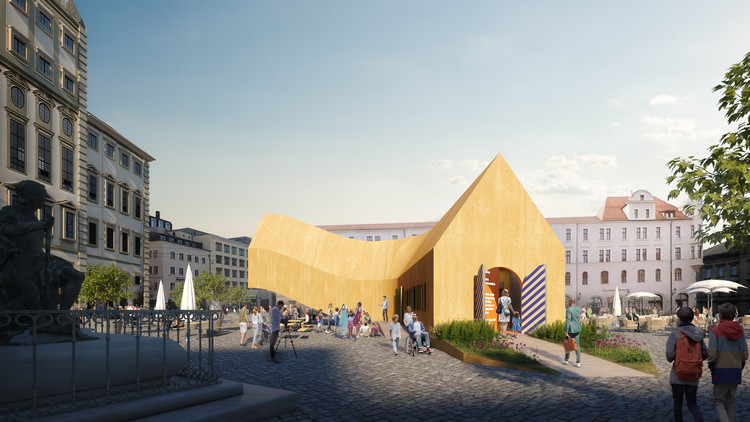
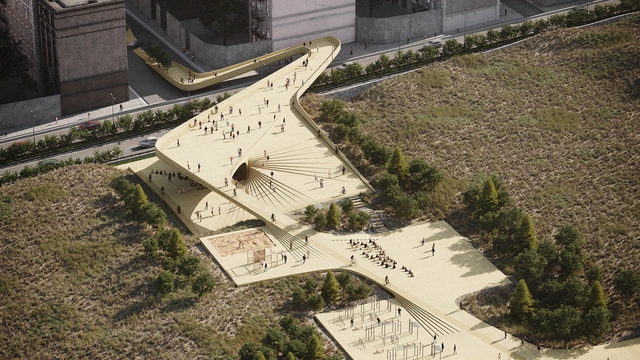
This week's curated selection of Best Unbuilt Architecture highlights different competition-winning designs submitted by the ArchDaily Community. From large scale urban developments to small interventions in the landscape, from commercial projects to public spaces and urban planning strategies with an environmental focus, this article showcases a variety of design approaches, programs and scales. The proposals featured are the results of local and international competitions, either creative concepts or projects currently in progress.
The award-winning entries include a range of different projects, designed by both young architects and established firms. An adaptive reuse project for office towers in New York, the redevelopment of an industrial site in China, an abstract installation for a Russian festival, or a masterplan focused on climate resilience and ecosystems protection are a few of this week's highlights.
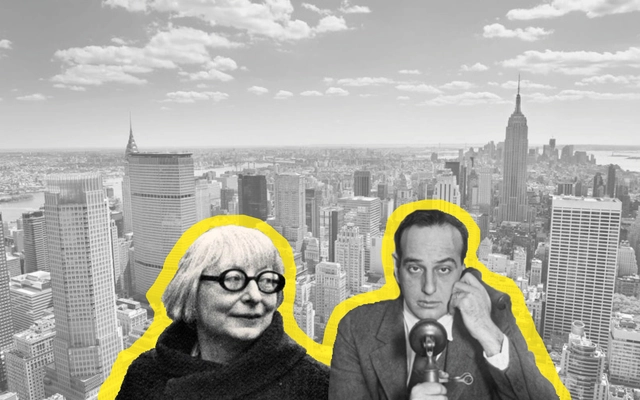
The development of cities has historically been a slow-moving process. In the everchanging urban landscape that faces the pushes and pulls of a variety of social, economic, and financial factors, it’s been hard to pinpoint just one main reason over another why each city has evolved over time into the way that we experience it today. And as designers and planners speculate about what the future of our cities should be, sometimes the reason that our cities look and operate in the way that they do has come down to a few famous battles between individuals with competing schools of thought.