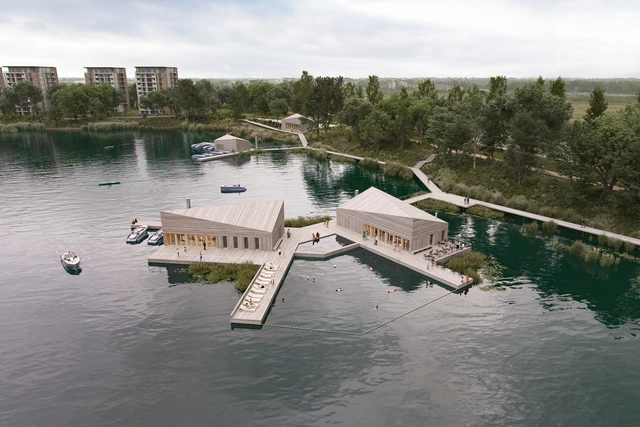
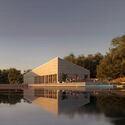
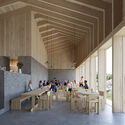
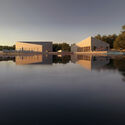
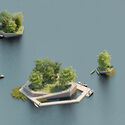
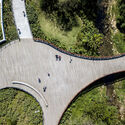
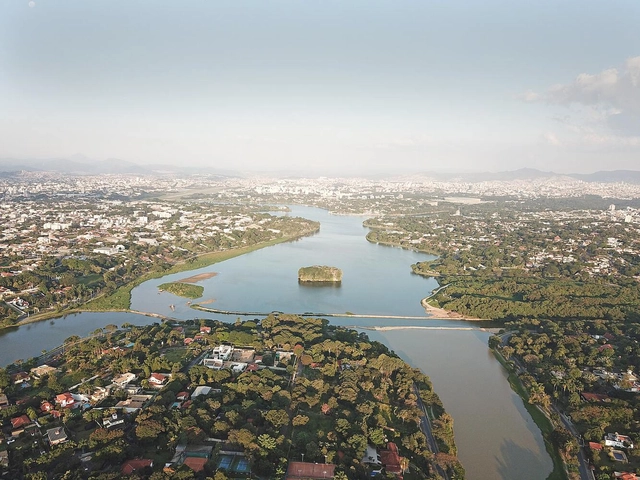
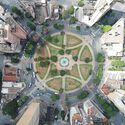
Danish Maritime Architecture Studio MAST, working together with the Municipality of Segrate, plans to transform a former sand quarry into a central park to reconnect the surrounding neighbourhoods and create a new destination for the residents of Milan, Italy. The abandoned quarry has left behind a unique landscape. The off]ice’s proposal includes a series of buildings along the lake’s perimeter linked by a public walkway and a cluster of islands in the centre of the lake. MAST is currently working with the Municipality of Segrate toward realising the project.
As the industry shifts towards a more sustainable model for construction, transparency becomes increasingly important. With a growing emphasis on building greener, architects, planners and other professionals want to make sure that the materials they are using have a minimal impact on the planet. Environmental Product Declarations (EPDs) are an important tool to accurately measure that impact.
In January, Holcim Germany became the first company in Europe to publish EPDs for its entire cement portfolio. It is also the first German company to provide its customers with product-specific ready-mix concrete EPDs.
Videos
Sia Task Chair. Image Courtesy of Boss Design
Choosing the appropriate working elements –such as furniture, lighting, flooring, and other equipment– is key for creating an optimal workplace environment. With a positive impact on productivity, as well as the comfort and well-being of team members, designing workplace elements that integrate sustainable, wellness and aesthetic qualities implies a deep understanding of the interactions between these three areas. Minimizing the environmental impact and prioritizing well-being throughout the design process, while also considering the resulting aesthetics, Boss Design’s Sia Task Chair defines a new standard for workplace design.
Infrastructure is widely known by the population in general, defined simply as a set of fundamental services for the socio-economic development of a region, such as sanitation, transportation, energy, and telecommunication. The commonly presented examples always refer to man-made physical structures. However, a new concept of infrastructure has emerged in recent decades, driven primarily by the urgent need for reconciliation between humans and nature for the survival of species.
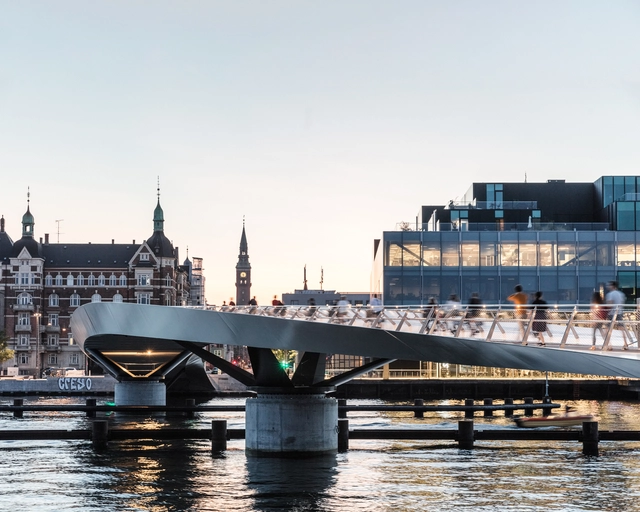
The UIA World Congress of Architects 2023 is an invitation for architects from all around the world to meet in Copenhagen to explore and communicate how architecture influences all 17 UN Sustainable Development Goals (SDGs). The Science Track of the UIA World Congress has been tasked with the development of the agenda, Sustainable Futures – Leave No One Behind. For more than two years, its international Scientific Committee has been analyzing the various ways in which architecture responds to the SDGs. The work has resulted in the formulation of six themes: climate adaptation, rethinking resources, resilient communities, health, inclusivity, and partnerships for change. ArchDaily is collaborating with UIA to share articles pertaining to the six themes to prepare for the opening of the Congress on July 2, 2023.
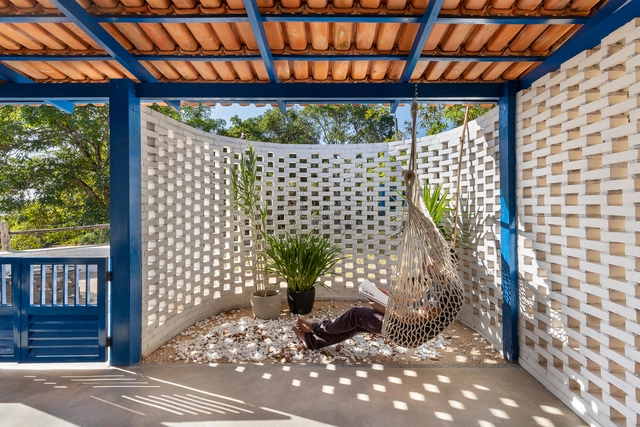
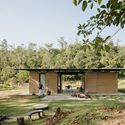
Country houses usually are found in remote areas, therefore, they often demand placement strategies that respect the context and dialogue with the landscape while bringing more thermal comfort and natural lighting. Most of the time, these solutions bring passive strategies that, along with the choice of materials and construction techniques, can provide an even more sustainable project. Get to know seven Brazilian residences that are examples of this theme.
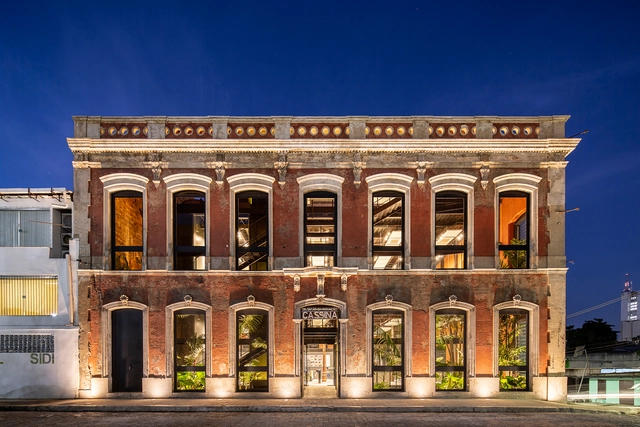
Form and function. Terms that accompany several definitions that belong to architecture, but more is needed to summarize the practice in 2023. Nowadays, building involves understanding the cycles of materials and how each action can be linked to the extraction of natural resources and their damage to the environment. We live in an urgent need to review the way we produce built space. In this search for models that move away from linear systems and provide a constant process of transformation and redistribution of matter, strategies arising from the circular economy emerge as a possible path. Its application in architectural heritage – for maintenance or restoration – can incentive the necessary changes toward a more sustainable society.
World Wetlands Day is celebrated every February 2nd to raise awareness of wetlands. This day also marks the anniversary of the Wetlands Convention, adopted as an international treaty in 1971. Its enactment is because nearly 90% of the world's wetlands have been degraded since 1700, decimated three times faster than the forests. However, they are essential ecosystems that contribute to biodiversity, climate mitigation and adaptation, freshwater availability, world economies, and much more.
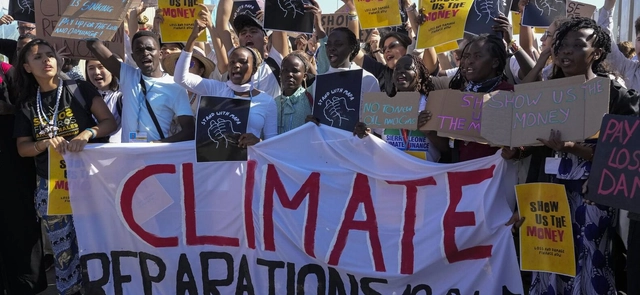
Last November, the annual climate conference COP 27 came to a close in Sharm el-Sheikh with a tentative agreement, reached at the last moment, to set up a “loss and damage” climate fund for Africa and other developing countries. For Africans, this was cause for muted celebration, because for generations the continent has built its climate change agenda almost exclusively around the pursuit of climate justice, a desire to enforce liability on the industrialized nations responsible for the bulk of global carbon emissions. All of this has unfolded, in a sort of willful blindness, while a majority of Africans struggled with the most prosaic challenges: inefficient urban sanitation; poor stormwater management; a paucity of water, sanitation, and hygiene facilities; willful and unabated deforestation; and environmental degradation.
https://www.archdaily.com/996301/its-time-for-africa-to-chart-its-own-climate-change-agendaMathias Agbo, Jr.
Carbon footprint, circularity and environmental sustainability are terms that are increasingly present in many professional fields, but what do they mean? How do they relate to architecture and the built environment? We spoke with civil, environmental and sanitary engineer Lucas Rosse Caldas about these and other emerging architectural issues.
Lucas is a professor at the Graduate Program in Architecture at the Federal University of Rio de Janeiro and the Civil Engineering Program at the same institution. He participated in chapter 9 of the sixth report of the Intergovernmental Panel on Climate Change (IPCC) on buildings. He wrote several scientific and technical articles about architecture and sustainable construction.
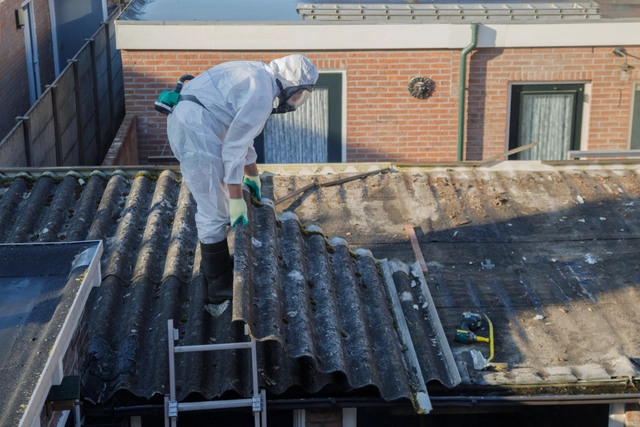
Dozens of countries around the world have already banned the use of asbestos in the civil construction sector. Cheap to extract and abundant in nature, it is a natural fiber used to manufacture water tanks, insulation, partitions, tiles and decorative elements. Its properties include great flexibility and high chemical, thermal and electrical resistance, making it a seemingly ideal material. However, there is scientific evidence that links exposure to asbestos to several types of cancer, as well as to asbestosis - when the fibers of the mineral lodge in the pulmonary alveoli, compromising the respiratory capacity. The asbestos case shows how certain construction materials can –suddenly or not– become a distant memory because of their negative impacts. In addition to the effects on health, the use of materials with high energy consumption or made of rare raw materials is currently under pressure, as experts call to reduce their use or to make their manufacturing methods "greener". The penalty? Disappearing in the near future, becoming yet another in the list of banned building materials. In this article, we delve into some of these materials and what their risks are.
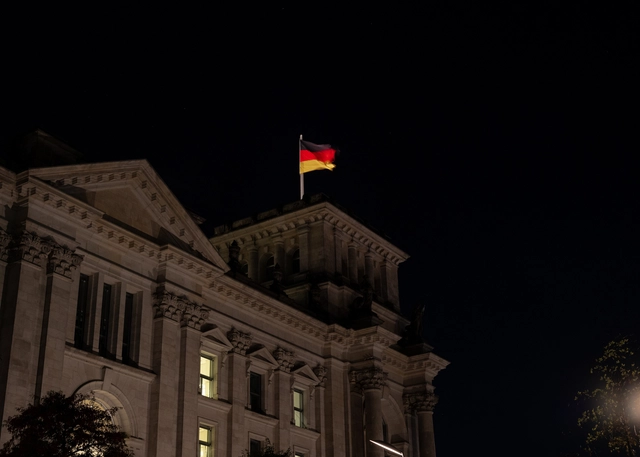
When capital cities like Paris and Berlin resolved to switch off lighting for public buildings and landmarks in July 2022 in order to save energy in the context of the Russian invasion of Ukraine, the cities created a ripple effect throughout central Europe. Images of dark iconic landmarks swept through the media and allowed politicians a momentary act of environmental demonstration. However, designers have started to question the sustainability of this ad hoc step. Seen from a broader perspective the impression arises that this alleged radical action has been part of a rather media-savvy campaign with small effect in cities at night. Further steps are necessary to reassess urban lighting that may have a major impact on energy saving and sustainability.
The 2022 United Nations Conference of the Parties, more commonly referred to as COP27, was held between November 6 and November 18, 2022, in Sharm El Sheikh, Egypt. The conference included more than 90 heads of state and an estimated 35,000 representatives, or delegates, from 190 countries. Aimed at encouraging and guiding countries to take effective action against climate change, the next edition of these conferences, COP28, is already scheduled from 30 November to 12 December 2023, in the United Arab Emirates. The CEO of the Abu Dhabi National Oil Co, an oil company chief who also oversees renewable energy efforts in the Emirates, was appointed to preside over the negotiations and talks, which led to a wave of criticism from environmental activists.
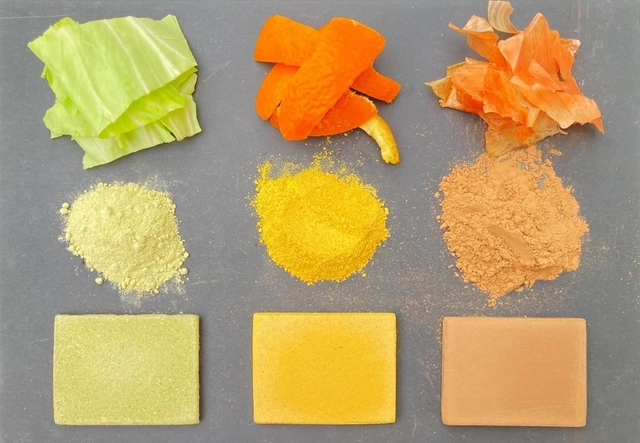
Add cabbage leaves, orange peels, onions, bananas and a few slices of pumpkin to get... cement. That's right, researchers from the University of Tokyo in Japan have developed a technique through which it is possible to produce cement from food waste. Besides being used in construction, the innovative initiative is edible as well. You can make boiled cement into a delicious meal by adjusting flavors, adding seasonings, and breaking it into pieces.
At a historical moment when industrialization and urbanization are continuing at a fast and predatory pace, we need to design and produce spaces that can adapt to new realities. Based on this need, concepts that can guide the transformation and production of future cities emerge.
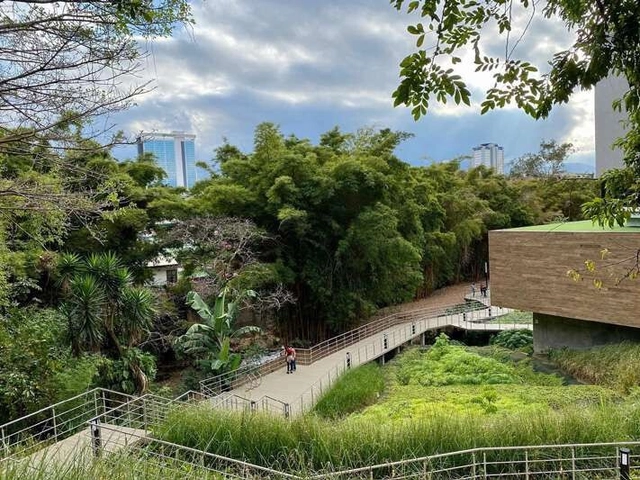
Rutas Naturbanas (San José, Costa Rica. 2015 – 2020). Fundación Rutas Naturbanas - Federico Cartín. Image Courtesy of Jeannette Sordi
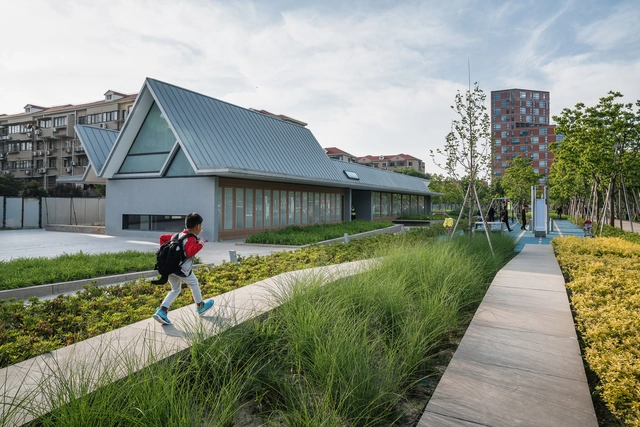
Green corridors, or biodiversity corridors, are large portions of land that receive coordinated actions to protect biological diversity. According to Brazil’s National System of Nature Conservation Units, they strengthen and connect protected areas, encouraging low-impact use by implementing a more comprehensive, decentralized and participatory conservation alternative.
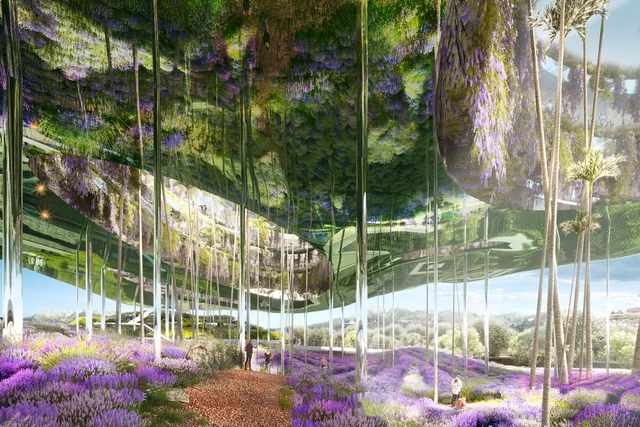
Jean Nouvel + OXO Architectes design Mountainous Mixed-Use Campus in Antibes. Image via Compagnie de Phalsbourg
Nowadays, much is said about the importance of collaborative design processes that involve joint creation, affirming a context in which there is less and less room for individual work and much more for the logic of collective and co-creation. Therefore, the idea that the work is created exclusively by the architect is already understood as a distortion of the complex reality of designing a project, going beyond the technical staff and also adding the community and its users.
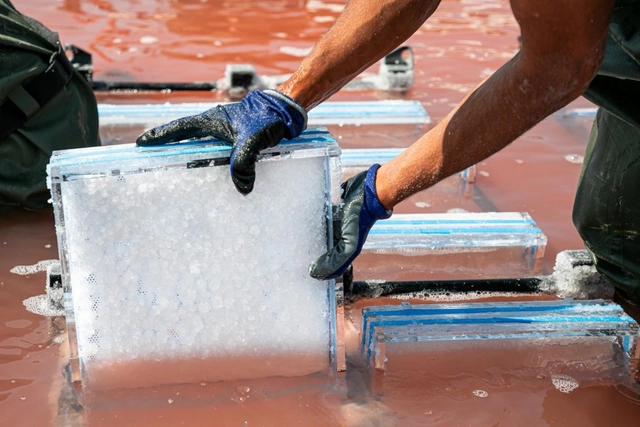
Sodium chloride, most commonly known as salt, is everywhere. Ancient in its uses and abundant in nature, it preserves local ecosystems, de-ices roads, is vital in a variety of industrial processes, and is likely sitting on your kitchen table as a seasoning for your meals. Today, it is attributed relatively little value –considering it used to be as worthy as gold–, and unlike other nature-derived alternatives such as algae or mycelium, there doesn’t seem to be enough research and interest around all of its physical, mechanical or aesthetic properties. And yet it is a material with infinite, extraordinary potential. Apart from its life-supporting qualities, salt is affordable, easily available, antibacterial, resistant to fire, can store humidity and heat, and is great at reflecting and diffusing light.