1. ArchDaily
  2. Postmodernism

Postmodernism: The Latest Architecture and News

Drawings from Famous Architects' Formative Stages to be Exhibited in St. Louis

Drawings from Famous Architects' Formative Stages to be Exhibited in St. Louis  - Featured Image
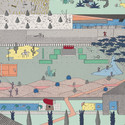
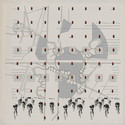
Zaha Hadid, The World (89 Degrees), 1984. Image Courtesy of Kemper Art Museum

As a student of architecture, the formative years of study are a period of wild experimentation, bizarre use of materials, and most importantly, a time to make mistakes. Work from this period in the life of an architect rarely floats to the surface - unless you're Zaha Hadid or Frank Gehry, that is. A treasure trove of early architectural drawings from the world's leading architects has recently been unearthed from the private collection of former Architectural Association Chairman Alvin Boyarsky. The collection is slated to be shown at the Kemper Art Museum, Washington University, St. Louis, as a part of the exhibition Drawing Ambience: Alvin Boyarsky and the Architectural Association from September 12th to January 4th, 2015.

Take a look at the complete set of architects and drawings for the exhibition after the break.
Drawings from Famous Architects' Formative Stages to be Exhibited in St. Louis  - Image 1 of 4Drawings from Famous Architects' Formative Stages to be Exhibited in St. Louis  - Image 2 of 4Drawings from Famous Architects' Formative Stages to be Exhibited in St. Louis  - Image 3 of 4Drawings from Famous Architects' Formative Stages to be Exhibited in St. Louis  - Image 4 of 4Drawings from Famous Architects' Formative Stages to be Exhibited in St. Louis  - More Images+ 5

Happy Birthday Robert Venturi

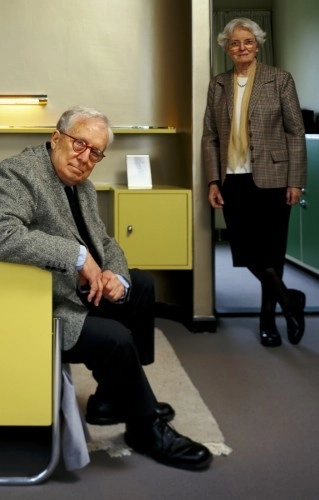
Robert Venturi, the architect famous for "less is a bore," turns 89 today. Venturi started his firm in 1964 and ran it with his wife and partner Denise Scott Brown from 1967 until 2012. Today the Pritzker Prize winner's legacy lives on as the firm continues under the name VSBA (Venturi Scott Brown Associates).

The Portland Problem: $95 Million for a Hated Building?

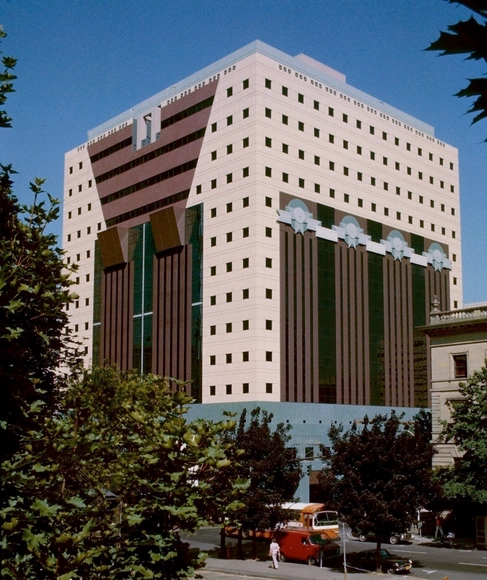
In a provocative article, The Atlantic Cities explores the dilemma which Portland currently finds itself in: the Michael Graves-designed Portland Building, one of the most important examples of early postmodernism, requires renovation work to the tune of $95 million; unfortunately, most residents of Portland "really, really hate" the building - as they have since it was constructed in 1983. Should the city spend so much money renovating a building which is unpopular, dysfunctional and poorly built just because of its cultural significance? Read the original article for more.

Subscriber Access

A Crash Course on Modern Architecture (Part 2)

Merete Ahnfeldt-Mollerup is associate Professor at The Royal Danish Academy of Fine Arts. This article originally appeared in GRASP.

Miss Part 1? Find it here.

Architecture is inseparable from planning, and the huge challenge for the current generation is the growth and shrinkage of cities. Some cities, mainly in the Southern Hemisphere, are growing at exponential rates, while former global hubs in the northern are turning into countrysides. In the south, populations are still growing a lot, while populations are dwindling in Europe, Russia and North East Asia. The dream of the Bilbao effect was based on the hope that there might be a quick fix to both of these problems. Well, there is not.

A decade ago, few people even recognized this was a real issue and even today it is hardly ever mentioned in a political context. As a politician, you cannot say out loud that you have given up on a huge part of the electorate, or that it makes sense for the national economy to favor another part. Reclaiming the agricultural part of a nation is a political suicide issue whether you are in Europe or Latin America. And investing in urban development in a few, hand-picked areas while other areas are desolate is equally despised.

The one person, who is consistently thinking and writing about this problem, is Rem Koolhaas, a co-founder of OMA.

Denise Scott Brown Demands Recognition from Pritzker

During a speech at the AJ Women in Architecture luncheon in London last week, postmodern icon Denise Scott Brown requested to be acknowledged retrospectively for her role in Robert Venturi’s 1991 Pritzker Prize, describing Pritzker’s inability to acknowledge her involvement as “very sad”.

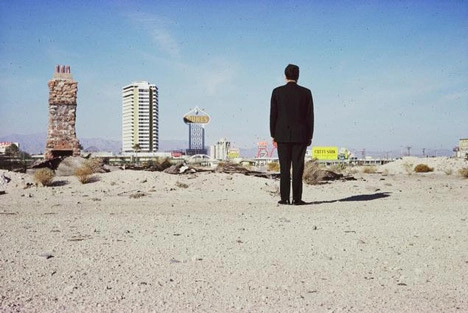
Although at the time of the award Brown had co-partnered their practice Venturi Scott Brown and Associates for over 22 years and played a critical role in the evolution of architectural theory and design alongside Venturi for the over 30 years, as well as co-authored the transformative 1970’s book Learning from Las Vegas, her role as “wife” seemed to have trumped her role as an equal partner when the Pritzker jury chose to only honor her husband, Venturi.

More information and an online petition after the break...