1. ArchDaily
  2. Natural disasters

Natural disasters: The Latest Architecture and News

Rockefeller Foundation Selects 33 Cities for Resiliency Challenge

The Rockefeller Foundation has named the first group of cities selected in the “100 Resilient Cities Centennial Challenge.” Each city has been chosen for demonstrating “a commitment to building their own capacities to prepare for, withstand, and bounce back rapidly from shocks and stresses.” More than 1,000 registrations and nearly 400 formal applications from cities around the world were submitted. After careful review of each city's challenges, these 33 where chosen:

Rebuild Strategy for Hoboken / OMA

Rebuild Strategy for Hoboken / OMA - Master Plan
Resist, Delay, Store, Discharge: OMA's Comprehensive Strategy for Hoboken. Image Courtesy of OMA

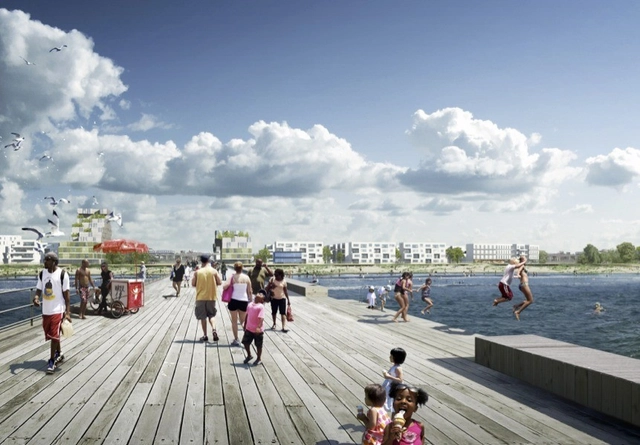
OMA’s comprehensive strategy to rebuild the New Jersey city of Hoboken, after the devastation of Hurricane Sandy, has been selected as one of ten initiatives moving forward in the Department of Housing and Urban Development’s (HUD) Rebuild by Design competition. The proposal, Resist, Delay, Store, Discharge, focuses on establishing resiliency through the integration of key infrastructural elements that not only protects coastal neighborhoods, but also the entire city of Hoboken.

10 Projects Advance to Rebuild by Design's Final Round

After three months of in-depth analysis and public outreach, the U.S. Department of Housing & Urban Development (HUD) has shortlisted 10 design “opportunities” for the third and final round of Rebuild by Design. The design competition, focused on making New York’s Sandy-effected regions more resilient, sustainable, and livable, will now have the final project teams collaborate with local and regional stakeholders in developing their projects over the next five months. The goal is to arrive at projects that are implementable and fundable, leveraging the variety of federal recovery investments being made in the region.

OMA, BIG and WXY are just a few practices involved in the final round. Read on to review a glimpse of each shortlisted proposal.

Architects & AIA Respond to Devastation in the Philippines, Call for Immediate Help

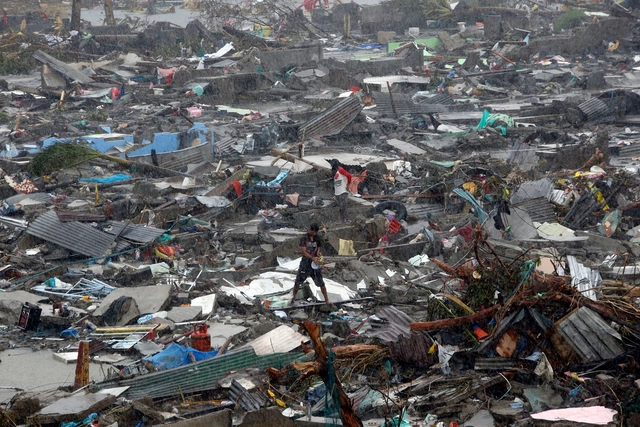
On Friday, one of the strongest storms ever to hit land left 660,000 Filipinos homeless, with countless more desperately needing basic supplies to survive. 

In the wake of catastrophe wrought by Typhoon Haiyan in the Philippines, the American Institute of Architects (AIA) and Architecture for Humanity are calling for immediate help as survivors face severe shortages of food, water, shelter and medical supplies.

Both organizations will be aiding local volunteers to help rebuild in the coming days and weeks. Through speaking with local stakeholders and construction professionals, they are working to begin understanding the on-the-ground situation to prioritize rebuilding needs and help affected regions build back better and stronger. Relief and reconstruction, however, cannot happen without your support. Learn how you can send aid to typhoon victims today after the break. 

3C Competition Winners Announced

3C Competition Winners Announced - Featured Image
First Place: Adaptive Urban Habitats / Mixed Paper

Operation Resilient Long Island (ORLI) has just announced the winners of its 3C: Comprehensive Coastal Communities ideas competition. Entrants were asked to design solutions that were not just resilient but also contextually sensitive and pragmatic to the devastating aftermath of Super-storm Sandy as well as all future natural disasters. Over 60 submissions were received from 20 different countries and 32 finalists were engaged in a public education strategy through a public voting campaign. A jury panel of eight leading professionals in the fields of architecture, urban planning and disaster mitigation met in mid-September to review the top finalists and selected 3 winners.

The 2013 winners of the 3C Competition are:

The 20 Cities Most Vulnerable to Flooding

A study published in Nature Climate Change, has compiled a list of cities most vulnerable to coastal flooding. Taking in consideration elevation, population distribution and available flood protection from 136 coastal cities worldwide, in addition to forecasts of sea level rise and ground sinking due to groundwater depletion, the study determines that if no mitigating steps are taken, coastal flooding will cause damage totaling $1 trillion annually by the year 2050. 

Topping the list as the most vulnerable city is Guangzhou, China, followed by Mumbai and Kolkata in India, Guayaquil, Ecuador and Shenzen, China. Almost all cities at the highest risk of flooding damage were in North America or Asia.

The top 20 most vulnerable cities are:

How Shoddily Constructed Buildings Become Weapons of Mass Destruction

Why is it that the Bay Area can suffer a 6.9 earthquake and lose just 63 people, while Haiti suffers a slightly stronger quake and loses about 100,000? The answer: shoddy construction. As Bryan Walsh of TIME points out, “We tend to focus on the size of an earthquake, but death toll has more to do with the quality of buildings. [...] Poverty — and even more, poor governance and corruption — is the multiplier of natural disasters. [...] That’s why one of the most vulnerable places in the world is south-central Asia.” Learn more about the dangers of poorly constructed buildings here and see what the "true value" of architecture is here.

Four NGOs Launch Housing Competition to Aid Disaster Survivors

The American Institute of Architects (AIA), Make It Right, St. Bernard Project and Architecture for Humanity has formed a strategic partnership to launch “Designing Recovery,” an ideas competition created to aid in the rebuild of sustainable and resilient communities.

Help Rebuild Moore

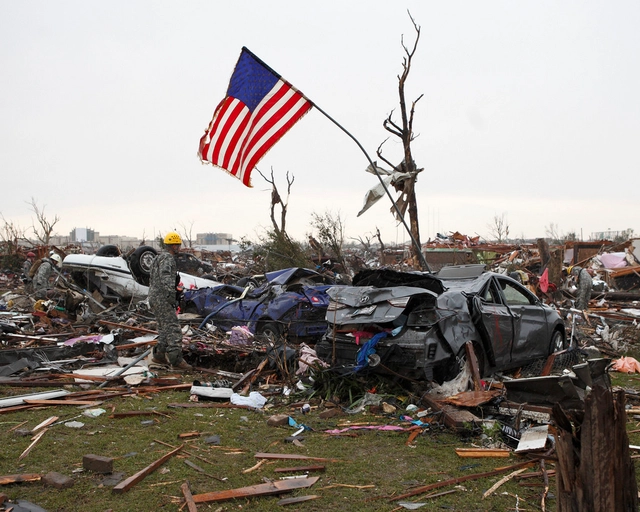
Recovery efforts are underway in the Oklahoma City suburb of Moore after a deadly, 1.3-mile-wide tornado carved a 20-mile-long swath of destruction through neighborhoods and schools on Monday afternoon. With winds up to 210 miles per hour and a death count that currently stands at 24, President Obama has declared this tornado to be “one of the most destructive in history,” ranking it at a Category 5.

In an effort to help, Architecture for Humanity and the American Institute of Architects (AIA) have mobilized their teams to provide instant assistance and aid in long term reconstruction efforts. Although professional design and construction volunteers from both organizations are already on the ground, the community needs your help. Find out how you can help the residents of Moore after the break.

Subscriber Access

Infographic: The Make It Right Foundation

Since Hurricane Katrina swept through New Orleans, leaving devastation in its wake, the Make It Right Foundation has been working to redevelop the Lower 9th Ward by recruiting world-renowned architects (from Frank Gehry to Shigeru Ban) to the cause. The foundation, the brain-child of actor Brad Pitt, aims to design houses that aren't just temporary solutions, but rather parts of an on-going process of sustainable, community development.

Learn more about the Make It Right Foundation's goals and progress, and check out some of the starchitect-deisgned prototypes that will eventually make up a 150-house neighborhood, in our ArchDaily original infographic, after the break.

NY State's Governor Cuomo's Solution for Ravaged Homes in NYC's Coastal Region

NY State's Governor Cuomo's Solution for Ravaged Homes in NYC's Coastal Region - Image 1 of 4
© Governor’s Office / Tim Larsen

After months of debate, the United States Congress has passed a bill that will allocate $51 billion to Hurricane Sandy relief helping the thousands who lost their homes and businesses to the devastating storm last October. New York Governor Andrew Cuomo announced that $400 million of the aid will be used to fund New York's buyout program, an initiative to help address the damaged homes and coastline. The program is two-fold; in part it will help reimburse the property damage caused by the storm, but the initiative has a larger goal, which is to address the nature of coastal flooding and create a barrier that would mitigate the damage created to the coast by storm surges in the future. Since the storm, there have been many suggestions as to how to prepare for the type of damage brought on by Hurricane Sandy of 2012 and Hurricane Irene of 2011. These suggestions range from flood gates to barrier reefs. Cuomo's buyout program, as reported by the Architect's Newspaper Blog, hopes to encourage residents along vulnerable flood zones to sell their land to the city for the development of a natural coast that would absorb the impact of strong winds and storm surges.

Subscriber Access

AIA President Mickey Jacob Urges Congress to Aid Sandy Relief

AIA President Mickey Jacob Urges Congress to Aid Sandy Relief - Featured Image
© Amanda Kirkpatrick

In response an outrage that broke out amongst Democrats and Republicans, after House Speaker John Boehner failed to vote for Sandy relief before the end of the Congressional session two days ago, the House of Representatives have approved a $9.7 billion relief measure to aid flood victims of Hurricane Sandy. This is good news, as the Federal Emergency Management Agency’s (FEMA) recently warned that it would soon run out of funding if no measures were taken. Senate approval is likely to come later in the day and a second congressional vote is scheduled to take place on January 15 for a larger $51 billion request.

Understanding the importance of issuing this federal support, AIA President Mickey Jacob has offer Congress three key objects for helping these communities recover.

Read AIA President Jacob’s letter to congress and his three objectives after the break…

Subscriber Access

Architecture for the Apocalypse (Now)

Architecture for the Apocalypse (Now) - Image 3 of 4
The 2nd Prize winner of the New York Cityvision context envision a New York City as Heritage Site, protected from the elements with a barrier-wall. Image via Cityvision.

In 1945, the United States dropped 2 nuclear bombs on Hiroshima and Nagasaki. While the act devastated and destroyed these two Japanese towns, it also created an entirely new political climate, one based on apocalyptic fears. As tensions with Soviet Russia heightened, and the United States entered an age of potential nuclear destruction, the landscape itself adapted in response - becoming littered with bunkers and fallout shelters, the “concrete responses to the political social and existential anxieties of the atomic age.”

Fast-forward nearly seventy years, and we’re currently faced with a new apocalyptic scenario of our own. Assuming you’re reading this, we have all survived the Mayan Apocalypse. Congratulations. However, that’s not to say that out apocalyptic fears - and its resultant architecture - has come and gone. Our apocalypse is more based on the fear of natural disaster - hurricane, tornado, viral disease, even infected-zombie-people - than nuclear attack; and our apocalyptic architecture is less of the bunker variety, and more of the vertical farm/fortress - let’s call it ESD: Extremely Sustainable Design.

More on apocalyptic architecture of the 21st century, after the break...

Architecture for the Apocalypse (Now) - Featured ImageArchitecture for the Apocalypse (Now) - Image 1 of 4Architecture for the Apocalypse (Now) - Image 3 of 4Architecture for the Apocalypse (Now) - Image 4 of 4Architecture for the Apocalypse (Now) - More Images

Subscriber Access

Post-Hurricane Sandy: Solutions for a Resilient City

Post-Hurricane Sandy: Solutions for a Resilient City - Featured Image
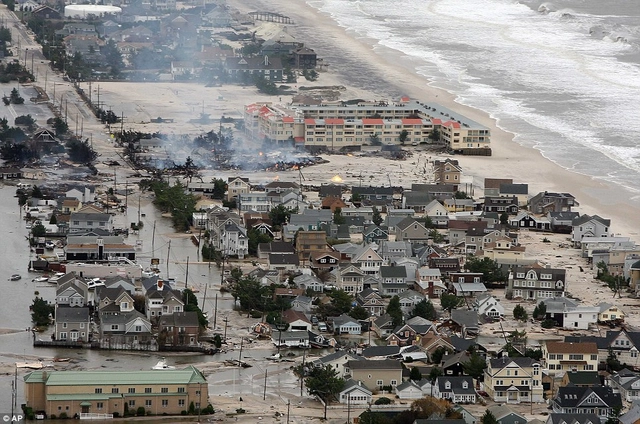
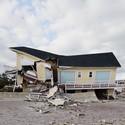
Hurricane Sandy damage north of Seaside, N.J. on Tuesday, Oct. 30, 2012. © Governor’s Office / Tim Larsen

In the wake of Hurricane Sandy, as communities band together to clean up the devastation and utility companies work tirelessly to restore the infrastructure that keeps New York City running, planners and policy makers are debating the next steps to making the city as resilient to natural disaster as we once thought it was. We have at our hands a range of options to debate and design and the political leverage to make some of these solutions a reality. The question now is, which option or combination of options is most suitable for protecting New York City and its boroughs? Follow us after the break for more.

Photography: The Rockaways, Post-Sandy / Amanda Kirkpatrick

Photography: The Rockaways, Post-Sandy / Amanda Kirkpatrick - Image 1 of 4
© Amanda Kirkpatrick

Hurricane Sandy has come and gone, but the destruction she left in her path remains a stark reminder of her strength. 

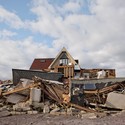
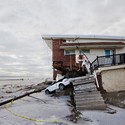
Photographer Amanda Kirkpatrick has shared with us her images of The Rockaways in Queens, an upper-class beach neighborhood that was one of the areas hit hardest by the storm. Kirkpatrick's objective eye documents the twisted boardwalks and unrecognizably distorted homes in an almost "clinical" way, honestly portraying the damage from the perspective of the broken structures themselves.

If you're interested in getting involved with Hurricane Sandy Recovery Efforts, you can get more information here. For more images from Amanda Kirkpatrick, read on after the break...

Photography: The Rockaways, Post-Sandy / Amanda Kirkpatrick - Image 1 of 4Photography: The Rockaways, Post-Sandy / Amanda Kirkpatrick - Image 3 of 4Photography: The Rockaways, Post-Sandy / Amanda Kirkpatrick - Image 6 of 4Photography: The Rockaways, Post-Sandy / Amanda Kirkpatrick - Image 7 of 4Photography: The Rockaways, Post-Sandy / Amanda Kirkpatrick - More Images+ 3

Subscriber Access

Disaster Ready Housing / Y/N Studio

Disaster Ready Housing / Y/N Studio - Image 28 of 4
© [Y/N] Studio
Subscriber Access

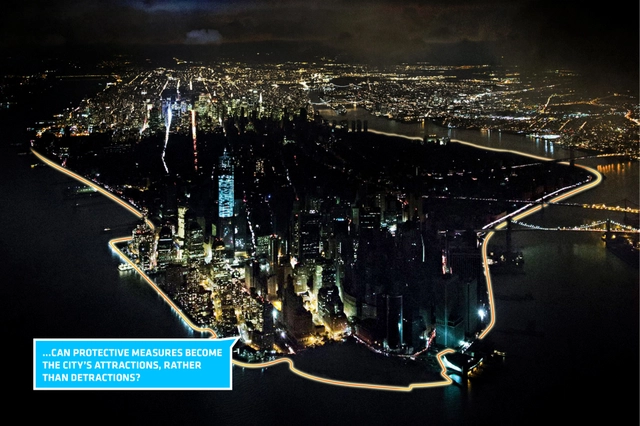
Iwan Baan vs. Sandy: The Story Behind That Iconic NYC Shot

Iwan Baan vs. Sandy: The Story Behind That Iconic NYC Shot - Featured Image
Photo: Iwan Baan for New York Magazine

We got in touch with Iwan Baan to ask him how on earth he got that incredible aerial shot of a Sandy-struck New York City for New York Magazine; he told us what it was like to face the frenzy and fly into the storm itself. Read his incredible story, after the break...

Architecture for Humanity's 5-Point Plan for Hurricane Sandy Reconstruction

Architecture for Humanity's 5-Point Plan for Hurricane Sandy Reconstruction - Image 1 of 4
Hurricane Sandy damage north of Seaside, N.J. on Tuesday, Oct. 30, 2012. © Governor’s Office / Tim Larsen

"As whenever disaster strikes, it will be many days before the full impact of the storm is brought to light, and which communities will be in largest need of design support as the broader reconstruction effort proceeds. However we are not waiting for water to recede before preparing a reconstruction campaign." - Cameron Sinclair, Architecture for Humanity co-founder

Since Hurricane Sandy struck New York and New Jersey last week, Architecture for Humanity volunteers have been in action - not just aiding in the recovery efforts, but also analyzing how/where long-term reconstruction efforts will need to be focused. Indeed, Architecture for Humanity's co-founder, Cameron Sinclair, has already published the organization's 5-point strategy for long-term reconstruction in the areas most severely impacted by Sandy.

Architecture For Humanity's strategy for reconstruction (and more information on how you can get involved), after the break....