Across the globe, museums function as cultural landmarks – spaces of significance that quite often become defining symbols of a city’s architectural landscape. Historical examples such as the Museum de Fundatie in the Netherlands and The Louvre Museum in France continue to attract millions of visitors, with contemporary architectural interventions to them redefining their spatial contribution to their local context.
The remodeling project of the Archeological Museum of Seville, Spain, won in a national competition in 2009 by architectural firm Vázquez Consuegra, was finally presented to the authorities on Monday 29th November 2021. The start of the construction is scheduled for 2022 and has a budget of 20 million euros.
Fotografiska Museum has announced its expansion to three new locations in Berlin, Shanghai and Miami, to be housed within existing buildings redesigned by Herzog & De Meuron, Neri&Hu and Rockwell Group. A former department store in Berlin's Jewish Quarter, a 1946 factory building in Miami and a historically significant warehouse complex in Shanghai are the future Fotografiska venues set for completion in 2022 and 2023. Together with the existing locations in Stockholm, Tallin and New York, these will form the world's largest private art museum in terms of size, number of locations, and exhibitions per year.
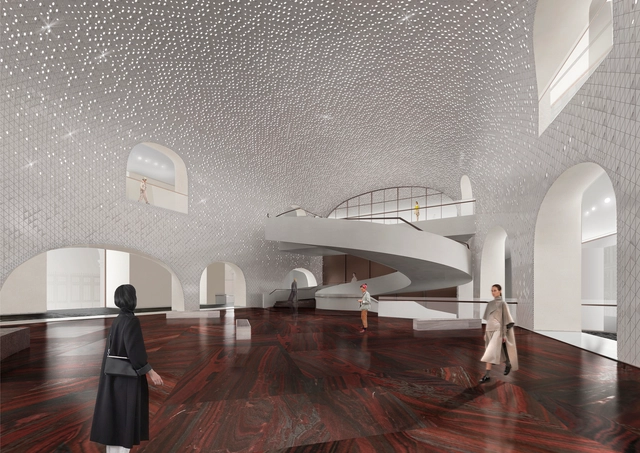
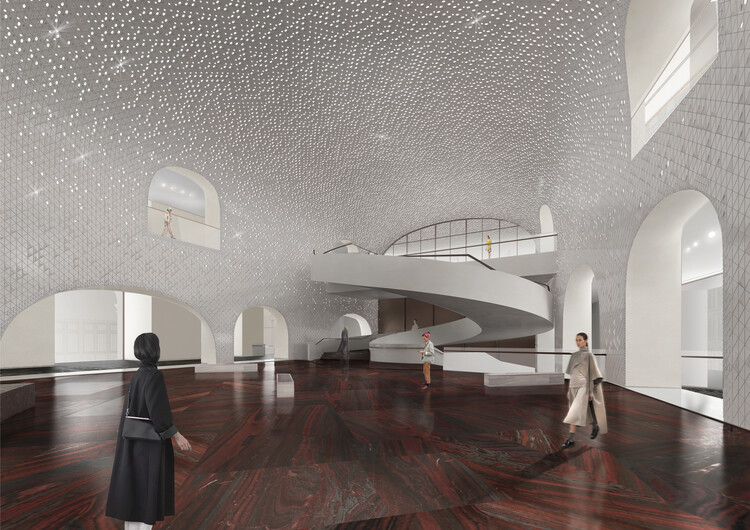
The new Kremlin museum set within the UNESCO protected museum ensemble in Red Square nestles a contemporary structure within the vast courtyard of a 19th-century building. Designed by Moscow-based practices NOWADAYS office and Meganom, the project will house the vast Armory collection, of which only 30% is currently available to the public with the Kremlin walls. The refurbishment of the historic Middle Trading Rows building, together with the new extension, complement each other, creating a diverse and complex museum experience.
2020 has fundamentally changed our spatial routines and the current health crisis brought about a significant amount of speculation regarding how our daily lives will unfold onward. With the year coming to an end, we look at how the pandemic accelerated some architecture trends that were already underway, and how it brought into question other well-established ideas.
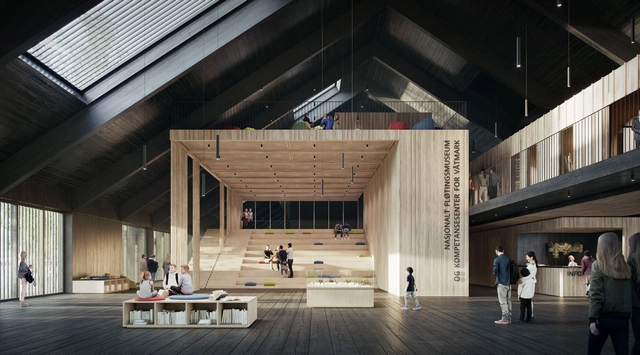
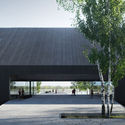
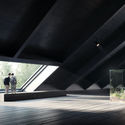
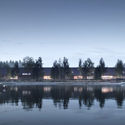
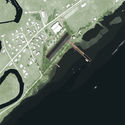
Landscape and design office Karres en Brands has won the international competition to design Norway’s National Logging Museum. Selected out of 136 submissions, the team's winning proposal was chosen by the jury and the Commission of Museums in Akershus for building connections to the regional wetlands and local history. Sited on Northern Europe's largest inland delta, the new museum will focus on Norway's cultural and natural heritage.
Given the sheer magnitude and influence of its recorded history, Italy as we know it is a surprisingly young country. For centuries, the region was divided between powerful (and sometimes warring) city-states, each with their own identity, culture, and, fortunes, and influence. Some are eternally famous. Rome is a cradle of history and heart of religion; cool Milan is a hub of contemporary fashion and design; Florence is synonymous with the Renaissance and all the epoch’s relationship to the arts.
Turin’s history is arguably less romantic. The small city in Savoy, a north-Italian region bordering France, has established an identity as an industrial powerhouse. It is home to FIAT and some of Italy’s finest universities; the streets are dotted with works by Nervi, Botta, and Rossi. But despite the design pedigree, perhaps nothing better illustrates the region’s faceted history better than Castello di Rivoli.
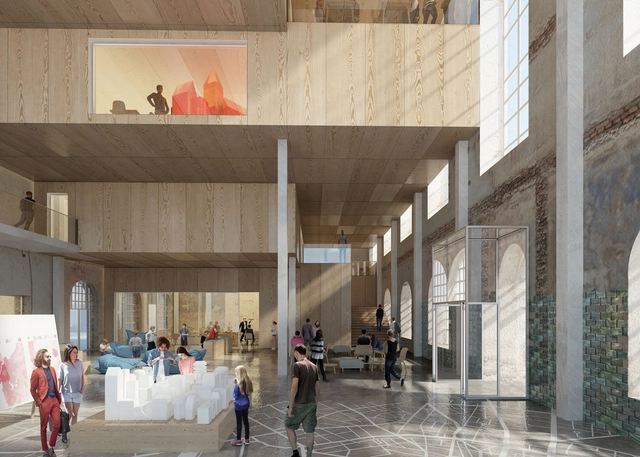
ADEPT's interior proposal for the Stadtmuseum. Image Courtesy of ADEPT
Danish architecture firm ADEPT has been announced the winner of a competition to redevelop Berlin's Marinehaus as part of the city's Stadtmuseum group. This iteration of the competition was launched in 2018 (following a similar competition ten years ago) and will rehabilitate the Marinehaus for public use after nearly 20 years of closure.
https://www.archdaily.com/906319/adept-wins-competition-to-design-new-city-museum-for-berlinAD Editorial Team








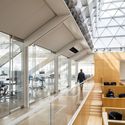
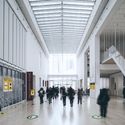
_Del_Rio_Bani.jpg?1608748851 "Superblock of Sant Antoni. Image © Del Rio Bani")
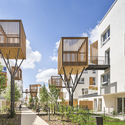


.jpg?1548265388)
.jpg?1548265246 "Castello di Rivoli / Andrea Bruno (Refurbishment). Image © Laurian Ghinitoiu")
.jpg?1548265270 "Castello di Rivoli / Andrea Bruno (Refurbishment). Image © Laurian Ghinitoiu")
.jpg?1548265404 "Castello di Rivoli / Andrea Bruno (Refurbishment). Image © Laurian Ghinitoiu")
.jpg?1548265416 "Castello di Rivoli / Andrea Bruno (Refurbishment). Image © Laurian Ghinitoiu")
.jpg?1548265388)