




-
Architects: ROW Studio
: ROW Studio - Álvaro Hernández Félix, Nadia Hernández Félix, Alfonso Maldonado Ochoa - Area: 968 ft²
- Year: 2016
-
Professionals: CM2


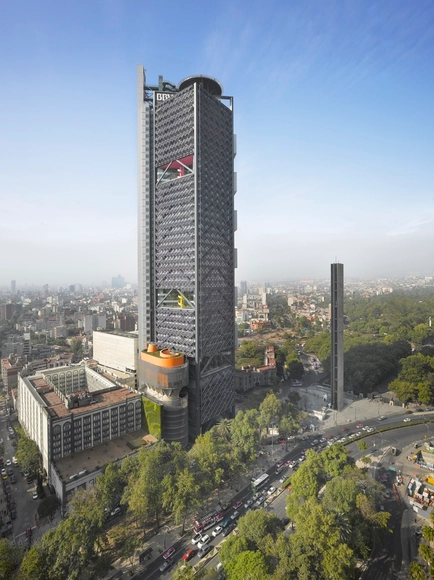
The Southern California Institute of Architecture (SCI-Arc) has announced the launch of SCI-Arc Mexico, to begin in mid-March 2016. Located in the Barragán Foundation in Mexico City, SCI-Arc Mexico will feature international studios, exhibitions, conferences and symposia, furthering SCI-Arc’s global presence by complementing SCI-Arc Shanghai as well as bolstering further development into South America and Europe.

.jpg?1450380794&format=webp&width=640&height=580)
5,000 3D cameras to help preserve the architecture of a country torn by war; A team of Latin American architects that moved into Venezuela’s most dangerous neighborhoods in order to design and build with the community; A legendary architect who understood architecture’s relationship to the transformation of technology -- and whose projects have celebrated technology across a trajectory of multiple decades. These are the projects, initiatives and people who have proven to be leaders in 2015.
ArchDaily’s editorial team wanted to recognize these projects for their commitment to promoting practices in architecture that serve many, in all corners of the globe -- from Bolivia to London, from Chicago to Venice, from public spaces in favelas to projected drone-ports in Africa. These are the stories that have inspired us in 2015, and whose influence we hope to continue to see into 2016.
FR-EE / Fernando Romero Enterprise, a global architecture and design firm founded by Fernando Romero that is known for its radically diverse portfolio, is currently working on designs for Mexico City's new international airport. Watch the video above, filmed by German photographer Yannick Wegner and his colleague Julián Cáceres Aravena, for an introduction on the massive project and insight on the firm's overall design approach.

A smart city isn’t necessarily a city brimming with technology. This crucial (and, thankfully, growingly accepted) clarification was strongly emphasized by a panel of experts during the Smart City Expo in Barcelona. However, the piloted driving—which, in layman's terms means cars that drive themselves—that Audi has been testing and implementing is as high-tech, impressive and brimming with technology as one might expect. Beyond the “ooh and aah” factor of a car that needs no human driver, the spatial implications for our cities are undeniable, and the sooner architects can learn to work with and appreciate this technology, the better. In a city equipped with smart mobility solutions, we can expect technology to drive positive changes to social behavior and the affordability of the cities. But for this, we need visionary leaders.
Last week Audi showed their commitment to finding these visionary leaders in the field of architecture by announcing the implementation of three Urban Future Partnerships in Somerville/Boston and Mexico City. In the words of Audi CEO Rupert Stadler, the three pilot projects represent a key move for the car manufacturer: “The development of an investment logic for mobility infrastructure in cities will be an integral part of our company strategy.”
With a nuanced approach to site and purpose, the projects of Eduardo Cadaval & Clara Solà-Morales are geometric abstractions that are strong without being aggressive, and alluring without being indelicate. In a new documentary on their work, "Cadaval & Solà-Morales / Synthesis and Containment," the architects explain their history and process with commentary that is interspersed by tours of their most lauded projects, and validation of their work by peers. Juan Herreros, Founder and Director of Estudio Herreros, characterizes the architects as not heroic or epic, but as with ballerinas, practice makes the impossible look easy. Josep Luis Mateo, Founder & Director of Mateo Architectura, extols, “one can understand their work by itself, without having to recall their references.”


.jpg?1442198797 "Guinovart Florensa Residence. Image © Santiago Garcés")