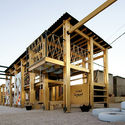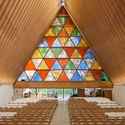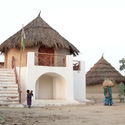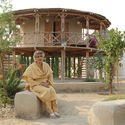
The Global Challenge is calling for high-impact community architectural initiatives. Finalists will have the opportunity to win an award and connect to A--D partners to bring their community project to life
The Global Challenge is calling for high-impact community architectural initiatives. Finalists will have the opportunity to win an award and connect to A--D partners to bring their community project to life
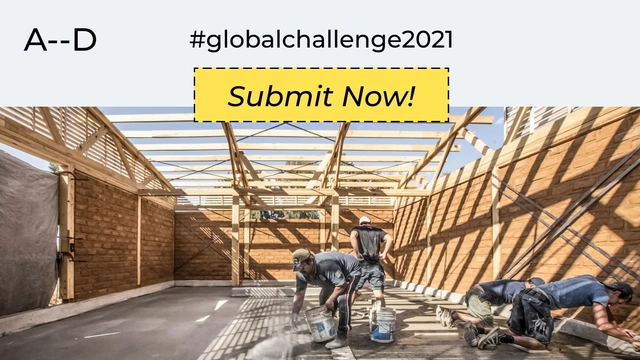
Architecture-in-Development (A--D) is launching the Global Challenge 2021, the 2nd edition, following the great success of the 2016 pilot. The Global Challenge 2021 calls for community-driven architectural initiatives that have radical potential to improve the lives of both rural and urban communities.
Enter the Global Challenge, connect to partners and supporters to get your community's initiative off the ground! The submission will be open from June 6 until July 25, 2021.
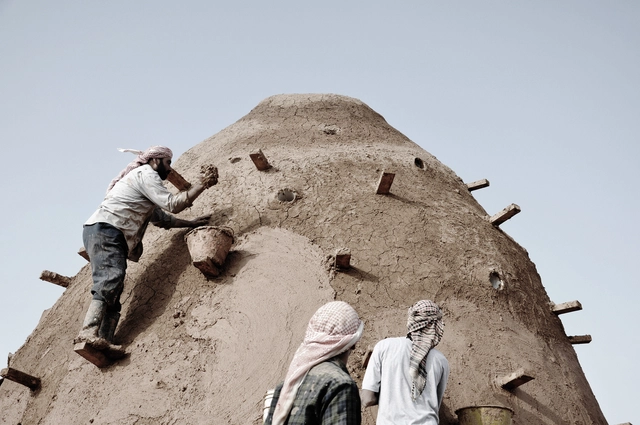
Architecture can be a tool for social change, and the belief in this statement is what motivates the work of many architectural NGOs who strive to address the lack of adequate shelter, generate social and economic change and build resilience in communities. These NGOs operate in two major areas, disaster relief and community development, with many organisations pursuing both types of actions. This article rounds-up several architecture-related foundations that act in emergencies, covering their expertise, past involvement in humanitarian crises, as well as the means to join them in their efforts.

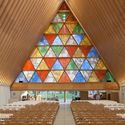
2014 Pritzker Laureate Shigeru Ban may be as well known for his innovative use of materials as for his compassionate approach to design. For a little over three decades, Ban, the founder of the Voluntary Architects Network, has applied his extensive knowledge of recyclable materials, particularly paper and cardboard, to constructing high-quality, low-cost shelters for victims of disaster across the world —from Rwanda to Haiti, to Turkey, Japan, and more. We've rounded up 10 projects of his humanitarian work, explained by Shigeru Ban Architects themselves.
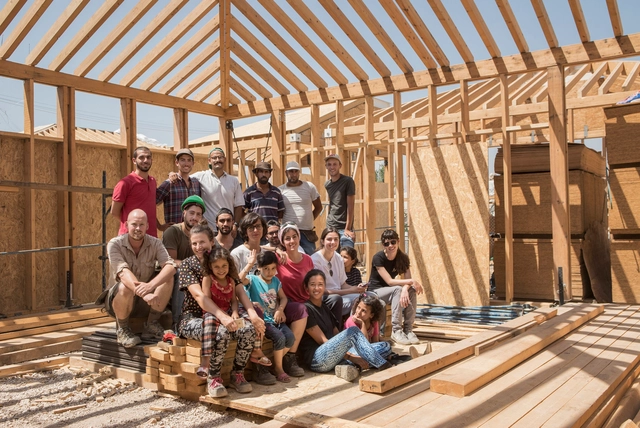
For the past few months, the architecture community has been trying to bring its contribution to the fight against the pandemic. The global spread of this crisis might have triggered a coordinated, and thus a more visible effort, but this isn’t the first time professionals step up in crises. Over the years, natural disasters and emergencies have determined several architects to get involved in disaster relief initiatives, as well as a wide range of humanitarian actions. In this article, we take a look at different occasions various architects and practices made a significant contribution to, helping affected communities overcome hardship.

In April 2015 there was an earthquake in Nepal which took the lives of 8,790 and injured 22,300.
It’s been almost 4 years since that day.
Nepal is considered one of the poorest countries in Asia. And because of this, the country has not yet recovered from this disaster. People still seek ways to reconstruct their homes to live, and children need school to go to.
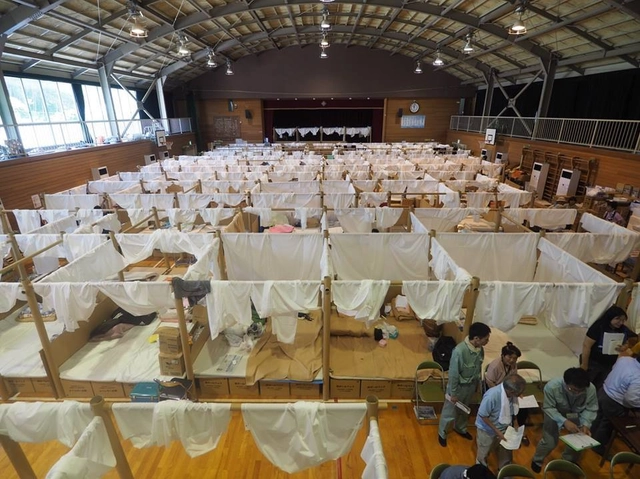
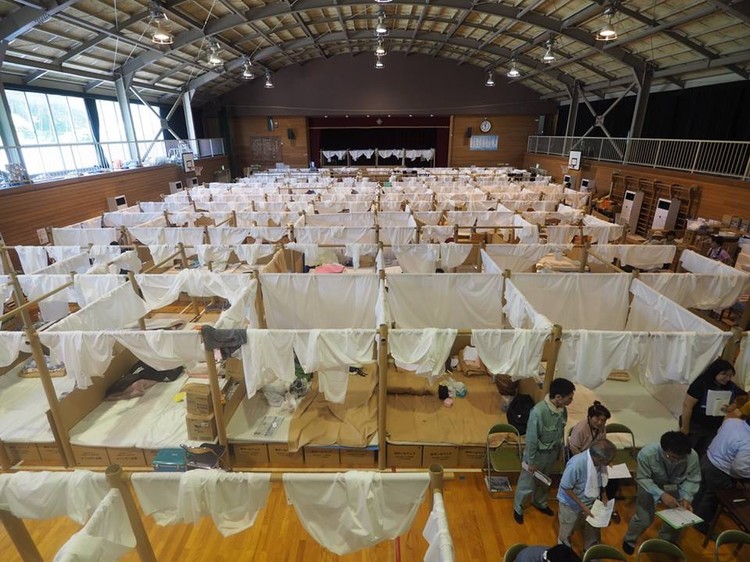
Pritzker Prize-winning architect Shigeru Ban has mobilized his Voluntary Architects’ Network (VAN) to aid victims of recent devastating floods in Southern Japan. At least 210 people have been killed by flooding and landslides which occurred last week, with a continuing heatwave further hampering recovery efforts.
Ban, along with members of the VAN and student volunteers, is constructing a partition system in evacuation centers made from paper tubes and cloth curtains. The temporary structures intend to offer privacy for flooding victims, forming a modular unit of 2 meters by 2 meters.
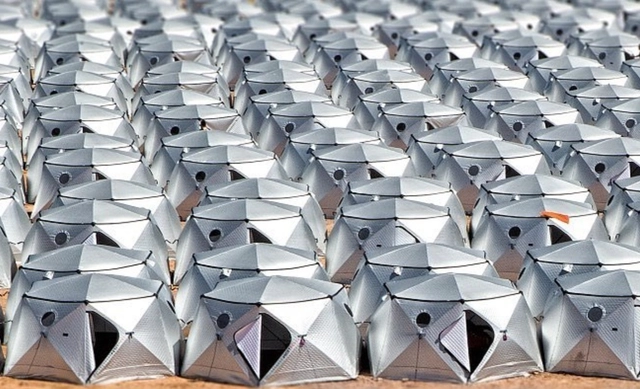
Following natural disaster or conflict, architecture plays a critical role in not only reconstructing lost infrastructure but also responding to the need for comfort and safety for those affected. Successful post-disaster architecture must meet both the short-term need for immediate shelter, as well as long-term needs for reconstruction and stability. Eight years after the 2010 Haiti earthquake, those displaced continue to reside in temporary shelters without adequate access to plumbing and electricity, revealing the critical importance of addressing long-term needs after disaster and conflict.
Below, we've rounded up 10 impressive examples of post-disaster architecture that range from low-cost, short-term proposals to those that attempt to rebuild entire communities from the ground up:
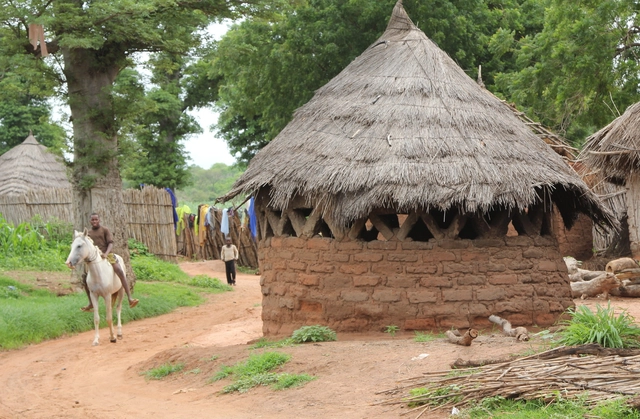
Durham University and University College London are pleased to announce the establishment of a new multi-disciplinary research network called the BOVA (Building out vector-borne diseases in sub-Saharan Africa) Network. The Network, funded by the Global Challenges Research Fund aims to bring together researchers and practitioners working in the fields of the built environment and insect-borne diseases such as malaria and dengue.
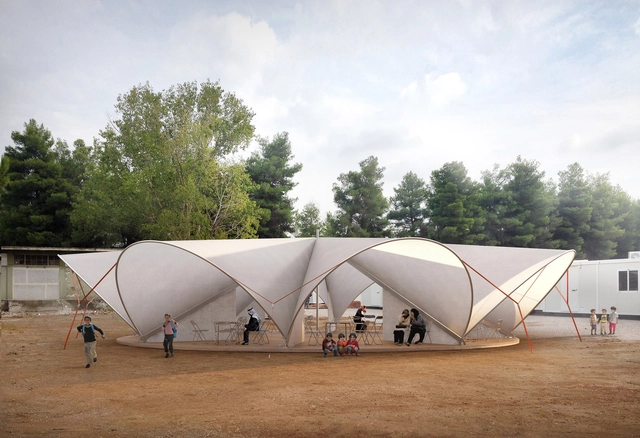
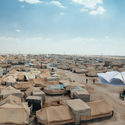
Over the past two years alone, more than a million people have fled the Syrian conflict to take refuge in Europe, strenuously testing the continent’s ability to respond to a large-scale humanitarian crisis. With the Syrian Refugee Crisis still unresolved, and temporary refugee camps now firmly established on the frontiers of Europe, architects and designers are devoting energy to improving the living conditions of those in camps fleeing war and persecution.
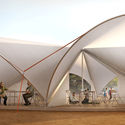
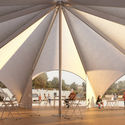
One emerging example of humanitarian architecture is Maidan Tent, a proposed social hub to be erected at a refugee camp in Ritsona, Greece. Led by two young architects, Bonaventura Visconti di Modrone and Leo Bettini Oberkalmsteiner, and with the support of the UN International Organization for Migration, Maidan Tent will allow refugees to benefit from indoor public space – a communal area to counteract the psychological trauma induced by war, persecution, and forced migration.

Challenge
We challenge the innovative minds around the globe to design a marketplace with an operational plan for a vulnerable population (adolescents, single mothers, children, people with trauma, etc) in one of the refugee settlements below. The marketplace should be able to run for long-term, i.e. 3-5 years, and benefit as many people as possible. The overall budget limit for both construction and operation of the entire marketplace is $100,000.
Opportunity
In light of the current surge of refugees in the international arena, refugee livelihoods in transitional settlements have become a crucial topic in contemporary geopolitical relations.

The ARCASIA Travel Prize in Architecture is the travel and research scholarship given annually to Young Architects of ARCASIA (40 years and under) and member of the institute of their country. The emphasis of the traveling scholarship is not only to promote research in the selected fields of study, but also to encourage cross border education as well as to foster cultural exchange between nations and institutes. Sponsored by NS Bluescope (Thailand), this year is the second year of the ARCASIA Travel Prize. For 2016, the ARCASIA Travel Prize aims to enable Young Architects to travel and to conduct design research in Thailand on the topic of humanitarian architecture.
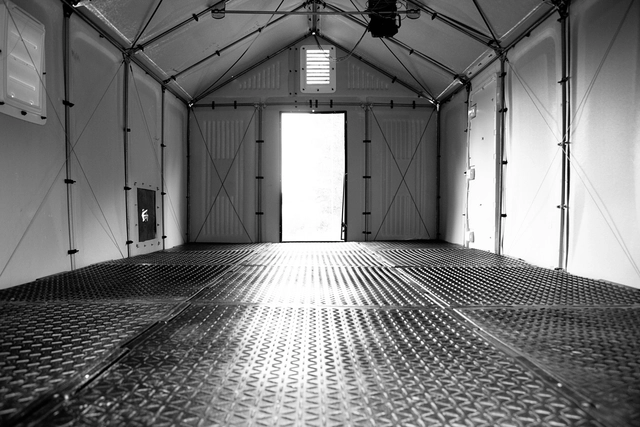
Millions of refugees across the globe, due to global conflict or natural phenomena, are forced to leave their homes and live in low-quality, temporary housing. The majority of these shelters lack a fundamental component of safety and well-being: floors. Emergency Floor is an initiative developed by Sam Brisendine and Scott Key to solve this problem, and bring safety to refugee shelters and the people in them. With their new Indiegogo campaign, Emergency Floor is working to provide efficient, inexpensive flooring that is directly geared towards assisting relief agencies.
Learn more about Emergency Floor after the break.

Shigeru Ban has been included in Foreign Policy Magazine's 100 Leading Global Thinkers of 2014, dubbing this year's Pritzker Prize Laureate as "architecture's first responder." The annual list recognizes the 100 people whose ideas and actions have had the greatest impact on the outcome of world events, and this year 'disruption' is the buzzword; acknowledging a tumultuous year, the list focuses on the people who, for better or worse, "smashed the world as we know it."
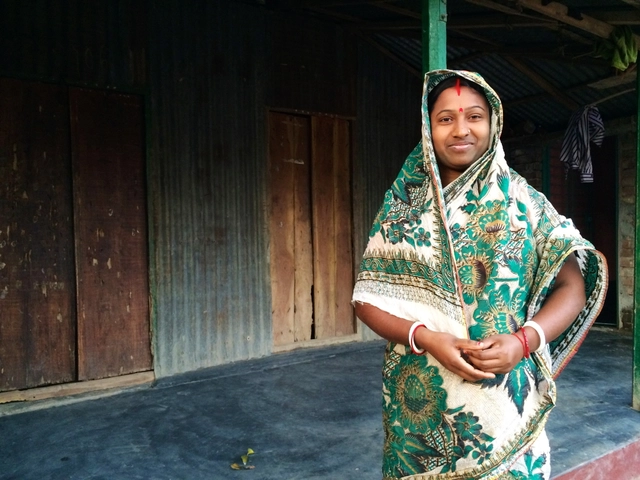
Each year 6.5 million children around the world die from diseases directly related to substandard housing conditions. Dirt floors in particular are carriers of parasites, bacteria, and viruses contributing to many fatal diseases. In response to this and with the aim of dramatically reducing child mortality rates, New York-based non-profit Architecture for Health in Vulnerable Environments (ARCHIVE), has launched a new initiative to replace dirt flooring with concrete in Bangladesh.
Learn more about the initiative after the break.