Broadly speaking, the performing arts are all those disciplines that take place on a stage, although the main ones are dance, theatre and music. However, parades, religious processions, holiday celebrations and carnivals also have a clear scenic quality. That is why the stage space is so important not only for the presentations of these disciplines but also for carrying out a whole bodily and spatial process that is supported by the architecture.
Videos
Courtesy of A Broken House, The New Yorker Documentary directed by Jimmy Goldblum
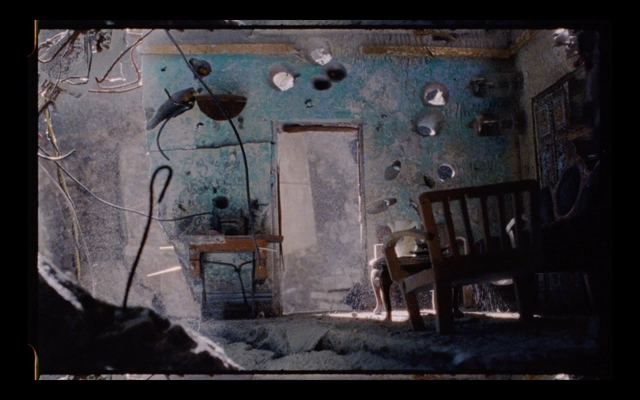
“A Broken House” is a documentary directed by Jimmy Goldblum that highlights the story of Mohamad Hafez, a Syrian native that moved to the US on a single-entry visa to study architecture and was not able to return home. Facing his fate, he channeled his homesickness in his artwork, and started producing miniature sculptures of his hometown, in order to build the “Damascus of his memories”.
“If you can’t get home, why don’t you make home”. Telling the story of the human being that lived within, the architectural project gained a political dimension after the eruption of the Syrian civil war, portraying the extent of the destruction suffered by the city, humanizing refugees, and sharing their stories.
Architectural filmographers 9sekunden have collaborated with David Chipperfield architects to create a short film about the extension the Kunsthaus Museum extension in Zurich, Switzerland. The feature shows visitors' journey through the new building, coming across the interactive installation "The Sense of Things" by renowned choreographer William Forsythe. Walking through the architecture, paired with the curiosity of the people entering the space, the film highlights the interplay of culture, urbanity, and the built environment of the city of Zurich.
The year 2021 has been a turbulent one –coronavirus rages on, and the design and construction industries have been forced to keep adapting two years into a global pandemic. As virtual methods of working and communicating continue to be tweaked and honed, a plethora of virtual events has meant that architectural discourse outside the western canon and Eurocentric gaze, in a small way, has been able to claim space front and center in the global architectural conversation.
During the last quarter of 2021, Herzog & de Meuron completed the construction of three museums: M+ in Hong Kong, 433 MKM Museum Küppersmühle Extension in Duisburg, and 473 SONGEUN Art Space in Seoul. To celebrate this milestone and highlight the projects' varied approaches to the presentation of art as culturally-enriching platforms, the firm has put together a video compilation of all three projects alongside each other, showcasing the different approaches to their contexts and geographical locations, spatial requirements and materiality, and how all three of them share a collective focus to foster the exchange between people and culture.
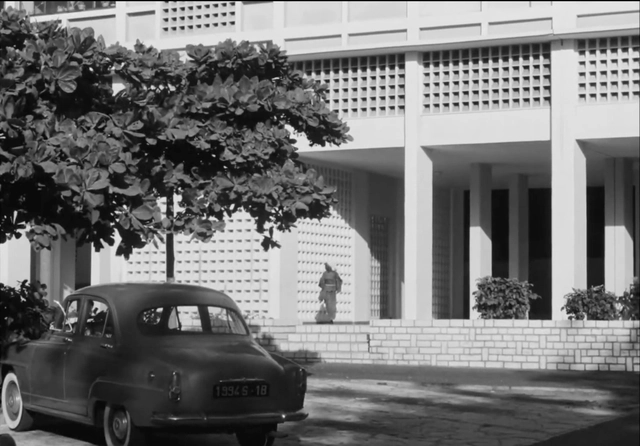
When examining the world of African cinema, there are few names more prominent than that of Senegalese director Ousmane Sembène. His films ‘La Noire de…’ and ‘Mandabi’, released in 1966 and 1968 respectively, are films that tell evocative stories on the legacies of colonialism, identity, and immigration. And whilst these two films are relatively slow-spaced, ‘slice-of-life stories, they also offer a valuable spatial critique of the setting where the films are based, providing a helpful framework to understand the intricacies of the post-colonial African city, and the contrast between the African and European metropolises.
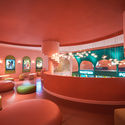
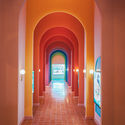
If you haven't seen Respect, I highly recommend it. The Liesl Tommy-directed biographical film based on the life of American singer Aretha Franklin visually takes us back to the 1960s through a successful set work. Here, Production Designer, Ina Mayhew had the job of creating a series of locations where color palettes undoubtedly evoke more than emotions: Her suburban home from her childhood in Detroit, the sassy jazz clubs of New York City, her luxurious Upper West Side apartment, and finally her ultramodern home in Los Angeles.
Architectural photographer and short filmmaker Kevin Siyuan released his latest architectural short film titled "A Wes Anderson-ish Singapore", a short motion picture that features buildings by world renowned architects built around the country. The 30-minute documentary was released as part of Singapore Archifest's virtual exhibition: Singapore Through My Eyes, and focuses on the urban planning, architecture, neighborhoods, parks, and green spaces, and how the people of Singapore have adapted to the pandemic.
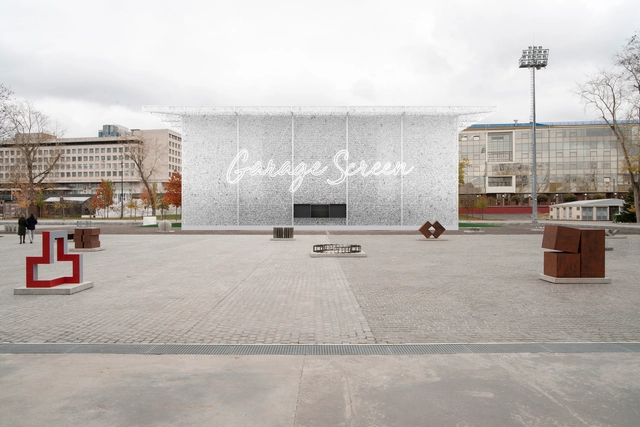
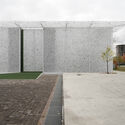
The Garage Museum of Contemporary Art has announced the winning design for the 2022 summer cinema. Selected from 118 applications, the proposal created by Moscow-based practice LIPMAN ARCHITECTS (Dmitry Limpan, Angelina Yashkevich, Maria Oganian) features gabion walls filled with plastic water bottles, inviting conversation around topics such as material recycling and the environmental impact of temporary architecture.
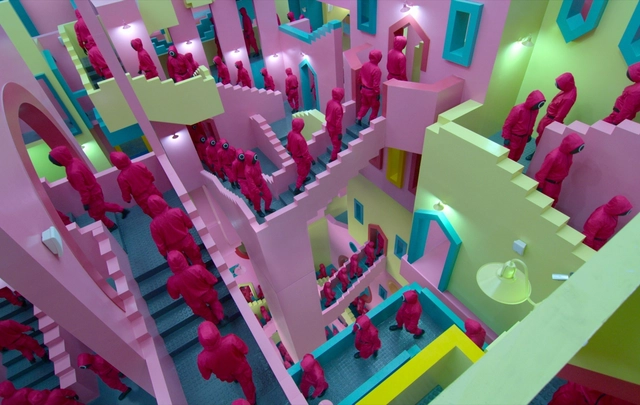
Maze-like hallway. Screenshot from the series. Courtesy of Netflix
People die in Squid Game. Lots of people. But while violence is one of the most appealing ingredients for the success (or failure) of a television show, that's not the only reason the series has become so popular worldwide. Pop culture, mesmerizing scenarios, and a plot full of social metaphors all contribute to this.
Available for streaming since September 2021, the Netflix series Squid Game “will definitely be our biggest non-English language show in the world, for sure,” and has “a very good chance it’s going to be our biggest show ever,” according to Ted Sarandos, the platform's co-CEO and Head of Content. The survivor thriller by director Hwang Dong-hyuk tells the story of a group of 456 people who are deeply in debt competing to win 45.6 billion won (around €33 million, $38 million) in prize money.
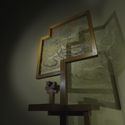
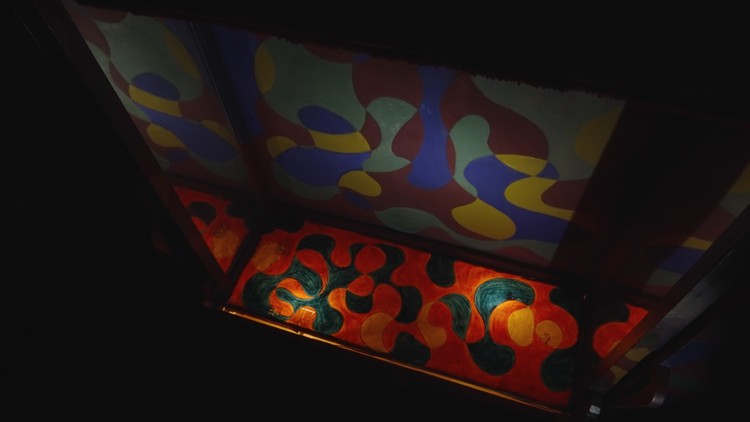
Commissioned for the exhibition “Casa Balla - From the house to the universe and back” at MAXXI museum in Rome, Italy, Bêka & Lemoine’s have released their latest film OSLAVIA. The cave of the past future, a tour inside the house-atelier where Giacomo Balla, prominent Futurist painter and major figure of the avant-garde of the early 20th century lived. The Futurist house where the artist lived and worked from 1929 until his death will be open to the public for the first time during the time of the exhibition.
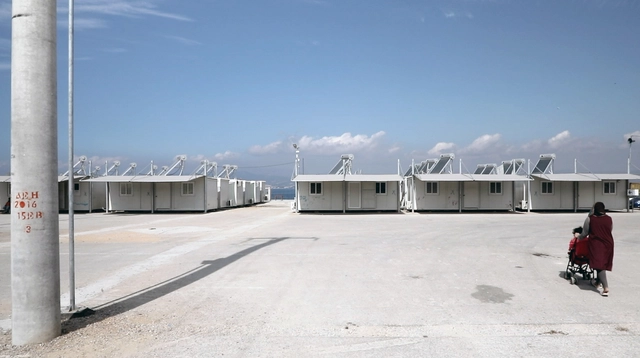
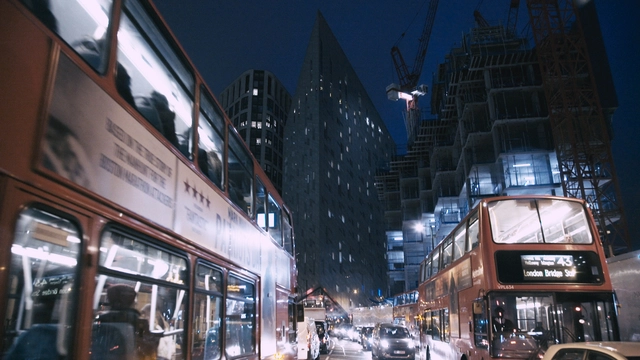
The Architecture Film Festival London, in its 2021 edition, addresses a variety of topics related to contemporary architecture. In particular, the role of housing—from the history of housing estates to the current global housing crisis—is a prominent theme.
The Architecture Film Festival London, in its 2021 edition, addresses a variety of topics related to contemporary architecture. Special film events include the UK premiere of The New Bauhaus (2019, dir. Alysa Nahmias), a film dedicated to the vibrant life and legacy of the artist László Moholy-Nagy.
The Architecture Film Festival London, in its 2021 edition, addresses a variety of topics related to contemporary architecture. In particular, the role of housing—from the history of housing estates to the current global housing crisis. Thus, this critical topic will provide the basis for the festival’s opening film, PUSH (2019), directed by Fredrik Gertten.
The Architecture Film Festival London is excited to present its third festival edition, which will take place from 2–27 June 2021. Since its first edition, the Architecture Film Festival London has aimed to discover and promote original ideas, conversations and art forms at the intersection of Architecture + Film. Considering the current situation in the UK and abroad, this year’s festival will be held online, offering a combination of ticketed, free and off-line content.
The festival’s International Film Competition [OPEN CALL] received over 270 submissions from 40 countries worldwide, competing for awards across six different categories. From this group, 18 shortlisted films will be featured during the festival, and awarded films will be announced in an online ceremony on June 25, 2021.
Videos
Toronto's Dundas and Ossington intersection, re-imagined as 1962 Baltimore by special effects studio MR. X for the film The Shape of Water. Image Courtesy of The Canadian Pavilion
Canada’s contribution to the 17th Venice Architecture Biennale explores Canadian cities’ established “career” in cinema as stand-ins for the world’s metropoles, raising questions of authenticity, architectural identity and the collective understanding of the built environment. Curated by David Theodore of McGill University and realized by Montréal architecture and design practice T B A / Thomas Balaban Architect, the exhibition Impostor Citieshighlights the diversity and versatility of Canada’s cityscapes as portrayed on film.
.jpg?1643867734&format=webp&width=640&height=580)


.jpg?1643867734)















![[OPEN CALL] International Film Competition 2021 - Featured Image](https://snoopy.archdaily.com/images/archdaily/media/images/60b0/01d2/f91c/81d9/db00/0224/slideshow/open-uri20210527-2137-1vez1f.jpg?1622147530&format=webp&width=640&height=580)


