1. ArchDaily
  2. Bioclimatic Architecture

Bioclimatic Architecture: The Latest Architecture and News

Do Passive Design Strategies Truly Reduce the Carbon Footprint Effectively?

Audio available

Architecture is a transdisciplinary field. It incorporates principles and knowledge from several other disciplines to ensure a built structure functions as intended. This fundamentally involves considering the context in which a building is placed, including its immediate surroundings, such as neighboring structures, local biodiversity, and climate. Essentially, architecture only exists within a particular context. When we expand this context to a broader scale, it becomes what we commonly refer to as the "environment."

Do Passive Design Strategies Truly Reduce the Carbon Footprint Effectively? - Imagen 1 de 4Do Passive Design Strategies Truly Reduce the Carbon Footprint Effectively? - Imagen 2 de 4Do Passive Design Strategies Truly Reduce the Carbon Footprint Effectively? - Imagen 3 de 4Do Passive Design Strategies Truly Reduce the Carbon Footprint Effectively? - Imagen 4 de 4Do Passive Design Strategies Truly Reduce the Carbon Footprint Effectively? - More Images+ 5

Rewilding in Architecture: Concepts, Applications, and Examples

Subscriber Access | 

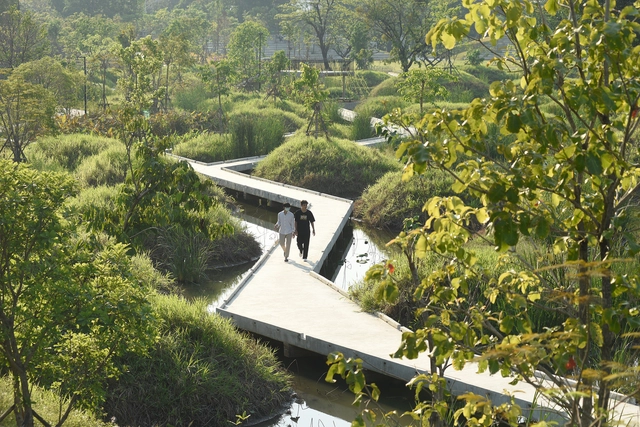
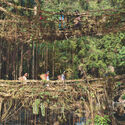
In an age where humanity's detrimental impact on the environment has become increasingly evident, the concept of rewilding is emerging as a powerful approach to conservation and ecological restoration. In line with growing attention on landscape architecture in recent years, the idea of removing human intervention from our natural surroundings in order to restore a stable equilibrium seems to offer a low-effort, ethereal way to right fundamental climate wrongs. But is a lack of meddling in nature really all there is to rewilding, and how does this relate to architecture and design? We look at key concepts, applications, and examples to find out.

Rewilding in Architecture: Concepts, Applications, and Examples - Image 1 of 4Rewilding in Architecture: Concepts, Applications, and Examples - Image 2 of 4Rewilding in Architecture: Concepts, Applications, and Examples - Image 3 of 4Rewilding in Architecture: Concepts, Applications, and Examples - Image 4 of 4Rewilding in Architecture: Concepts, Applications, and Examples - More Images+ 3

The Bioclimatic Skyscraper: Kenneth Yeang's Eco-Design Strategies

Subscriber Access | 

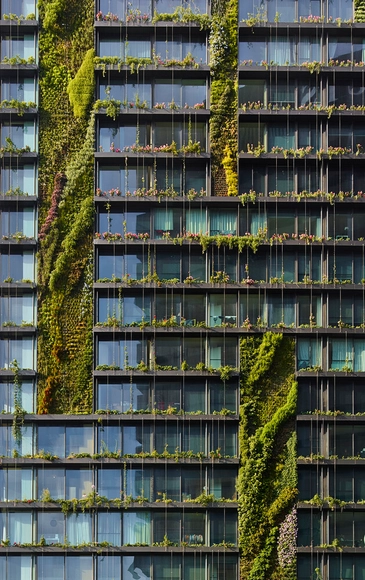
Rising over global cities, the modern skyscraper has long been a symbol of economic growth and environmental decline. For years, they have been reviled by environmentalists for being uncontrolled energy consumers. Malaysian architect Kenneth Yeang acknowledged the skyscraper as a necessity in modern cities and adopted a pragmatic approach to greening the otherwise unsustainable building typology. Yeang’s bioclimatic skyscrapers blend the economics of space with sustainability and improved living standards.

The Bioclimatic Skyscraper: Kenneth Yeang's Eco-Design Strategies  - Image 1 of 4The Bioclimatic Skyscraper: Kenneth Yeang's Eco-Design Strategies  - Image 2 of 4The Bioclimatic Skyscraper: Kenneth Yeang's Eco-Design Strategies  - Image 3 of 4The Bioclimatic Skyscraper: Kenneth Yeang's Eco-Design Strategies  - Image 4 of 4The Bioclimatic Skyscraper: Kenneth Yeang's Eco-Design Strategies  - More Images+ 2

Get Set: 9 Architecturally Relevant Exhibitions at the 2022 Dutch Design Week

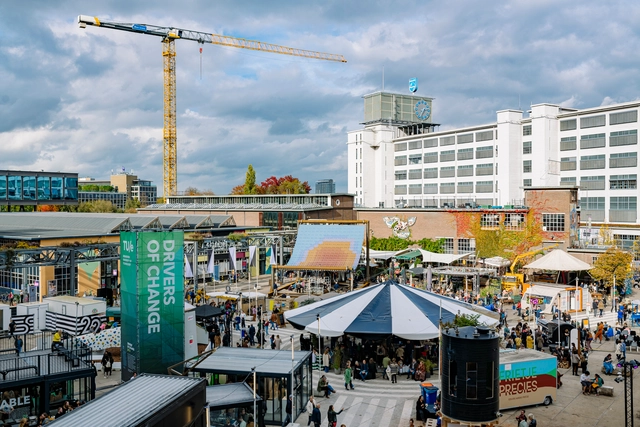
Under the motto "Get Set," the 2022 DDW exhibited more than 50 art and architectural installations to call out designers and communities for a shift from preparation to action facing the challenges of our time. Led by Miriam van der Lubbe, Creative Head of DDW, with Marjan van Aube and Formafantasma as ambassadors, the 21st edition of the Dutch Design Week took place the last week of October in Eindhoven, the Netherlands closing with a Graduation Show of over 200 students of the Design Academy Eindhoven.

Inspiring designers to incorporate innovation and sustainability and familiarize the public with all the technology has to offer, ArchDaily has selected 9 relevant works focused on bio-materials and modular systems. Highlighting ongoing design research, the list underlines projects that reinvent how we deal with nature and the space we live in. 

Get Set: 9 Architecturally Relevant Exhibitions at the 2022 Dutch Design Week - Image 12 of 4Get Set: 9 Architecturally Relevant Exhibitions at the 2022 Dutch Design Week - Image 27 of 4Get Set: 9 Architecturally Relevant Exhibitions at the 2022 Dutch Design Week - Image 34 of 4Get Set: 9 Architecturally Relevant Exhibitions at the 2022 Dutch Design Week - Image 35 of 4Get Set: 9 Architecturally Relevant Exhibitions at the 2022 Dutch Design Week - More Images+ 31

What Can We Learn About Zero Carbon From Lelé’s Work?

The Zero Carbon policy is intended to create a kind of ecological balance to neutralize greenhouse gas emissions. Several studies report that the construction sector is one of the main responsible for the unbalance in which we find ourselves today, after all, it consumes natural resources on a gigantic scale and still builds buildings that do not collaborate with the maintenance of the environment. Therefore, searching for paths towards a carbon neutral architecture has become fundamental and one of them is learning from past masters, such as the Brazilian architect João Filgueiras Lima, known as Lelé.

What Can We Learn About Zero Carbon From Lelé’s Work? - Image 1 of 4What Can We Learn About Zero Carbon From Lelé’s Work? - Image 2 of 4What Can We Learn About Zero Carbon From Lelé’s Work? - Image 3 of 4What Can We Learn About Zero Carbon From Lelé’s Work? - Image 4 of 4What Can We Learn About Zero Carbon From Lelé’s Work? - More Images+ 8

Bio-climatic Fixtures in Buenos Aires' Houses as Seen In Floor Plans and Layout

Subscriber Access | 

Bio-climatic Fixtures in Buenos Aires' Houses as Seen In Floor Plans and Layout - Image 1 of 4Bio-climatic Fixtures in Buenos Aires' Houses as Seen In Floor Plans and Layout - Image 2 of 4Bio-climatic Fixtures in Buenos Aires' Houses as Seen In Floor Plans and Layout - Image 3 of 4Bio-climatic Fixtures in Buenos Aires' Houses as Seen In Floor Plans and Layout - Image 4 of 4Bio-climatic Fixtures in Buenos Aires' Houses as Seen In Floor Plans and Layout - More Images+ 15

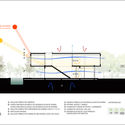
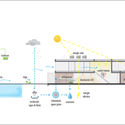
The principles of bio-climatic architecture, when applied with an understanding of the surrounding climate and geography, can simultaneously increase a building's efficiency and create a more comfortable living space. Passive measures like solar panels, rainwater and grey water harvesting, openings for natural light, and cross-ventilation are all low-cost, high yield methods of increasing a home's thermal comfort and efficiency and decreasing its carbon footprint.

Cross Ventilation, the Chimney Effect and Other Concepts of Natural Ventilation

Cross Ventilation, the Chimney Effect and Other Concepts of Natural Ventilation - Sustainability
Sarah Kubitschek Hospital Salvador / João Filgueiras Lima. Image © Nelson Kon

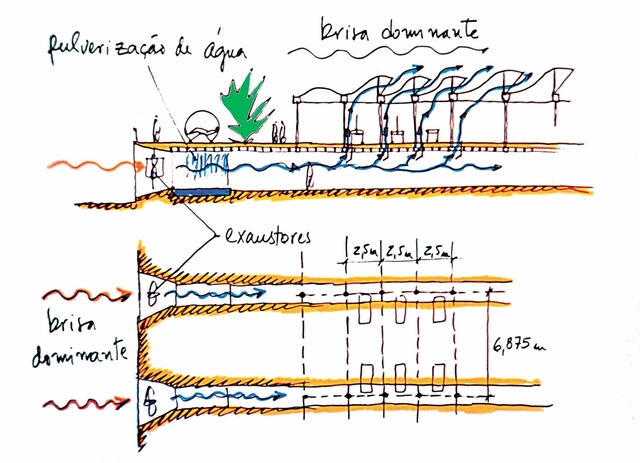
Nothing is more rational than using the wind, a natural, free, renewable and healthy resource, to improve the thermal comfort of our projects. The awareness of the finiteness of the resources and the demand for the reduction in the energy consumption has removed air-conditioning systems as the protagonist of any project. Architects and engineers are turning to this more passive system to improve thermal comfort. It is evident that there are extreme climates in which there is no escape, or else the use of artificial systems, but in a large part of the terrestrial surface it is possible to provide a pleasant flow of air through the environments by means of passive systems, especially if the actions are considered during the project stage.

This is a highly complex theme, but we have approached some of the concepts exemplifying them with built projects. A series of ventilation systems can help in the projects: natural cross ventilation, natural induced ventilation, chimney effect and evaporative cooling, which combined with the correct use of constructive elements allows improvement in thermal comfort and decrease in energy consumption.

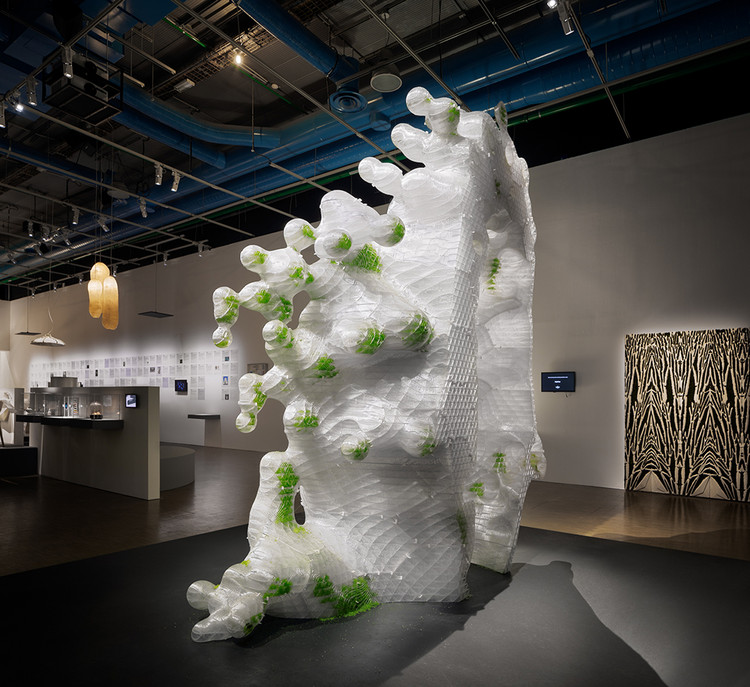
Centre Pompidou hosts Living Sculptures investigating Life in a Digital Age

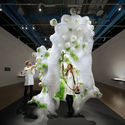
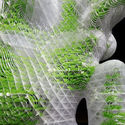
The renowned Centre Pompidou in Paris is to open its doors to two living sculptures, embodying the future forms of spatial intelligence. The exhibition, titled “La Fabrique du vivant” [The Fabric of the Living], will feature “H.O.R.T.U.S. XL Astaxanthin.g” by ecoLogicStudio in collaboration with Innsbruck University - Synthetic Landscape Lab, CREATE Group / WASP Hub Denmark - University of Southern Denmark, and "XenoDerma" by Urban Morphogenesis Lab directed by Claudia Pasquero at The Bartlett UCL.

Running from February 20th to April 15th, the exhibition will examine the notion of “living” in a digital era, where new interactions are emerging between the fields of life science, neuroscience, and synthetic biology. Permeating the entire urbanscape, this global, digital apparatus “encompasses miniaturization, distribution, and intelligence of manmade urban networks of in-human complexity, engendering evolving processes of synthetic life on Earth.”

Centre Pompidou hosts Living Sculptures investigating Life in a Digital Age - Imagem 1 de 4Centre Pompidou hosts Living Sculptures investigating Life in a Digital Age - Imagem 2 de 4Centre Pompidou hosts Living Sculptures investigating Life in a Digital Age - Imagem 3 de 4Centre Pompidou hosts Living Sculptures investigating Life in a Digital Age - Imagem 4 de 4Centre Pompidou hosts Living Sculptures investigating Life in a Digital Age - More Images+ 12

5 Passive Cooling Alternatives Using Robotics and Smart Materials

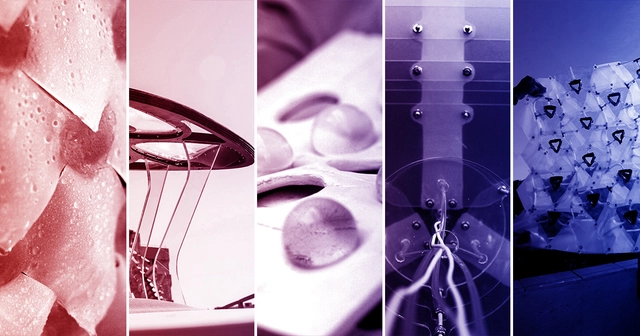
The IAAC (Institute for Advanced Architecture of Catalonia) has developed a series of advanced materials and systems for air conditioning and passive ventilation, allowing homes to reduce interior temperatures up to 5 degrees lower while saving the electricity consumption caused by the traditional air-conditioning. The systems are made from long-lifespan materials, which lower the costs of maintenance in the long-term and can be used as low-cost alternative building technologies.

The projects highlighted are the Breathing Skin, Hydroceramics, Hydromembrane, Morphluid and Soft Robotics - all developed by students of the IAAC's Digital Matter Intelligent Constructions (conducted by Areti Markopoulou). The passive air-conditioning of spaces is investigated using a combination of new materials that mimic organic processes, adaptive structures and Robotics that help regulate temperature and create sustainable micro climates.