1. ArchDaily
  2. Bathrooms

Bathrooms: The Latest Architecture and News

Subscriber Access

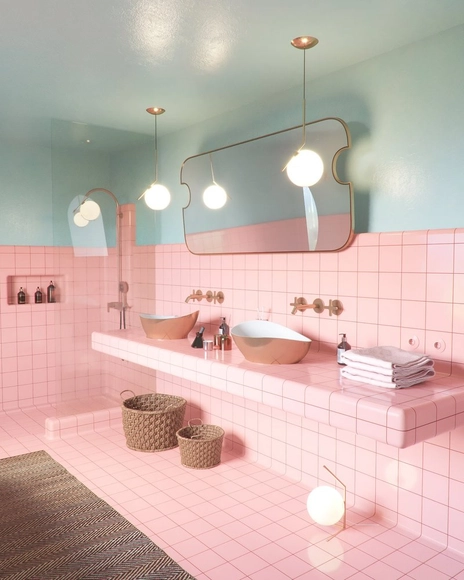
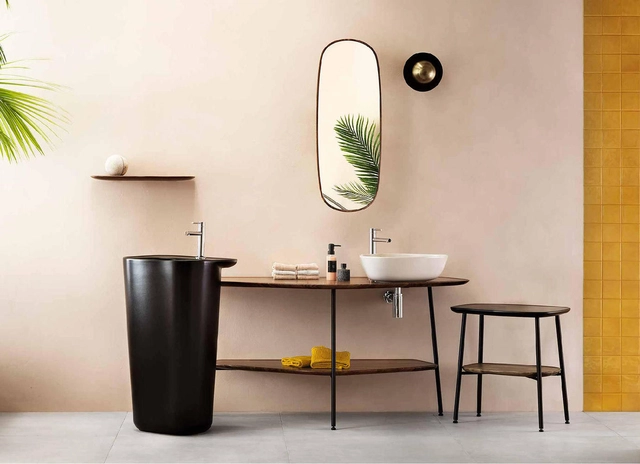
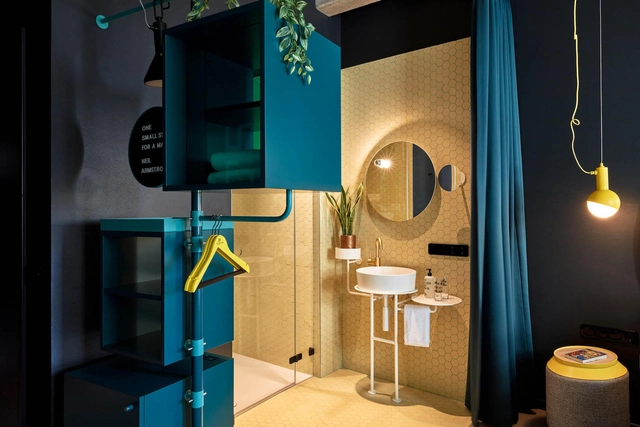
Escaping From Ceramics: Ideas for Bathroom Coverings

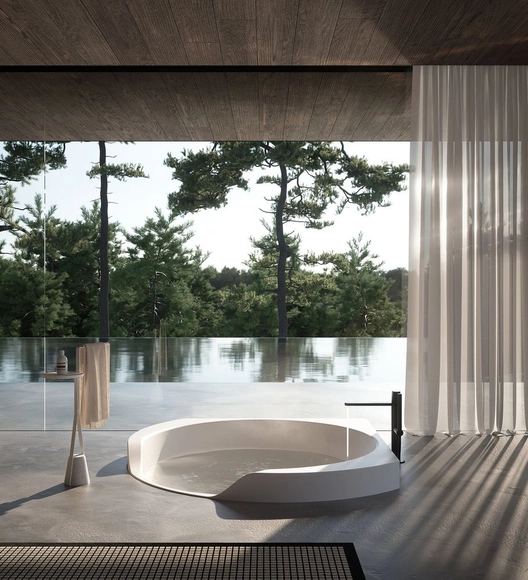
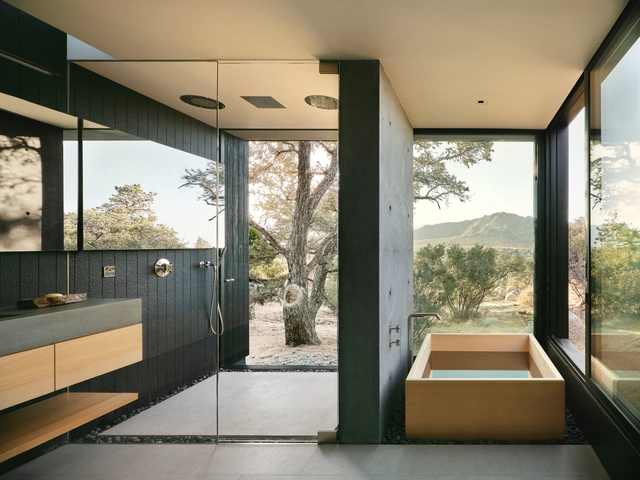
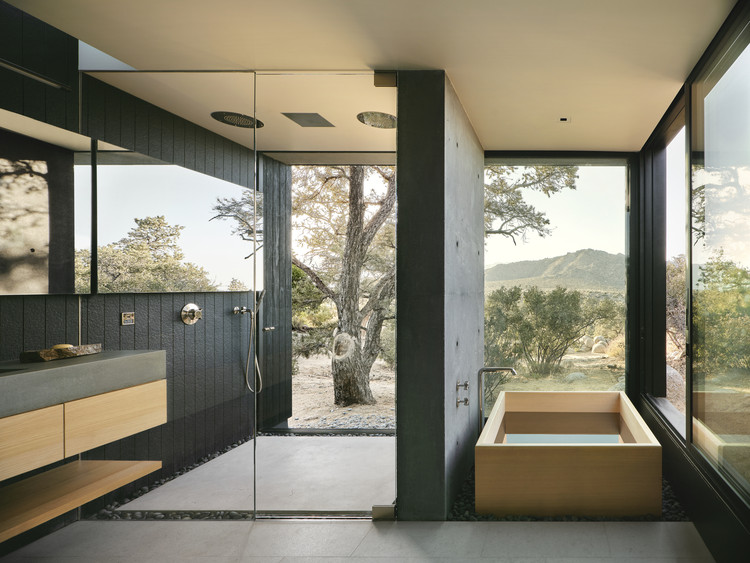
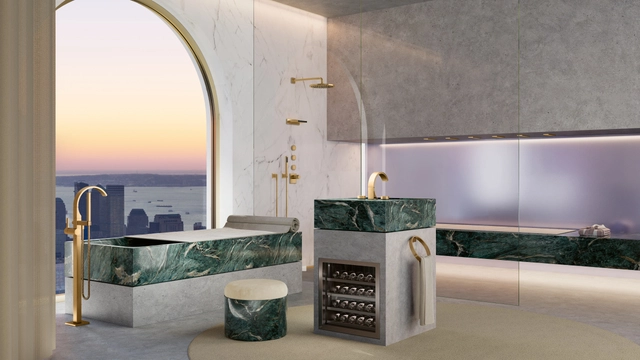
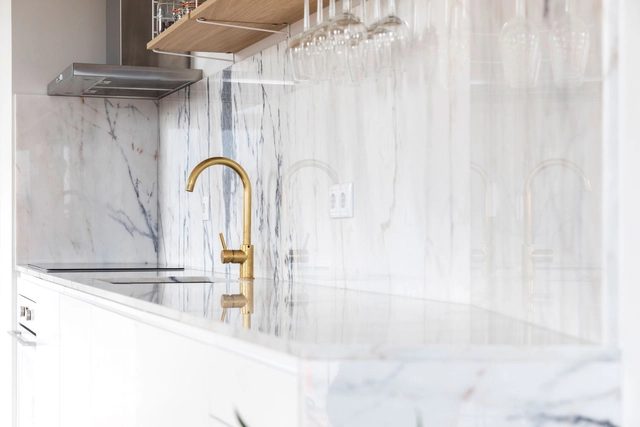
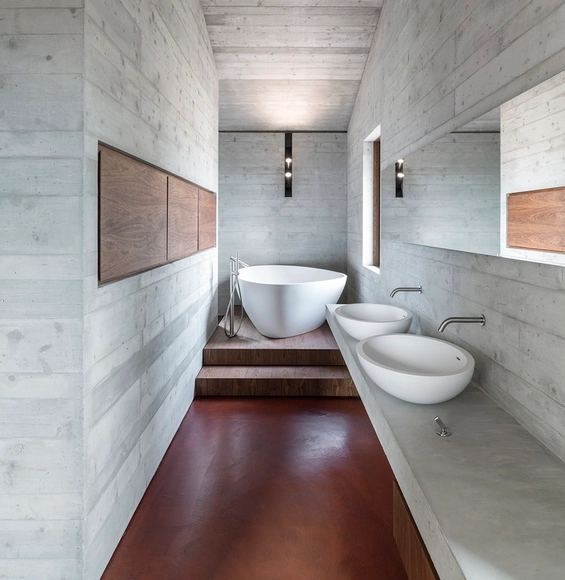
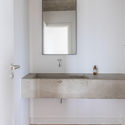
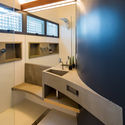
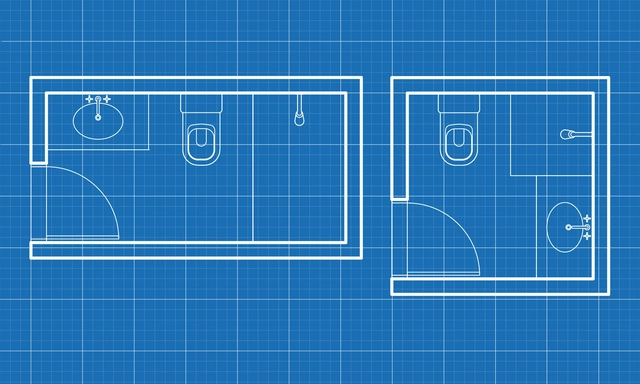
If, on the one hand, bathrooms have a certain rigidity when we think about the layout and their spatial arrangement, it is in the floor and wall coverings that this logic is inverted. With the wide variety of models and patterns available on the market, ceramic tiles and porcelain tiles are often used to give quality and identity to space. At the same time, the ease of access to ceramic and porcelain tiles, as well as their ease of installation, end up conditioning our choices, making it difficult to think of other finishing possibilities for these areas.

Escaping From Ceramics: Ideas for Bathroom Coverings - Imagen 5 de 4Escaping From Ceramics: Ideas for Bathroom Coverings - Imagen 1 de 4Escaping From Ceramics: Ideas for Bathroom Coverings - Imagen 2 de 4Escaping From Ceramics: Ideas for Bathroom Coverings - Imagen 3 de 4Escaping From Ceramics: Ideas for Bathroom Coverings - More Images+ 6

Reimagining the Bathroom: Contemporary Bathtubs for Total Relaxation

 | Sponsored Content

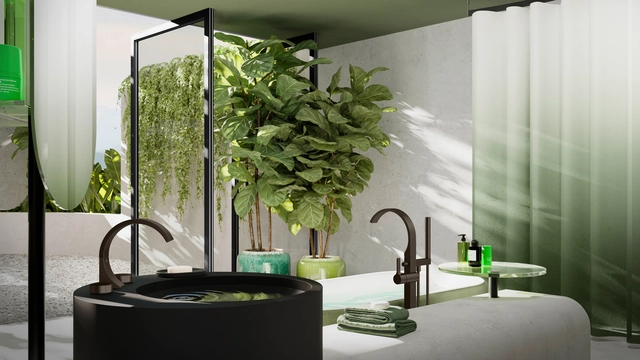
Throughout the years, bathrooms have been viewed as purely functional spaces strictly programmed for hygiene and privacy. Becoming smaller and more practical, the utilitarian, space-saving shower stall has often been considered the norm, pushing the bathtub into obsolescence or as an additional luxury for those with extra space (and money). Recently, however, as lifestyle changes driven by the pandemic have placed wellness as a top priority, the notion of the bathroom as a sanctuary has really taken hold. Contemporary bathrooms have thus been reimagined, shifting towards open spaces of relaxation, comfort and recuperation. And tubs – with their inherent meditative nature – have returned to the spotlight.

Let the Light In: The Lightness of Translucent Baths and Sinks

 | Sponsored Content
Let the Light In: The Lightness of Translucent Baths and Sinks - Featured Image
Cortesia de antoniolupi

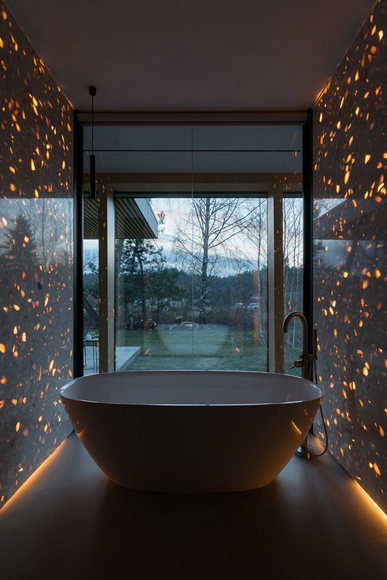
Located somewhere between opacity and transparency, translucent surfaces allow rays of light to partially pass through them, creating a "blurred" aspect to what is seen on the other side. This is an effect widely used in art, as in the works of the Icelandic–Danish artist Olafur Eliason, for example, who works with optical illusions through light and colorful and transparent surfaces. But it is also admired by contemporary architects, such as the Japanese office SANAA, or European offices such as Barozzi / Veiga or Lacaton & Vassal, among many others.
In buildings, when using translucent surfaces with materials such as polycarbonate or glass, elements become visually lighter and highlight interiors or even the building's structure, without intruding on inhabitants' privacy. Chairs, lamps, pots: there are several everyday objects that use translucency for aesthetics and lightness. In the bathroom, however, this is not so common. Usually made of porcelain, the traditional pieces used in this space are opaque and at times are not so flexible to allow for a designer's vision.

Subscriber Access

Sanitation in Modern Houses: 12 Projects that Explore Different Bathroom Typologies and Layouts

Despite being the smallest rooms of houses, bathrooms have always been one of the most challenging and critical to design, which often left them fairly simplified. The past few years, however, saw these spaces undergo significant change; what was once only limited to functionality, ease of maintenance, and privacy, is now being given a strong character with pops of color, classic fixtures, and patterned surfaces. Similarly for public bathrooms, where "functionality" and "ease of maintenance" are now complimented with aesthetics, technology, and high quality finishing. In this interior focus, we explore the three main bathroom typologies used in residential projects, and look at how architects have employed them through 12 examples.

Sanitation in Modern Houses: 12 Projects that Explore Different Bathroom Typologies and Layouts  - Image 1 of 4Sanitation in Modern Houses: 12 Projects that Explore Different Bathroom Typologies and Layouts  - Image 2 of 4Sanitation in Modern Houses: 12 Projects that Explore Different Bathroom Typologies and Layouts  - Image 3 of 4Sanitation in Modern Houses: 12 Projects that Explore Different Bathroom Typologies and Layouts  - Image 4 of 4Sanitation in Modern Houses: 12 Projects that Explore Different Bathroom Typologies and Layouts  - More Images+ 14

A Modern Personal Retreat: Material Compositions for the Bathroom

 | Sponsored Content

As cities become denser and the pandemic continues to shape living and working patterns, people have become well aware that the space they inhabit greatly influences their physical and mental well-being. As a result, the interior design of homes has focused on promoting sensitivity, comfort and calmness as a way of escaping the uncertain outside world. As a safe space where we practically start and end each day, the modern bathroom has also adapted accordingly, taking on a key role as an environment dedicated to relaxation and self-care. Hence, what used to be a purely functional zone is now perceived as an energizing personal retreat and flexible living space that can even adopt other functions – from a gym to a private spa.

Subscriber Access

From a Necessary Evil to Luxury: The History of Bathrooms in Modern Society

Audio available

The bathrooms that we usually have in our homes are legacies of European colonization around the world. Its current form, however, dates back millennia and would not have been possible without investments and the evolution of basic sanitation.

The health of a population is directly related to the physical environment it inhabits, as stated by Hippocrates in his text “Airs, waters and places”, written during the 5th century BC, in which the Greek thinker known as the 'father of medicine', states that in order to properly investigate health and the cause of disease it is necessary to observe and understand the inhabited environment from the seasons, the wind, the water, its geographical position, the land and the landscape and also the habits of the people who live there. Each civilization has developed a way of dealing with what we understand by sanitation today, depending on its time and also on its geographical, cultural, political and economic context.

Subscriber Access

The Comeback of Retro Design Trends in Modern Bathrooms

Even though white minimalism remains the norm, retro trends are making a serious comeback in modern bathroom designs, with homeowners incorporating pops of color, classic fixtures, and patterned surfaces. Despite often being static and traditional spaces in homes, bathrooms have certainly undergone significant transformations throughout the years. While those of the outspoken 1970s brought vibrant colors like avocado green and mustard yellow, the ‘80s introduced ceramic tiles in more muted, pastel shades. On the other hand, this century has set the ideal on white and marbled surfaces, slick gloss finishes, and silver fixtures. However, even as this all-white look continues to be the protagonist, bold retro enhancements are reviving and blending in with contemporary elements to create elegant, yet lively atmospheres with a strong character.

Subscriber Access

Design Trends in Bathrooms: Exceptional Sanitary Equipment

Today, bathroom and sanitaryware design is witnessing a concerted move away from the mild-mannered minimalism and washed-out pastel accents of the turn of the millennium. Bathrooms increasingly feature either bolder colors or more pronounced textures and patterns, and these are found in ceramics as well as fixtures and accessories, providing a more layered, multi-sensory experience.

How to Save Water with a Smart Water-Management System

 | Sponsored Content

Water scarcity will directly affect nearly 20% of the human population by 2025, according to several UN reports, and indirectly influence the rest of the planet’s inhabitants as well as economies and the whole ecosystems. Designing effective water management systems is an important process that encompasses the planning, developing, and managing of water resources, in terms of both water quantity and quality, across all water uses. It includes the institutions, infrastructure, incentives, and information systems that support and guide water management.

Subscriber Access

From Hotels to Concert Halls: 8 Distinctive Projects With Original Bathrooms

As a room everyone needs to visit, no matter what their social standing (or sitting), bathrooms can be one of the best ways to add character to a project. Used when we are at our most vulnerable, bathrooms are calm, solitary arenas, giving a few minutes of peace in an otherwise hectic environment. So the originality of the user experience can really stand out.

Whether they bring relaxation to hospitality, individuality to residential or drama, and culture to public space, bathrooms can both surprise and delight users, while allowing them to rest. Here are eight projects where a designer bathroom is an integral part of interior architecture.

Subscriber Access

Bathroom & Kitchen Fixtures: 12 Projects to Get You Inspired

As an architectural project comes to its last phases, it is time to put together the smaller details in bathrooms and kitchens, which means choosing finishes for the walls and floors, as well as the countertops, and picking the right fittings and fixtures. These elements are essential for a well-designed space, regardless of the style.

Subscriber Access

Where Does Wastewater Go?

When water runs down the drain or we flush it down the toilet, we usually don't care where it ends up. This is because with adequate basic sanitation, wastewater shouldn't be a concern. Yet, although humanity has already taken man to space and plans to colonize Mars, it continues to fail to provide basic living conditions for a large part of its population. A comprehensive study estimates that 48% of global wastewater production is released into the environment untreated. The UN, in turn, presents a much less encouraging figure, citing that 80% of the world's sewage is released without treatment. But returning to the question of the title, there are basically two destinations for sewage if it is not being released directly into the natural environment: it can be treated locally through septic tanks, or connected to a sewage treatment plant through the sewage network, eventually returning to nature after a series of treatment processes.

The Restroom Pavilion at the 2021 Venice Biennale Displays how Restrooms are Political Battlegrounds

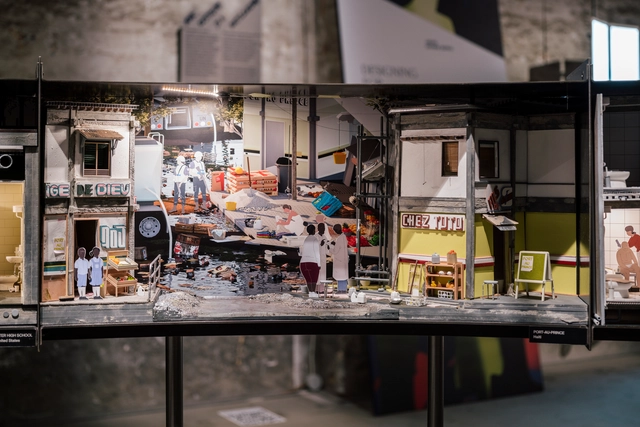
"When we enter the restroom, we are never alone. Instead, we are entangled in a network of bodies, infrastructures, ecosystems, cultural norms, and regulations". Although restrooms are often overlooked facilities that cater to the needs of individuals, they are, however, spaces where gender, religion, race, hygiene, health, and the economy are defined and expressed. For the 17th International Architecture Exhibition at La Biennale di Venezia, Matilde Cassani, Ignacio G. Galán, Iván L. Munuera, and Joel Sanders designed two pavilions that exhibit how restrooms are political architectures, serving as battlegrounds for the world's disputes.

The Restroom Pavilion at the 2021 Venice Biennale Displays how Restrooms are Political Battlegrounds - Imagen 1 de 4The Restroom Pavilion at the 2021 Venice Biennale Displays how Restrooms are Political Battlegrounds - Imagen 2 de 4The Restroom Pavilion at the 2021 Venice Biennale Displays how Restrooms are Political Battlegrounds - Imagen 3 de 4The Restroom Pavilion at the 2021 Venice Biennale Displays how Restrooms are Political Battlegrounds - Imagen 4 de 4The Restroom Pavilion at the 2021 Venice Biennale Displays how Restrooms are Political Battlegrounds - More Images+ 10

Transforming the Bathroom into a Space for Living

 | Sponsored Content

What we are currently experiencing in the world is a shift in values. A crisis like COVID-19 leads us to question how we want to live, who is important to us, how we should spend our time. As our needs change, we focus on enduring values such as family, community, and an emphasis on our physical and mental well-being. When it comes to the objects that we surround ourselves with, themes such as lasting value, longevity, and quality are coming to the forefront. It is no longer only about what is good for the individual today, but also what will be useful and relevant tomorrow.

Tearoom / Atelier Satoshi Takijiri Architects

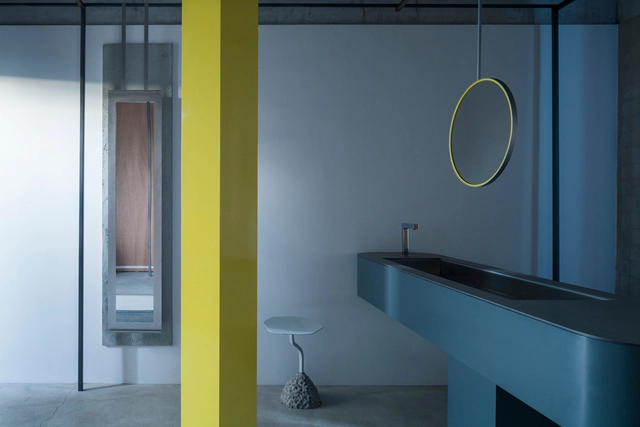
Tearoom / Atelier Satoshi Takijiri Architects - Interior Photography, Interior DesignTearoom / Atelier Satoshi Takijiri Architects - Interior Photography, Interior Design, Door, FacadeTearoom / Atelier Satoshi Takijiri Architects - Interior Photography, Interior Design, BathroomTearoom / Atelier Satoshi Takijiri Architects - Interior Photography, Interior DesignTearoom / Atelier Satoshi Takijiri Architects - More Images+ 6

Subscriber Access

Concrete Countertops: Brutalism in the Bathroom

Concrete is one of the top building materials in the world and it is almost impossible not to associate it with architectural structures. However, the so-called brutalist style is becoming more and more popular in interior design, and concrete is replacing the traditional materials used in furniture and countertops, such as wood and stone.

Due to its polished finish and seamless surface, this waterproof and resistant material is very easy to clean, preventing mold from growing in expansion joints, and requiring little maintenance. A few months ago we published an article featuring a collection of projects for kitchen countertops and indoor/outdoor benches made of concrete. Now, we have gathered a series of interior design projects with bathrooms featuring concrete countertops, from small washrooms to roomy bathrooms. Check out below:

Concrete Countertops: Brutalism in the Bathroom - Imagen 1 de 4Concrete Countertops: Brutalism in the Bathroom - Imagen 2 de 4Concrete Countertops: Brutalism in the Bathroom - Imagen 3 de 4Concrete Countertops: Brutalism in the Bathroom - Imagen 4 de 4Concrete Countertops: Brutalism in the Bathroom - More Images+ 7

Subscriber Access

Minimum Dimensions and Typical Layouts for Small Bathrooms

Having access to a bathroom is, above all, a factor of dignity. As basic as this fact may seem, the WHO (World Health Organization) estimates that 2 billion people worldwide do not have access to basic sanitation facilities, such as bathrooms or latrines. Such inadequate sanitation causes 432,000 deaths annually, mainly from diarrhea, in addition to being an aggravating factor for several neglected tropical diseases including intestinal worms, schistosomiasis, and trachoma. In 2010, the UN (United Nations) labeled sanitation a basic right, alongside access to drinking water.

Subscriber Access

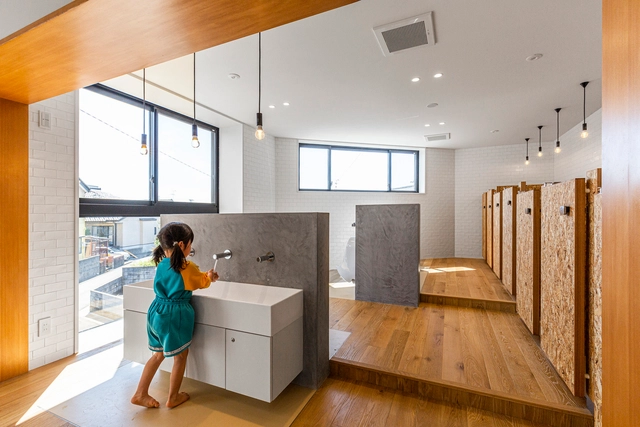
Public Bathrooms for Children: Design Tips and Inspiration

Public Bathrooms for Children: Design Tips and Inspiration - 1 的图像 4Public Bathrooms for Children: Design Tips and Inspiration - 2 的图像 4Public Bathrooms for Children: Design Tips and Inspiration - 3 的图像 4Public Bathrooms for Children: Design Tips and Inspiration - 4 的图像 4Public Bathrooms for Children: Design Tips and Inspiration - More Images+ 9

We often use the term accessibility when designing spaces for the elderly or for people with special needs. However, to guarantee effective universal design for children, it is necessary to understand and cater to their specific needs as well, especially through ergonomics, safety, lighting, colors, and some particular accessories. In this article, we will cover the most important parameters to consider when choosing dimensions and materials in public bathrooms for young children.