FuturArc Prize seeks forward-thinking, innovative design ideas for Asia. The competition offers a platform to professionals and students who are passionate about the environment. Through the force of their imagination it aspires to capture visions of a sustainable future. FuturArc Prize 2017 invites you to Envisage an Architecture for the Common Good.
The SIA-Getz Architecture Prize for Emergent Architecture in Asia honours, biennially, an architect who contributes to emergent architecture in Asia. Launched by the Singapore Institute of Architects (SIA) and Getz Bros. & Co. (Singapore) in 2005, the prize is in its sixth edition this year.
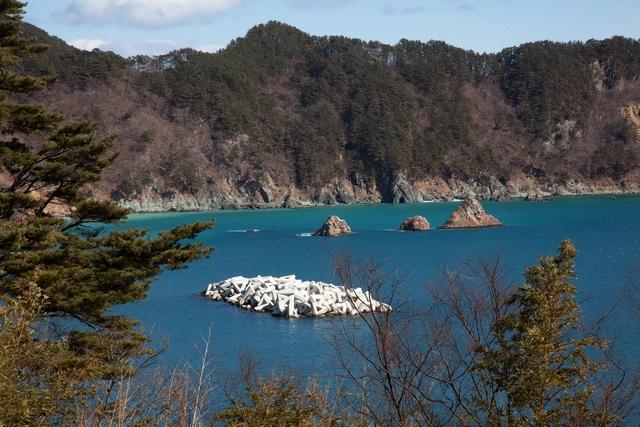
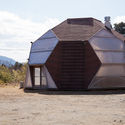
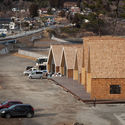
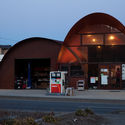
In this article, written by Christian Dimmer and illustrated with photographs by Max Creasy, the post-earthquake and tsunami coastal architectural landscape of the Japanese Prefectures of Aomori, Iwate and Miyagi are presented and studied.
Few disasters were as complex and their implications as hard to grasp as the compound calamity of earthquake, tsunami, nuclear meltdown that hit the North-East of Japan on March 11, 2011. While over 500 kilometers of coastline were devastated, the disaster unfolded in each of the hundreds of towns affected differently depending on local topographies, urban morphologies, existing landscape formations, collective memory of past disasters and preparedness, and the social ties within the communities.
2A MAgazine now announces the second 2A Asia Architecture Award; 2AAA 2016 with the theme: “Innovative Architecture in Asia”
2A Magazine is pleased to announce the second annual 2A Asia Architecture Award; 2AAA 2016, which celebrates “Innovative Architecture in Asia”. Accordingly, the Award is for recognition of an individual's or group's substantial contribution to today’s architecture in Asia in terms of contemporary challenges of the field in the region and lasting influence on the theory and practice of architecture.
The ARCASIA Travel Prize in Architecture is the travel and research scholarship given annually to Young Architects of ARCASIA (40 years and under) and member of the institute of their country. The emphasis of the traveling scholarship is not only to promote research in the selected fields of study, but also to encourage cross border education as well as to foster cultural exchange between nations and institutes. Sponsored by NS Bluescope (Thailand), this year is the second year of the ARCASIA Travel Prize. For 2016, the ARCASIA Travel Prize aims to enable Young Architects to travel and to conduct design research in Thailand on the topic of humanitarian architecture.
Russian designer Vasily Klyukin has envisioned the "Asian Cobra Tower." Just as its name suggests, the gold-plated tower takes the shape of a snake, offering offices and apartments in its body and a restaurant, night club and terrace in its jaws.
"In Japan telling someone that he is a snake means a compliment. In China snakes and dragons often mean the same," says Klyukin. "The symbol of wisdom and eternal life, this tower would embellish any Eastern city."
Australia to host landmark gathering of architects from Asia Pacific. As the Asia Pacific experiences unprecedented urban growth, architects will play a critical role in shaping the future of cities across the region. The diversity of its people and countries will be explored in the Asia Pacific Architecture Forum, taking place in Brisbane from 1 to 14 March 2016.
FuturArc Prize seeks forward-thinking, innovative design ideas for Asia. The Competition offers a platform to professionals and students who are passionate about the environment. Through the force of their imagination it aspires to capture visions of a sustainable future.
The 3rd “Earth God Temple” Student Design Competition
The Earth God (Tu Di Gong / 土地公) Temple, the symbol of humans' respect for Nature, exists in harmony and as one with the land and environment. However, current urban development practices have caused the gradual shrinking of this civic and religious center, as the property has been frequently ceded to the city under expropriation regulations. In response to this issue, Tai Square Arts and Aesthetics Association has organized the "Earth God Temple Student Design Competition", inviting young students with creativity and ideas to evaluate and provide a solution that will improve the situation of the temple and its surrounding landscape in a new location, ultimately granting the Earth God and the residents of the neighborhood a better environment.
Imagine that Eurasia has been brought to absolute destruction - by wars over religion, ethnicity or countries, or maybe even nuclear destruction. Cities, towns and villages across the super-continent are left in rubble or abandoned; all forms of organization are a fairy tale from a bygone era. Thousands of years of culture and civilization, gone.
What if a new Eurasia could arise from the remnants of this destruction? What artifacts and memories would remain, to seed the creation of a new Eurasia? Imagining New Eurasia, commissioned by Asia Culture Center in Gwangju, South Korea, invites anyone living in, or from Eurasia to submit their ideas, in the form of drawings, sketches, text, artwork, found objects, photographs, maps, memorabilia or any other kind of artifact, on how the future of a New Eurasia may pan out.
2A Magazine is pleased to announce the first annual 2A Asia Architecture Award; 2AAA 2015, which celebrates “The Emergence of Contemporary Architecture in Asia”.
PURPOSE This annual international award is to honour architects -individuals or groups- whose substantial contributions to today’s architecture and urban design in Asia, have made waves and impact on Asia or even international architecture scene. As the Middle East regional source for information regarding architecture, design and art ,2A Magazine has always attempted to avoid the extinction of cultural identity in architecture and art and emphasis on these unique distinctions rather than global modernism. Accordingly this Award will be the context to highlight and recognize the essences of architectural identity in Asia and present them to the audience.
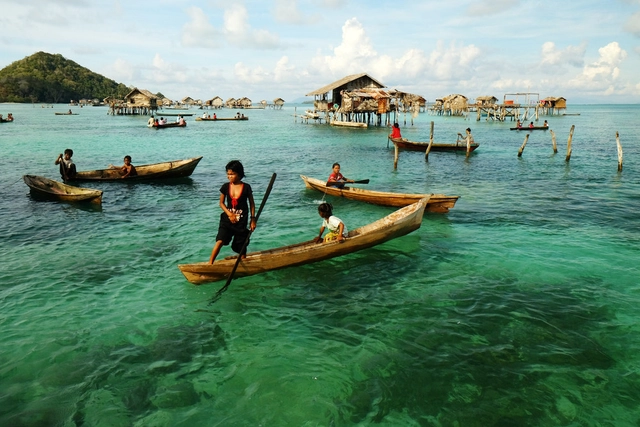
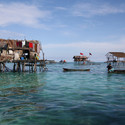
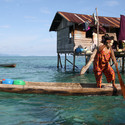
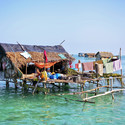
Thousands of years ago, a small civilization of hunter gatherers migrated to the coastal regions of Southeast Asia. These people progressed into a widespread tribe of travelling sea dwellers. To this day, they remain a stateless people with no nationality and no consistent infrastructure, sometimes living miles away from land. Yet these people are one of the few civilizations whose collective life practices have survived so long through human history. They are called the Badjao, and they have a surprising amount to teach us about architecture.
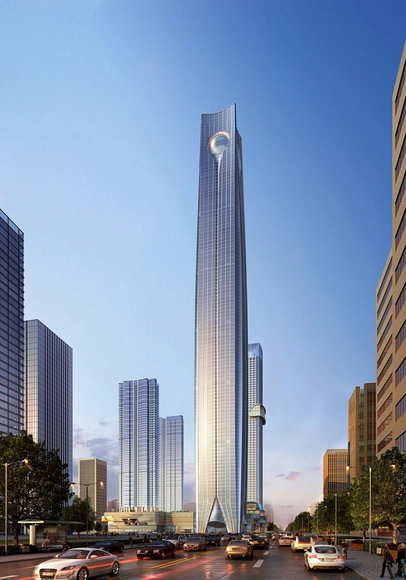
The 'Pearl of the North' (expected to complete 2018). Image Courtesy of Atkins
In an article for the Wall Street Journal, Dinny McMahon and Yang Jie visit Shenyang - a "chilly industrial town" in north eastern China which was once the country's capital (circa 1600). The city will soon be home to what's being dubbed the 'Pearl of the North', "a 111-floor office tower that will, briefly, be the seventh-largest in the world, dwarfing One World Trade Center." The tower, designed by Atkins, is "symptomatic of China’s edifice complex," McMahon notes - and the city is "just getting started." Read the article in full here.
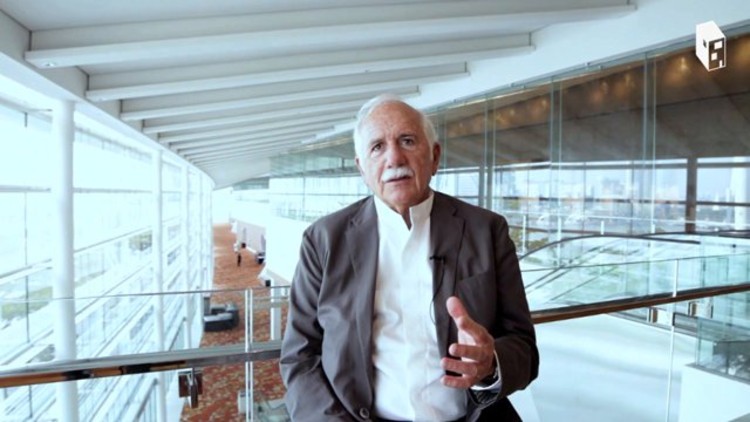
During this year’s World Architecture Festival (WAF) held in Singapore, we had the chance to talk with keynote speakerMoshe Safdie. Standing inside the Marina Bay Sands, a massive mixed-use project by Safdie Architects and an example of the firm’s ongoing research on density, Safdie talked to us about Asia's urban environment and the challenges of working there. As the world's growth is happening in dense areas, this subject is utterly important, and Safdie has proven that these kind of mega-urbanism projects can be functionally integrated into the city. “Working in Asia at the intensity and scale that we do has been a paradigm shift for our practice because much of our work in the United States and Israel and elsewhere in recent years has been focused on institutions - on libraries, museums, airports - here we are involved with urban place, mixed-use mostly, extremely dense, working for the private sector, and having to reconcile the market forces with the architectural environmental demands, which is no mean task,” he said.
Videos
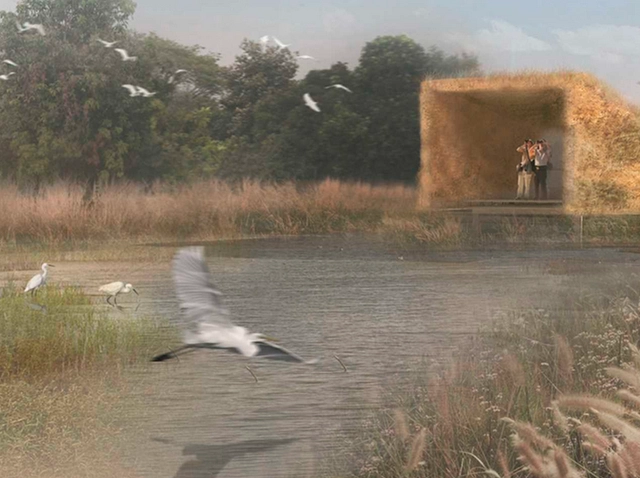
GOLD: “Protective Wing” Bird Sanctuary . Image Courtesy of Holcim Foundation
Teams from Thailand and New York have received top honors in the 2014 regional Holcim Awards for Asia Pacific, an award which recognizes the most innovative and advanced sustainable construction designs. Among the top three winners are the “Protective Wing” bird sanctuary and a locally-adapted orphanage and library in Nepal.
The 13 recognized projects will share over $300,000 in prize money, with the top three projects overall going on to be considered for the global Holcim Awards, to be selected in 2015.
The full list of Asia Pacific winners, after the break…
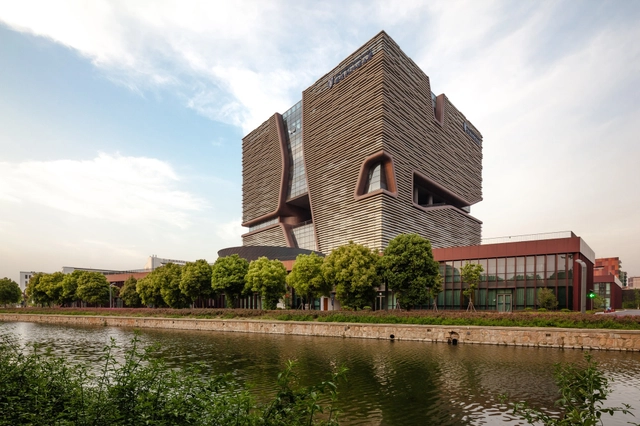
Xi'an Jiaotong-Liverpool University Administration Information Building. Image Courtesy of Aedas
As of this week Aedas, which was recently ranked as the 5th largest and influential practice in the UK by the Architects' Journal, has demerged into two separate practices. The thirteen offices in China, South-East Asia, the Middle East and the US, will continue to operate under the Aedas brand whilst the eight UK offices and the offices in Russia, Poland and Kazakhstan will operate under a new name: AHR. According to the outgoing board, the demerger "will allow both companies to focus on their respective strengths and will enable them to grow the businesses in different directions." The intention is that both groups will continue to work together on projects in the future.