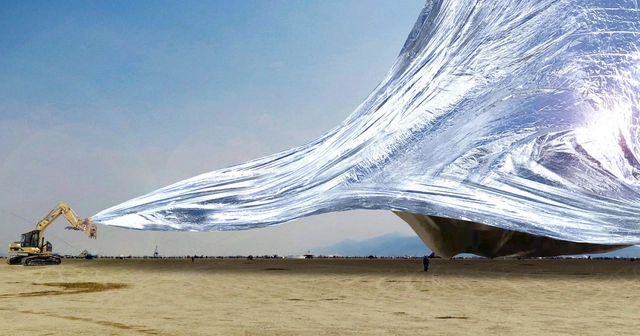
Moscow-based designer Alex Shtanuk has launched an Indiegogo campaign for his 107,000-square-foot (10,000-square-meter) blanket woven from over 3000 NASA Space blankets, to feature at this year’s Burning Man festival at Black Rock City, Nevada.
“The Blanket” seeks to “bring the waves of the ancient Lake Lahontan back to Playa,” influenced by wind conditions to mirror surreal forms such as waves, mountains, or giant sculptures. With an exterior metallic coating, the blanket will reflect 97% of radiated heat, creating a cool, refreshing environment underneath for those seeking shelter from the hot Playa sun.
Every year in August, a temporary metropolis is erected in Black Rock City, Nevada. This is Burning Man, an annual event of art and architecture that attracts some 70,000 participants. The people who come to Burning Man come from all walks of life. What is incredible is that they come together to construct an ephemeral city that lasts for 7 days. These people assume the role of architects and construction workers and use the desert to build all sorts of shelters in a fast, sustainable way. The desert is so remote, and everything built in Black Rock City is packed and taken home at the end of the event, and some of the art is burned on site. This poses a unique architectural challenge. The people who have come to build these structures have to plan them way in advance to accommodate all the challenges of working in the desert, but the result is worth it - a striking, unique city, democratically built, set against a desert landscape, and for only one week.
We had the chance to interview Kim Cook at the World Architecture Festival in Berlin. Kim Cook is Director of Art and Civic Engagement at Burning Man. Kim Cook and her team are tasked with increasing the impact of Burning Man’s arts and civic initiatives. As part of her role, Kim engages with artists and community leaders to increase opportunities for funding, collaboration and learning.
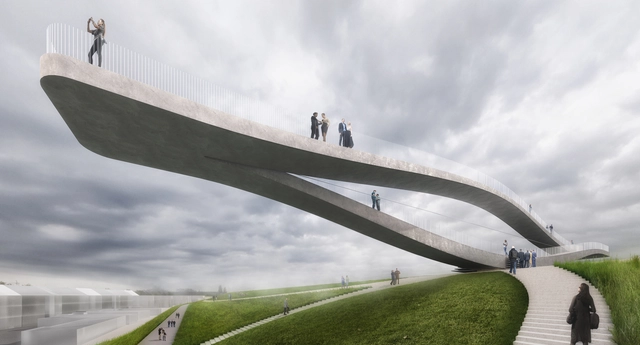
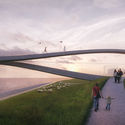
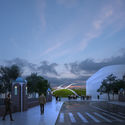
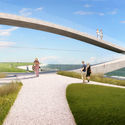
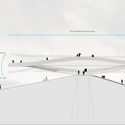
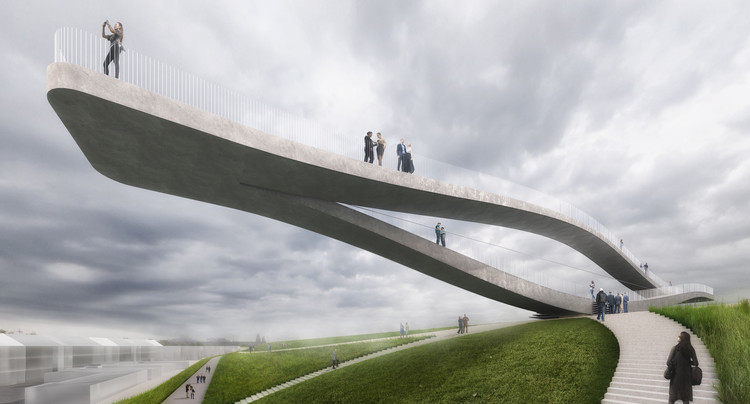
MVRDV has won a competition for the design of an art installation in the Dutch coastal city of Den Helder, seeking to strengthen the connection between land and sea through a new public landmark. The “SeaSaw” consists of a viewing platform balanced in equilibrium atop the city’s flood defenses, a distinguishable structure praised by the jury for capturing “the energetic spirit of the city represented as an infinite form.”
Artist Christo has released images of his proposed temporary sculpture for Hyde Park, London, to become his first major outdoor public sculpture in the United Kingdom. Titled “The Mastaba (Project for London, Hyde Park, Serpentine Lake)," the sculpture will consist of 7,506 horizontally-stacked barrels floating on the Serpentine Lake throughout the summer of 2018.
“The Mastaba” will coincide with an exhibition of Christo and Jeanne-Claude’s work at the Serpentine Galleries, featuring sculptures, drawings, collages and photographs spanning more than 60 years. Supported by Bloomberg Philanthropies, the exhibition will be the artists’ first in a UK public institution since 1979 and will showcase their long-running exploits with barrel forms, chosen initially for their sculptural effect and low cost.
On The Desert Island in Cottesloe Beach, Australia, a 72-meter wall of mirrors partitions out a section of the sand, creating a cove of its own. The wall faces the Indian Ocean, and the curved reflection of sand merging with the soft-blue waters and the horizon beyond creates an illusion of an enclosed space; a desert island floating in an endless sea.
Conceived of by the Danish architecture studio Gjøde & Partnere Arkitekter, the installation was part of the annual Sculpture By The Sea exhibition in Australia last month. It is the largest free public sculpture exhibition in the world, and anyone can submit their ideas. As beachgoers stumbled upon this panorama of the shore upon sand, they danced, took photos, and watched the sunset from the wavering reflections of the mythical island.
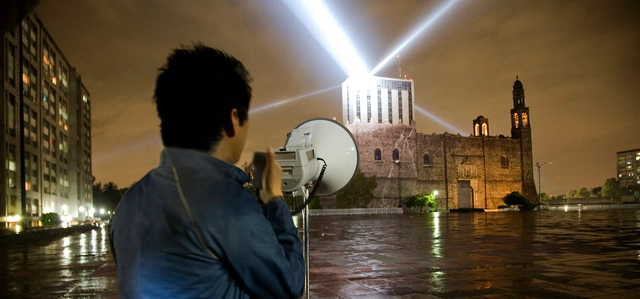
In the past, cities were often constructed in the likeness the public--the built environment reflected citizens and local culture. It is questionable whether this can be said of the modern world. Much construction today is a product of capitalism, generating buildings and areas in which local people have no attachment or sense of agency over. Artist Rafael Lozano-Hemmer believes this to be a fundamental crisis within our cities, and he is committed to reestablishing the relationship and representation of people within urban space. His work is examined in a new short film by PLANE-SITE, titled Public Interruptions.
A building today does not represent a citizen, a building today represents capital.



_-_The_Mastaba_(Project_for_London__Hyde_Park__Serpentine_Lake)_(1).jpg?1522847854&format=webp&width=640&height=580)
_-_The_Mastaba_(Project_for_London__Hyde_Park__Serpentine_Lake).jpg?1522848242 "Courtesy of Christo")
_-_The_site_of_The_Mastaba_in_Serpentine_Lake.jpg?1522848328 "Courtesy of Christo")
_-_The_Mastaba_(Project_for_London__Hyde_Park__Serpentine_Lake)_(5).jpg?1522848162 "Courtesy of Christo")
_-_The_Mastaba_(Project_for_London__Hyde_Park__Serpentine_Lake)_(4).jpg?1522848063 "Courtesy of Christo")
_-_The_Mastaba_(Project_for_London__Hyde_Park__Serpentine_Lake)_(1).jpg?1522847854)
_Ross_Duggan.jpg?1522798592&format=webp&width=640&height=580)
_David_Dare_Parker.jpg?1522822132 "© David Dare Parker")
_Richard_Watson.jpg?1522822056 "© Richard Watson")
_Richard_Watson.jpg?1522822029 "© Richard Watson")
_Gjøde___Partnere_Arkitekter.jpg?1522822514 "© Gjøde & Partnere Arkitekter")
_Ross_Duggan.jpg?1522798592)