Africa is a diverse continent with different contexts that go beyond the stereotypes imagined and propagated by those who do not know it. These stereotypes also cover the architectural field. African architecture is always remembered for its beautiful vernacular projects or works by Keré, but other languages developed by architects on the continent are almost forgotten.
For this reason, in order to increase the panorama of contemporary architecture built in Africa, we have gathered here a selection of buildings that have been realized in fourteen different countries. Be inspired by the eighteen selected projects below.
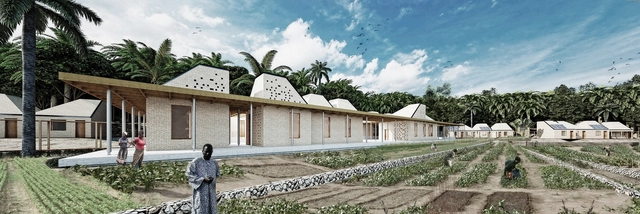
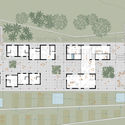
With a modular composition inspired by traditional sub-Saharan African building typologies, MASA Studio’s safe lodging proposal for Tanzanian cancer victims has been selected as the winner of the Hostels for Hope competition, which called for solutions to issues of health and safety in regards to the rehabilitation of cancer victims away from home in rural Africa. Organized by Pink Ribbon Red Ribbon, an international foundation combatting women’s cancers, the competition responds to the unfortunate decision that thousands of Tanzanian women have to make every year – to travel great lengths for unaffordable treatment and lodging, or to remain at home unable to fight the disease.
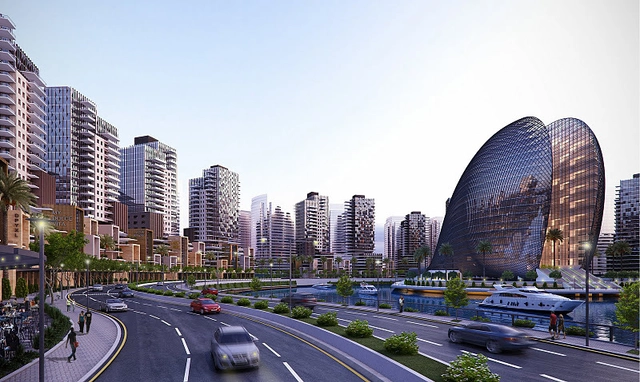
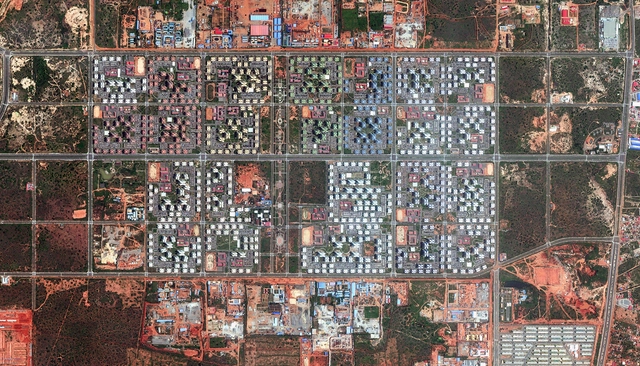
In the last two decades, the African narrative has changed phenomenally. The tired, age-old storyline—largely woven around the stereotypes of poverty, disease, and bloody civil wars—has been replaced with one celebrating the continent’s unprecedented economic growth and relative political stability. This new narrative is also about Africa’s gleaming skyscrapers, massive shopping malls, and ambitious “smart” cities being designed and built from scratch: Ebene Cyber City in Mauritius; Konza Technology City in Kenya; Safari City in Tanzania; Le Cite du Fleuve in DR Congo; Eko Atlantic in Nigeria; Appolonia City in Ghana, and others.
There are currently at least twenty of these new cities under construction in Africa and about twice that number in the works. These developments have permanently altered the continent’s urban outlook, and have offered it something different from the bland pastiche of colonial architecture that it was once known for. As a designer, I was initially excited by the quality of some of the architecture. Though I must admit that these new cities are eerie mimicries of similar developments in China, Singapore and even the UAE, and that they’re largely bereft of any cultural connection to Africa.
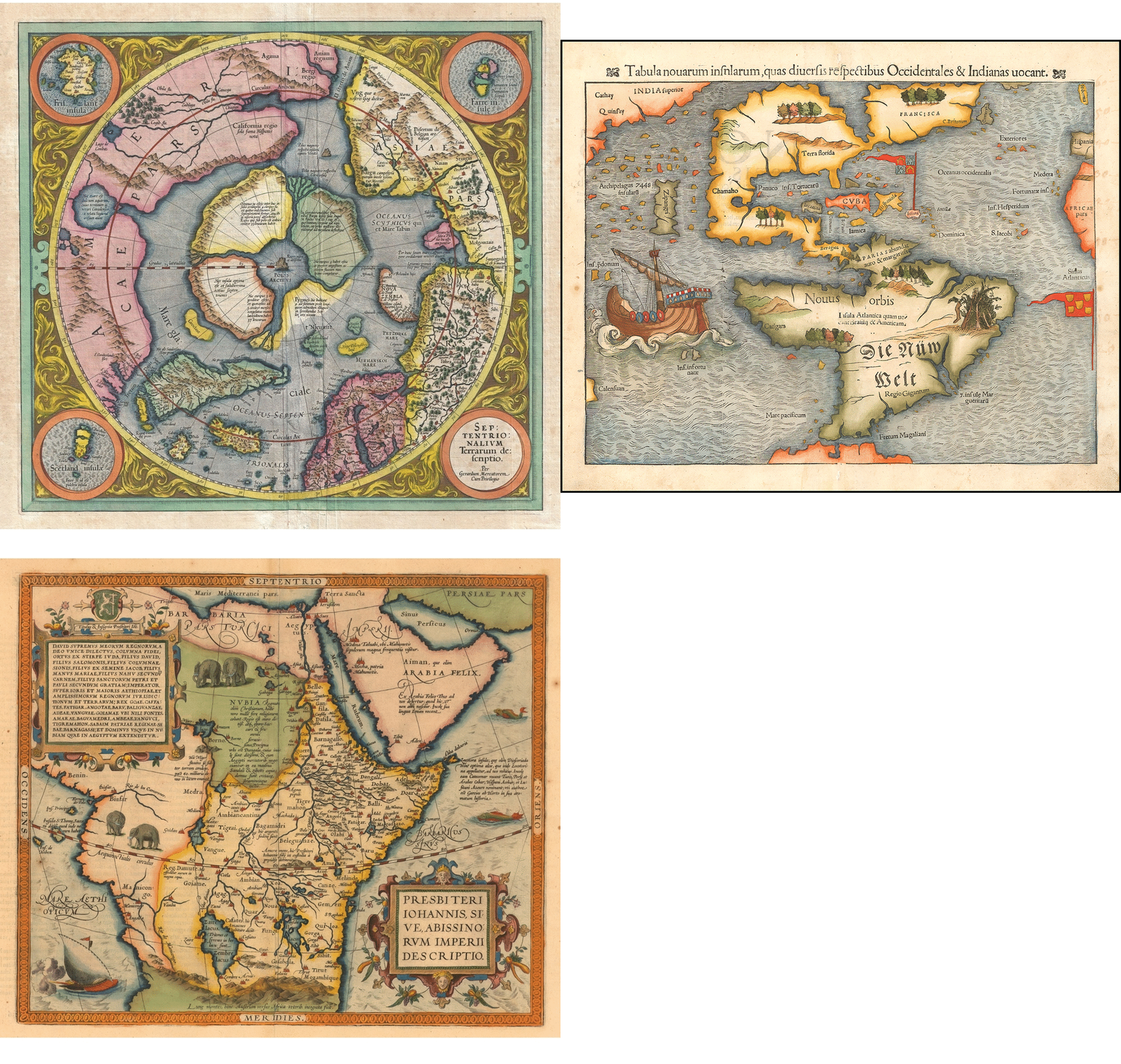
It's difficult to imagine an uncharted world. Today, GPS and satellite maps guide us around cities both familiar and new, while scanning and mapping techniques are gradually drawing the last air of mystery away our planet's remaining unexplored territories. At one time, however, cartography was based on little more than anecdotal evidence and a series of educated guesses. But map-making in the 16th and 17th Centuries was an art nonetheless, even if these examples testify to the fact that just because you're missing important facts, total fabrication may not be the best way forward.
https://www.archdaily.com/870609/these-maps-show-why-its-a-bad-idea-to-make-things-up-munster-ortelius-mercatorAD Editorial Team
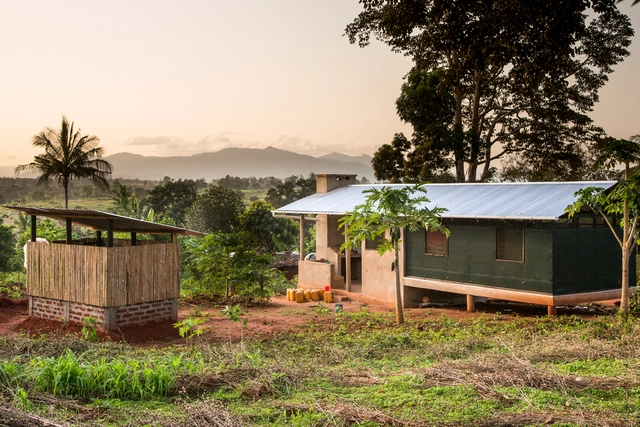
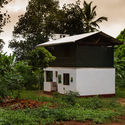
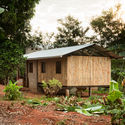
Architecture firm Ingvartsen Architects has turned their gaze towards “cultural exchange architecture”—not with the aim of exploring identity or experimenting with aesthetics, but with a practical purpose in mind: to minimize the spread of diseases. The Magoda Project combines Asian elements with traditional rural African building methods in the village of Magoda, in the Tanga region of Tanzania, taking shape in the form of eight prototype homes. The design goes to show that cultural exchanges in design and architecture can make great contributions towards problem solving for a humanitarian purposes, not only to improve health and hygiene, but also comfort and happiness.
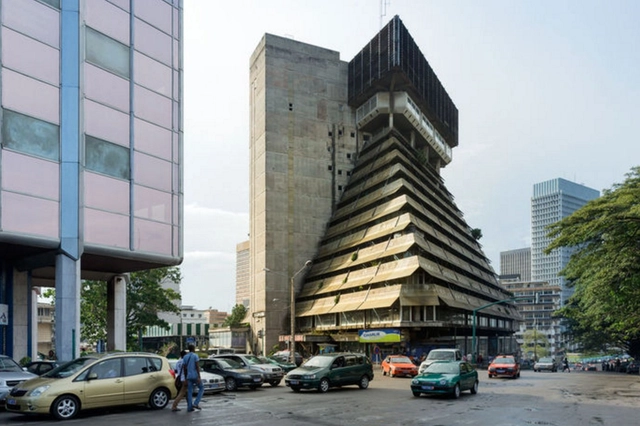
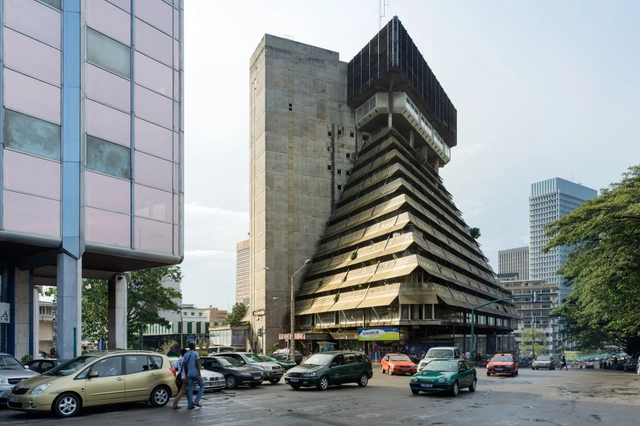
A new exhibition opening later this month at Chicago's Graham Foundation seeks to explore the complex history and legacy of modernist architecture in sub-Saharan Africa during the 1960s and 1970s. Architecture of Independence: African Modernismwill feature nearly eighty buildings in commissioned photographs by Iwan Baan, Alexia Webster, and Manuel Herz. Alongside archival material, the exhibition "imparts a new perspective on the intersection of architecture and nation-building in Ghana, Senegal, Côte d’Ivoire, Kenya, and Zambia and investigates some of the most compelling yet under-studied examples of 1960s and 1970s architecture worldwide."
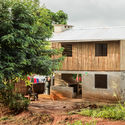
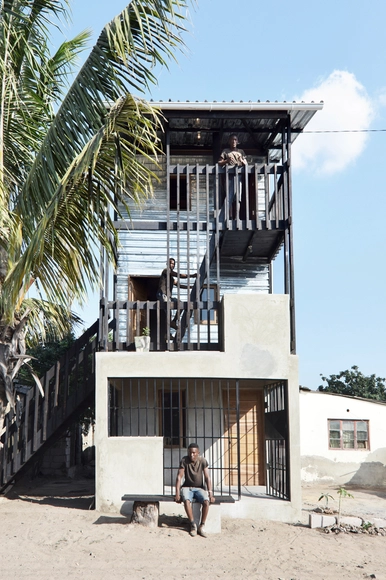
The Department of Human Settlements at the Royal Danish Academy of Fine Arts' School of Architecture, Design, and Conservation has developed a new low-income housing prototype for Maputo, Mozambique in southeast Africa as part of the Casas Melhoradas research project. The prototype reinterprets the area’s traditional “Casa de Madeira e Zinco,” which is made of wood and corrugated iron sheets, and the "Casa de Blocos," which is composed of concrete blocks.
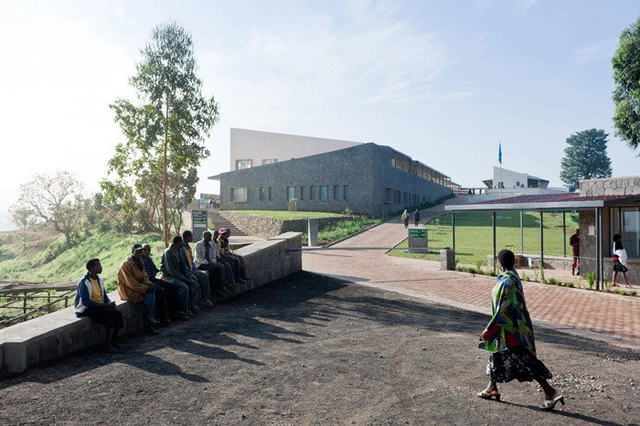
In designing and building multiple successful public buildings in central Africa and around the world, MASS Design Group has employed and guided thousands of local craftsmen, curating the building process to inspire dignity. Now, they wish to help the African people obtain the skills necessary to guide the process themselves. At the United Nations Solutions Summit this Sunday Christian Benimana, a program director for the non-profit design studio, will present plans for what they are calling the “Bauhaus of Africa”: three “African Design Centers” to be built over the next 10 years in strategic locations throughout the continent. The design centers will house an education program tasked with training a new generation of African architects - a workforce certain to be indispensable as Africa enters a period of unprecedented urban growth.
By the year 2025, the urban population in Sub-Saharan Africa is predicated to increase by almost 70% -- a rapid urbanization that will inevitably affect the construction sector.
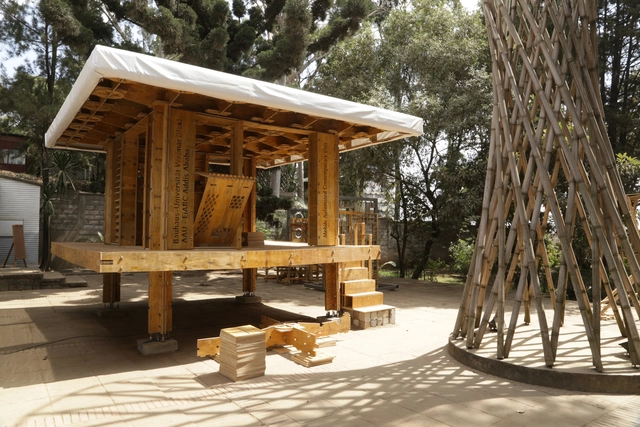
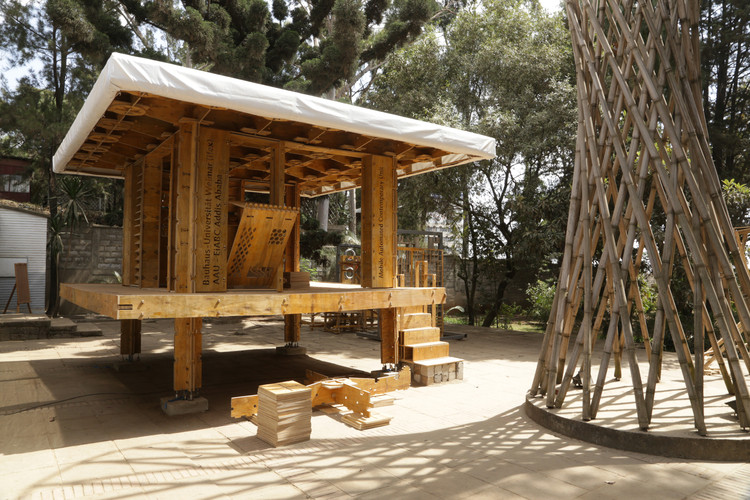
To address this expected growth and to help lay the foundations for a sustainable urban and social development, students from the Institute of Experimental Architecture at Bauhaus-Universität Weimar and EiABC (Ethiopian Institute of Architecture Building Construction and City Development) worked together to build three residential prototypes at a 1:1 scale for Addis Ababa: the capital of Ethiopia and the heart of hyper-urbanization. See all of the project details, below.
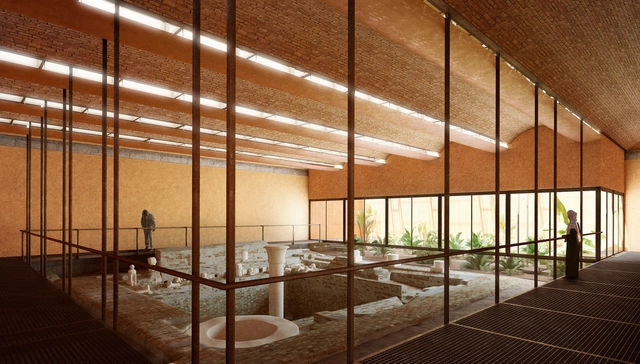
Rendered Interior View. Image Courtesy of Kéré Architecture
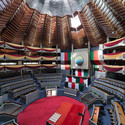
Kéré Architecture has placed first in a competition to design a protective shelter on the UNESCO-protected Meroe Royal Baths in Sudan, North Africa. Believed to have served nearby palaces from the great African Kingdom of Kush (now modern-day Sudan), the Meroe Royal Baths were listed as a UNESCO World Heritage Site in 2011 and is the focus of joint research by the German Archaeological Institute and the National Corporation for Antiques and Museums. Still marked by temples, palaces and over two hundred pyramids, the ruins of Meroe are a testimony to the exchanges of culture between the Mediterranean and Africa. Find out more about the proposal after the break.
The exhibition AFRICA is the third and last in the series architecture, culture and identity. It focuses on the area called sub-Saharan Africa – the part of Africa south of the Sahara Desert. Louisiana’s wish to mount this exhibition has its origin in a very simple observation: despite the fact that Africa is the world’s second-largest continent, surprisingly little contemporary culture from there comes our way.
Storefront for Art and Architecture hosts Facing East: Chinese Urbanism in Africa, an exhibition by journalist Michiel Hulshof (Tertium, Amsterdam) and architect Daan Roggeveen (MORE Architecture, Shanghai). Facing East investigates the impact of Chinese development on fast-growing African cities, and is built around personal stories of individuals involved in the urbanization process.
Architecture is a unique component of a country's culture just as much as its language, music, art, literature or food. Architecture is also the most visual of those cultural components; the pyramids in Egypt, skyscrapers in New York, a temple in Japan, and onion domes in Russia all convey a unique image. This is called “genius loci,” the “spirit of a place”. Every country has its own genius loci, its own uniqueness. Vernacular architecture is composed of local materials and derived from local customs, techniques that have been passed on from generation to generation. But vernacular architecture in most (if not all) African countries is disappearing, being abandoned for western materials and techniques.
The American Institute of Architects (AIA) and the Africa Union of Architects (AUA) has signed a cooperative agreement to "share practice tools and resources, creating a framework for American and African architects to work collaboratively in achieving development and infrastructure goals in Africa." The agreement articulates their mutual interests to advance the “Africa Sustainability Campaign” in spirit of the 2014 U.S.-Africa Leaders’ Summit in Washington DC.
"I am thrilled to have the opportunity to reinvigorate and formalize the AIA's relationship with our colleagues in Africa,” said AIA 2015 President, Elizabeth Chu Richter, FAIA. “We look forward to increased knowledge sharing on topics such as health and resilience which are critical to the sustainable future of our planet."
On display until May 31st, the Vitra Design Museum's "Architecture of Independence – African Modernism" exhibition displays a cross-section of Africa's experimental architecture from the post-colonial years of the 1960s. Covering more than 80 projects in Kenya, Zambia, Ghana, Côte d’Ivoire, and Senegal, the exhibition aims to shed light on this little-known period of architecture history, and challenge Western notions of African countries. In this interview, originally published by Metropolis Magazine as "Q&A: Curator Manuel Herz on Africa's 'Grandiose' Modern Architecture," Curator Manuel Herz reveals the origins of the exhibition and shares his thoughts light on some of the buildings which the exhibition highlights.
Clare Dowdy: What triggered your interest in the post-colonial architecture of Central and Sub-Saharan Africa?
Manuel Herz: I was in Nairobi a couple of times around 2007 and noticed the architecture of that period was of outstanding quality but virtually unknown outside Kenya. This triggered an interest to research the whole of Sub-Saharan Africa. I found that the political urgency that existed at the time of the independence process is embodied in the architecture.
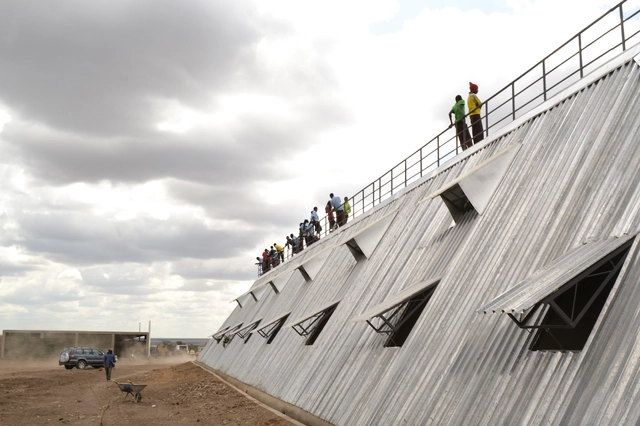
Waterbank Stadium under construction, photo credit: A.Maganga. Image Courtesy of PITCHAfrica
In many African countries, clean water is still a luxury. Wars are fought over it, families are uprooted for it, and entire communities perish without it. The scarcity of freshwater has plagued nations in Africa and around the world for centuries. Now, non-profit group PITCHAfrica is fixing the problem with a novel combination of sport and design. Part of a 10-acre Waterbank Campus comprised of 7 water-harvesting buildings, the soccer (or “futsal”) stadium is capable of hosting up to 1500 people, helping to save, educate and unite communities that are most in need.
Adjaye Associates has announced plans to transform a 17-floor post-modernist structure in Johannesburg’s central business district into a luxury mixed-use building that will be known as the “Hallmark House.” Scheduled for completion mid-2016, the project aims to “combine an African aesthetic with a contemporary vision” and form a new typology for urban living.
“The transformation of Hallmark House is an opportunity to apply fresh thinking to urban community and to address changing lifestyles with a more fluid approach to the way we inhabit cities,” says David Adjaye.