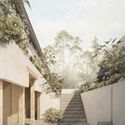
How to visualize architectural concepts in SketchUp using D5 Lite for faster design exploration.
How to visualize architectural concepts in SketchUp using D5 Lite for faster design exploration.

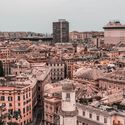
Various cities have been experimenting with wavering fees for public transport in an effort to promote sustainable mobility, alleviate traffic congestion and decrease social inequality. This past February, Salt Lake City has paused fare collection for a month to reduce carbon emissions in the region. At the end of March, the Italian city of Genoa extended free access to some of its public transport networks, following a successful experiment which began at the end of 2021 and in an ambitious plan to become the first Italian city with free transportation. Meanwhile, the small duchy of Luxembourg became the world’s first country with free public transit in 2020.




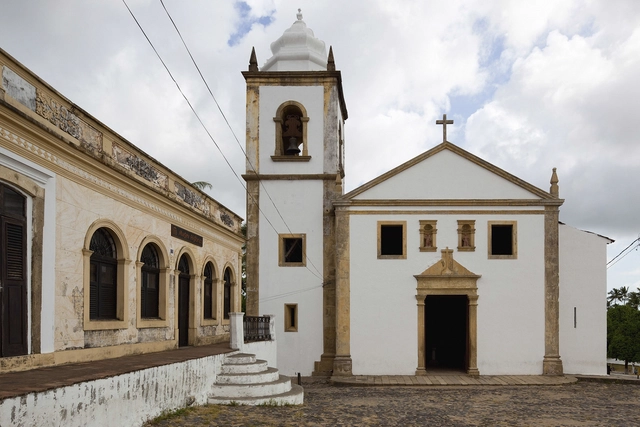
Dating back to 1535, the Church of Saints Cosmas and Damian in Igarassu, Pernambuco, is considered the oldest surviving church in Brazil. This iconic landmark has recently undergone an extensive restoration that preserves its historic features while introducing upgrades to facilitate its contemporary use. The intervention also included the adjacent two-story Parish House.
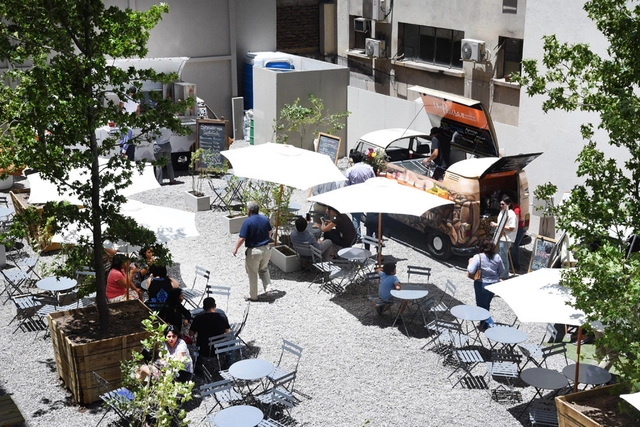
Today, one of the most popular initiatives regarding public space, participatory design and activism in the city is the so-called citizen urbanism or tactical urbanism. The approach proposes to trigger, through limited and low-cost interventions, long-term changes in public space, i.e. short-term action, long-term change (Street Plans, 2013).
The strategy used is to create temporary scenarios that make visible a specific problem and the formation of specific interventions to solve it, seeking to incorporate the community to give it relevance and promote its sustainability over time and, in this way, raise the discussion about the benefits of the projects for the quality of life in the context in which they are inserted.

Improving people's quality of life is one of the biggest goals of professionals in Architecture and Urbanism. When planning cities, creating housing or carrying out a simple refurbishment, we seek to improve the built space regardless of scale. The Urban Rehabilitation of Alto de Bomba, carried out in the city of Mindelo, Cape Verde, arose from the need to combat the precariousness found previously in the place. A project that required the immersion of the team in the daily life of the city and resulted in an inspiring proof of how much architecture can reveal better ways of living the city and acting directly in society. No wonder it received the Work of the Year Award in 2022, chosen by our readers as the winner among hundreds of competing projects.
This article was originally published on Common Edge.
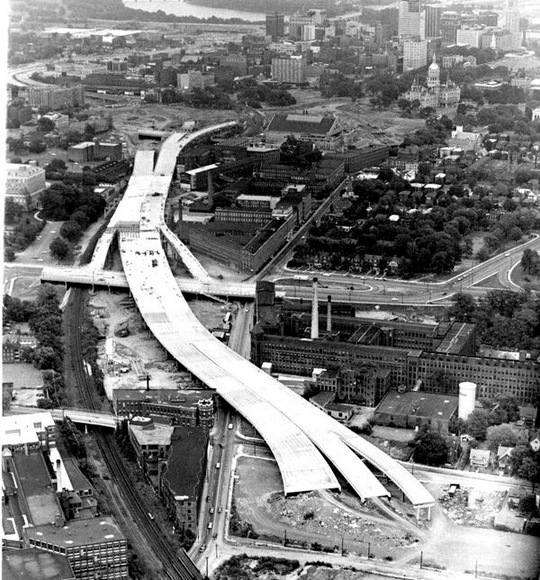
Can a piece of infrastructure literally kill a city? This is the question that writer Jim Krueger poses in his recent podcast, The Road That Killed a City. The place in question is Krueger’s current hometown—Hartford, Connecticut—which he grew up next to in the leafy suburb of West Hartford. Kruerger has lived in both towns, and that helps to balance the amazing story he uncovers about how Connecticut’s capital was impaled by a roadway (actually, two: east/west I-84 and north/south I-91 converge in Hartford in a sort of arterial highway ground zero). I spoke with Krueger about what prompted the podcast, some of what he uncovered about the history of this ill-fated urban “improvement,” and the legacy of a highway that continues to thwart Hartford’s rebirth—an inheritance shared by many cities across North America.

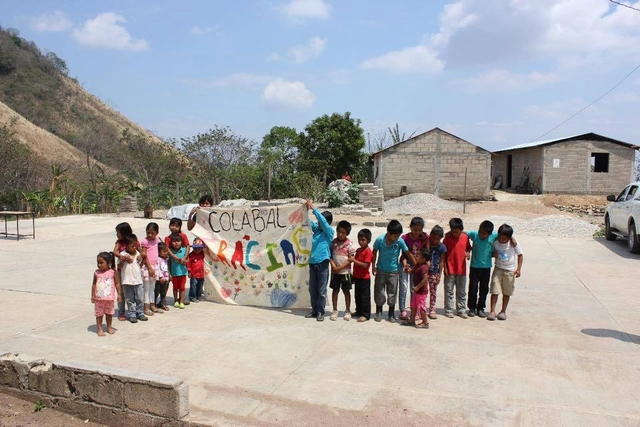
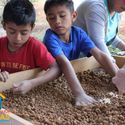
When we speak of social production, we refer to processes where community leaders are adults who represent and make decisions for their community; however, we often overlook children, who also enjoy and live in these spaces. They are the ones with limitless imagination and creativity, who create scenarios on Mars on a basketball court. They are the ones who hold the best car races in the loose sand of their backyards. They are children who, due to various family or economic circumstances, cannot write a letter, but instead express what they feel and want through the lines they draw.


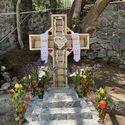
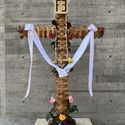
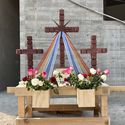
May 3rd is a holiday originating from the Finding of the Holy Cross (also known as May Cross or Feast of the Crosses), which traces its roots back to Roman rites celebrating the Cross of Christ. Over time, this commemoration has evolved and been adopted across cities in Mexico, Chile, Spain, Ecuador, El Salvador, Guatemala, Paraguay, Peru, Trinidad and Tobago, Argentina, Colombia, and Venezuela, where traditions include floral decorations, processions, and dances.
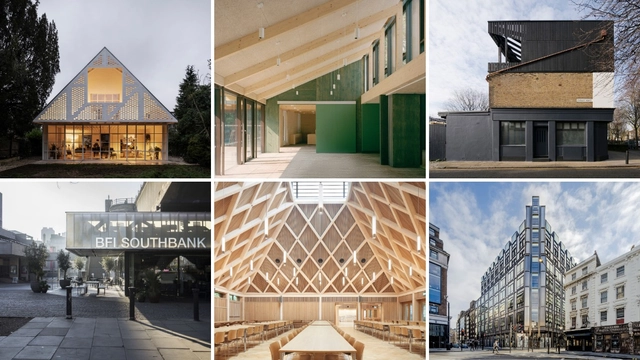
The Royal Institute of British Architects (RIBA) has announced the winning projects for the 2022 RIBA London architecture awards. The list of 42 buildings includes projects ranging from a sustainable council housing development to a cookery school for children, showcasing the best architectural interventions in London over the past two years. The projects were selected by a regional jury, who visited all 66 shortlisted projects. RIBA London Award winners will now be considered for a highly-coveted RIBA National Award in recognition of their architectural excellence, which will be announced in June.
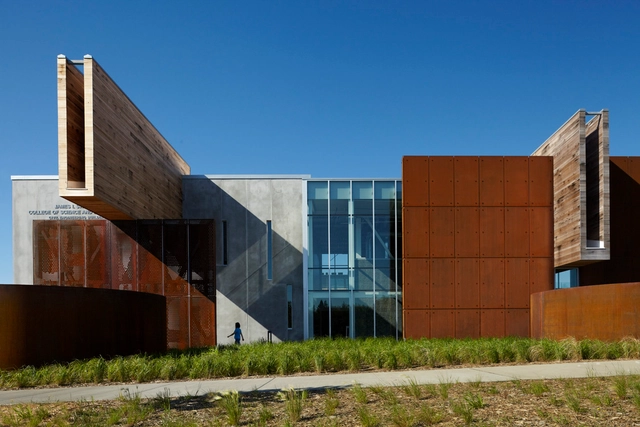
Architecture draws together influences in art, culture and daily life. When designing for local communities and sourcing regional materials, architects often take inspiration from vernacular traditions. Utilizing traditional materials and resources from the area where a building is located, they draw from local climates and a history of building and ideas. Building sites around the world are diverse locations shaped by new construction technologies, past techniques, and changing conditions of cultural life.
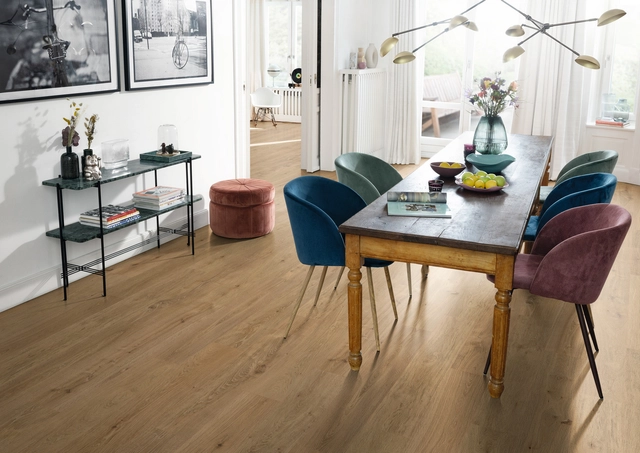
Greatly driven by the Covid-19 pandemic, interior design trends that prioritize comfort and well-being have become more prominent than ever in recent years. With former confinement restrictions and the rise of hybrid work, the amount of time spent indoors to carry out daily functions has risen drastically, forcing many to adapt their living spaces accordingly. As a result, demand has focused on residential interiors that foster calmness, peace and warmth, as well as on products and design elements that successfully meet these new needs. But how to achieve this? While there are many ways to promote comfort inside the home, one method has been indisputably proven to be the most successful: bringing nature in.

Bringing lighting to those in need using solar energy and affordable materials. This is the mission of the NGO Litro de Luz, which, during a three-day campaign, positively impacted the quality of life of 173 families from riverside communities living along the banks of the Rio Negro in the Amazon.

OMA /Jason Long revealed its latest adaptive reuse project in Detroit, transforming a former bakery and warehouse into mixed-use art, education and community space. Developed in collaboration with Library Street Collective, the project provides new headquarters for two local non-profits, PASC and Signal-Return, while creating a mix of artist studios, galleries, community-serving retail and gathering spaces. Dubbed “LANTERN”, the development is set to become an “activity condenser.”
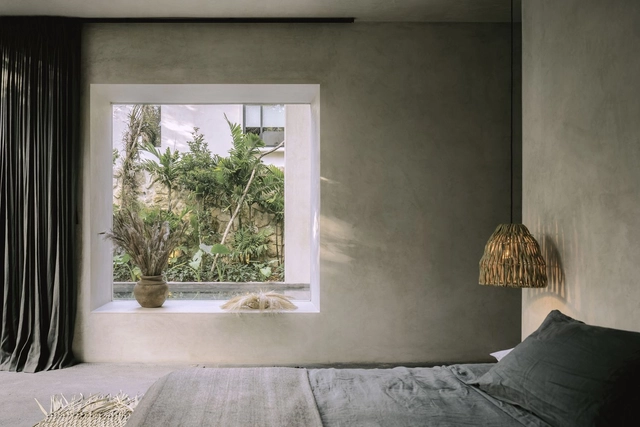
Windows are the elements that connect us to the outside world. It is from them that views are framed, privacy, lighting and natural ventilation are defined. Nowadays in the construction market we find different types of openings. Find out how to choose the type that best fits your project needs here.
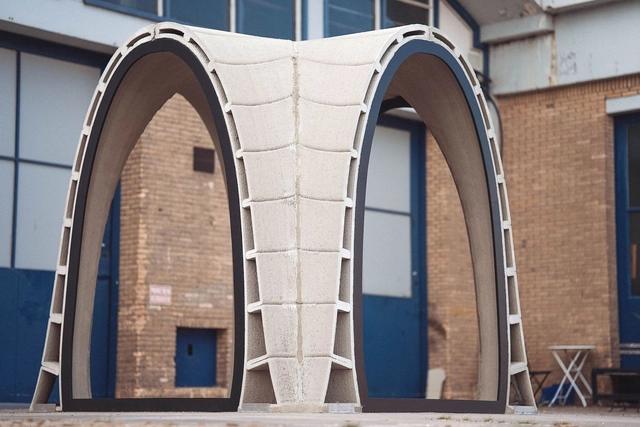
When browsing the 3D printing tag on ArchDaily, it is clear that this technology has developed at an incredibly fast pace. If in the early years we observed the concept as a distant possibility for the future or with small-scale examples, in recent years we have observed entire printed buildings and increasingly complex volumes being produced. Developed by reading a computer file, the fabrication is carried out through additive manufacturing with concrete - or other construction materials - and presents numerous difficulties in providing an efficient process that enables the constructive technique to become widespread. The pavilion printed by the Huizenprinters consortium, for example, illustrates this process well.
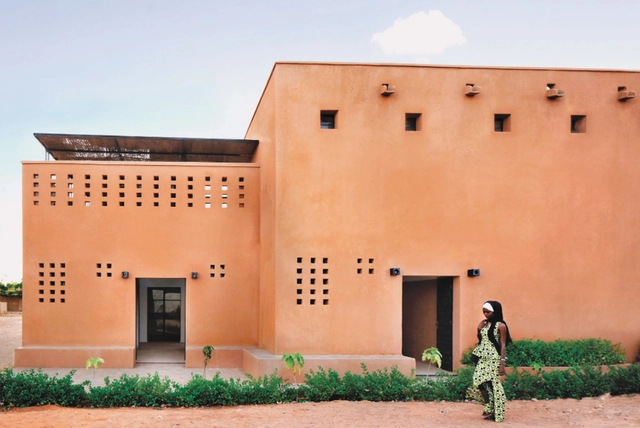
Architect Mariam Kamara—founder of Niamey, Niger-based firm Atelier Masōmī—is a contrarian of design pedagogy as it is largely practiced today. To Kamara, modern is not synonymous with European forms, architecture is not only for Westerners to define, and the so-called canon of great buildings actually ignores most of the built world. The Niger-based architect's rapidly growing practice informs a series of lectures she has delivered recently at MIT, Columbia University GSAPP, the African Futures Institute in Ghana, and Harvard GSD.

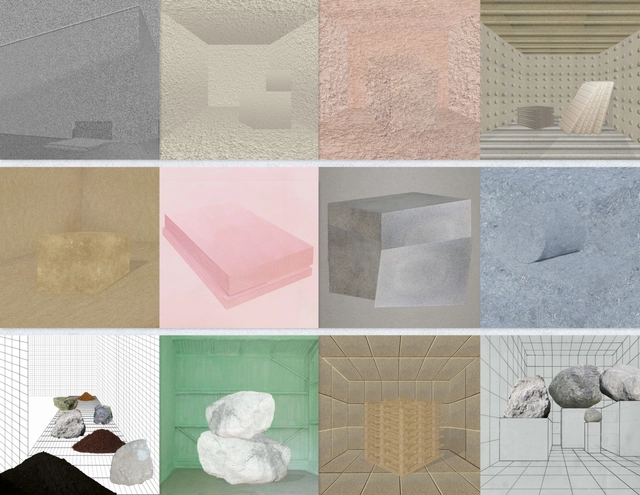
The Architectural League of New York has announced the winners of the 41st cycle of the annual Architectural League Prize for Young Architects + Designers. Open to young architects and designers ten years or less out of a bachelor’s or master’s degree program, the award seeks to recognize visionary work by young practitioners and encourage the development of talented young architects and designers.

From May 10 to 15, the second edition of the Barcelona International Architecture Film Festival (BARQ) will take place. The event will be hosted within the MODEL. Barcelona Architectures Festival. It will feature seven feature films and twelve short films in competition, which will be screened at Barcelona's Cines Girona and the Disseny HUB. During the festival, the selected films will also be available on the Filmin platform.

Although some may question it, architecture is essentially a service industry. And like in all services, the process itself (meetings, invoices, payments) can be just as important as the end result (the finished project). At the end of the day, if you offer a coherent, efficient and well-structured service that complements a good design, clients will be satisfied and are likely to return. They will also spread the word and recommend the office, which is ultimately the best way for design professionals to build a good reputation and attract new customers.
Many boxes must be checked to provide a good service. But perhaps one of the most crucial involves billing and payments, which are vital for cashflow and thus fundamental for businesses. In project-based industries like architecture and design, fees are usually paid out in various installments defined by specific time frames, from the initial design delivery to construction. Therefore, receiving a consistent, predictable income in all stages is indispensable; it avoids non-payments and delays that can hinder project delivery and cause complicated situations.
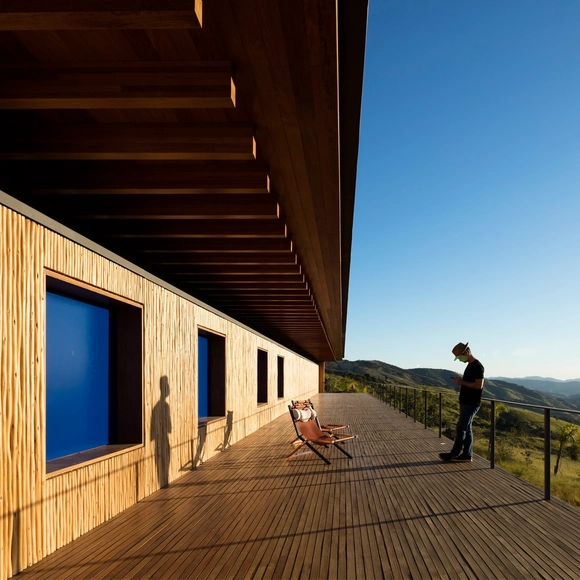
There is no shortage of filmmakers trained in architecture, nor of architects passionate about cinema. On the Betoneira Podcast, architect and filmmaker Marcio Kogan joined hosts Marcelo Barbosa and André Scarpa, both architects and cinephiles, to discuss the films that have shaped their lives and influenced their architecture.
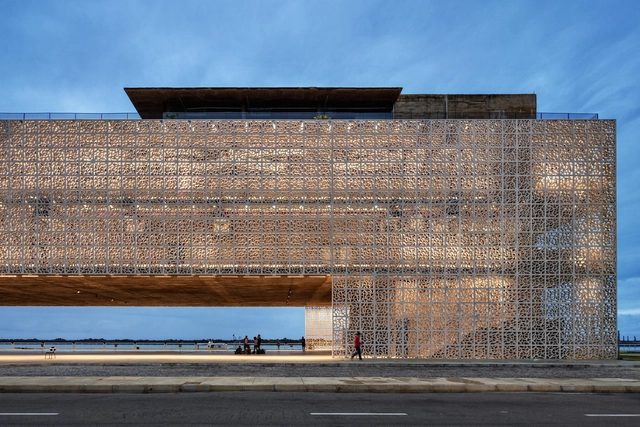
Nothing is more representative for an office than carrying the name of the country on its identity. Far from seeming banal, the architecture of Brazil in Brasil Arquitetura undergoes a thorough analysis that highlights aspects of Brazilian culture and society.

Even before we got used to remote work, some offices were already concerned about the well-being of their teams and how to attract new talent to work in their physical spaces. In this context, the decompression rooms had already become fundamental parts of the architectural program to demonstrate that the company is concerned with encouraging people to live together, relieving everyday pressure and bringing moments of pleasure during the workday. Currently, when many have already returned to the offices, environments like this have become increasingly essential to ensure the well-being of the employee, as well as improve their performance.
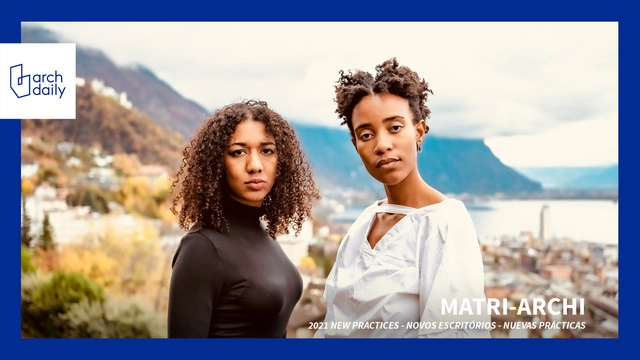
Led by architectural designers Khensani de Klerk and Solange Mbanefo, Matri-Archi is a collective based between Switzerland and South Africa that aims to bring African women together for the development of spatial education in African cities. Through design practice, writing, podcasts, and other initiatives, Matri-Archi — one of ArchDaily's Best New Practices of 2021 — focuses on the recognition and empowerment of women in the spatial field and architectural industry.
ArchDaily had the opportunity to talk to the co-directors of the collective on hegemonic space, informal architecture, technology, local idiosyncrasies, and the future of African and global cities. Read the full interview below.
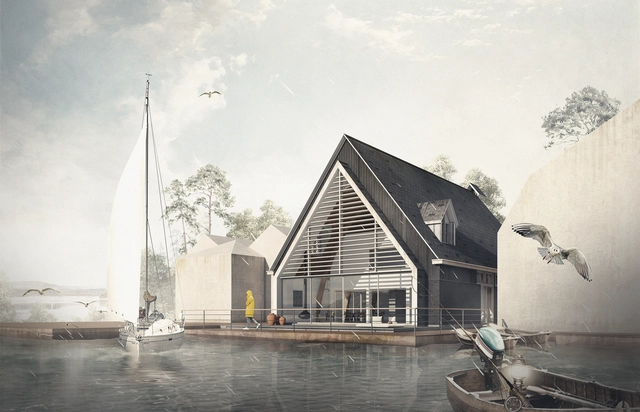
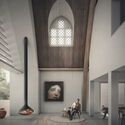
Architectural visualization is a branch of the profession that has gradually evolved to show more than just a final image of the projects presented. Over the years, with new tools made available by technology, it has become increasingly interesting to explore the different facets that speak not only to an author's language, but to a firm's own processes. At ArchDaily, architectural visualization has been a topic we have explored through various articles that reveal different ways of working, but above all, of communicating.

Forests cover about a third of the planet and play a fundamental role for life on Earth. According to Peter Wohlleben, author of the book “The Secret Life of Trees”, through fungal weaves, specimens of a forest can communicate with each other, exchange nutrients, help out the weakest plants, and organize survival strategies, which is essential for the healthy growth of individuals. The preservation of existing forests and the creation of new ones are essential for biodiversity and natural recovery, but also to meet the demand for wood. According to a report by the WWF (World Wide Fund for Nature), it is estimated that the amount of wood harvested in the world will triple by the year 2050, with the increase in population and income in developing countries. In addition, it is estimated that there will be an increased use of wood to manufacture biofuels, pharmaceuticals, plastics, cosmetics, consumer electronics and textiles. Searching for wood substitutes can be a smart path towards a sustainable future, especially if the alternatives are made using waste generated by other industries. Pyrus, for example, is an oil-free wood material produced sustainably with bacterial cellulose waste repurposed from the kombucha industry.