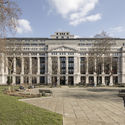
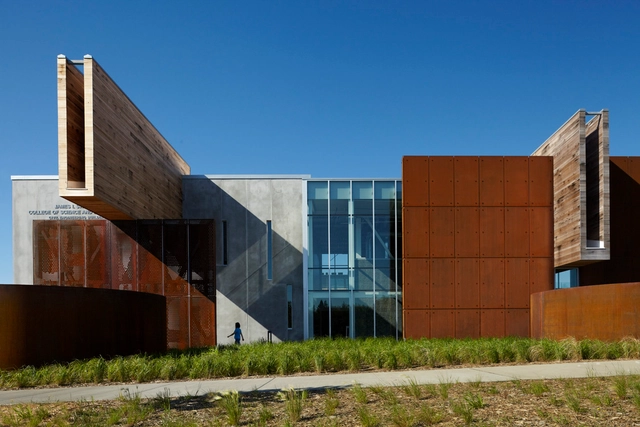
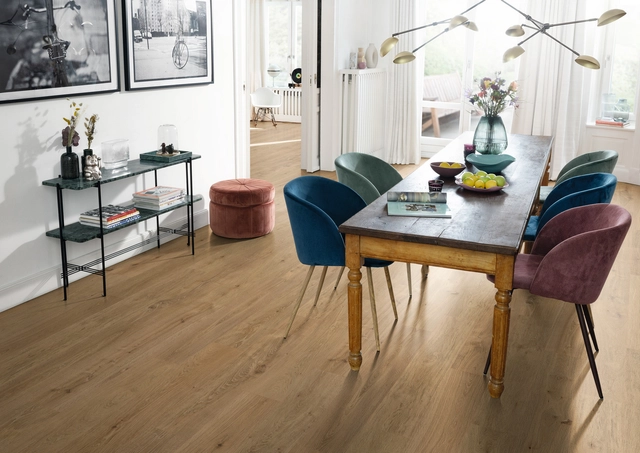
With more than 11,000 years of history, brick is one of the oldest building materials. In fact, replacing sun-dried mud blocks, the Romans were the first to experiment with fired clay masses in new structural forms such as arches, vaults, and domes. Although the dimensions and manufacturing methods of this small module have evolved over the years, its components and classic rectangular shape have undergone few changes, especially considering its long history. The reason is simple: with its warmth, versatility, and outstanding structural properties, brick is a timeless material that never goes out of style.
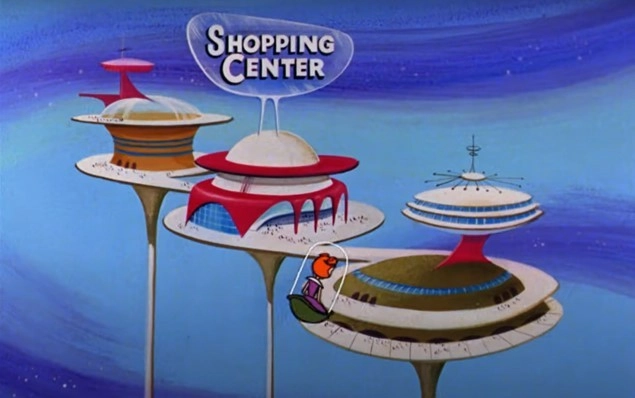
Futuristic shopping center. Image via The Jetsons, 1962 / Hanna-Barbera Productions
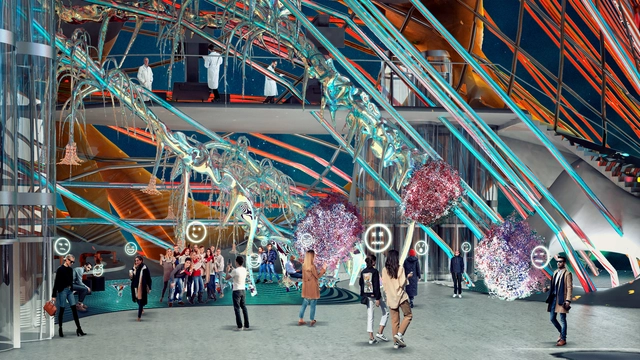
The dawn of nuclear power, dramatic advances in rocketry, and the desire to be the first to put men into space and on the moon, kick-started an era known as the ‘Space Age’. Upon the closure of WW2, both the Soviets and the Allies found themselves in a state of antagonism, as they both began to struggle to make advancements in space exploration before the other, a race for space. The era would give way to rapid advancements in technology and huge accomplishments including the moon landing in 1969. The Space Age aesthetic completely changed the way designers visualized the new world and left a dramatic impression on architecture and interiors. A new vision of futurism and prosperity.
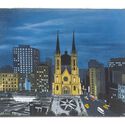
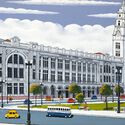
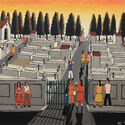
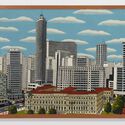
"Agostinho de Freitas was an extraordinary artist," says Agnaldo Farias, art critic, professor, and curator of the exhibition “Agostinho Batista de Freitas – Mestre das Ruas,” on view from May 12 to June 11 at Galeria Estação in São Paulo. The exhibition features a selection of about 20 of the artist's canvases from the collection of gallerist Vilma Eid.
The Second Studio (formerly The Midnight Charette) is an explicit podcast about design, architecture, and the everyday. Hosted by Architects David Lee and Marina Bourderonnet, it features different creative professionals in unscripted conversations that allow for thoughtful takes and personal discussions.
A variety of subjects are covered with honesty and humor: some episodes are interviews, while others are tips for fellow designers, reviews of buildings and other projects, or casual explorations of everyday life and design. The Second Studio is also available on iTunes, Spotify, and YouTube.
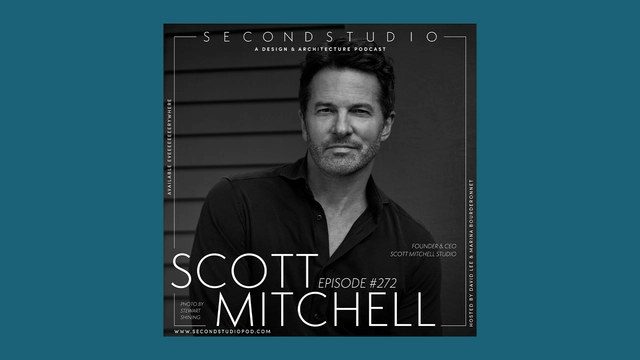
This week David and Marina are joined by Scott Mitchell, Founder and Chief Executive Officer of Scott Mitchell Studio, to discuss his designs; his early interests in architecture; his office; influential people in his life; the power of thoughtful architecture; and much more.
The National Congress will officially discuss the proposal for the Professional Microentrepreneur (MEP), a tax category that would reduce taxes paid by architects, urban planners, and other independent professionals. The proposal, drafted by CAU in partnership with the Board of National Entities of Architects and Urban Planners (CEAU), was introduced by Federal Deputy Érica Kokay in the Chamber of Deputies as Supplementary Bill No. 55/2022.
https://www.archdaily.com/1131906/national-congress-debates-bill-to-reduce-taxes-for-architectsArchDaily Team
“Libros Model” is presented in Barcelona's Plaza Reial, hosted by its curator, Ethel Baraona. Joined by Santiago Bogani, they speak with curious visitors who stop to ask about the wooden wall and table filled with architectural publications.
The installation features a selection of 90 books from various international publishers promoting and disseminating work and ideas within the architectural field—inviting reflection on the central theme of the Model. Barcelona Architectures Festival: Re-Grow.
As part of “Libros Model,” a network of bookstores and libraries across Barcelona will also present special collections reflecting on the five themes of this inaugural edition of the festival: Between-Classes, Between-Cultures, Between-Species, Between-Generations, and Between-Materials.
From 'A Bestiary of the Anthropocene' to 'Icebergs, Zombies, and the Ultra-Thin', the complete selection of books curated by Baraona is presented below.
From Epic Games' Build: Architecture 2021. Image Courtesy of Zaha Hadid Architects
Epic Games operates one of the world’s largest games, Fortnite, and also develops Unreal Engine, the most advanced real-time 3D creation tool that powers Fortnite and is used in industries beyond games. Over the last few years, more professionals in architecture and related fields are using Unreal Engine to bring stunning, photorealistic worlds to life.
In an exclusive interview with ArchDaily, David Weir-McCall, Architecture Industry Marketing Manager at Epic Games, shares his insights on the use of digital technology, such as the likes of Unreal Engine, for collaboration and co-design within the field of architecture, engineering, and construction.
No País dos Arquitectosis a podcast created by Sara Nunes, who also runs the architecture film production company Building Pictures. The podcast aims to profile the professionals, projects, and stories behind Portugal's leading contemporary architecture. With just over 10 million inhabitants, Portugal is a fascinating country when it comes to this professional field, and its architectural output far exceeds its population or territorial scale.
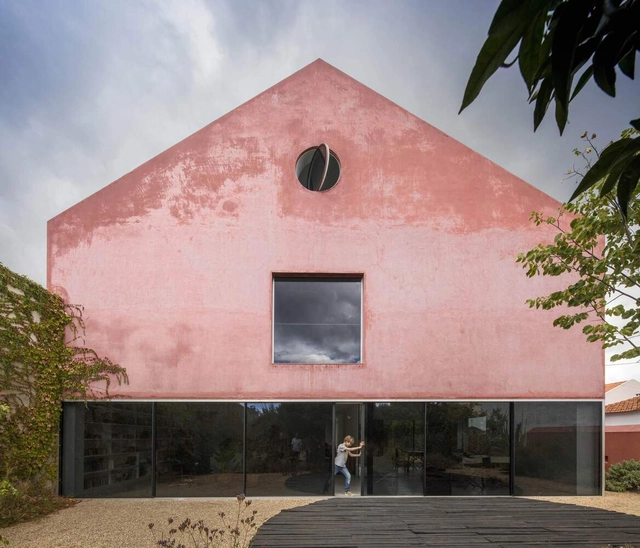
In this episode, Sara talks with the architects of extrastudio, João Caldeira Ferrão and João Costa Ribeiro, about the Red House project. Listen to the full interview and read an excerpt of the transcript below:
El poder de la Data - Render interior conceptual. . Image Cortesia de Online Lab of Architecture (OLA)
From NFTs to the metaverse and the benefits of real-time rendering, this is an opportune moment to discuss the latest trends in architectural visualization.
With this in mind, we want to open the debate and hear your thoughts on the subject. What can we learn from other related industries, such as cinema, video games, and industrial design? How can architecture contribute to and advance the world of visualization?
Through the construction of a narrative fiction, this work by Federico Lagomarsino, framed around the landscape, aims to depict everything that unfolds in contemporary society when a singular event occurs—in this case, the impact of the two largest meteorites detected to date in South America.
When developing an architectural project, regardless of scale or program, architects face a series of decisions regarding the construction method to adopt, considering various aspects—structural, economic, available labor, aesthetics, among others—in pursuit of the best solution.
To address the many questions that arise during design development regarding the choice of structural systems, we have prepared a practical guide to the main types of cast-in-place and precast concrete slabs that designers should know, highlighting the advantages and disadvantages of each.
One of the elements of most affinity between architecture and cinema is the scenographic project. The set designer, like the architect, starts from a concept to create spaces with a purpose. The architect designs spaces for living and the set designer designs spaces for storytelling. Many architects work with scenography because of the affinity between the activities.
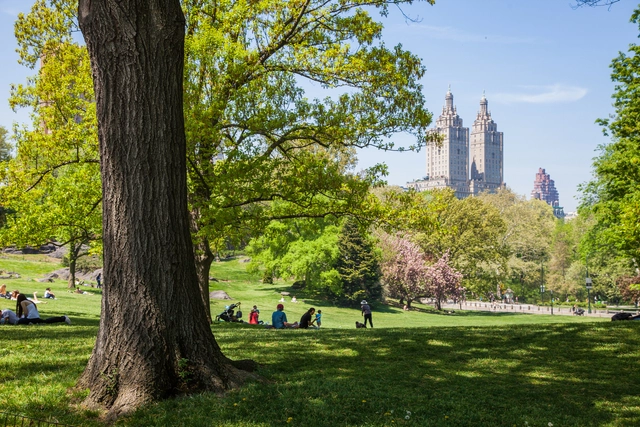
Central Park, New York, NY, 2015. Photo by Barrett Doherty. Image Courtesy of The Cultural Landscape Foundation
Celebrating the bicentennial of the birth of Frederick Law Olmsted, Sr., known as "the father of landscape architecture", the Cultural Landscape Foundation has created an ever-growing digital guide of Olmsted’s most notable works. The illustrated guide features more than 300 landscapes throughout North America, including Canada and 30 U.S. States, along with stories by practitioners who worked for, with, or were otherwise associated with Olmsted, Sr. and his successor firms.
Various cities have been experimenting with wavering fees for public transport in an effort to promote sustainable mobility, alleviate traffic congestion and decrease social inequality. This past February, Salt Lake City has paused fare collection for a month to reduce carbon emissions in the region. At the end of March, the Italian city of Genoa extended free access to some of its public transport networks, following a successful experiment which began at the end of 2021 and in an ambitious plan to become the first Italian city with free transportation. Meanwhile, the small duchy of Luxembourg became the world’s first country with free public transit in 2020.
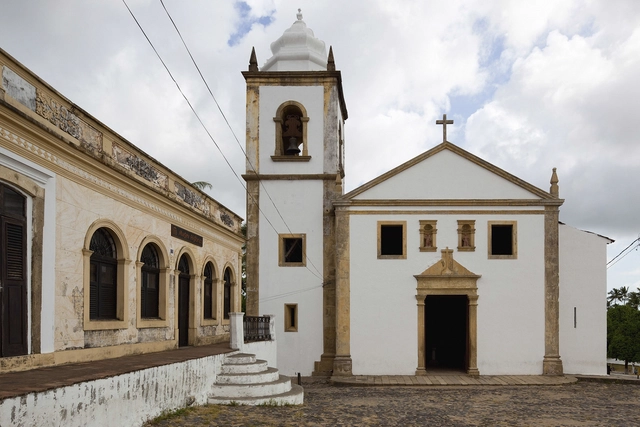
Dating back to 1535, the Church of Saints Cosmas and Damian in Igarassu, Pernambuco, is considered the oldest surviving church in Brazil. This iconic landmark has recently undergone an extensive restoration that preserves its historic features while introducing upgrades to facilitate its contemporary use. The intervention also included the adjacent two-story Parish House.
https://www.archdaily.com/1132380/brazils-oldest-church-restored-in-igarassu-pernambucoArchDaily Team
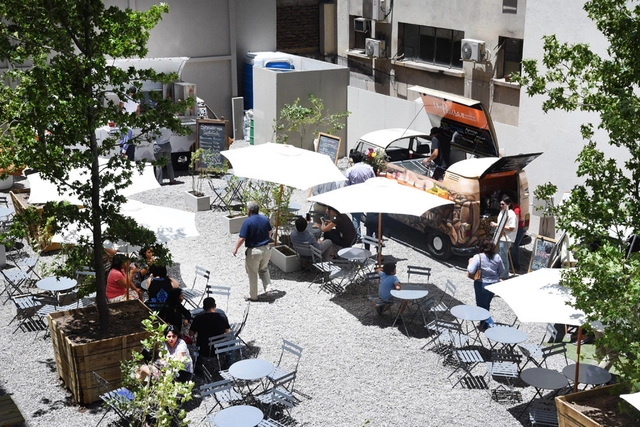
Today, one of the most popular initiatives regarding public space, participatory design and activism in the city is the so-called citizen urbanism or tactical urbanism. The approach proposes to trigger, through limited and low-cost interventions, long-term changes in public space, i.e. short-term action, long-term change (Street Plans, 2013).
The strategy used is to create temporary scenarios that make visible a specific problem and the formation of specific interventions to solve it, seeking to incorporate the community to give it relevance and promote its sustainability over time and, in this way, raise the discussion about the benefits of the projects for the quality of life in the context in which they are inserted.
Improving people's quality of life is one of the biggest goals of professionals in Architecture and Urbanism. When planning cities, creating housing or carrying out a simple refurbishment, we seek to improve the built space regardless of scale. The Urban Rehabilitation of Alto de Bomba, carried out in the city of Mindelo, Cape Verde, arose from the need to combat the precariousness found previously in the place. A project that required the immersion of the team in the daily life of the city and resulted in an inspiring proof of how much architecture can reveal better ways of living the city and acting directly in society. No wonder it received the Work of the Year Award in 2022, chosen by our readers as the winner among hundreds of competing projects.
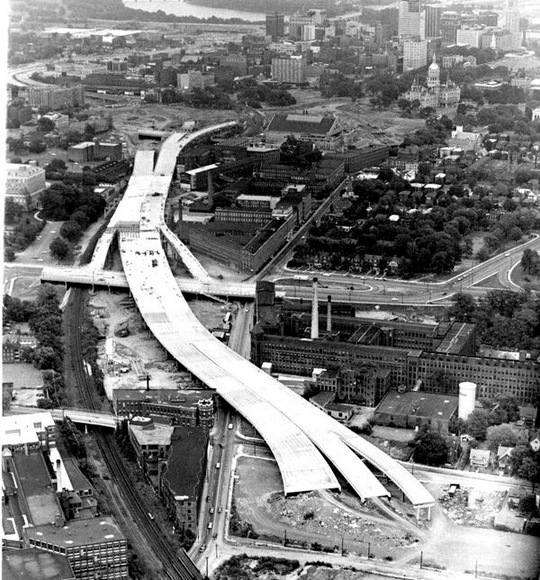
Can a piece of infrastructure literally kill a city? This is the question that writer Jim Krueger poses in his recent podcast, The Road That Killed a City. The place in question is Krueger’s current hometown—Hartford, Connecticut—which he grew up next to in the leafy suburb of West Hartford. Kruerger has lived in both towns, and that helps to balance the amazing story he uncovers about how Connecticut’s capital was impaled by a roadway (actually, two: east/west I-84 and north/south I-91 converge in Hartford in a sort of arterial highway ground zero). I spoke with Krueger about what prompted the podcast, some of what he uncovered about the history of this ill-fated urban “improvement,” and the legacy of a highway that continues to thwart Hartford’s rebirth—an inheritance shared by many cities across North America.
https://www.archdaily.com/981425/did-a-highway-kill-the-city-of-hartfordMichael J. Crosbie
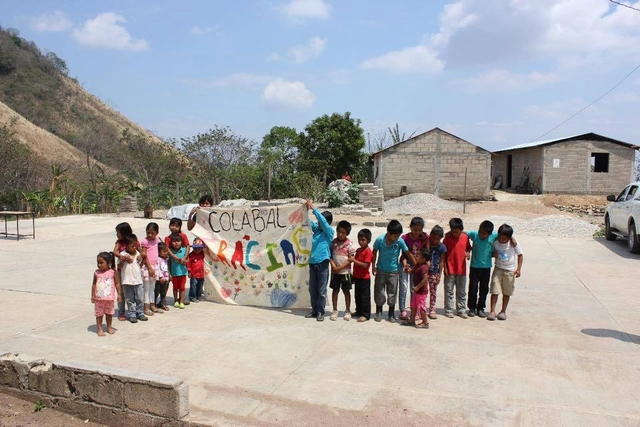
When we speak of social production, we refer to processes where community leaders are adults who represent and make decisions for their community; however, we often overlook children, who also enjoy and live in these spaces. They are the ones with limitless imagination and creativity, who create scenarios on Mars on a basketball court. They are the ones who hold the best car races in the loose sand of their backyards. They are children who, due to various family or economic circumstances, cannot write a letter, but instead express what they feel and want through the lines they draw.
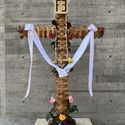
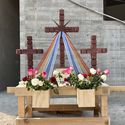
May 3rd is a holiday originating from the Finding of the Holy Cross (also known as May Cross or Feast of the Crosses), which traces its roots back to Roman rites celebrating the Cross of Christ. Over time, this commemoration has evolved and been adopted across cities in Mexico, Chile, Spain, Ecuador, El Salvador, Guatemala, Paraguay, Peru, Trinidad and Tobago, Argentina, Colombia, and Venezuela, where traditions include floral decorations, processions, and dances.
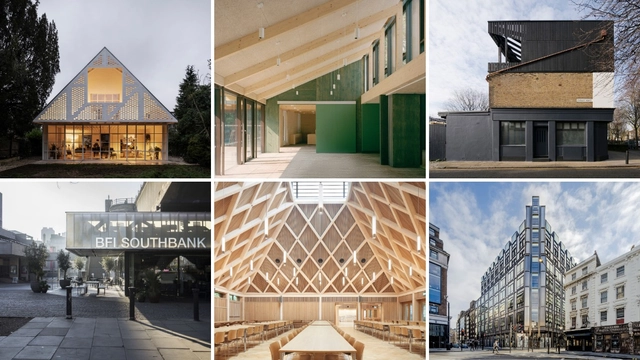
The Royal Institute of British Architects (RIBA) has announced the winning projects for the 2022 RIBA London architecture awards. The list of 42 buildings includes projects ranging from a sustainable council housing development to a cookery school for children, showcasing the best architectural interventions in London over the past two years. The projects were selected by a regional jury, who visited all 66 shortlisted projects. RIBA London Award winners will now be considered for a highly-coveted RIBA National Awardin recognition of their architectural excellence, which will be announced in June.
Architecture draws together influences in art, culture and daily life. When designing for local communities and sourcing regional materials, architects often take inspiration from vernacular traditions. Utilizing traditional materials and resources from the area where a building is located, they draw from local climates and a history of building and ideas. Building sites around the world are diverse locations shaped by new construction technologies, past techniques, and changing conditions of cultural life.
Greatly driven by the Covid-19 pandemic, interior design trends that prioritize comfort and well-being have become more prominent than ever in recent years. With former confinement restrictions and the rise of hybrid work, the amount of time spent indoors to carry out daily functions has risen drastically, forcing many to adapt their living spaces accordingly. As a result, demand has focused on residential interiors that foster calmness, peace and warmth, as well as on products and design elements that successfully meet these new needs. But how to achieve this? While there are many ways to promote comfort inside the home, one method has been indisputably proven to be the most successful: bringing nature in.
Bringing lighting to those in need using solar energy and affordable materials. This is the mission of the NGO Litro de Luz, which, during a three-day campaign, positively impacted the quality of life of 173 families from riverside communities living along the banks of the Rio Negro in the Amazon.







.jpg?1651685605&format=webp&width=640&height=580)