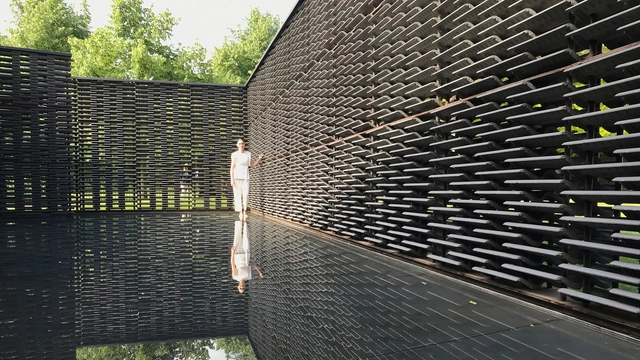
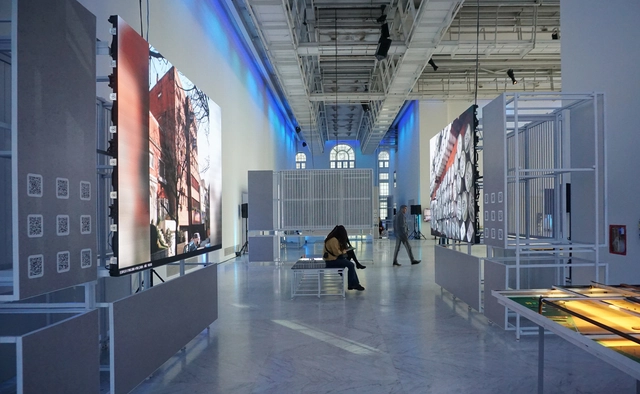
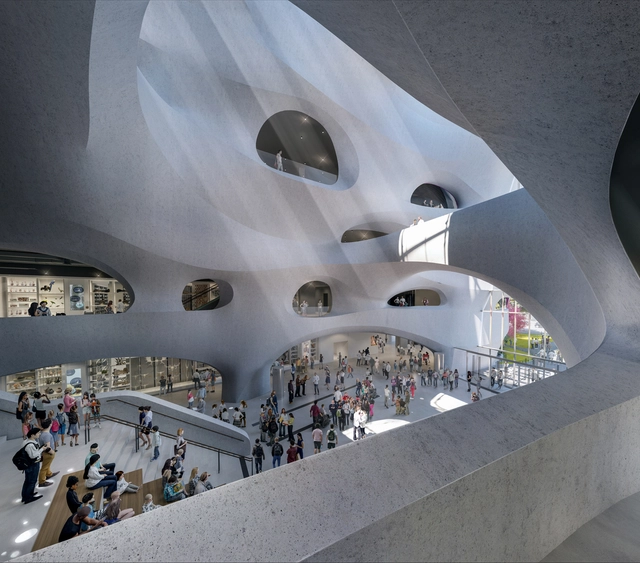
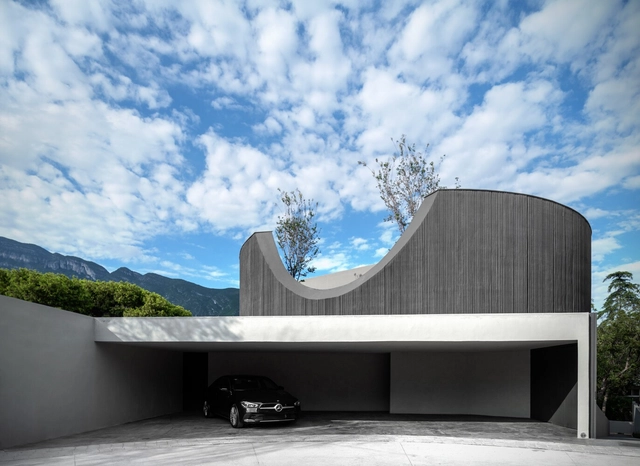
Each year, TIME publishes TIME100 Next, a list, inspired by its flagship TIME100, seeking to recognize 100 people from all industries around the world whose careers are on the rise. As a result, the 2022 TIME100 Next list features high-profile musicians and medical professionals, government officials, movement leaders and whistleblowers along with top CEOs, all selected by TIME journalists. However, in this year's list it is possible to recognize the only professional that represents the guild: the Mexican architect Frida Escobedo.
Don't be fooled. Size really does matter. Particularly when it comes to new urban housing developments, where the challenge of squaring housing density with quality of life and sustainability remains key.
On Wednesday, September 28, the 18th edition of the Buenos Aires International Architecture Biennale opened at the Faena Art Center in Puerto Madero, where it will run through Sunday, October 2. The five-day event celebrates and recognizes the social value of architecture and urbanism, bringing together leading contemporary architects and urbanists. For the first time, the event is free and open to the public.
Videos
Bad Bunny - "El Apagón" . Image via YouTube
As part of his recent releases over the past few months, the globally renowned reggaeton artist Bad Bunny debuted his new music video for the song "El Apagón," a track from his latest album "Un verano sin ti." Although the song was already streaming across various platforms, few anticipated that the video's release would serve as a powerful political stance on the current situation in Puerto Rico.
The Lusail Stadium, the largest stadium in Qatar and the centerpiece venue for the FIFA World Cup Qatar 2022™, is now open to the public. On 9 September, the stadium hosted the Lusail Super Cup final between Al Hilal SFC and Zamalek, an event seen as the precursor to the FIFA World Cup Qatar that will be played later this year. Located in Lusail City, 15 kilometers north of Doha, the 80,000-seat stadium aims to create an immersive atmosphere for both players and spectators. The building was designed with Foster + Partners’ joint venture partner Arup, and sports specialist Populous.
Studio Gang's founder, Jeanne Gang, is the winner of the 2022 ULI Prize for Visionaries in Urban Development, the most prestigious and respected honor in the real estate, land use, and development community. From museums and skyscrapers, including the Arkansas Museum of Fine Arts and the St. Regis Tower in Chicago, Gang has demonstrated her work in creating and implementing better practices in sustainable reuse, ecological biodiversity, and social equity. Gang, the first woman architect to get the prize for Visionaries in Urban Development, joins the ULI laureates list along with Alejandro Aravena, Richard Rogers, and Vincent Scully.
As part of a Tec de Monterrey initiative, this year the First Prize of the 213th Traditional Tec Draw is being held with a work by the Chilean architect who won the 2016 Pritzker Prize, Alejandro Aravena. Elemental House, is the second of the Houses of the 75th Anniversary of Sorteos Tec, which is celebrated this year.
When war started in Ukraine, the faculty and students of the Kharkiv School of Architecture (KhSA) were forced to flee from their city. After three weeks of being scattered across Ukraine and Europe, they decided to reconvene in Ukraine and continue their work. The school relocated to Lviv, one of the safest cities in Ukraine, in order to restart their in-person education. Various platforms and institutions in Lviv, like the Lviv National Academy of Arts, are hosting the dislocated institution and providing continuous support. The KhSA is also looking for financial support to help keep the school open.
Ever since Meta CEO Mark Zuckerberg renamed his company and announced a larger investment in the so-called “metaverse,” searches for the term have surged considerably. And while it is not a new concept, the technological topics surrounding the subject have exploded in recent years.
Cryptocurrencies, NFTs, and the overall creation of a virtual economy help illustrate how the metaverse is cementing its place in our daily lives. Yet, the opportunities extend far beyond financial shifts: the metaverse is also proving to be an important space for engineers and architects alike.
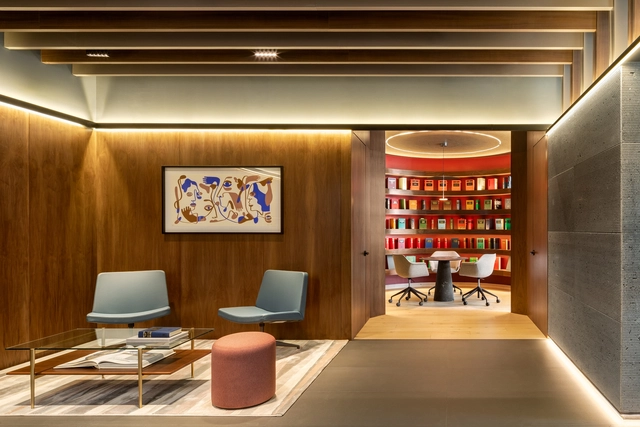
The Mexican firm Faci Leboreiro, led by Carlos Faci and Marina Leboreiro, has been recognized at the Grands Prix du Design in Quebec, Canada, for the interior design of their project Estudio Basalto, receiving the Gold Certification in the Office category. The fifteenth edition of the competition—which celebrates international excellence and exemplary practice among architects and designers—was held at the Théâtre Le Capitole before a jury of prominent professionals and academics.
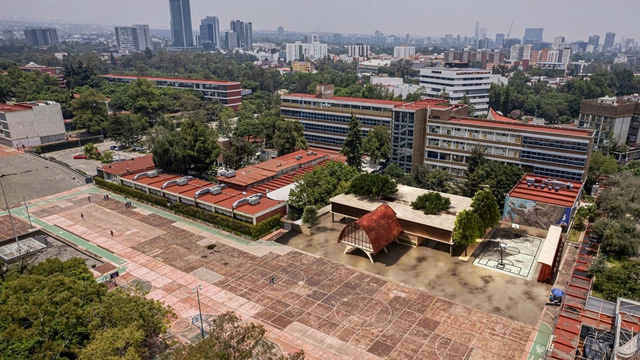
For 37 years, since 1985, the Faculty of Architecture at the National Autonomous University of Mexico (UNAM) has organized and hosted the Alberto J. Pani Architectural Composition Award, aiming to bring together the top students from member institutions of the Association of Architecture Education Institutions of the Mexican Republic (ASINEA). The event is organized in collaboration with an ASINEA member institution, which this year is the Faculty of Architecture at the Universidad DeLaSalle Bajío in León, Guanajuato.
https://www.archdaily.com/1131936/finalists-of-the-38th-alberto-j-pani-architectural-composition-award-2022-of-the-faculty-of-architecture-unamArchDaily Team
Raúl Cárdenas and Ana Martínez (ToroLab), alongside Anna Vergés and Guillem Augé (UNDO), are the curators of the XII Ibero-American Biennial of Architecture and Urbanism. In 2022, under the theme "Living on the Margins," the biennial set out to showcase the work of those who are providing solutions to growing social, environmental, and economic needs outside the mainstream system. To this end, they fostered a space for reflection on the use of individual and collective space—bridging the home and the street—sparking an optimistic and timely debate on the urban challenges facing the Ibero-American landscape.
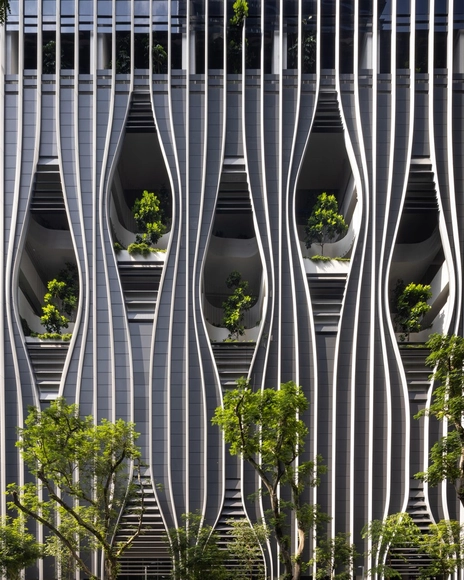
Designed by BIG-Bjarke Ingels Group and CRA-Carlo Ratti Associati, CapitaSpring is Singapore’s latest addition to its skyline. Recently completed after four years of construction, the 280-meter-tall high-rise oasis, considered among the city’s tallest structures, is a mixed-use high-rise with abundant sky gardens and rooftop park, office space, a serviced residence, a hawker center, restaurants, and public spaces.
The biophilic skyscraper, aligned with “the city’s pioneering vertical urbanism” and Singapore’s reputation as a garden city, is located at the heart of the financial district on the site of a former public car park and a hawker center. Comprising 80,000 plants, translating to a total landscaped area of more than 140% of its site area, the tower puts in place a “new green breathing space in the high-density CBD for the neighboring tenants and passersby”.
According to the National Fire Academy of Chile, a fire is defined as “fire out of control.” Once a fire starts, temperatures can reach 1000° Celsius, generating flames and smoke that endanger both human lives and buildings.
According to a report by ONEMI, the main causes of structural fires – those occurring in homes, buildings, and commercial premises – include domestic accidents, electrical failures, and gas leaks.
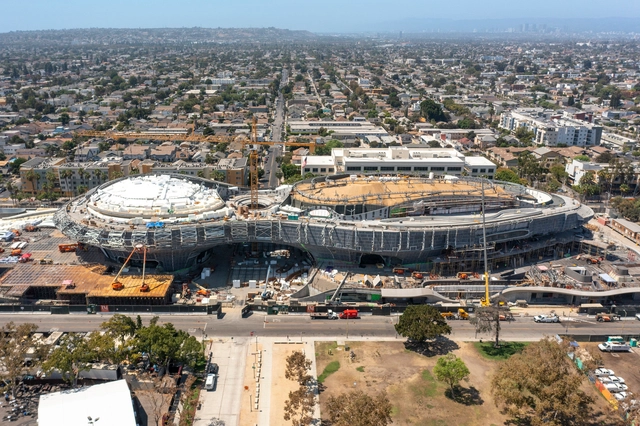
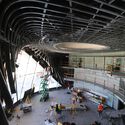
Scheduled to open in 2025, the Lucas Museum of Narrative Art in Los Angeles’s Exposition Park, reveals the latest details in the construction and addition of artwork. The first of its kind, the Lucas Museum, founded by filmmaker George Lucas and his wife Mellody Hobson, will be devoted to all forms of visual storytelling, including painting, photography, sculpture, illustration, comic art, performance, and video. Designed by Ma Yansong of MAD Architects with Michael Siegel of Stantec, the five-story and 27900 square-meter building will feature a gallery space, two state-of-the-art theaters, and dedicated spaces for learning and engagement, dining, retail, and events.
The Brazilian Steel Construction Center (CBCA) has announced the winners of the 15th CBCA Competition for Architecture Students. In this nationwide competition, teams were challenged to address the theme “Industry, Innovation, and Infrastructure.”
Interior architecture is undoubtedly much more than the composition of aesthetically appealing environments. From building materials and thermal conditions to finishes and furniture, every design decision directly affects user comfort. However, this relationship between design and well-being is most evident at the residential scale, particularly as more than two years of the pandemic forced many to spend more time at home. This has positioned the home at the center of spatial renovation, transforming it into an environment dedicated to tranquility and health. Consequently, well-being is not a mere passing trend. While brought to the forefront by the pandemic, today it is a design movement that is here to stay—one to which every material and product must respond.
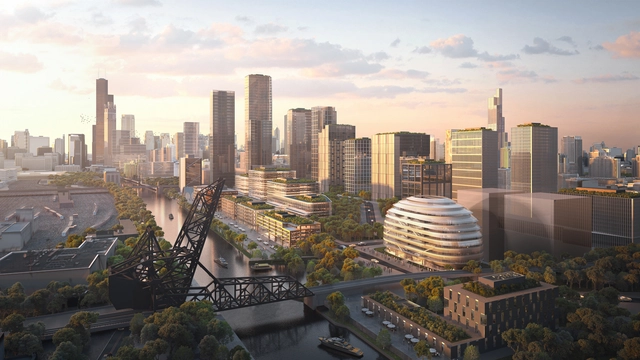
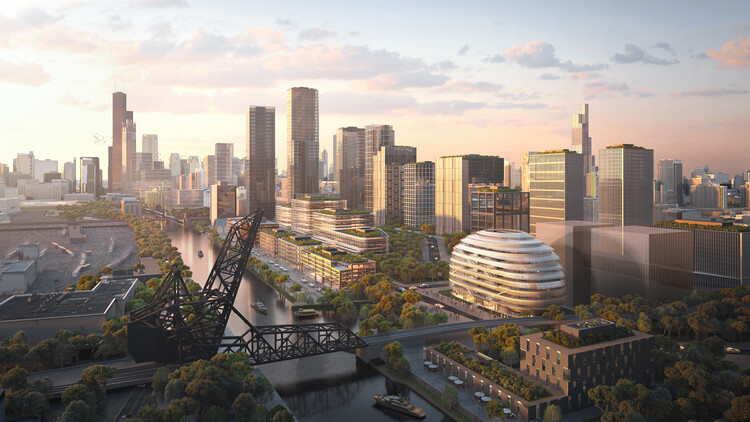
Architecture offices OMA, led by Partner Shohei Shigematsu, and Jacobs have unveiled the design for the new headquarters for the Discovery Partners Institute, part of the University of Illinois System. The building is planned to anchor an innovation district at “The 78”, along the Chicago River. The eight-story building, located on a one-acre site southwest of the Loop, will provide more than 200,000 square feet of office, classroom, lab, and event space for DPI and its university and industry partners.
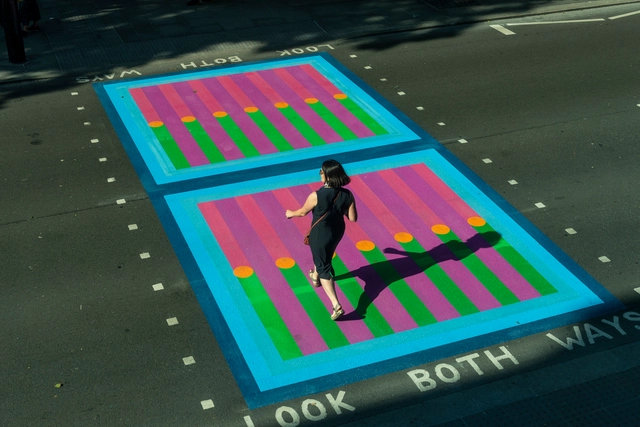
LetsBringLondonTogether. Image Courtesy of Yinka Ilori
PARABLES FOR HAPPINESS by the London-based British-Nigerian designer Yinka Ilori features for the first time at the Design Museum in London. Exhibited from September 25, 2022, to June 25, 2023, essential aspects of Ilori’s work will be placed beside key influences, including artworks, photographs, and furniture, to Nigerian textiles. Curated by Priya Khanchandani, the exhibition celebrates Ilori’s mix of cultural influences and unpacks the ingredients of a diasporic visual language.
Generation Z comprises people born after 1995. They grew along with the popularization of the internet and interact with the world by integrating all forms of available technology.
The diversity of available media, the speed in information traffic, the interactivity in the virtual environment and the daily use of these technological assets common today, influence the behavior of individuals of this generation, inspiring versatility, agility and curiosity.
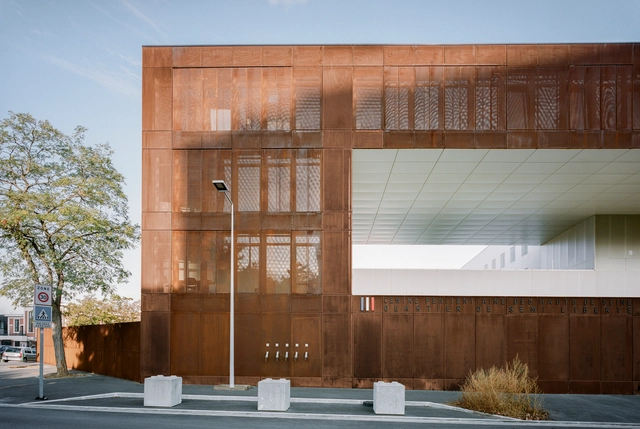
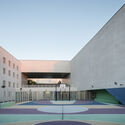
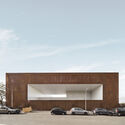
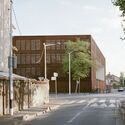
Commissioned from LAN (Local Architectural Network) by the French government, the Nanterre minimum-security prison project engages with the concepts of the penal system by critically reviewing the design of these buildings. The complex is guided by an attempt to better integrate it into the urban fabric, reinforcing the importance of the relationship between the city and prison structures as spaces for social integration. Consequently, understanding the proposal for the Nanterre Minimum-Security Area involves political, institutional, and historical factors that retrieve and reframe historical and contemporary debates surrounding the penitentiary system in general, and the French system in particular. While a prison is naturally understood by its confinement, LAN's design prioritizes an educational and humanitarian character to transform both the inmates and the public's perception of them.
https://www.archdaily.com/1132545/confinement-and-transparency-how-the-nanterre-minimum-security-area-contributes-to-redefining-the-classic-concept-of-the-prisonAlexandre Kok, Caio França, Gabriela Rudge, Lara Girardi, Lia Soares, Maria Clara Calixto, Marina Liesegang, Marina Saboya, Pedro Trama, Tamara Silberfeld e Valentina Kacelnik
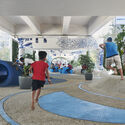
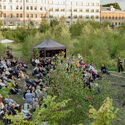
Noise, high-rises, cars, buses, subways, and a relentless flow of people coming and going. This is how large cities are portrayed in cinema. This imagery is compounded by distant personal relationships and the promise of anonymity within the crowd, shaping a vibrant, connected routine that can also feel oppressive and isolating. Today, we find ourselves in a constant search for balance between the benefits of the megacity and the challenges imposed by its scale.
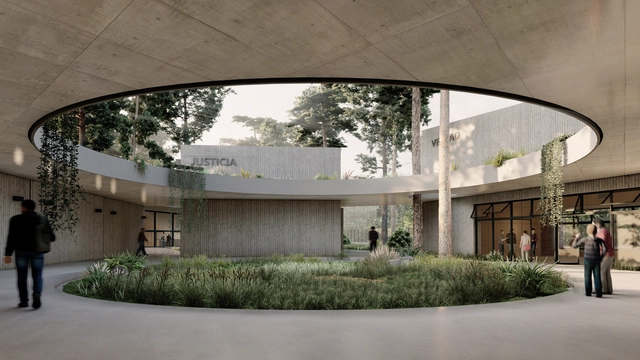
With the aim of bringing visibility to the state terror committed during the Argentine civic-military dictatorship that began in 1976, the Secretariat of Human Rights of the National Ministry of Justice and Human Rights commissioned the Institute of Architecture and Urbanism of the National University of San Martín (IA-UNSAM) to develop an architectural proposal for a new memory space on the grounds of Campo de Mayo, in the province of Buenos Aires.