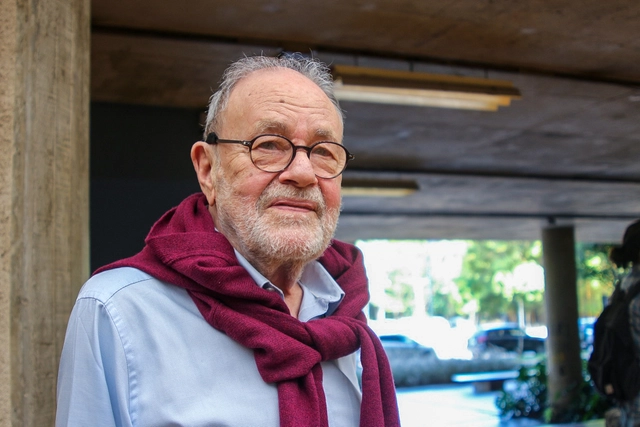
Sérgio Ferro is a Brazilian architect, artist, historian, and architectural critic who, due to his political activism during the military dictatorship, was imprisoned and exiled to France in the 1970s. Throughout his career, he has observed and intervened in the production spaces of civil construction, developing a critique of the production of plastic arts and architecture based on the construction process and its agents: the construction site, technologies, materials, and the builder.
In a historical context dominated by Eurocentric and male references, Ferro, along with architects Rodrigo Lefèvre and Flávio Império, formed Arquitetura Nova, a group that proposed debates centered on architectural production, the social role of the architect, and the relations of production on the construction site, challenging hegemonic thinking and practices, whether in design practice or academia. Following his exile, unable to practice as an architect, he dedicated himself to teaching at the École Nationale Supérieure d'Architecture de Grenoble.