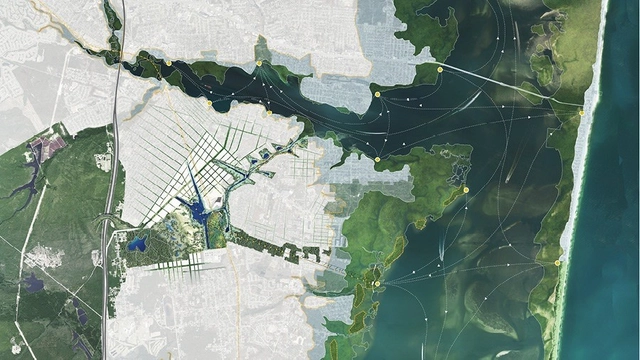
An aerial rendering from the Sasaki/Rutgers/Arup team shows Barnegat Bay, New Jersey. A threatened barrier island is visible on the right, and in the middle is a redeveloped area where people could, in theory, move. Image Courtesy of The Atlantic Cities
If you lived in a region repeatedly devastated by storms, would common sense be enough to make you leave your memories behind? Two of the ten proposals for the Rebuild by Design competition (which included proposals from OMA and BIG) tackle this issue, providing designs that compel communities to move to safety. To learn more about this sensitive and increasingly relevant social and political issue, known as "Managed Retreat," check out James Russell's article on The Atlantic Cities.
The owners of the Montréal-Mirabel International Airport have confirmed that, after a decade lying vacant, it will finally demolish the airport's sleek black terminal building. When it was completed in 1975, Mirabel was the world's largest airport, but it quickly became unpopular with airlines as it was simply too far from Montréal, and was re-purposed as a testing site and cargo airport. Now, with the terminal building requiring $15 million in emergency repairs, owner Aéroports de Montréal have announced that it is "irreparably obsolete" and are seeking tenders for its demolition. You can read the full story at CBC News.
Notre Dame Driehaus Prize laureate Pier Carlo Bontempi and Leon Krier’s Watercolor of the Piazza Matteotti
London-based architect John Simpson, a leading practitioner of New Classicism and New Urbanism, has been commissioned to design a new School of Architecture for the University of Notre Dame. As Dean Michael Lykoudis stated, Simpson’s work reflects the “principles and highest aspirations” of Notre Dame’s school, “which embraces the timeless classical values of durability, functionality and beauty.” The 80,000-square-foot building will be located on the campus’ south end.
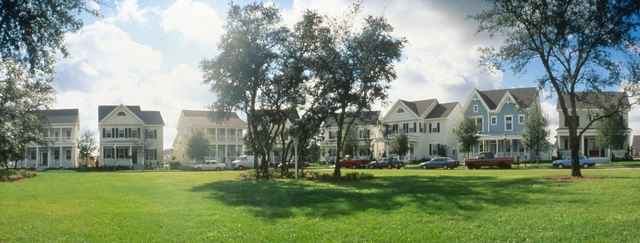
Disney-backed garden suburb, Celebration, Fla.. Image Courtesy of Robert A.M. Stern via NYT
The modern suburb has become an unruly sprawl, homogenous in style and over-dependent on the automobile. However, according to Robert A. M. Stern's new manifesto “Paradise Planned: The Garden Suburb and the Modern City,” there is a superior alternative for suburban development that could attract millennials and preserve quality of life in terms of health, economic savings, and physical safety: the centrally planned, pedestrian-friendly garden suburb. You can learn more about Stern’s 1,072 page manifesto on the garden suburb in this article by the New York Times.
Metro 1 has partnered with DawnTown Miami to present an international ideas, design and build competition for a true urban park in the heart of the burgeoning Wynwood Arts District in Miami, Florida. The winning design team will have their idea and proposal built as well as a cash prize of $10,000.
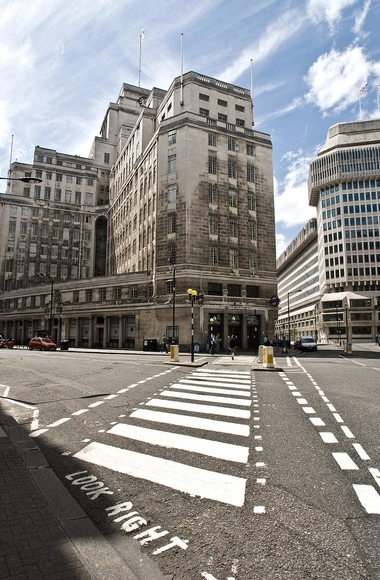
Transport for London today announced TateHindle as the winners of the competition to transform their London Underground Headquarters into a residential building. The building, designed by Charles Holden and completed in 1929, was once the tallest office block in London and has been home to Transport for London ever since. However, TfL say the building at 55 Broadway is "no longer fit for purpose", and will move out in 2015 when TateHindle will begin the renovation. You can read the full story on the Architects' Journal.
From CLOG. In many countries, architects assume that designing to meet the local building code assures that their buildings are safe for the public. But what if a building’s harm is not in the risk of the building falling down, but in the building performing as intended? If designed for the wrong purpose, can a building be a human rights violation, and if so, what should an architect do about it?
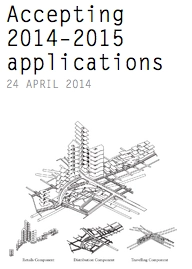
The Berlage is currently accepting applications for the 2014–2015 academic year. It offers an international, one-and-a-half-year English-language accreditated postgraduate-level Master of Science-degree program in architecture and urban design. The program focuses intensively on how architects and urban designers practice in a globalized world, concentrating on the complex development of the built environment within different contexts.
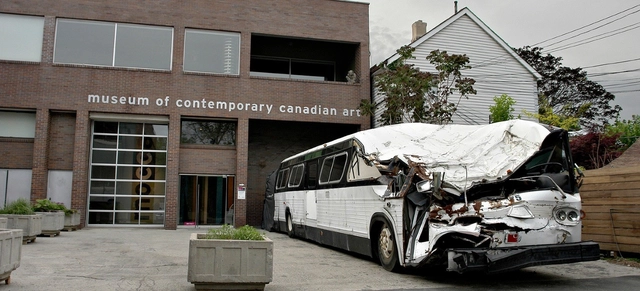
The Museum of Contemporary Canadian Art (MOCCA) is calling for submissions that respond to the thematic of an upcoming exhibition, entitled TBD, that will be on view September 5 to October 25, 2014 in Toronto, Canada.
The exhibition proposes that the definition of a museum is not fixed but rather “to be determined.” By asking, “what is a contem- porary art gallery?” the exhibition questions our fundamental assumptions concerning the role and importance of museums in so- ciety and their associated architectural forms. MOCCA’s galleries will become a place of inquiry and discussion featuring artworks and activities that destroy existing paradigms and offer projections about the shape of museums in the future. This is a particularly timely topic given the proliferation of museum architecture in Canada and abroad and the current juncture in MOCCA’s existence which sees the institution searching for a new and permanent venue.
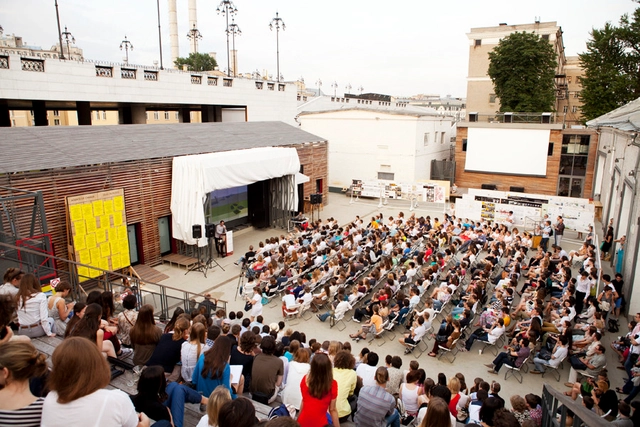
A collection of 41 interviews conducted by students at the Strelka Institute, entitled Future Urbanism, is now available online. The interviews feature architects, urban planners, sociologists, researchers, and other professionals from fields related to urban studies, emphasizing the Strelka Institute's mandate for interdisciplinary thinking. To take a look at the interviews, see here.
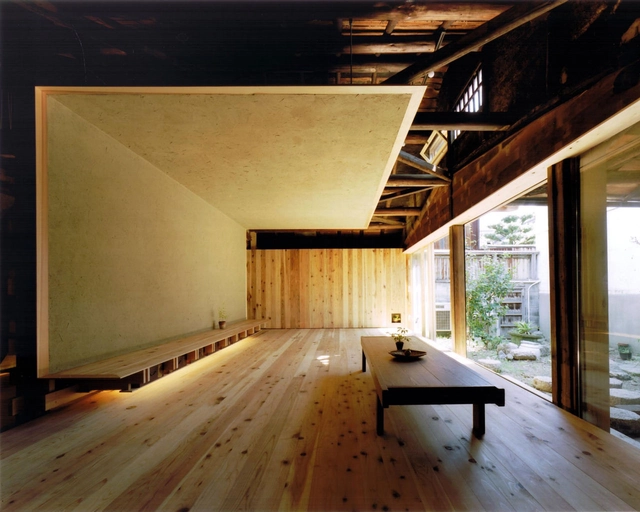
The Robert A.M. Stern Architects has awarded McGill University Masters candidate Anna Antropva with the 2014 RAMSA Travel Fellowship, a $10,000 award presented annually to "promote investigations of the perpetuation of tradition through invention" - key to the firm's own work. With the award, Antropva will travel to Japan to further her research into ancient wood joinery techniques and their potential to be transformed and manipulated into modern day construction. “This elegant and efficient mode of construction could meaningfully inform our western building industry," she stated during her presentation to a jury that included Melissa DelVecchio, Dan Lobitz, and Grant F. Marani.
https://www.archdaily.com/501497/robert-a-m-stern-awards-master-student-with-10-000-travel-fellowshipStephen Stanley
The U.S. Pavilion has launched an international search for 90 architects to collaborate (via satellite) with the eight principles of OfficeUS. The radical experiment, which will last the duration of the 2014 Venice Architecture Biennale, is calling for architects to lend their “voices, expertise and skills” in an effort to “redefine the terms of design and production of architecture on the global scale.” See if you qualify and learn more about the intentions behind OfficeUS here.
The Royal Institute of British Architects' (RIBA) latest Future Trends Survey indicates a small drop from February's index, "down to +35 from its all-time high of +41." Despite this, "confidence levels about an improvement in future workloads for architects remain very solid." All types of practice size, ranging from those with fewer than 10 employees to those with over 50 staff, are "reporting positive balance figures." The strongest future workload forecasts came from Scotland and the North of England, suggesting that "the recovery in confidence levels is now widespread across the UK and has spread beyond London and the South East."
Once the fourth largest city in America, Michigan’s primary Metropolis, Detroit has recently filed the largest municipal bankruptcy in the history of the United States. Among the many reasons for Detroit’s decline, two stand out: an undiversified economic model, reliant on the production and sale of automobiles, and an unprecedented degree of sprawl. Currently more than 77% of jobs in the metropolitan area reside more than ten miles from the city center, making Detroit the most job-sprawled city in the US and stretching city services beyond capacity. Detroit’s deterioration is just as much about urban decline as it is about industrial decline. Detroit is located in the Midwest portion of the United States and is part of a larger band of cities known as the Rust Belt which have gone through a process of decline over the past decades.
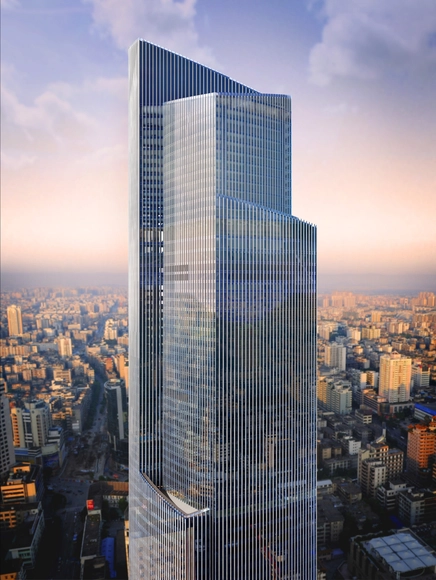
The days of elevator small talk could be coming to an end with Hitachi planning to deliver the world's fastest elevator by 2016. Capable of travelling at speeds of 72km/h (44m/h), the record-breaking lifts will be able to hoist passengers up 95 floors in less than 40 seconds. Khon Pedersen Fox's 530-meter Guangzhou CTF Finance Centre will be the first to house the super-speed elevators, amongst 13 other high-speed elevators and 28 double-decker elevators. Currently, the world's fastest elevator is by Toshiba and only capable of reaching speeds of 61km/h (38m/h) within Taipei 101. You can learn more about the super-speed elevators, here.
https://www.archdaily.com/500944/worlds-fastest-elevator-coming-soon-to-guangzhouStephen Stanley
The Noguchi Museum will be honoring architect Norman Foster and contemporary artist Hiroshi Sugimoto as the first recipients of the Isamu Noguchi Award on Tuesday, May 13. The award acknowledges individuals whose work relates to landscape architect and artist Isamu Noguchi, who promoted a multi-disciplinary, collaborative approach to the arts and was committed to innovation, global consciousness, and Japanese/American exchange. For more information on the benefit, see here.

.jpg?1399029392&format=webp&width=640&height=580)