"Some days it feels like Google is taking over the world." In an article for The Verge Sean Hollister investigates how Google now represents one tenth of Mountain View, the city which hosts the company's Californian headquarters. Having one of the world's largest tech companies on their doorstep is a cause of concern for residents, some of whom are now referring to their home as Googleville. Having just bought the lease for a former military airport some city council members are seeing the expansionist move as a step too far - read the article in full here.
In this Financial Times article, Will Hunter reacts to another FT article which brands architects as "cling-ons": "middle class but only by the skin of our teeth". Hunter's article looks at the reasons why our profession has suffered so badly, as doctors' and bankers' fortunes have improved dramatically. You can read the full article here.
Cities are developing into increasingly complex systems. This is giving rise to new scales of risk, making preparedness measures and resilience planning more challenging to formulate and implement.
In the early years of COOP HIMMELB(L)AU, Raimund Abraham was a role model - later on a friend. On the occasion of the Austrian government "Staatspreis" awarded to Raimund Abraham, Wolf D. Prix held the speech of honor, and characterized him as one of the main representatives of the Austrian architectural approach of celebrating space.
Tahrir Square during the Egyptian revolution of 2011. Image
In this tongue-in-cheek "Dictator's Guide to Urban Planning", the Atlantic explores the various ways that public spaces, and cities as a whole, have been used to suppress uprisings and bolster the control of authoritarian governments. Covering everything from Baron Haussmann's 19th Century Paris to the recent revolution in the Ukraine, the article reveals the fundamental relationship between public space and democracy. You can read the full article here.
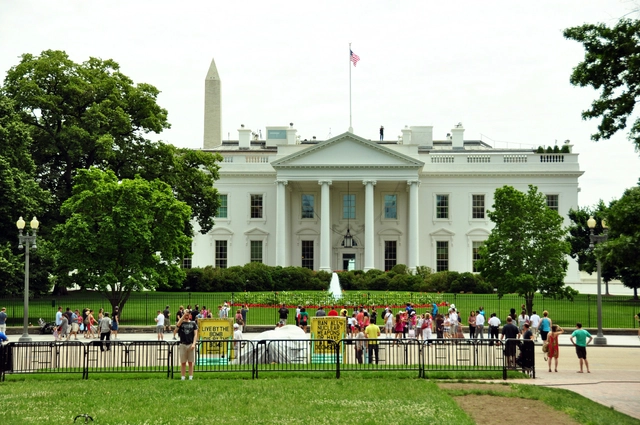
A public petition that the design of new Federal building projects be awarded by open architectural competition has been submitted to the White House’s “We The People” website for consideration by the Obama Administration. The appeal proposes to give young architects greater access to the building market and needs 100,000 votes by March 24th to qualify for a response from the Oval Office. Sign the petition here!
CLOG explores, from multiple viewpoints and through a variety of means, a single subject particularly relevant to architecture now. Their latest issue, REM, is now accepting submissions until March 20.
Pre-existing structures permitted for 'part demolition and refurbishment'. Image Courtesy of Future Melbourn (Planning) Committee
Australian developer CBUS Property has invited four pairs of Australian and internationally-renowned architectural practices to compete to design an office complex at a 6,000 square meter site in downtown Melbourne, Australia where the National Mutual Plaza currently stands.
Apple's signature glass design has come with its fair share of mishaps - from errant snowblowers to, of course, dying birds. To determine the risk posed by Apple's latest approved store to San Francisco's protected bird population, Apple hired avian collision risk consultants (really) who determined that the risk is "acceptable" (for non-avian species at least). Read the full bird analysis here.
The Missing 32% Project has a mission: to understand why in the US women represent about 50% of students enrolled in architecture programs, but fewer than 18% of licensed architects (and fewer in leadership roles). If you too are curious about this unusual discrepancy, you can help find an answer by participating in the Equity in Architecture Survey. The Missing 32% Project (along with AIA San Francisco) will use the results to determine best practices for attracting, promoting, and retaining talent in architecture.For more information about the project and to take the survey, go to http://themissing32percent.com/.
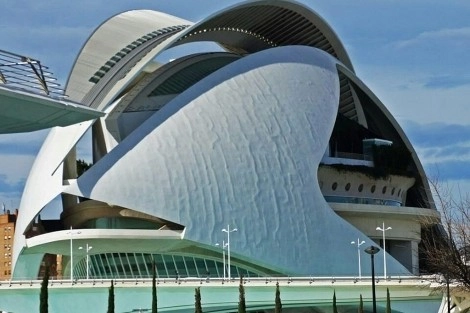
Will the peeling shell of Santiago Calatrava’s Palau de les Arts in Valencia be saved by an innovative, new paint? Calatrava's $455.6 million project, which surpassed its budget four times over, has sprouted many defects over the years, but none more damning than its peeling facade - a defect that spurred the city of Valencia to sue Calatrava's office. However, Spanish paint manufacturer Graphenano has proposed an innovative solution: Graphenstone, a mixture of limestone powder and the allotrope graphene, which should just prevent further deterioration. Whether the solution could also relieve some courtroom tension, remains to be seen. Read more on Inhabitat and The Architect's Newspaper.
The American Institute of Architects (AIA) has selected the recipients of the 2014 Institute Honors for Collaborative Achievement. The award, to be presented at the 2014 AIA National Convention and Design Exposition in Chicago, recognizes and encourages distinguished achievements of allied professionals, clients, organizations, architect teams, knowledge communities, and others who have had a beneficial influence on or advanced the architectural profession. Among this year’s winners include the ACE Mentor Program, the National Building Museum, the AIA New York’s “Post-Sandy Initiative,” and computer-aided design pioneer Rick Smith. You can learn more about the awardees here.
Construction has begun on KWK Promes’ lakeside hotel in Poland. Inspired by traditional mountain homes that found refuge from flooding on a neighboring hilltop, the building’s low profile burrows into the ground at its entrance while opening up to the Czorsztyn waters as topography descends. Similar to the regions typical layout, two massive gable roofs, which appear as two separate structures, are designed to house the elevated sleeping quarters.
As New York begins to thaw after record breaking winter conditions, city dwellers are forced to be on high alert for falling ice. Streets surrounding the 1,776-foot One World Trade Center have been closed following reports of ice shearing from its surface. Some blame the more energy efficient buildings for the deadly occurrence, believing that because the newer structures are able to hold in more heat their exteriors remain colder which aids the formation of ice. Materials and building form can help prevent this phenomena. You can learn more here.
The School of Visual Arts MFA Design Criticism invites you to join them for a two-week intensive to research and write about design. Participants will be introduced to a range of techniques for constructing compelling narratives about images, objects,and spaces. You will experiment with different research methods, writing formats, and complete several projects across media, including a collaboratively produced publication.