



-
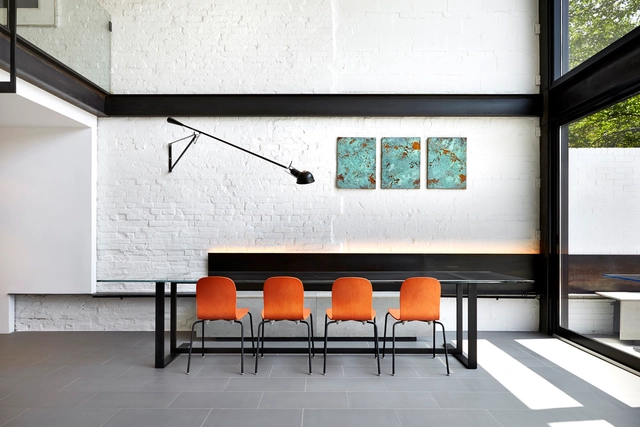
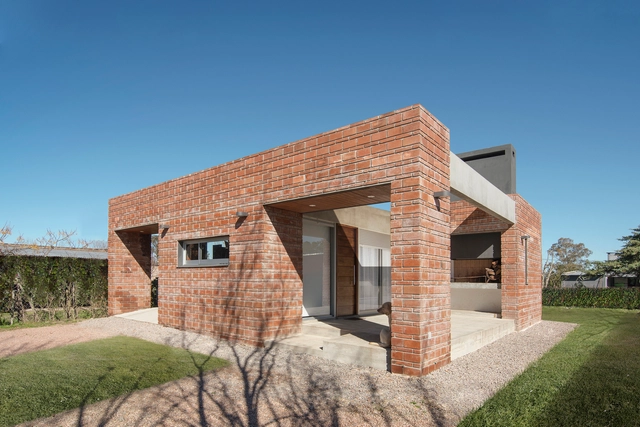
Architects: Kube Architecture
- Area: 2500 ft²
- Year: 2015
-
Manufacturers: Hansgrohe, Bedco Mobility, Illuminations, Inc., Metal Specialties
This article was originally published on July 28, 2016. To read the stories behind other celebrated architecture projects, visit our AD Classics section.
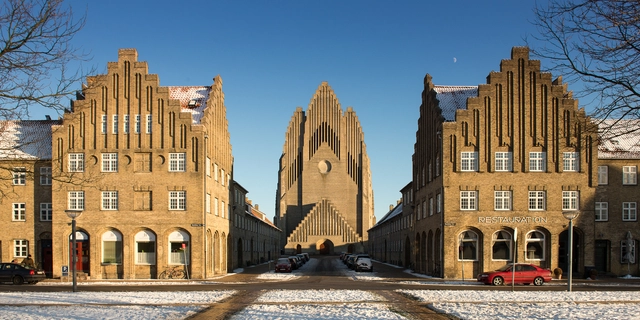
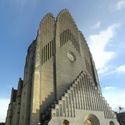
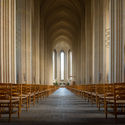
Six million yellow bricks on a hilltop just outside Copenhagen form one of the world’s foremost, if not perhaps comparatively unknown, Expressionist monuments. Grundtvigs Kirke (“Grundtvig’s Church”), designed by architect Peder Vilhelm Jensen Klint, was built between 1921 and 1940 as a memorial to N.F.S. Grundtvig – a famed Danish pastor, philosopher, historian, hymnist, and politician of the 19th century.[1] Jensen Klint, inspired by Grundtvig’s humanist interpretation of Christianity, merged the scale and stylings of a Gothic cathedral with the aesthetics of a Danish country church to create a landmark worthy of its namesake.[2]
It was decided in 1912 that Grundtvig, who had passed away in 1873, had been so significant to Danish history and culture that he merited a national monument. Two competitions were held in 1912 and 1913, bringing in numerous design submissions for statues, decorative columns, and architectural memorials.[3]
.jpg?1530170090&format=webp&width=640&height=580)


This article was originally published on May 4, 2015. To read the stories behind other celebrated architecture projects, visit our AD Classics section.
Arches have long been used to mark the greatest achievements of Roman civilization. Constantine, Titus, and Septimus Severus built them to commemorate their military victories. Engineers at Segovia and Nîmes incorporated them into their revolutionary aqueducts. And fifteen hundred years after the Fall of Rome, Rafael Moneo gave a modern touch to the ancient structure in Mérida's breathtaking National Museum of Roman Art, located on the site of the former Iberian outpost of Emerita Augusta. Soaring arcades of simple, semi-circular arches merge historicity and contemporary design, creating a striking yet sensitive point of entry to the remains of one of the Roman Empire's greatest cities.











.jpg?1530170265 "© Andy Stagg")
.jpg?1530170487 "© Andy Stagg")
.jpg?1530170126 "© Andy Stagg")
.jpg?1530170090)