This guide covers a workflow that moves from project parameters to generated floor plans, 3D perspective views, exterior design exploration, and site context visualization, using AI tools in place of preliminary CAD and rendering work.
This guide covers a workflow that moves from project parameters to generated floor plans, 3D perspective views, exterior design exploration, and site context visualization, using AI tools in place of preliminary CAD and rendering work.
Seniority is infamously important in the field of architecture. Despite occasionally being on the butt end of wage jokes, the field can actually pay relatively well—assuming that you’ve been working for a couple of decades. Even Bjarke Ingels, the tech-savvy, video-producing, Netflix-documentary-starring provocateur and founder of the ultra-contemporary BIG isn’t a millennial; at 42 the Dane is a full nine years older than Mark Zuckerberg.
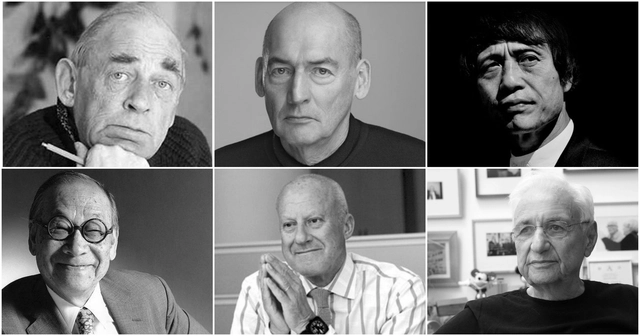
As a result of this, it's common to lead a rich and complex life before finding architectural fame, and many of the world’s most successful architects started their careers off in an entirely different field. If you haven't landed your dream job yet, you may find the following list of famous architects' first gigs reassuring.

You’re a chipper young first-year student, still soft and tender in the early stages of your induction into the cult of architecture. Apart from fiddling with drafting triangles and furiously scribbling down the newfound jargon that is going to forever change how you communicate, you often find yourself planted in a seat, eyes transfixed to a projector screen as your professor-slash-cult-leader flashes images of the architecture world's masterpieces, patron saints, and divine structures.
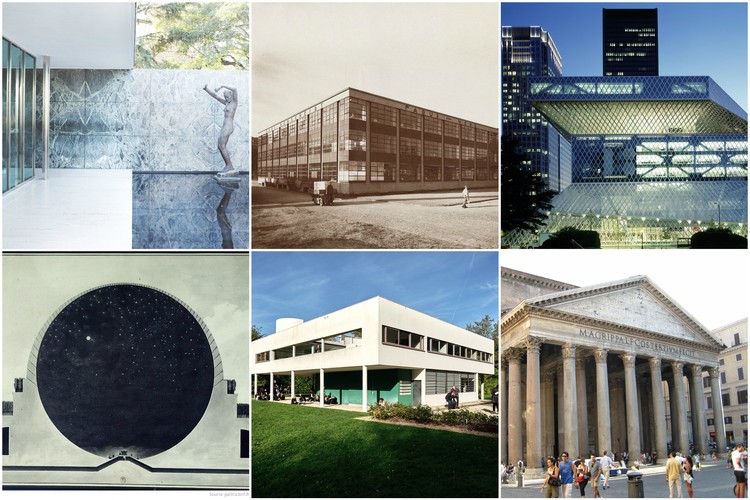
Soon, you develop a Pavlovian response: you instinctively recognize these buildings, can name them at once and recite a number of soundbites about their design that have lodged themselves in your brain. Your professor looks on in approval. Since we here at ArchDaily have also partaken in this rite of passage, here are 15 buildings that we all recognize from the rituals of architecture school.
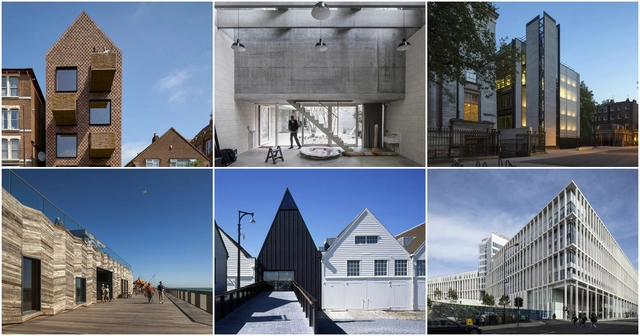
The 2017 winner of the UK’s most prestigious architecture award, the Stirling Prize, will be announced on October 31. Leading up to the main event, The Royal Institute of British Architects (RIBA) has released its list of the six shortlisted buildings, a collection that has left many critics scratching their heads. What the list left out seems to be as noteworthy as what was included, and while critics’ opinions on individual buildings differ, they seem mostly united in finding the overall list uninspiring and underwhelming. Read on to find out what they had to say.
.jpg?1501130282&format=webp&width=640&height=580)
It’s always fascinating when architecture breaks the bounds of the profession and becomes a topic of debate in the wider profession. Fortunately, thanks to the internet, there is no shortage of such occasions: whether it’s the click-seeking cluster of articles that found a client for an improbable cliff-hanging design or the forums that suddenly decided that most modern architecture looks “evil,” the viral trend treadmill ensures that there are plenty of opportunities for the layperson to offer their two cents on the output of our profession.
The flavor of the summer of 2017 is Attika Architekten’s Emoticon Facade. This thoroughly sensible and polite building has caught the public’s attention thanks to its inclusion of emoji-shaped decorative additions. While most of the internet has responded with heart-eyes, there’s no shortage of people for whom these carved emojis are a clear indication that architecture, and by extension society, and by extension all of life as we know it, is doomed, never to recover. Such an opinion is legitimized by articles like this one in Wired by Sam Lubell, who in reporting on the building found two experts willing to take a big old smiley poop on Attika Architekten’s work. Given the role that these experts play in directing the conversation among the public, their arguments bear analysis.
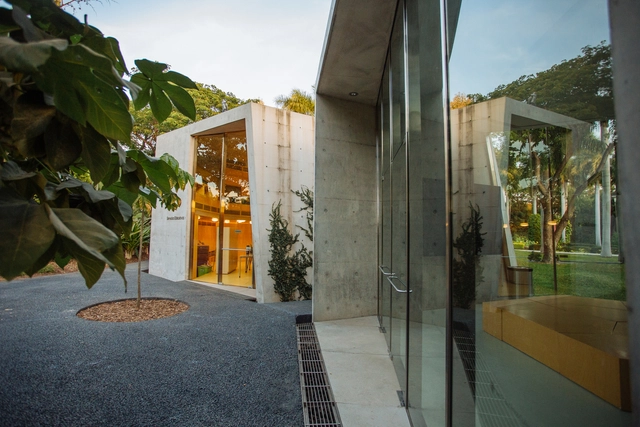
What becomes of public space once violence is normalized in a city? Though it is naive to believe that architecture by itself can present absolute solutions to complex social and political issues, it is also important to explore and understand its possibilities as an agent of social change, however small.
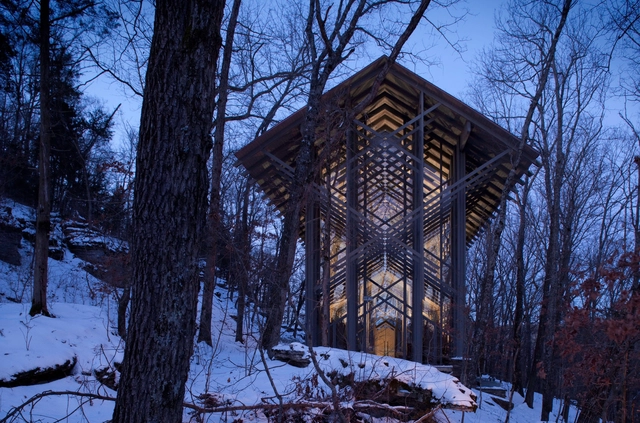
This article was originally published by Common Edge as "Sarah Williams Goldhagen on How the Brain Works and What It Means for Architecture."
Sarah Williams Goldhagen has taken a big swing. Her new book, Welcome to Your World: How the Built Environment Shapes Our Lives, is nothing less than a meticulously constructed argument for completely rethinking our way of looking at architecture. A longtime critic for The New Republic and a former lecturer at the Harvard Graduate School of Design, Goldhagen has taken a deep dive into the rapidly advancing field of cognitive science, in an attempt to link it to a new human-centered approach to the built world. The book is both an examination of the science behind cognition (and its relevance to architecture), and a polemic against the stultifying status quo. Recently I talked to the author, who was busy preparing for a year-long trip around the world, about the book, the science, and the state of architectural education.

When applying for architecture jobs, it's often necessary to self-evaluate your skill at various tasks. However, with many of these tasks--especially software--it can be difficult to give an accurate assessment since you often don't know what you don't know about the skill. This article, originally published by ArchSmarter as "Where Are You on the Path to Revit Mastery?" will help you come to an objective assessment of your skill level with one of the most complex and powerful pieces of software available.
BAM! I shook my head and peeled my sore body off the mat. “Good,” the instructor said, “Now try it again but with a little more force.” My partner grabbed my arm, twisted his hips and threw me to the mat again. BAM! Fortunately, I remembered to tuck in my chin so my head didn’t slam against the mat.
“Alright, a little better that time”, the instructor commented. “Do it another ten times then take a break. You both need to master this throw for your upcoming belt test.” Just as I started to groan, thinking about how sore I was going to be tomorrow, my partner grabbed my wrist again and tossed me over his hip. BAM!

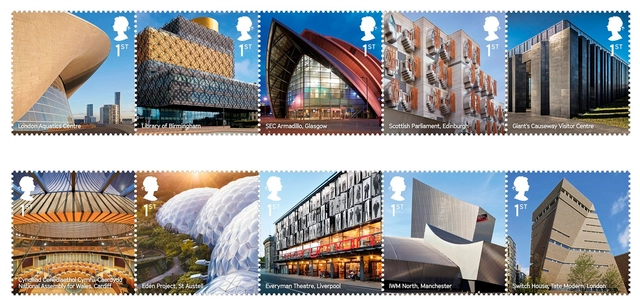
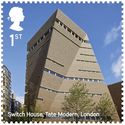
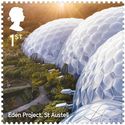
The UK’s postals service company, the Royal Mail, has launched a new special stamp series celebrating 10 buildings “that represent the renaissance of contemporary architecture in the UK of recent years,” including Zaha Hadid Architects’ London Aquatics Center, Herzog & de Meuron’s Switch House addition to the Tate Modern and Mecanoo’s Birmingham Library.
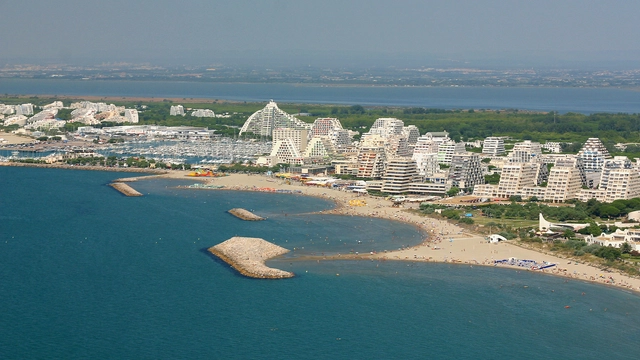
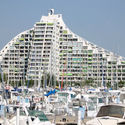
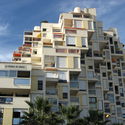
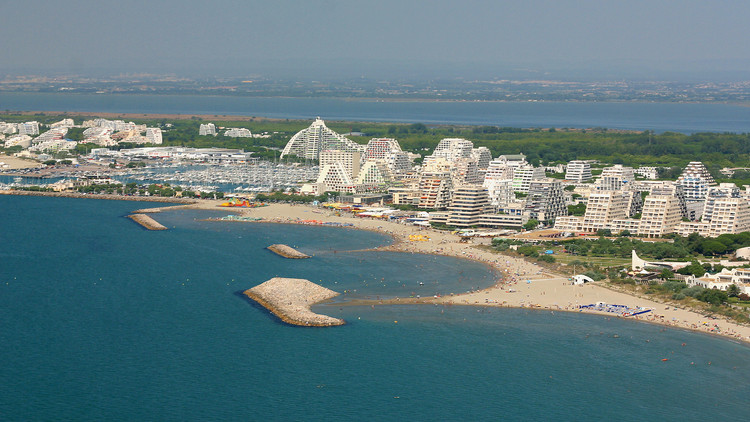
Given a chance to realize the architect’s dream of creating his own utopian city from a blank slate, French architect Jean Balladur was inspired by lost civilizations of the past. His designs recall the architecture of grand Mayan ruins with some added flair from the 1960s, all in the form of a seaside resort village in southern France, La Grande Motte. Balladur devoted nearly 30 years to his life’s work, which today welcomes over 2 million tourists annually.

This interview with the winner of the 2016 Pritzker Prize, Alejandro Aravena, was published last year in Issue 31 of Revista AOA, a Spanish-language magazine published by the Association of Architecture Offices of Chile. The interview was conducted by the editorial committee of Revista AOA—represented by Yves Besançon, Francisca Pulido and Tomás Swett—and is accompanied by photographs by Álvaro González. Aravena's openness and warmth allowed them to deliver a profound questionnaire about his thoughts and architectural projections, especially in light of Aravena's Venice Biennale which took place last year.

.jpg?1500381046&format=webp&width=640&height=580)
The Museo Soumaya, which opened to the public in 2011, is one of the more striking cultural landmarks on the skyline of Mexico City. Designed by FR-EE / Fernando Romero Enterprise, the space accommodates and displays a private art collection of nearly 70,000 works spanning the 15th to the mid-20th Centuries, including the world’s largest private collection of Auguste Rodin sculptures. In this photo-essay, photographer Laurian Ghinitoiu has turned his lens to this – a rotated rhomboid clad in a skin of 16,000 hexagonal mirrored-steel panels.
The third Arts & Architecture Case Study House has a noticeably different sensibility to that of many of the other designs in the series. While equally engaged with the goal of maximizing enjoyment of the natural surroundings, in this design the architects show more concern for privacy and protection.
The approach from the street is somewhat forbidding; aluminum siding presents an impenetrable front. Besides the front and garage doors, the small, high kitchen windows are the only visible openings, though it is possible to peer over the fence of grape stakes into the children’s private garden.

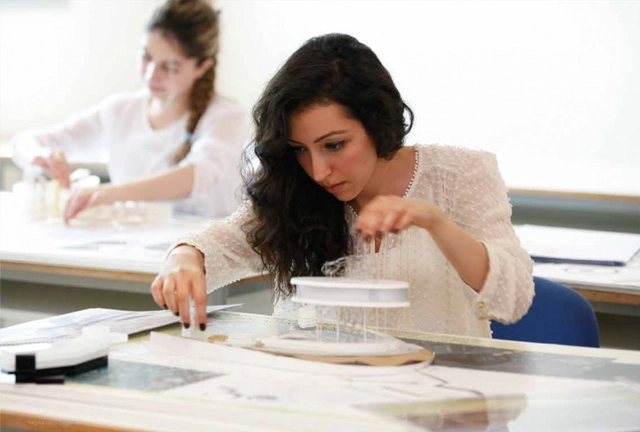
This article was originally published by Common Edge as "A Letter to Prospective Architecture School Parents."
Is your child suddenly wearing angular clothes and pretending to need glasses and talking about things like maylines (sorry, forgot we’re not in the 90s anymore) and 3d-printing and the power of the research lab to change the world studio? Has your child started rejecting your Frank Lloyd Wright photo books and started asking for that super sweet punched-out Chora L Works thing that makes no sense to you because there are literally holes in it? Has your child refused to go on anymore holiday house tours because, seriously mom, this is what I do all day at school?
Then congratulations! You now have an architecture school student child. And as much as we have—and need—the framework of, say, Adult Children of Alcoholics, just as deeply do we need a framework for Adult Parents of Architecture Students. You may be panicking right now. You may be wondering why Bessie is suddenly hating prints (unless she’s wearing all the prints at the same time); why Mark is rolling his eyes when you say there’s a nice-looking house for sale down the block. Rest assured, these are phases that will pass.
I would like to offer you the Phases of Architectural Education, so that you may feel calmer as you embark on this new journey:
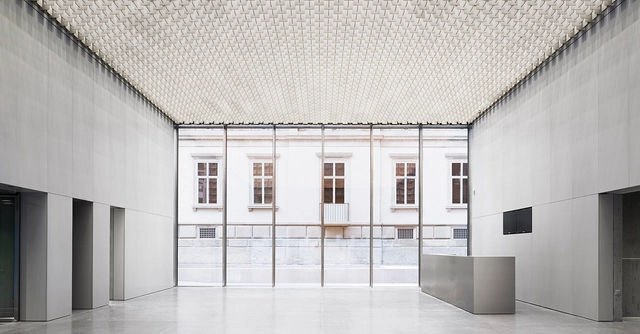
In this episode of GSAPP Conversations, Fabrizio Barozzi—who co-founded the Barcelona-based practice Barozzi/Veiga with Alberto Veiga in 2004—discusses the practice's process and obsessions, including how they position themselves in the architectural landscape and why they are sceptical of defining their own architectural "language". For Barozzi, research and an engagement with history are integral to the way his practice works operates.


You did it! You finished those grueling years of architecture school, perfected your portfolio and your interview pitch, and you landed your first job with an architecture firm. Everyone told you that working in a firm would be lightyears different from what you were used to doing in school, but until you get out there yourself, there is really no way to know just what that might entail. Once you’ve tackled life’s bigger questions about surviving outside of architecture school, you still have to learn to function in a day-to-day job. The learning curve is steep and it can certainly be overwhelming, but you’ve made it this far and there are a few lessons and skills you are sure to gain quickly as you start your career.
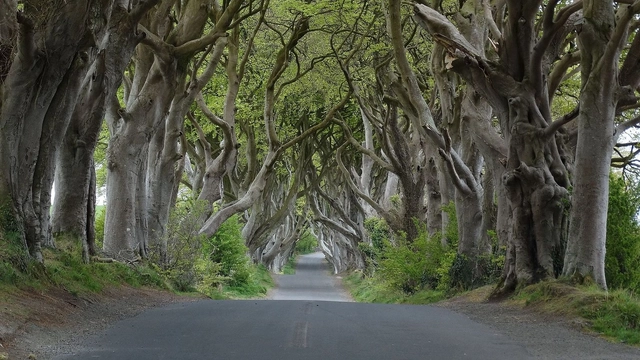
Is your life lacking in dragons? Do you long for the excitement and danger of a constant, treacherous struggle for governing power? If you find yourself simply biding your time waiting for new seasons of Game of Thrones to air (or for George R.R. Martin to finally write another book) one option is to spend some time traveling to the real-life locations used in the filming of the show! From Iceland to Morocco, the show’s creators have traveled all over the world to bring the mythical world Martin describes in his novels to life on screen. While much of the filming is done in a studio, and of course there’s plenty of CGI involved, many of the landscapes and buildings seen throughout the show’s 6 seasons are real places open to the public. We can’t promise you dragons or control of the Iron Throne, but what you will get are some spectacular sights that might just make you feel like a real Westerosi.
In honor of the show’s seventh season beginning later today, here’s a list of 7 Game of Thrones filming locations you can visit! (This list is mostly spoiler-free, but you may want to read with caution if you’re not caught up!)
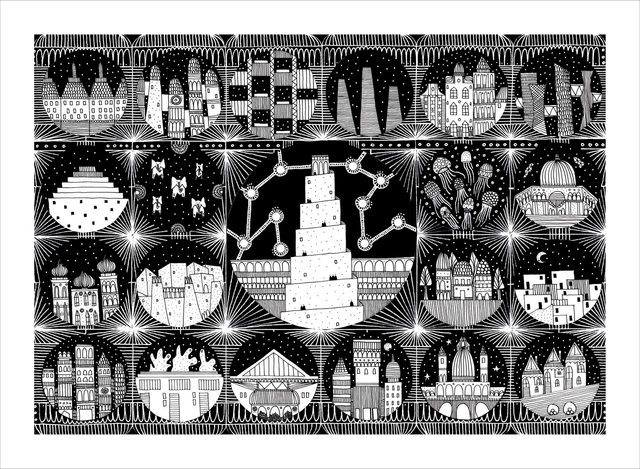
Ah, Invisible Cities. For many of us, Italo Calvino’s 1972 novel reserves a dear place in our libraries, architectural or otherwise, for its vivid recollections of cities and their curiosities, courtesy of a certain Marco Polo as he narrates to Kublai Khan. And while the book doesn’t specifically fit the bill in terms of conventional architectural writing, it resists an overall categorisation at all, instead superseding the distillation of the cities it contains into distinct boundaries and purposes.
For though there is a certain kind of sensory appeal that is captured in the details of places, the real beauty of Invisible Cities lies in the masking of underlying notions of time, identity and language within these details – a feat that is skillfully accomplished by both Marco and Calvino. With this in mind, here are three of many such principles, as revealed by the layered narrative of Invisible Cities.

This article was originally published by The Architect's Newspaper as "How green are Apple’s carbon-sequestering trees really?"
Apple is planting a forest in Cupertino, California. When the company’s new headquarters is completed later this year, 8,000 trees, transplanted from nurseries around the state of California, will surround the donut-shaped building by Foster + Partners. The trees are meant to beautify Apple’s 176 acres (dubbed Apple Park). But they will also absorb atmospheric carbon.
That’s a good thing. Carbon, in greenhouse gases, is a major cause of global warming. Almost everything humans do, including breathing, releases carbon into the atmosphere. Plants, on the other hand, absorb carbon, turning it into foliage, branches, and roots—a process known as sequestration.







.jpg?1500381347 "© Laurian Ghinitoiu")
.jpg?1500381865 "© Laurian Ghinitoiu")
.jpg?1500382233 "© Laurian Ghinitoiu")
.jpg?1500381480 "© Laurian Ghinitoiu")
.jpg?1500381046)
.jpg?1499902448 "Castle Ward: Winterfell. Image © <a href='https://commons.wikimedia.org/wiki/File:Castle_Ward_Castle,_June_2011_(01).JPG'>Wikimedia user Ardfern</a> licensed under <a href='http://https://creativecommons.org/licenses/by-sa/3.0/deed.en'>CC BY-SA 3.0</a>")