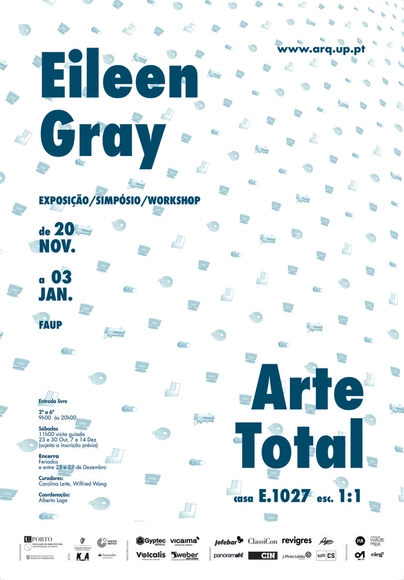
Exhibition: "Eileen Gray. Total Art: E.1027 House at 1:1 scale", at FAUP
On the rocky hillside of the Côte d'Azur in Roquebrune-Cap-Martin, Anglo-Irish designer Eileen Gray (1878–1976) built a long, white vacation home she named E.1027 (1926–1929). At 52, this was her first foray into the world of architecture, realized with the support of her then-partner Jean Badovici, editor of the avant-garde magazine L’Architecture Vivante. For Gray, E.1027 was more than an opportunity to apply new spatial concepts; it served as a manifesto, revisited in her subsequent projects, for which she designed not only the architecture but also virtually every object and piece of furniture—creating a total work of art represented in this 1:1 scale exhibition.
Espaço Interior is part of a research project concerning the construction of architectural imagination. It is also the title of one of the five main exhibitions at this year's Lisbon Architecture Triennale, curated by Mariabruna Fabrizi and Fosco Lucarelli. The exhibition aims to investigate the space between interior and exterior realities, seeking out those moments where these two realms interact most vividly.
"What is Ornament?" is a major question explored in this edition of the Lisbon Architecture Triennale, which aims to reframe the discussion on ornament, focusing particularly on its current appropriation and interpretation. In seeking potential answers, the exhibition, curated by Ambra Fabi and Giovanni Piovene, reveals the complexity of a multifaceted narrative that analyzes the very essence of ornament.
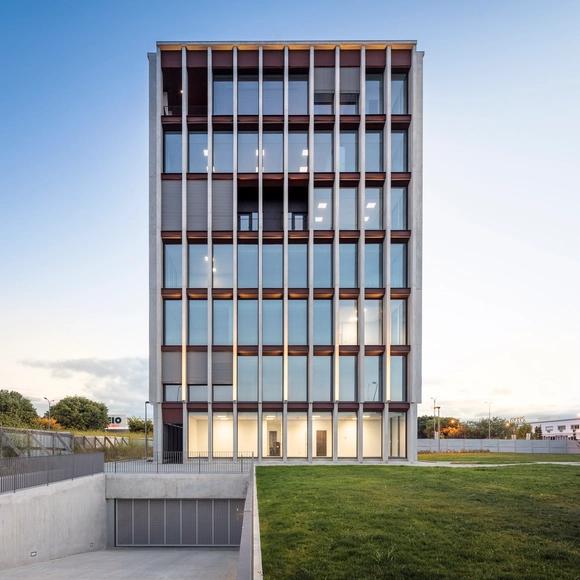
As part of the Lisbon Architecture Triennale, the exhibition Economy of Means, curated by Éric Lapierre, aims to contribute to the definition of architectural rationality, much like the other four exhibitions that are part of the event.
Each of the first four sections represents a specific modality of the economy of means. The economy of repetition leads to typology and an interest in common architecture and the city. The economy of void leads to the invention of space.






.jpg?1571709265 "© João Morgado")
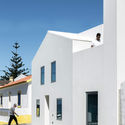
.jpg?1571709558 "© João Morgado")
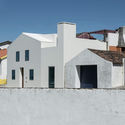
.jpg?1571709543 "© João Morgado")
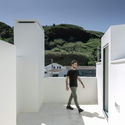
.jpg?1571709180 "© João Morgado")








.jpg?1571047974 "© João Margalha")