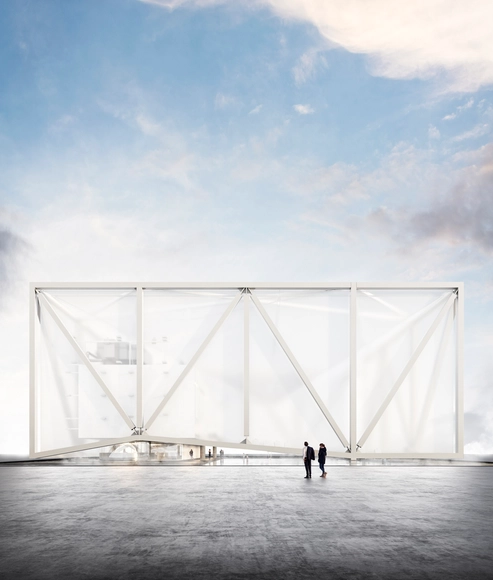
Superbacana+ invites architect José Paulo Gouvêa and engineer Miguel Maratá, members of the winning team for the Brazilian Pavilion competition at Expo Dubai, to discuss the challenges of this innovative structure, which will represent the country at the upcoming world expo. The conversation will be moderated by our partner, architect and photographer André Scarpa.
On Monday, May 3rd, at 5:00 PM, the FAUUSP YouTube channel will host the launch of Anna Bokov’s book, "Avant-Garde as Method: Vkhutemas and the Pedagogy of Space, 1920-1930." The work stands as one of the most significant publications on the often-overlooked Soviet school of art, design, and architecture from 1920s Moscow. The school was the first to implement mass art and technological education, which were considered essential to the dominant modernist paradigm in the Soviet Union. Better known in the West as the sibling of the Bauhaus, Vkhutemas (Higher Art and Technical Studios) possesses a history that diverges somewhat from the German experience, which has been extensively studied by researchers worldwide. In contrast, Vkhutemas has had only one major pioneering book prior to Bokov’s, released by researcher Selim Khan-Magomedov in the 1990s.
Planter from the Museu do Ipiranga collection. Hélio Nobre / José Rosael / Museu Paulista.
In 2021, the Casa Brasileira (Brazilian House) is the theme guiding the initiatives of the Museu do Ipiranga in partnership with Wiki Movimento Brasil (WMB). The program includes Wikipedia editing marathons, which this year begin with meetings featuring researchers in the field. These experts will discuss their ongoing research at the Museum, followed by training and technical assistance on the platform. The second meeting in this series will take place on Friday, April 23, starting at 2:00 PM, under the theme "Decoration and Feminine and Masculine Identities."
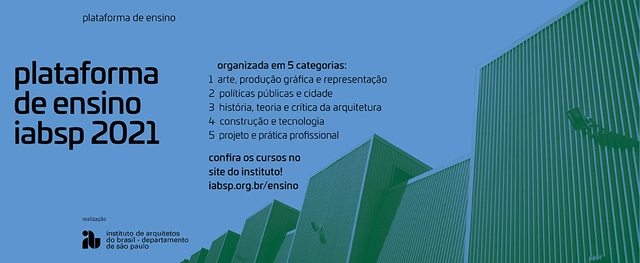
The Institute of Architects of Brazil – São Paulo Department (IABsp) is reactivating its educational platform! In alignment with the 2020–2022 management program, particularly regarding the promotion and consolidation of a space for debating pressing issues in the education of architects and urban planners, we have undergone a complete restructuring that deepens and strengthens the democratizing spirit of our previous initiatives.
Toy - metal and agate cauldron, Inah Meirelles Faria Guimarães Collection. Photo: José Rosael/Hélio Nobre/Museu Paulista.
This theme will be addressed in five meetings throughout this semester, aimed at the production and improvement of entries in the digital encyclopedia. With the presence of researchers from the Museum, the edit-a-thons will feature discussions on topics such as the construction of gender relations through domestic spaces and objects, as well as the historical transformations that have occurred in Brazilian domestic interiors.
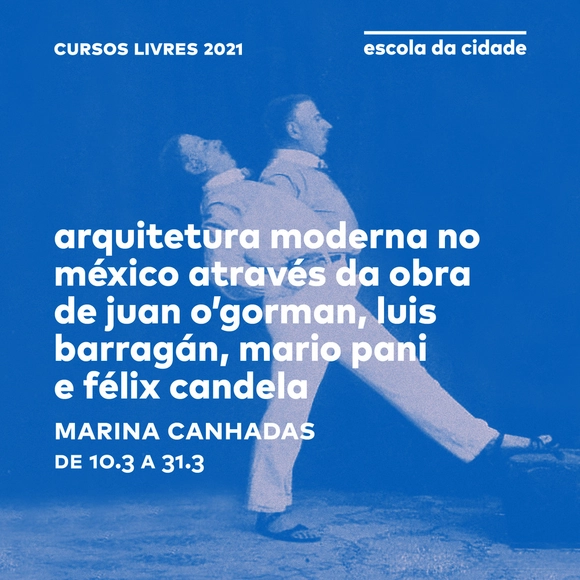
Modern architecture in Mexico can be understood through its diverse facets. This course aims to study and discuss, through theoretical and expository lectures, the work of four major architects of this period in Mexico: Juan O'Gorman (1905–1982), Luis Barragán (1902–1988), Mario Pani (1911–1993), and Félix Candela (1910–1997). The sessions will address the historical, political, and cultural contexts of Mexico during this era, while also drawing parallels with the work of Le Corbusier and other artists such as José Clemente Orozco, Mathias Goeritz, and Jesús “Chucho” Reyes. In this way, the course seeks to understand not only the discourse and practice of these architects but also the very construction of Modern Architecture in Mexico.
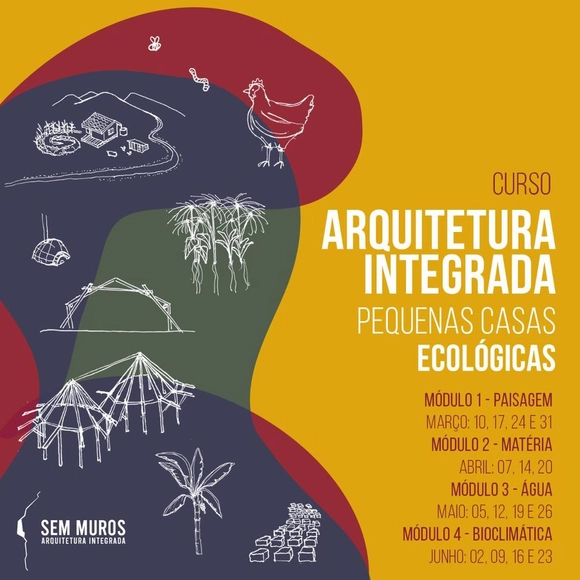
| ABOUT | This course introduces aspects of ecological architecture through the design and construction of a small house, focusing on integrating architecture with the environment. Key topics include landscape analysis, appropriate material use, water flow and its biological processes, food production, energy efficiency, bioclimatic design, and the capacity of a building to generate positive social impact.