Victor Delaqua holds a Master's degree from FAUUSP (São Paulo). He is an architect and urban planner from UFSC (Florianópolis) and studied at the Polytechnic University of Valencia. A contributor to ArchDaily since 2012, he is a Content and Community & Social Media editor. Professionally, he also works in exhibition and set design.
Hong Kong is an autonomous territory in southeastern China known for its skyscrapers, urban density, and high prices. However, on Nico Van Orshoven's travelogue, Everywhere in Particular, the Belgian architect creates a visual portrait of the territory beyond the stereotypes. With lively public spaces and stunning natural landscapes, Hong Kong can and will surprise you.
Below, Van Orshoven recounts his visit to Hong Kong:
What comes to mind when you think of Brazilian architecture? The strong forms of Oscar Niemeyer? Neutral-toned works of brutalism? Cobogós? In spite of the fact that colors are present in Brazil's colonial architecture, the aforementioned qualities tend to dominate the perception of the architecture of South America's largest country.
However, current architectural production in Brazil is bringing more and more colorful elements that shy away from the gray and beige purity. We've selected fifteen projects that use color to highlight architectural elements and generate dynamic perceptions of space.
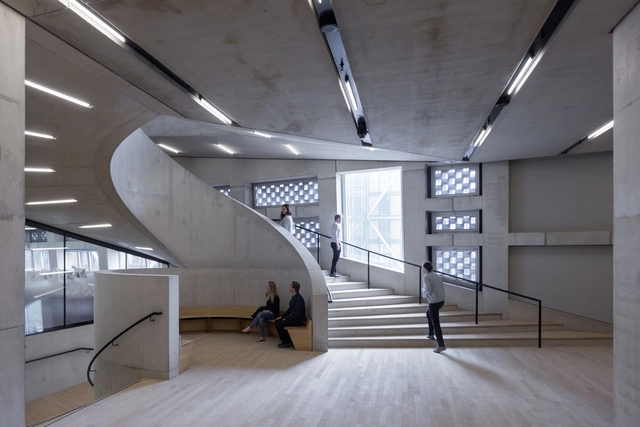
Stairs aren't only a means of vertical circulation. Through their might and scale, this building element can easily become the protagonist of a space. From afar one can observe the movement of people; from within the staircase the viewer is treated to new angles and perspectives of the building.
The prominence of staircases in the work of 2001 Pritzker Prize winners Herzog and de Meuron underscore the belief that risers and treads are never solely an element of circulation—they are generators of dynamism and rhythm that influence the essence of their projects.
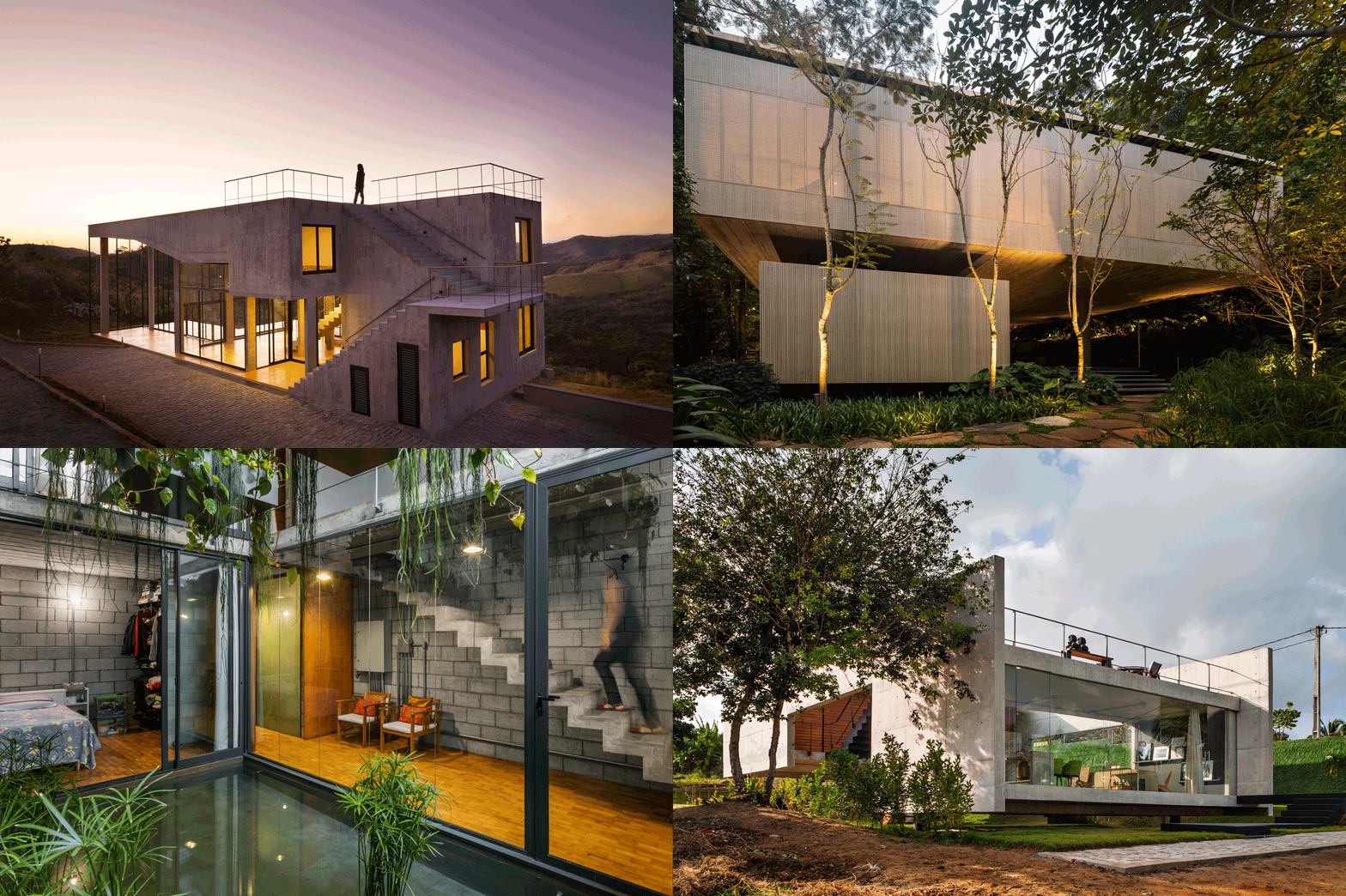
We absolutely love contemporary homes not only for their smart design but their visual appeal. Architects have a way of varying their design according to several factors such as the local and historical context, customs and cultures of users. The 10 projects below are no exception: open-floor plans, clean lines, minimal clutter, and a neutral color palette...
In a country like Brazil where all these factors vary in contrasting ways, it is possible to see a diversity of projects and architectural design approach adopted to deal with the challenge of building a residence.
Far from the noteworthy neighborhoods that often have buildings design by renowned architects, São Paulo's houses capture the modest scale that permeates the identity of its citizens. Alberto Simon, an artist based in the city of São Paulo, photographed the remarkable details of these unassuming housing in his project titled "tamanho_M," which roughly translates to Size M.
Find out more about the project in the artist's own words and see the impressive photos below.
It’s hard to find an architecture enthusiast who wasn’t obsessed with LEGO as a kid. Many of us would spend hours carefully placing the small, colorful blocks to make our crazy, imaginary environments in our heads a reality—well, somewhat. Whether it was building a dream home for your dolls or simply trying to construct the tallest tower, LEGO was certainly responsible for the first flirtations with the profession. It is no question this tool unleashes our creativity, and this can be demonstrated in a variety of ways.
For this reason, we searched our archive for some architects which highlight the creative and innovative ways LEGO is being used in adult-life. From a few pieces of the LEGO® Architecture Series to the appropriation of some important offices such as Zaha Hadid Architects and MVRDV, urban interventions are being inspired by toys and even serving as a furniture mold.
With the green premise growing in popularity across the globe, more and more people are turning to recycling shipping containers as a way to reduce the extremely high surplus of empty shipping containers that are just waiting to become a home, office, apartment, school, dormitory, studio, emergency shelter, or anything else. The conversion of shipping containers to living spaces is not a new concept.
Shipping containers have become a more common architectural tool over the past few years. Through clippings, insertion of external elements, coatings, and equipment, the container is adapted according to its future use and desired aesthetics. See below 10 examples of works that adopt the use of containers.
Recycling material in architecture is becoming increasingly valued in order to enable the creation of sustainable projects. Certainly, naval containers have been one of the elements that have gained prominence in recent years for the design of private and public buildings that respect the environment. In addition to the ecological appeal, containers are a viable choice due to the speed and ease of assembly, the option of a cleaner construction site, or even the different design solutions that this material provides. With their standardized sizes, it becomes possible to create a modular structure that allows infinite possibilities of intervention, so that it suits different uses.
We have gathered here 20 examples of works that adopt the use of containers and some tips that will certainly help you on your next project.
Housing is certainly one of the most interesting themes that present itself to the architect, after all designing a residence allows the study of the usage and customs of human beings according to their culture, desires and daily life. Each project brings a new customer and, with it, an unprecedented challenge.
Through the ten selected projects, it is possible to see the inventiveness of the architects and how each work distinguishes itself from the other through the colors, geometry, relation with surroundings or even the way in which it innovates when proposing a new daily life to its inhabitants.
Africa is a diverse continent with different contexts that go beyond the stereotypes imagined and propagated by those who do not know it. These stereotypes also cover the architectural field. African architecture is always remembered for its beautiful vernacular projects or works by Keré, but other languages developed by architects on the continent are almost forgotten.
For this reason, in order to increase the panorama of contemporary architecture built in Africa, we have gathered here a selection of buildings that have been realized in fourteen different countries. Be inspired by the eighteen selected projects below.
The stair is one of the most fundamental elements of architecture. Whether thin and delicate or bold and colored, in some projects a staircase becomes the buildings’ main protagonist and serves as a focal point for the entire project. It is through staircases that architects create spatial forms and visuals that reveal new ways to perceive a constructed space. For this reason, we’ve searched our archives (again!) in search of some more inspiring stairs.
We’ve already presented a selection of staircases made from beautiful materials, and are back for round 2! With different types of materials and support techniques, some stairs give us the feeling of being suspended in the air, while others play with the exposed elements that sustain them. In this round-up, we’ve got some seriously spiraling stairs, both in public and private buildings. We’re also showcasing some unique metal staircases so thin they look almost see-through – a feat of architecture and structural design.
Check out ten more unique staircases from our archive below:
Stairs do more than take you up a floor; they represent a journey the architect wants you to travel. The act of ascending and descending extends beyond planning. Projects like Herzog and De Meuron’s expressive staircases in VitraHaus, Sou Fujimoto’s inhabited stairs in Musashino’s Library and even MVRDV’s giant urban staircase allowed individuals to achieve entirely new perspectives of their surroundings or even city. Staircases hold their own as elements of architectural expression. Some blend in; others puncture a space with their unique shape and materials.
Through his sketches, Renzo Piano communicates the true intentions of his projects, pointing to the specific concepts that will become the protagonists of his works, including concern for the human scale and comfort, solar studies, and dialogue with the immediate environment. We compile here ten projects by the architect accompanied by their sketches, through which it is possible to see how the 1998 Pritzker Prize winner takes his designs from paper to reality.
Contemporary Japanese homes are a balance between the country’s traditional values of organizing spaces and architectural innovation that is constantly on the move. They challenge the norms of how to occupy places, pushing the envelope for what it means to have a minimal, “micro-living”. Through experiments small and smaller, residential projects in Japan shed new light on how we go about our daily routines and rituals at home and question urbanites on what we can do with the space we have.
For this reason, we’re inspired to go through our archives and bring out 10 projects that bring out new perspectives on Japanese architecture, be it aesthetic, functional or atmospheric.
The strategic definition of a new cruise terminal had a double objective: improvement of the commercial efficiency and a better urban integration. In this photoset, Fernando Guerra captures the many sides of the Leixões Cruise Terminal, a project that won the 2017 Building of the Year Awardsin the "Public Architecture" category.
Get to know all the facets of this building below.
Like architecture, food has a way of making us feel a sense of time and place. The act of eating together is ingrained in our human rituals surrounding spaces and how we inhabit them. The space that shelters us during our meal can be bustling or intimate, but nevertheless contributes our memories there, and the experience of eating at a good restaurant goes far beyond the food served in it. For it to be truly immersive, everything is thought of - from the shade of timber to the shape of your knife when you sit down to eat.
We’ve gathered 10 examples from our archive of beautiful restaurants worth a visit – check them out below: