Content Editor at ArchDaily Mexico. Architect by UNAM (2018). Her interests focus on exploring the relationship of the body with architecture through dance. She has collaborated with different international choreographers who explore dance and architecture as an event. Twitter / Instagram: @monicarellano_
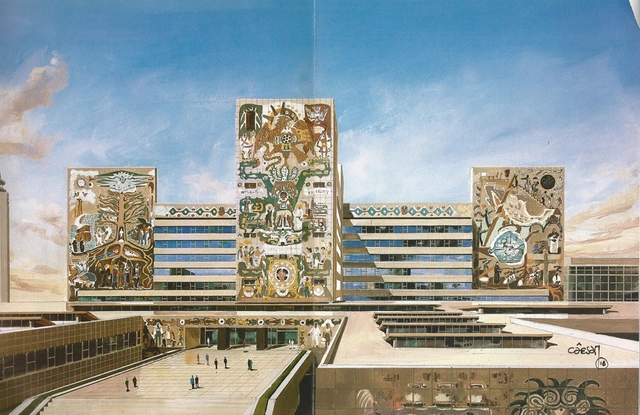
Six years ago, the 2017 earthquake left deep scars across various parts of the country, including Mexico City, where several buildings suffered severe structural damage and were subsequently evacuated. One of these is the SCOP Center (Centro SCOP). Designed by architects Carlos Lazo, Augusto Pérez Palacios, and Raúl Cacho, this integrated sculptural and pictorial complex features murals by Juan O'Gorman, José Chávez Morado, Francisco Zúñiga, and Rodrigo Arenas Betancourt. Today, it stands as one of Mexico's most significant 20th-century artistic monuments. Spanning over 6,000 square meters of gross floor area, it is widely considered one of the most successful examples of the *Integración Plástica* (Plastic Integration) movement.
There are several reasons why Colima is a Mexican state of relevant cultural wealth, one of them is due to its climate and orography where beaches such as Manzanillo and the Colima volcano are sheltered, facilitating tourism in this region. Moreover, the rich pre-Hispanic history signed on archaeological sites such as "El Chanal", "La Campana" and "Meseta de la Hierbabuena", as well as some important haciendas (farms) such as the Hacienda de Nogueras, Hacienda del Carmen and Hacienda San Antonio.
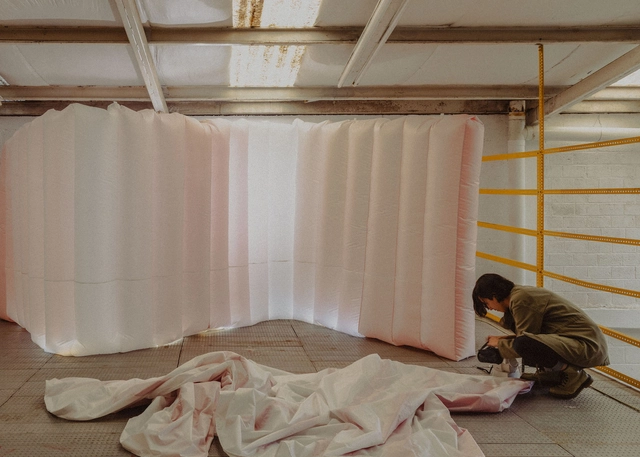
Throughout her career as an architect, Fernanda Canales has shown a specific interest in studying the housing phenomenon in Mexico. This focus is reflected in her various research projects and publications, which aim to address this issue on a global scale. As she explains regarding this project: "With millions of vacant homes in the world and millions of people without housing, architecture has the potential to offer alternatives to segregation: it can undoubtedly offer more, for more people." In this vein, Canales presents "A HOUSE FOR MORE," a workshop and installation at the VDL House designed to question underutilized residential spaces and integrate diverse collective programs into the places we inhabit.
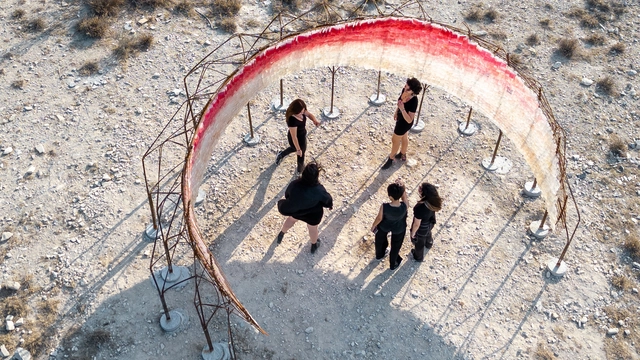
The Centro de Estudios Superiores de Diseño de Monterrey (CEDIM) presented "Cámara Clara," an installation that seeks to dialogue with the sun within the semi-arid landscape of the northern city of Monterrey, Mexico. This ephemeral installation, created by CEDIM students, does not fight against the sun, as architecture so often does, but rather celebrates its presence and orbital rhythms, allowing viewers to contemplate it through its skin from a precise central vantage point within the structure.
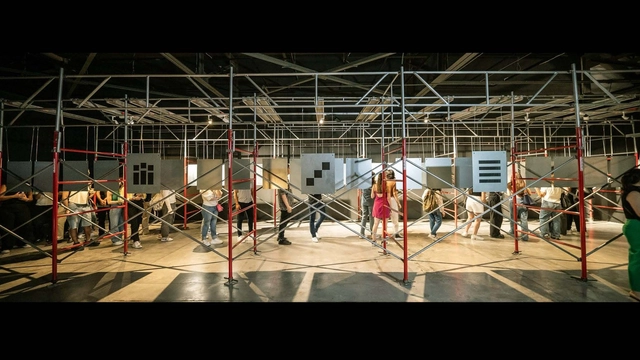
Since 1985, for 38 years, the School of Architecture at the National Autonomous University of Mexico has organized and hosted the calls for entries for the Alberto J. Pani Architectural Composition Award, with the goal of bringing together the top students from institutions affiliated with the Association of Architecture Teaching Institutions of the Mexican Republic (ASINEA). The event is organized in collaboration with an ASINEA member institution, which this year is the School of Architecture, Design, and Urbanism at the Benito Juárez Autonomous University of Oaxaca (UABJO).
Cortesía de BANL XXII - Bienal de Arquitectura de Nuevo Leon
The winners of the XXII Bienal del Colegio de Arquitectos de Nuevo León in Monterrey have been announced. Under the theme "Coherence," this edition's discourse proposes establishing dialogues and expressions to recognize the correct expressive and material act of architecture in practice. The biennial seeks to acknowledge how both architectural objects and urban projects operate under the following categories: social coherence, ethical coherence, strategic coherence, participatory coherence, productive coherence, and material coherence.
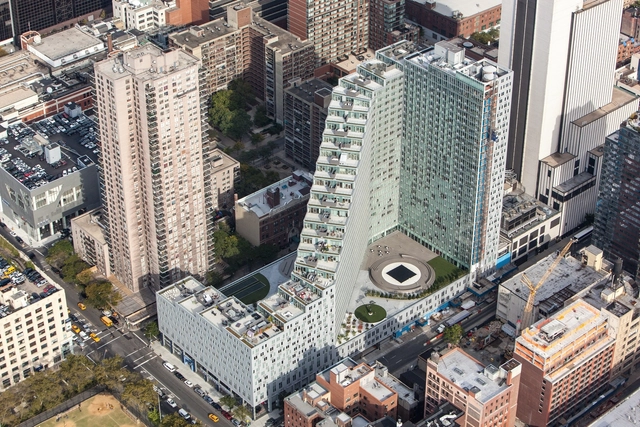
Mexican architect Enrique Norten has been awarded the Lorenzo H. Zambrano Award for his outstanding career as an architect and professor. He is the founder and director of TEN Arquitectos (Mexico City, New York, and Miami) and, throughout his career, has been internationally recognized for his extensive portfolio of more than 60 built projects around the world.
Pabellón_Centro Raíz_Global Woods . Image Cortesía de Mextrópoli
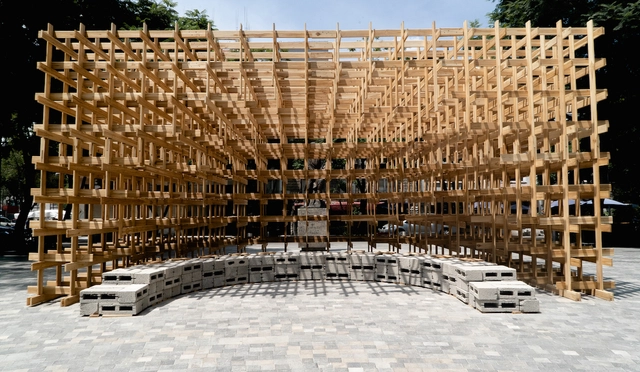
For the ninth time, the MEXTRÓPOLI Architecture and City Festival held the Arquine Competition No. 25 | MEXTRÓPOLI 2023 Pavilion, a platform where architecture, urbanism, and art converge to contemplate and celebrate Mexico City. The event also aims to engage the public by occupying public spaces with architectural pieces that can be activated by visitors. Celebrating public spaces or offering a different perspective on the places routinely traversed is the reason MEXTRÓPOLI showcases these ephemeral architectural pieces.
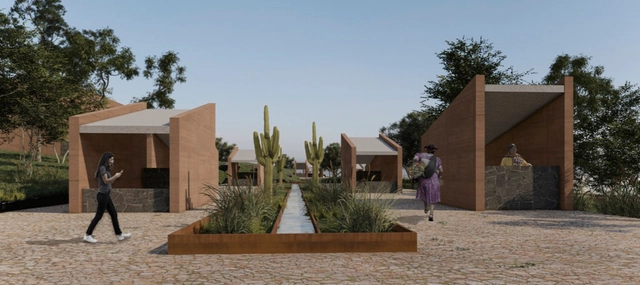
Centro para la Cultura y las Artes de la Ribera/ Alejandro Guerrero Gutiérrez-Andrea Soto Morfín. Image Cortesía de XVII Premio de Arquitectura Jalisco 2023
Thirty-eight years ago, the Colegio de Arquitectos del Estado de Jalisco A.C. established the Jalisco Architecture Prize to recognize the work of outstanding architects and to encourage and motivate architecture professionals in the State of Jalisco. The award was also conceived to celebrate the region's rich tradition of excellence and innovation, as the birthplace of numerous illustrious professionals, including architect Luis Barragán Morfín and Fray Gabriel Chávez de la Mora—who designed the signature medal for this prestigious honor. The accolade is divided into three main categories: the Architectural Design Award, the Urban Design and Planning Award, and Distinctions, as well as the Honoris Causa Recognition.
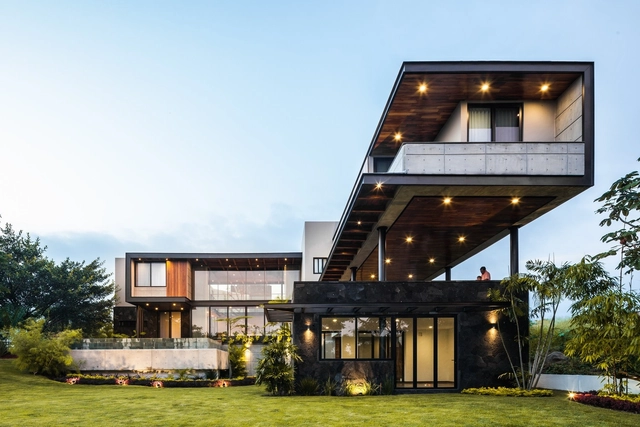
As part of an initiative by Tec de Monterrey, this year's first prize for the 215th Traditional Sorteo Tec features a residential project designed by Mexican architect Cristina Grappin. With this home, the university raffle of Tecnológico de Monterrey furthers its support for the Líderes del Mañana (Leaders of Tomorrow) program, an initiative aimed at driving change, social mobility, and the development of outstanding young scholars.
Wood has played an important role in contemporary Mexican architecture due to its versatility, sustainability, and cultural connection to the architectural history of the country. Currently, architecture in Mexico has gained worldwide recognition for its sensitivity and mastery in designing everyday spaces using various techniques that prioritize sustainability, aesthetics, and bioclimatic design.
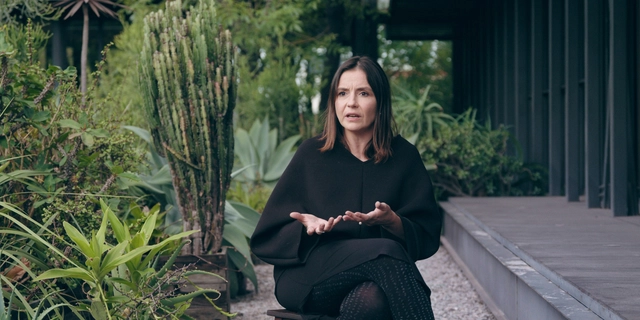
Mexican architect Gabriela Carrillo has forged a distinguished and passionate career centered on the city, the territory, and diversity. Her widely recognized work—initially in collaboration with Mauricio Rocha and subsequently leading her own studio—has become a benchmark for contemporary architecture in Mexico. Her projects manifest global demands, as she constantly strives to recognize the values inherent in the territory and create spaces that elevate their inhabitants. Gabriela Carrillo stands at the intersection of architectural practice, theory, and research. Her approach is oriented toward the everyday, adopting a versatile and dynamic practice that allows her to maintain a balance between her work and personal life.
Mexico City-based firm LOCUS, in collaboration with Studio Météores and Philippe Rahm Architectes, has been awarded fourth place in the single-stage international competition for the renovation of the National Museum of Carthage for its project titled "Byrsa, Topographies of an Act of Reparation." The Ministry of Cultural Affairs of the Republic of Tunisia announced the results of the competition, which was organized by the UIA, the OAT, UNESCO, Expertise France, and Patrimonie 3000.
Photo by Marlene González y Edgar Macías. Image via Tecnológico de Monterrey
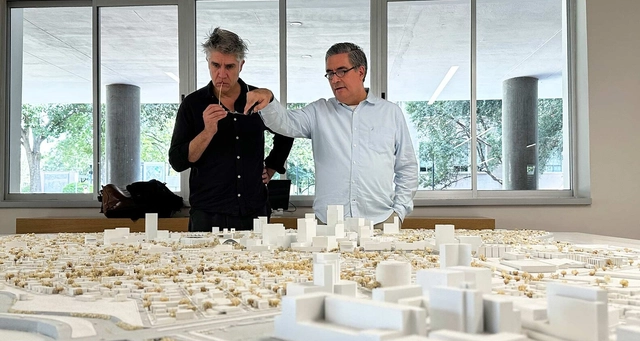
Through a statement from Tecnológico de Monterrey in Mexico, it has been announced that the Chilean architect Alejandro Aravena will construct a new facility on the Monterrey campus, named "Aulas 10." This facility will house the School of Architecture, Art, and Design (EAAD) with the goal of becoming a space that fosters creativity and knowledge.
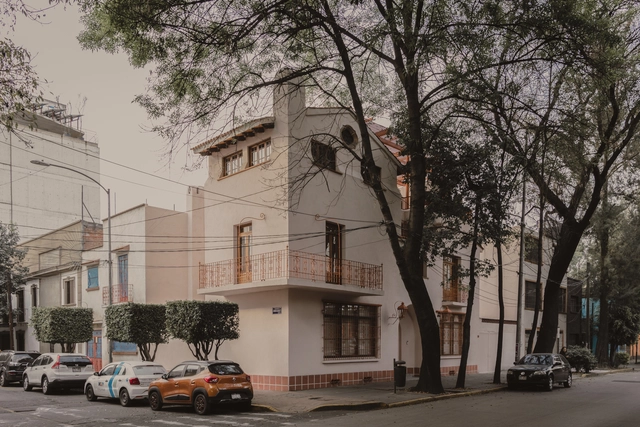
A new space has opened its doors in a 1930s house in the San Miguel Chapultepec neighborhood of Mexico City. This cultural enterprise, named ARCO, merges art, design, and architecture to create a collaborative venue housing the architecture firm WORC and the furniture-focused design studio VETA.
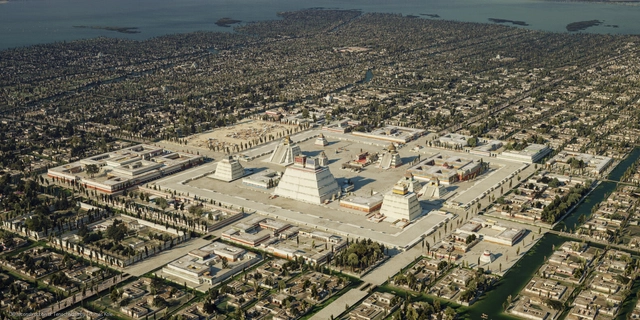
As part of a project led by Dutch artist Thomas Kole, a website titled "Portrait of Tenochtitlan: A 3D reconstruction of the Mexica capital" has been launched, presenting a variety of images of what Tenochtitlan once was. This reconstruction is based on historical and archaeological sources, as well as the collective knowledge that yields these images today to continue studying our history. The site offers navigation in three languages: Nahuatlahtolli, Spanish, and English, featuring an overlay of contemporary images where users can compare before and after simply by sliding the cursor across the screen. It was created using open-source software: Blender, Gimp, and Darktable.