Content Editor at ArchDaily Mexico. Architect by UNAM (2018). Her interests focus on exploring the relationship of the body with architecture through dance. She has collaborated with different international choreographers who explore dance and architecture as an event. Twitter / Instagram: @monicarellano_
Oaxaca is one of Mexico's thirty states, renowned for a rich culture that has shaped a territory celebrating its roots. Located in the country's southeastern region, it borders the Pacific Ocean and is known for its indigenous communities, where Zapotec and Mixtec cultures predominate. In addition, Oaxaca is home to a vibrant public life where streets, pedestrian walkways, and plazas frame a diverse range of political, religious, and popular activities. This has drawn the attention of various projects and research initiatives seeking to highlight this social effervescence.
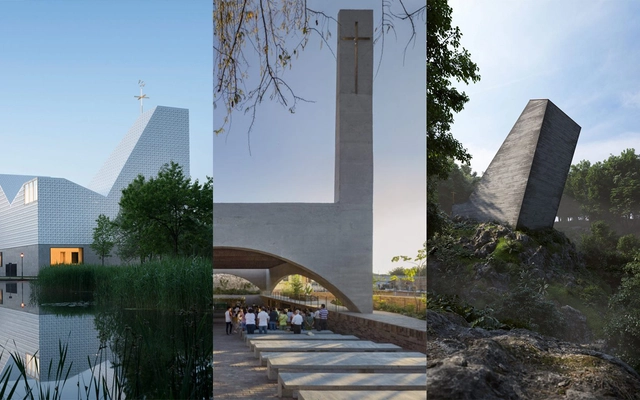
For the seventh time, the Frate Sole Foundation has launched the 2020 edition of the International Sacred Architecture Award, open to all professionals who have designed a church over the last decade (since October 4, 2010) within Christian denominations.
Despite UNESCO's recognition of specific world heritage sites, some are in constant danger of disappearing due to natural phenomena like earthquakes and human factors such as urbanization. By definition, these landmarks are significant to human history, embodying characteristics that reflect the core values of various civilizations. However, many have never been experienced firsthand by a large portion of the global population.
Despite UNESCO's recognition of specific World Heritage sites, many of them remain in constant danger of disappearing due to natural phenomena like earthquakes and human factors such as urbanization. By definition, these landmarks are vital to human history, possessing characteristics that reflect the deepest values of diverse civilizations. Nevertheless, much of the global population has never experienced them in person.
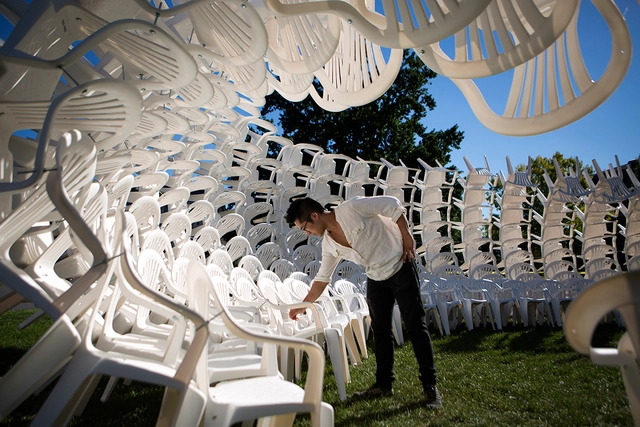
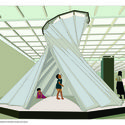
As seen throughout architectural history, ephemeral installations and pavilions are key elements for addressing specific architectural moments and social manifestations in an almost immediate way. While some pavilions have proven so significant that they transcended their temporary nature to become permanent, exemplary expressions of a historical moment—such as the Barcelona Pavilion, designed by Ludwig Mies van der Rohe and Lilly Reich for the Barcelona International Exposition in Montjuïc—others remain documented in photographs, plans, and experiences, to be rewritten in future projects.
For years, Mexico City has been what many authors call a "living organism"—built day by day and choreographed in diverse ways. In recent years, the work of Mexican photographer Santiago Arau has portrayed a city where time passes, a city built by its inhabitants, spanning from aerial shots to the daily perspective of a commuter on public transit. Yet, what has happened over these past few months as the COVID-19 pandemic swept across the globe?
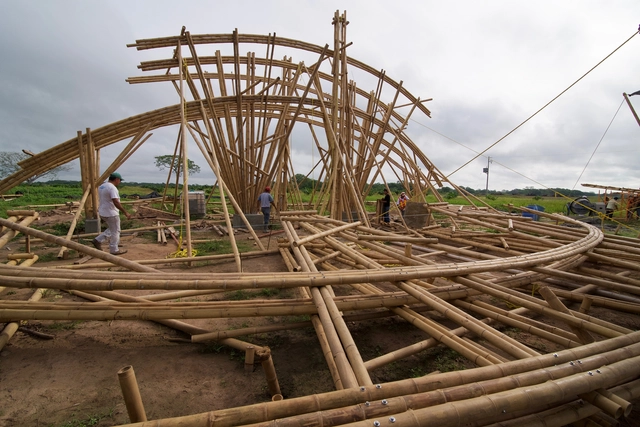
Bamboo is a building material that has been used since antiquity in various structures, demonstrating its superiority over modern materials like plastic and steel due to its myriad benefits—not to mention an incomparable aesthetic appeal that has positioned it as one of today's leading architectural trends.
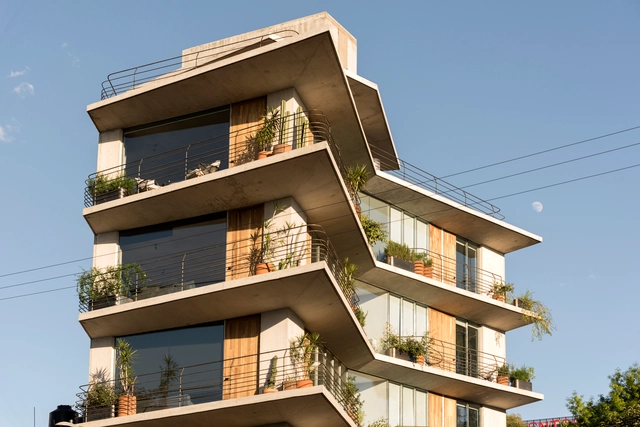
One of the most critical factors in architectural design is the site's specific climate. While this can present challenges in extreme conditions—requiring insulating materials to adapt to shifting environments—Mexico's privileged climate works in the architects' favor. It allows them to create microclimates and spaces that blur the boundary between indoors and outdoors.
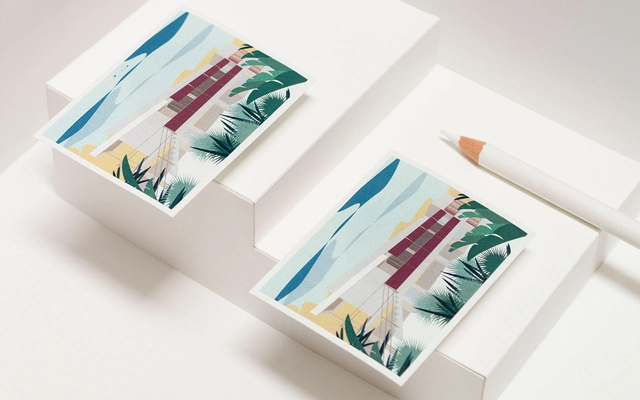
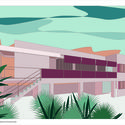
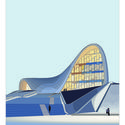
Taller de Arquitectura Carmelina&Aurelio, by Tuxtla Gutiérrez in Mexico, has launched a coloring book with illustrations of famous architectural works. Due to the success of the first edition, the studio has just published the second volume of the series, with illustrations of works by Zaha Hadid, Kengo Kuma, Rozana Montiel, BIG, and Eileen Gray. The digital book in PDF format is available for free on the studio website.
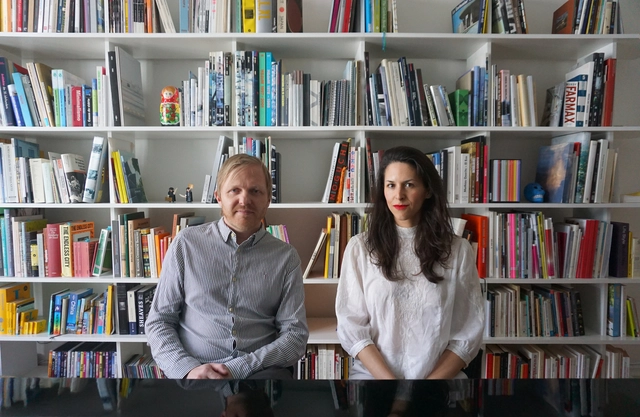
In this exclusive interview with ArchDaily, Ingrid Moye and Christoph Zeller, founders of the Mexico City- and Berlin-based firm Zeller & Moye, discuss the history of the practice, as well as how their personal and professional interests have evolved over the years regarding their way of living and making architecture.
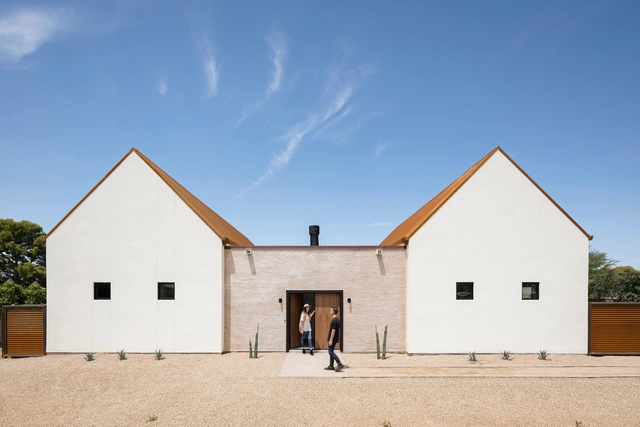
Arizona is located in the western region of the United States. It has geographical borders with Utah, Colorado, and New Mexico, in the United States, as well as with Sonora in Mexico. The state is also situated on the Sierra Madre Occidental and is home to a segment of the Colorado River, as well as the Grand Canyon. Part of Aridoamerica, Arizona's landscape is composed, in its majority, of Cactaceae and desert species.
At ArchDaily, engaging with architects through conversations that reveal their working methods, histories, and reflections—both personal and collective, within their teams and the broader professional community—has always been a core priority. This dialogue not only brings knowledge to the professionals building our world, but also provides future generations with tools and experiences as they enter the workforce, always maintaining a critical eye on architectural practice.
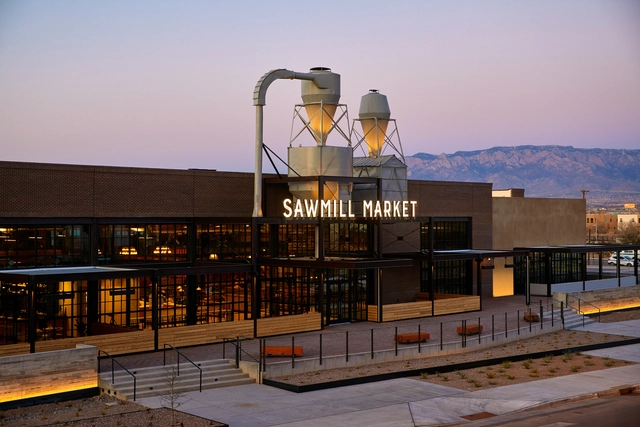
The state of New Mexico is located in the western region of the United States, bordering Colorado, Oklahoma, and Texas (in the US) and Chihuahua (in Mexico). It has the highest percentage of Spanish-speaking population in the United States. As part of Aridoamerica, its landscape is predominantly shaped by cacti and desert species.
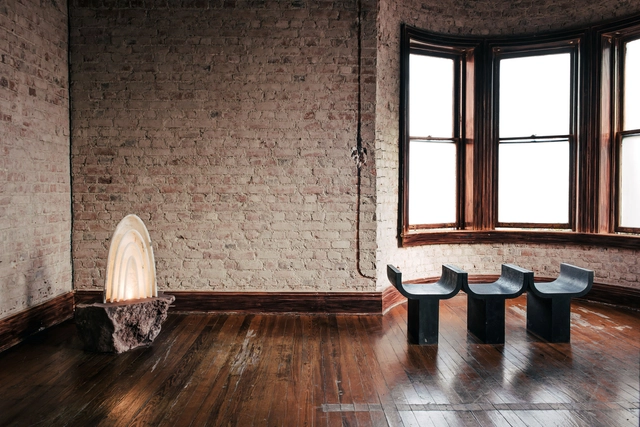
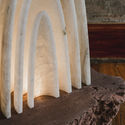
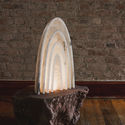
The Mexico City-based design studio, founded in 2017 by Manu Bañó, Age Salajõe, and Héctor Esrawe, has launched its new piece titled “Aura,” a lighting fixture that continues the studio's exploration of religious elements, objects, and places of worship in Mexican culture. Following this approach, the piece emerges as an aura built from four geometric, half-moon shapes that evoke the arches of colonial-era altars and churches.
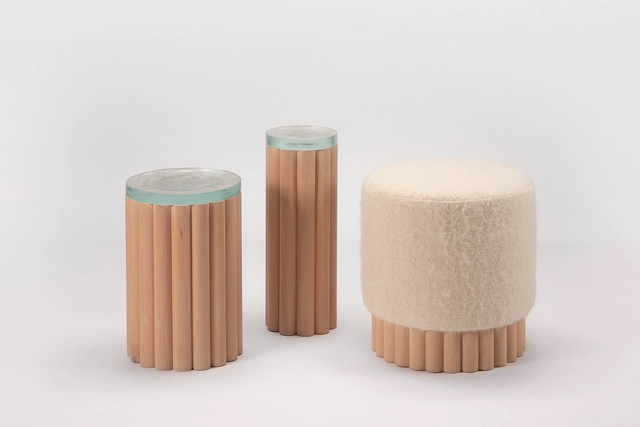
PECA design studio—led by Mexican architect Caterina Moretti—launches its new collection titled "Loto," crafted from beech wood, fused glass, and wool. It features two side tables with tops made of recycled glass fused in Tlaquepaque—providing the transparency needed to appreciate the interior of the pieces—and a pouf upholstered in sheep's wool woven on a backstrap loom in San Juan Chamula, in the Chiapas Highlands, which leaves a minimal portion of its wooden base exposed to highlight the contrast between the two textures.
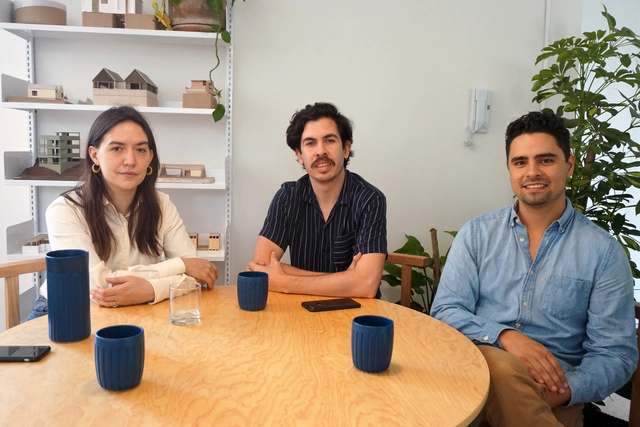
In this exclusive interview with ArchDaily, Ilse Cárdenas, Diego Escamilla, and Juan Luis Rivera—who, along with Regina de Hoyos, make up the firm PALMA—discuss the history of their practice and its evolution over the years, reflecting on how their personal and professional interests shape the way they inhabit and create architecture.
Videos
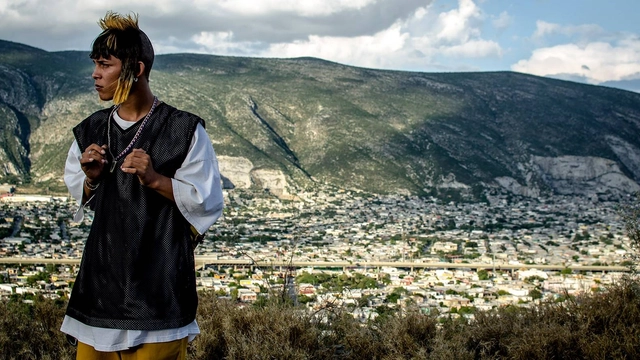
"Ya no estoy aquí" dirigida por Fernando Frías. Image Cortesía de Netflix
Directed by Mexican filmmaker Fernando Frías and winner of the Morelia International Film Festival, “I’m No Longer Here” (“Ya no estoy aquí”) is a film that has been widely discussed across various disciplines. It highlights the specific values and struggles of a territory while transcending borders to showcase the most human and global aspects of our shared world.
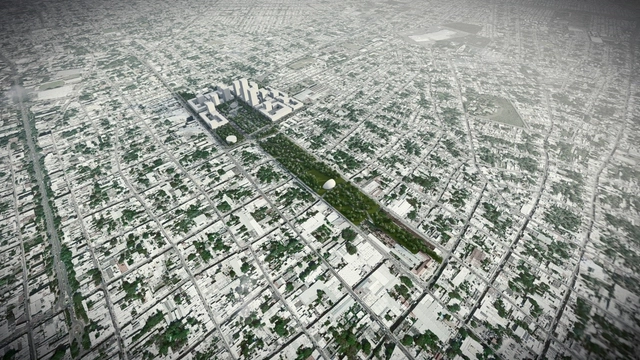
TEN Arquitectos is an architectural firm based in Mexico City, New York, and Miami, founded by Mexican architect Enrique Norten. With 33 years of experience designing from a global perspective, the practice brings a consistent international sensitivity to every new space it creates. This body of work has been recognized with numerous national and international awards, including the Mies van der Rohe Award for Latin American Architecture, honors from the national American Institute of Architects (AIA) and various US chapters, Architectural Record, Architect Magazine, Architizer, and Biennials in Mexico, Argentina, and Ecuador, as well as the Royal Institute of British Architects (RIBA), among others.

_11.44.10.jpg?1595963269&format=webp&width=640&height=580)



_11.44.10.jpg?1595963269)
_11.44.10.jpg?1595954667&format=webp&width=640&height=580)



_11.44.10.jpg?1595954667)


.jpg?1595384588 "Izaskun Chinchilla Unveils ‘Organic Growth’, a Recycled Pavilion Funded via Kickstarter. Image © Sergio Reyes")

_22.43.53.jpg?1595216773&format=webp&width=640&height=580)


.jpg?1594917129&format=webp&width=230&height=230&crop=true)








_-_Art_Gray.jpg?1593480840&format=webp&width=230&height=230&crop=true)

.jpg?1593480863&format=webp&width=230&height=230&crop=true)

.jpg?1592952477 "© Pilar de Ario")







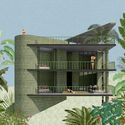
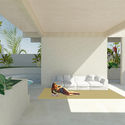


.jpg?1591798247 "2000 Ocean. Image © TEN Arquitectos")