Content Editor at ArchDaily Mexico. Architect by UNAM (2018). Her interests focus on exploring the relationship of the body with architecture through dance. She has collaborated with different international choreographers who explore dance and architecture as an event. Twitter / Instagram: @monicarellano_
As one of Mexico's most prominent cities and business hubs, Monterrey is situated within the territory of Nuevo León, a state in the country's Northeast region that borders Texas, defining a significant portion of the US-Mexico border. Covering just over 451.30 square kilometers with an average elevation of 500 meters above sea level, the municipality is bordered to the north by San Nicolás de los Garza and General Escobedo; to the south by San Pedro Garza García and Santiago; to the east by Guadalupe, Juárez, and Cadereyta; and to the west by Santa Catarina and García.
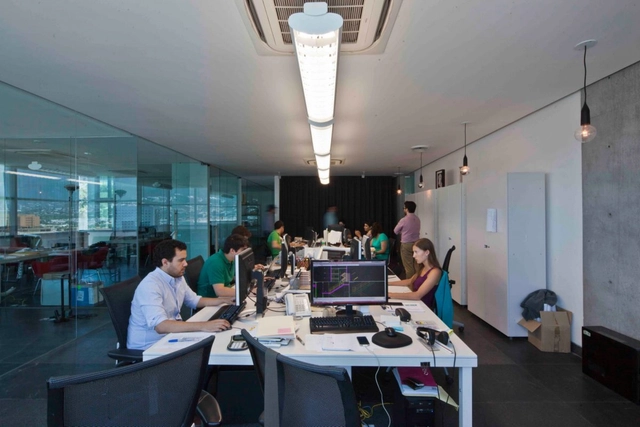
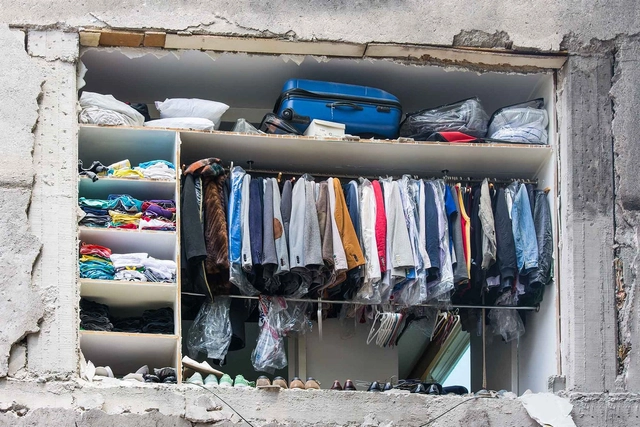
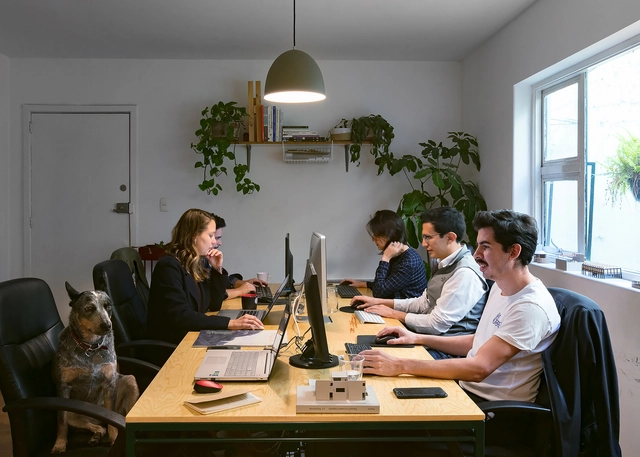
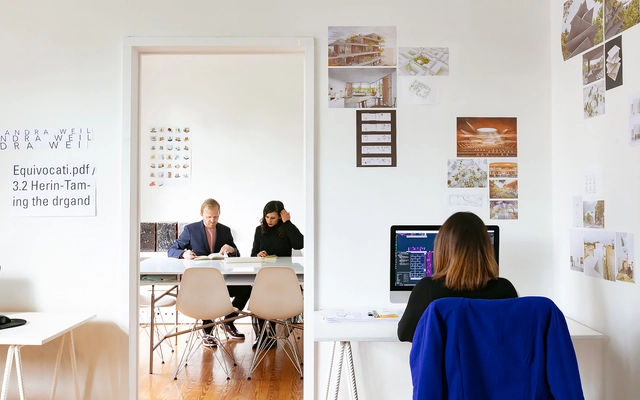
Mexico's National Social Distancing Campaign began on March 23, 2020. However, a couple of weeks prior—even in the face of the federal government's recommendation to continue normal activities—social media users were already opting to mirror the European model and self-isolate. Architecture firms immediately began closing their physical spaces to transition to remote work, though for others, the shift took several weeks. Yet, this period of social and physical (spatial) distancing is experienced differently in every household. Over the months of this pandemic, we have witnessed not only the inequities in access to basic needs in dense urban areas, but also the fragility of the social order itself. Whether at a macro or micro scale, all of these experiences occur within and are shaped by the built environment, positioning architecture as both an active participant and a critical arbiter in this equation.
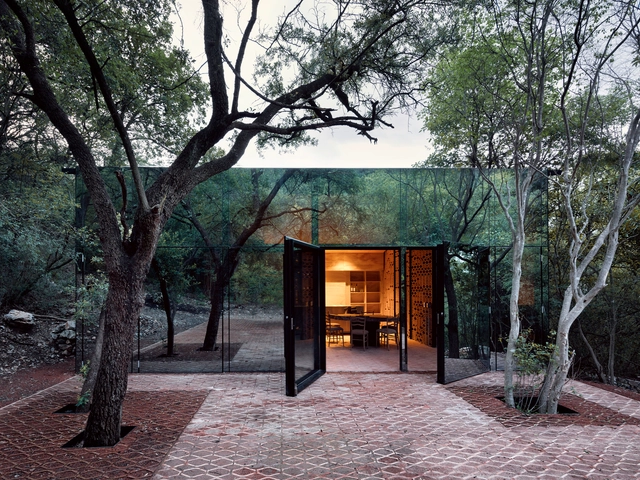
PRODUCTORA is a Mexico City-based architecture studio founded by Abel Perles (1972, Argentina), Carlos Bedoya (1973, Mexico), Víctor Jaime (1978, Mexico), and Wonne Ickx (1974, Belgium). The firm is characterized by its emphasis on precise geometries in an effort to generate legible projects with clear gestures, as well as its pursuit of timeless material and spatial resolutions.
As part of an initiative by the Ixtepecano Committee for the Defense of Life and Territory and the Ixtepec Reconstruction Council, in collaboration with the Universidad de la Tierra de Oaxaca and Comunal: Taller de Arquitectura—who have been working together since 2018—the manual “Reconstrucción Integral del Hábitat en Guendalizaa” (Comprehensive Habitat Reconstruction in Guendalizaa) has been released. The guide is designed to assist families in the process of rebuilding homes affected in Ixtepec, Istmo de Tehuantepec, Oaxaca.
In Latin America, the concept of emergency architecture refers to spaces that serve as temporary shelter in the face of adverse circumstances, such as earthquakes, floods, and migration. Various countries, including Mexico, Chile, Colombia, Ecuador, Uruguay, and Panama, have faced events that required redefining emergency housing according to each nation's specific needs.
The National Social Distancing Campaign in Mexico began on March 23, 2020. However, even a couple of weeks prior—despite the federal government's recommendation to continue daily activities as normal—social media users were already choosing to replicate the European model of self-isolation. Some architecture firms immediately decided to close their physical spaces and transition to remote work, while others took several weeks to adapt. Ultimately, this period of social and physical (spatial) distancing is experienced differently in every home. The months of this pandemic have exposed not only the systemic inequalities regarding basic needs in dense urban areas, but also the fragility of our established social order. Whether at a macro or micro scale, these experiences are shaped by the built environment, positioning architecture as both a witness to and a defining factor in this equation.
Mexico's National Social Distancing Campaign began on March 23, 2020, but a couple of weeks prior—even as the Federal Government recommended continuing activities as normal—social media was already filled with people opting to mirror the European model and self-isolate. Right away, some architecture firms decided to close their physical offices and transition to remote work, while others took a few more weeks to make the shift. However, this period of social and physical (spatial) distancing is experienced differently in every household. Over the months that this pandemic has unfolded, it has exposed not only inequalities regarding basic needs in dense urban areas, but also the fragility of the social order itself. Whether on a macro or micro scale, all of these experiences occur within and are influenced by the built environment, making architecture both an arbiter and an active participant in this equation.
The National Social Distancing Campaign (Jornada de Sana Distancia) in Mexico began on March 23, 2020. However, a couple of weeks earlier, even despite the Federal Government's recommendation to continue activities as normal, social media was already filled with people choosing to replicate the European model and self-isolate. Immediately, some architecture practices decided to close their physical offices and transition to a remote work model, while others took several weeks longer. Yet, this period of social and physical (spatial) distancing is experienced differently in every household. In the months since this pandemic unfolded, it has laid bare not only the inequality in basic needs within dense urban areas but also the fragility of the social order itself. Whether at a macro or micro scale, all these experiences occur within and are influenced by the built environment, making architecture both judge and jury in this equation.
In Mexico, the official Jornada de Sana Distancia (National Social Distancing Campaign) began on March 23, 2020. During this period, various firms, businesses, and universities reached a turning point where it became necessary to discuss the present and future impacts of the COVID-19 pandemic on operations at different levels. A few weeks ago, ArchDaily launched a series of interviews with Mexican firms reflecting on their organizational and operational experiences when transitioning from in-person to remote work. But what about universities? What happens to the new generations experiencing this shift in their schools? How is spatial thinking affected after nearly two months of social distancing? What lies ahead for educational models, and especially for university spaces?
The National Social Distancing Campaign (Jornada de Sana Distancia) in Mexico began on March 23, 2020, but a couple of weeks prior—even as the Federal Government recommended continuing normal activities—social media users were already opting to replicate the European model and self-isolate. Right away, some architecture firms made the decision to close their physical offices and transition to a remote work model, while others took a few more weeks to do so. However, this period of social and physical (spatial) distancing is experienced differently in every household. Over the months that this pandemic has unfolded, it has exposed not only the inequality regarding basic needs in dense urban areas, but also the fragility of our established social order. Whether at a macro or micro scale, all these experiences occur within and are influenced by the built environment, making architecture both arbiter and active participant in this equation.
Mexico's National Social Distancing Campaign began on March 23, 2020, but a couple of weeks earlier, even as the federal government recommended continuing normal activities, social media was already filled with people choosing to self-isolate and replicate the European model. Some architecture firms immediately decided to close their physical offices and transition to a remote work model, while others took several weeks longer. However, this period of social and physical (spatial) distancing is experienced differently in every household. Over the months that this pandemic has unfolded, it has exposed not only the inequality regarding basic needs in dense urban areas, but also the fragility of the established social order. Whether at a macro or micro scale, all of these experiences occur within and are influenced by the built environment, making architecture both judge and jury in this equation.
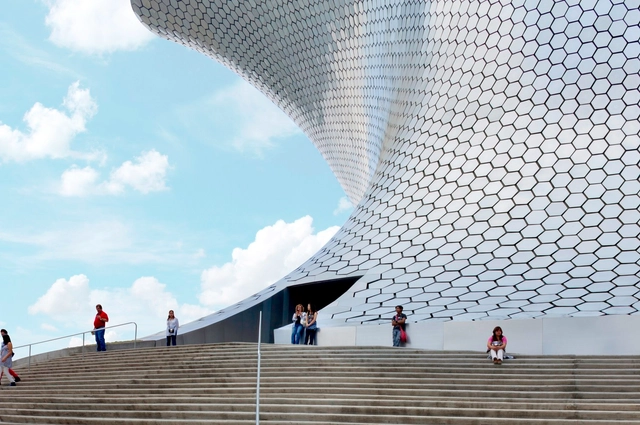
Soumaya Museum / FR-EE / Fernando Romero Enterprise. Image
While virtual reality is not a new tool, its adoption across various industries has been gradual. In the architecture and cultural sectors, virtual tours have become increasingly common, offering a much broader perspective of spaces and—in the case of art—their relationship with the exhibited works. Various efforts have been made to promote this spatial mapping, closing the gap between cities, countries, and continents. A prime example is the Google Arts & Culture project, which features a library of 4,500 institutions that can be explored virtually.
As part of an initiative by various creatives, Anything Else, But Change? emerges as a collective virtual exhibition that seeks to foster creative production and showcase content that triggers new ways of contemplating the current historical moment. In this project, the current state of affairs is not conceived as a struggle or a war; instead, it is understood as an invisible force pushing for a rapid shift in socioeconomic, political, and cultural logic, with no time for preparation.
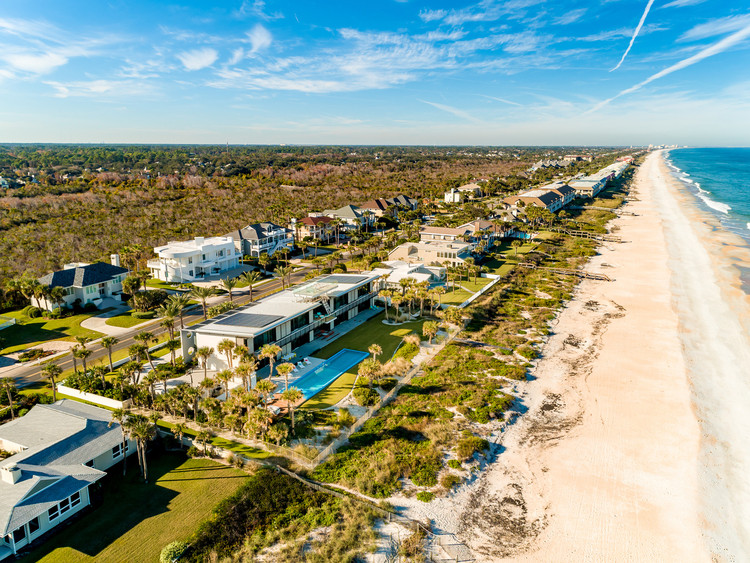
Located in the southern region of the United States, the state of Florida is one of the most populous states and the 22nd largest. The state hosts some of the most populated areas in the country, such as Jacksonville and the Miami Metropolitan Area.
The National Social Distancing Campaign (Jornada de Sana Distancia) in Mexico began on March 23, 2020. However, a couple of weeks earlier, despite the federal government's recommendation to continue normal activities, people on social media were already choosing to replicate the European model of self-isolation. Some architecture firms immediately decided to close their physical spaces and transition to remote work, while others took a few more weeks. Still, this period of social and physical (spatial) distancing is experienced differently in every household. The months of this pandemic have exposed not only inequality regarding basic needs in dense urban areas, but also the fragility of our social order. Whether at a macro or micro scale, all these experiences are shaped and influenced by the built environment, making architecture both a judge and a party to the equation.
Isaac Michan Daniel of Michan Architecture, as well asLuis Beltrán del Río García and Andrew Sosa Martínez of the Mexican firm VRTICAL, have been recognized with the 2020 Architectural League Prize. Established in 1981 to recognize exemplary and provocative work by young practitioners, the Architectural League Prize is an annual competition organized by The Architectural League and its Young Architects + Designers Committee. This year's jury was comprised of the Young Architects + Designers Committee—Kutan Ayata, Mira Henry, and Kevin Hirth—alongside Lucia Allais, Paul Lewis, Anna Puigjaner, and Nanako Umemoto.
The TEMA Pavilion 2019 competition was established to give architecture and design students from the University of Guadalajara the opportunity to showcase their knowledge, aspirations, and interest in space through an intervention in a shared social space on the CUAAD campus. The initiative is organized by TEMA Diseño y Contexto, a group made up of students from the University Center of Art, Architecture, and Design (CUAAD) at the University of Guadalajara. The winners of the TEMA Pavilion 2019 Competition were recently announced, comprising first, second, and third place, excluding honorable mentions.
As part of an initiative by architects and urban planners to mark the 50th anniversary of the founding of Cancun in Quintana Roo, Mexico, two comics have been released to portray the history of Cancun's Foundational Zone. Created by Pablo Landa of Landa + Martínez and David 'El Dee' Espinosa, this work explains the origins of the city's urban layout, as well as the history behind Cancun's Foundational Zone, to help understand its sustainable, pedestrian-friendly origins that promote community life.




_10.47.15.jpg?1590076046&format=webp&width=640&height=580)












.jpg?1589574474&format=webp&width=640&height=580)



.jpg?1589574474)


.jpg?1589245986&format=webp&width=230&height=230&crop=true)