Content Editor at ArchDaily Mexico. Architect by UNAM (2018). Her interests focus on exploring the relationship of the body with architecture through dance. She has collaborated with different international choreographers who explore dance and architecture as an event. Twitter / Instagram: @monicarellano_
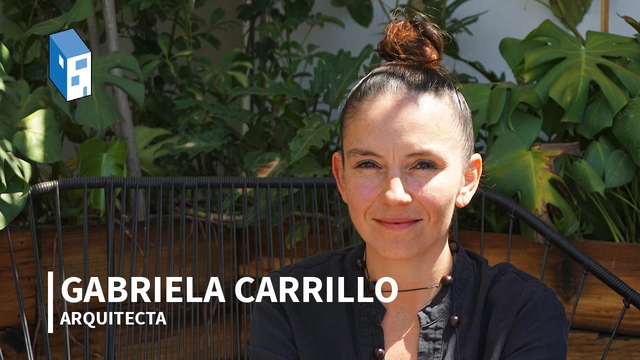
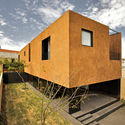
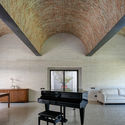
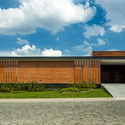
The professional career of Mexican architect Gabriela Carrillo reveals an impeccable and relentless commitment to recognizing the values of the territory in order to provide spaces that dignify their inhabitants. This approach has shaped her practice for 19 years, nine of which she spent as a partner at Taller de Arquitectura Mauricio Rocha + Gabriela Carrillo. Her work has been recognized with numerous awards, including the Gold Medal from the French Academy of Architecture.
March 8 was established by the UN in 1975 to commemorate the struggle for equal rights and universal suffrage. This commemoration honors the efforts of women who demanded their right to vote, to work, to professional training, to hold public office, and to combat labor discrimination. This struggle is the fruit of the labor of women who sacrificed themselves for the cause. Daily events clearly show that the social landscape has changed; however, it remains essential that both men and women commit to progress and justice to make things happen.
Since 2008, the National Chamber of the Iron and Steel Industry CANACERO has joined forces with the Latin American Steel Association ALACERO through initiatives such as the ALACERO Steel Design Competition for Architecture Students and the CANACERO National Steel Award for Architecture Students, aiming to encourage the use of steel in construction among architecture students in Latin America.
The Guadalajara region in Mexico is home to one of the country's most prominent cities, ranking as one of the most populous urban areas alongside Mexico City, Tijuana, the State of Mexico, and Monterrey. However, the exponential growth experienced by cities in the 20th century resulted in an urban sprawl that expanded far beyond traditional geographic boundaries. The capital of the state of Jalisco was no exception, ultimately leading to the definition of the Guadalajara Metropolitan Area, which integrates the key municipalities surrounding the capital.
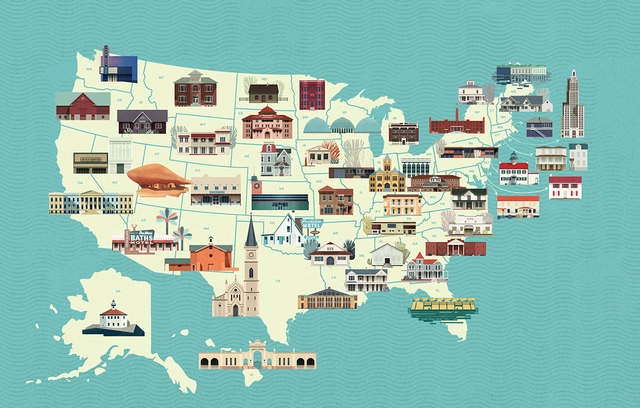
The stories of the buildings of the United States have been built by the undeniable culture that its inhabitants have been creating. That is why architecture is more than a physical object, it evokes moments that express the wishes of its inhabitants in different political and economic contexts. In all cases, these buildings represent the daily struggle that comes with a monumental legacy of those who lived there.
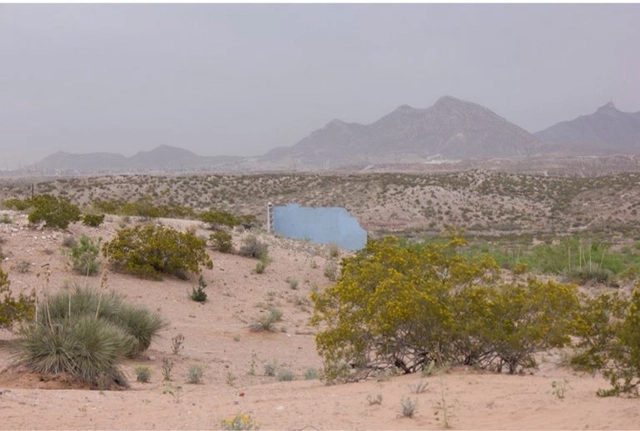
Located on the Mexican border as the southern gateway to the United States, Ciudad Juárez encompasses a territory that blends multiculturalism, migration, and resilience. Together, these elements form a phenomenon of hybrid roots that, over decades, has shaped “border culture.”
One of the most important factors in design is the site's specific climate. This can pose a challenge in extreme weather, where insulating materials are required to adapt to changing conditions. However, in the case of Mexico and its privileged climate, this factor works to the architects' advantage, allowing them to create microclimates and spaces that blur the transition between indoors and outdoors.
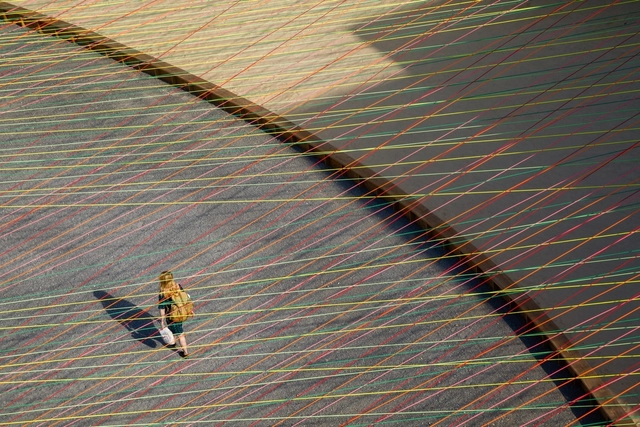
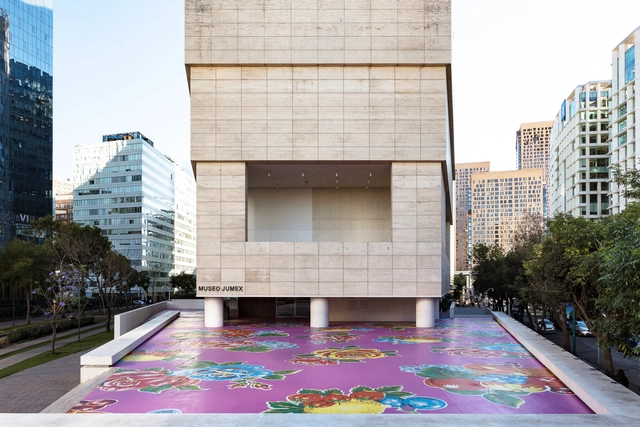
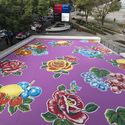
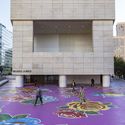
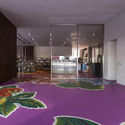
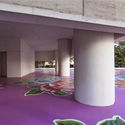
As part of this year's cultural agenda, Museo Jumex inaugurated the large-scale work Mariposa B1-09 by artist Michael Lin on February 4. The piece consists of a hand-painted floor spanning over 1,300 m2, temporarily covering the plaza and the building's ground floor.
The vast history of the United States involving migration, the great variety of climates and the mix of cultures, has built a very diverse urban and architectural landscape. Despite this, there is a large number of historic buildings that – unfortunately, as in many other countries – are in the state of decay due to poor maintenance, which attracts developers.
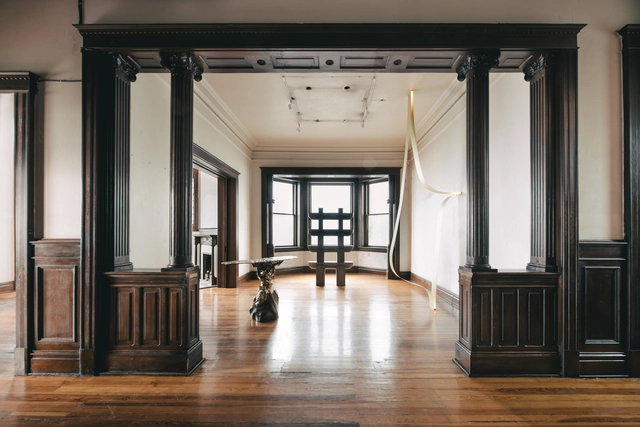
As part of the cultural programming of the Mexico City-based art gallery, MASA presents the exhibition Recover / Uncover, a space featuring unique and limited-edition pieces by designers and artists whose work seeks to challenge labels. In doing so, MASA celebrates contradiction as a reflection of an ongoing process of self-definition and evolution over time, presenting objects as tools for life and contemplation.
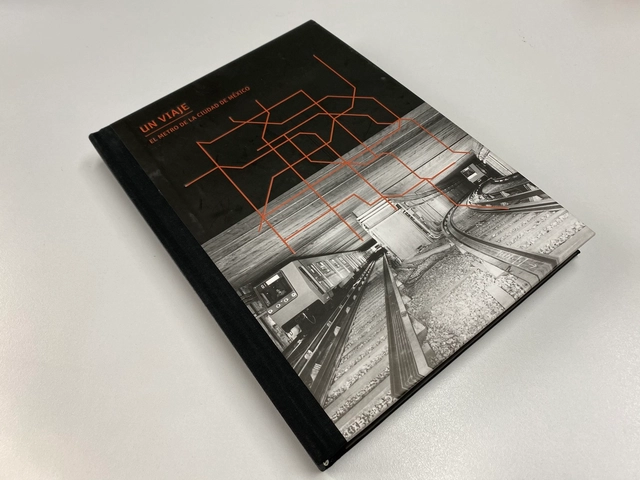
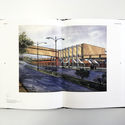
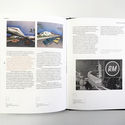
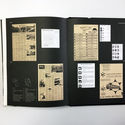
Un viaje. El Metro de la Ciudad de México is a publication edited by Juan José Kochen and the Fundación ICA in 2019—marking the 50th anniversary of the Collective Transport System. It brings together a series of texts by Bernardo Quintana Isaac, Manuel Larrosa, Enrique X. de Anda, Juan Villoro, and Carlos Monsiváis, among other experts. Accompanied by historical plans and graphics, these contributions form an extensive chronicle of the events surrounding the Metro Collective Transport System.
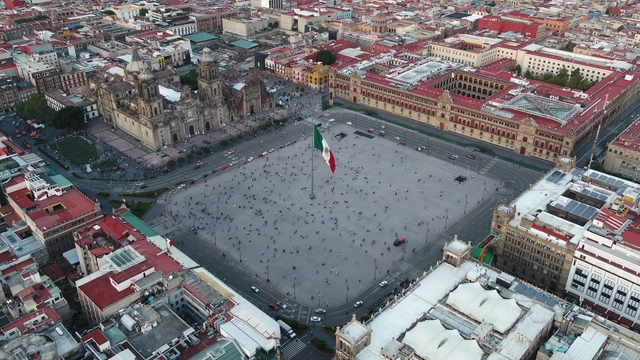
The remodeling project for the Plaza de la Constitución (El Zócalo) in Mexico City was completed in 2018. The design is the result of a competition launched by the Government of Mexico City and the Ministry of Public Works of Mexico City, covering an area of 46,800 square meters.
Currently, the volume of projects produced within universities in Mexico is immense, and we believe it is the perfect time to showcase some of their best work. Many undergraduate theses, also known as final graduation projects, address highly interesting and valuable topics for the country; unfortunately, the vast majority end up stored on library shelves or in a computer folder, missing the opportunity to drive real change in our cities and how we inhabit them.
Each year the Architectural League of New York selects eight firms, based in the United States, Canada or Mexico, to be granted the Emerging Voices Award, and to be recognized as emerging practices with the potential to influence the disciplines of architecture, landscape, and urban design.
This interview is part of a collaboration with the digital magazine Hysteria.mx. It was originally published on January 24, 2020, under the title "Stories from the US-Mexico Border" as part of Issue No. 31, titled "Bodies and Territories," and was conducted by Tadeo Cervantes.
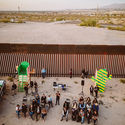
Alejandra Aragón is a visual artist, photographer, documentarian, and activist from Ciudad Juárez, Chihuahua—a city on Mexico's northern border infamous for the cases of femicide recorded from the early 1990s to the present. From this vantage point, Aragón narrates various aspects of daily life for women in a territory shaped by violence, conflict, and complexity.



.jpg?1582052291)







.jpg?1581963122&format=webp&width=640&height=580)