.jpg?1520927101&format=webp&width=640&height=580)
On the morning of March 10, 2018 (Beijing time), at the 2018 Civic Trust Awards ceremony held at Manchester's iconic Old Trafford stadium (home of Manchester United),
Established in the UK in 1959, this prestigious award is highly regarded,
ArchDaily China Team Lead Editorial & Business Development, Chinese architect and curator. You can follow me on Instagram @hanshuang_hhh
On the morning of March 10, 2018 (Beijing time), at the 2018 Civic Trust Awards ceremony held at Manchester's iconic Old Trafford stadium (home of Manchester United),
Established in the UK in 1959, this prestigious award is highly regarded,

On January 24, 2018, Schmidt Hammer Lassen (SHL), one of the world’s leading architecture practices, formally joined the global design firm Perkins+Will in Shanghai. The strategic partnership will expand SHL’s presence in China and reinforce Perkins+Will's commitment to sustainability and design excellence, combining the strengths of both firms to jointly develop the Chinese architecture market.
Harrison noted: “This partnership is founded on shared values between Perkins+Will and Schmidt Hammer Lassen: design excellence, sustainability, innovation, and the highest standards of client service. We also share a design philosophy, firmly believing that extraordinary architecture is always democratic and serves the greater good. We are aligned at every level.”

Preface: Tsinghua University School of Architecture is a world-renowned institution for architectural education. But how does a design institute operate within such a prestigious university system? Over its 60-year history, how has the Tsinghua University Architectural Design and Research Institute (THAD) maintained its relationship with the school, and what transformations has it witnessed in China's architectural industry? What challenges does the contemporary architectural field face? How will design institutes evolve under shifting national policies? How significant is the gap between architecture students and practicing professionals, and what qualities do contemporary architects lack? ArchDaily had the privilege of conducting an in-depth interview with Professor Zhuang Weimin, Dean of the Tsinghua University School of Architecture and President of THAD, to explore these questions.
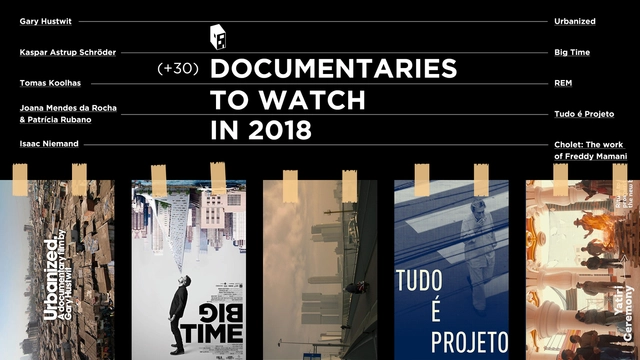
As we welcome the new year, don't miss ArchDaily's selection of the best architecture documentaries to watch this year!
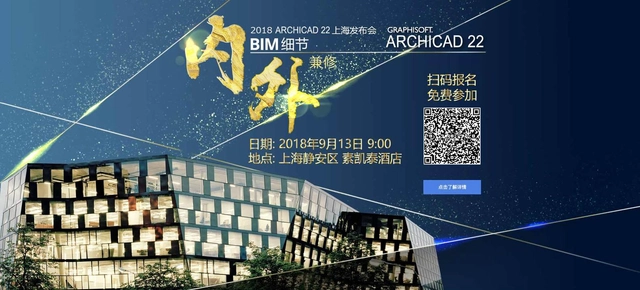
Dear ARCHICAD Users:
On September 13, the 2018 GRAPHISOFT China Product Launch will be held at The Sukhothai Shanghai in Jing'an District. To show our appreciation for our users, this event is free to attend. Please complete your registration details to secure your spot; attendees who check in on-site will receive a special gift. BIM details, refined inside and out. Join us to witness an evolution from the inside out!
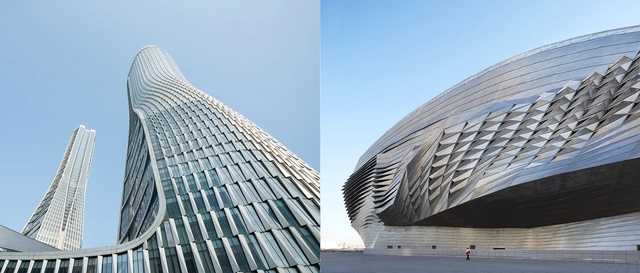
Tsinghua University established the Tsinghua University Architectural Design & Research Institute (THAD) in 1958 as a platform for architectural education and academic research, serving the development and construction of the newly founded republic. In 2018, THAD celebrated its 60th anniversary. Over these six decades, the institute has navigated the shifts and turns of the nation's social and economic development, serving as a witness to the evolution of modern Chinese architectural design. To mark this milestone, THAD and the Tsinghua University School of Architecture are co-hosting the "60 Years of Tsinghua Design Practice" event. This initiative invites professionals and institutions from across the Chinese architectural community to join in a series of exhibitions, forums, lectures, and publications. These activities aim to review the institute's development, reflect on the progress of Chinese architectural design over the past 60 years, and share research, practice, and insights, with the goal of continuing to serve the nation and advancing architectural scholarship and practice.
To celebrate the 60th anniversary of THAD, the Tsinghua Design Academic Week will be held on October 25, 2018. The event will feature domestic academicians such as He Jingtang, Wang Jianguo, and Meng Jianmin, alongside international guests including COOP HIMMELB(L)AU and UNStudio. Concurrently, the exhibition "6X10: A History of Modern Architecture at a University Design Institute" will officially open.

The tender announcement for the Schematic Design and Preliminary Architectural Design of Phase II of the Chinese University of Hong Kong, Shenzhen, has been officially released. We invite outstanding design teams from around the world to participate in this competition.
Please visit the Shenzhen Construction Engineering Transaction Service Network to view the full tender announcement: https://www.szjsjy.com.cn:8001/jyw/jyw/zbGongGao_View.do?ggguid=2c9e8ac2679cba010167a043234404b1
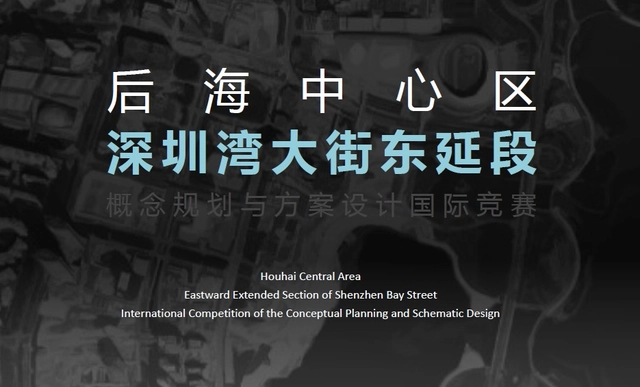
Competition Call: International Competition for the Conceptual Planning and Design of the Shenzhen Bay Avenue East Extension Now Open!

Shenzhen Ocean New City represents a rare opportunity for incremental development, serving as a key site for national strategic initiatives following the Qianhai development. Situated in the northwest of the Greater Airport area, the site is bounded by the Maozhou River estuary to the north, the International Convention and Exhibition Center of the Greater Airport New City to the east, the Bao'an Comprehensive Port Phase I to the south, and Jiaoyisha to the west, covering an area of approximately 7.44 square kilometers. To fully realize the strategic value of Ocean New City, the Urban Planning and Land Resources Commission of Shenzhen Municipality (Municipal Ocean Administration) is hosting an international urban design consultation, organized by the Shenzhen Special Economic Zone Construction and Development Group. The initiative seeks to leverage international perspectives, forward-looking strategies, and creative design to guide the high-level planning and construction of the area.

MAD Architects and WAY Studio were invited by BMW to co-design "Water, Cloud, Mountain," an immersive exhibition space located in the heart of Beijing's historic center. Looking out from the gallery, the Forbidden City, traditional hutongs, siheyuan courtyards, and lush greenery—iconic elements of old Beijing just steps away—authentically reflect the exhibition's theme: "Nature is the ultimate luxury." The space functions like a traditional Eastern courtyard, using a small-scale environment to recreate the essence of landscapes. Simultaneously, it serves to suspend time and space, transporting visitors away from reality and into a realm of boundless imagination. The shifting interplay of light and shadow adds a layer of ethereal beauty, making those within feel as though they have stepped into a landscape painting.

Qianhai is located in the western part of Shenzhen, Guangdong Province, on the eastern bank of the Pearl River Estuary. Adjacent to Hong Kong, it is planned as a future demonstration zone for deep cooperation between Guangdong, Hong Kong, and Macao, as well as a new urban center. To develop a series of high-level, high-quality iconic buildings that establish a new landmark for Qianhai in terms of form, design, and function, and to enhance the area's influence and appeal, the Qianhai Authority intends to construct the Qianhai International Financial Exchange Center in Unit 1 of the Guiwan area. This project will be the first international-level conference center in Qianhai, positioned as a venue for head-of-state level multilateral summits. It will serve government agencies, public institutions, enterprises, and associations within the Guangdong-Hong Kong-Macao Greater Bay Area, functioning primarily as a conference venue while incorporating auxiliary functions such as dining, banquets, hotel accommodations, boutique exhibitions, product launches, and festival events.

Have you ever traveled along such a coastline—where the mountains are low, yet cascade gently toward the sea; where the ocean is never far, yet unfolds anew with every turn? Have you ever noticed the villages scattered between bays and tidal flats, sustaining a slow and steady rhythm shaped by tides and monsoons?Have you ever truly seen the night sky— when artificial lights recede, and the sea and the sky nearly merge as one? Have you ever imagined, along this coastal road, a small station called "Zi · Pillowing the Stars"— and, stepping inside, what kind of encounter might unfold?
A journey through mountains and sea, unfolding alongside time—begins here.

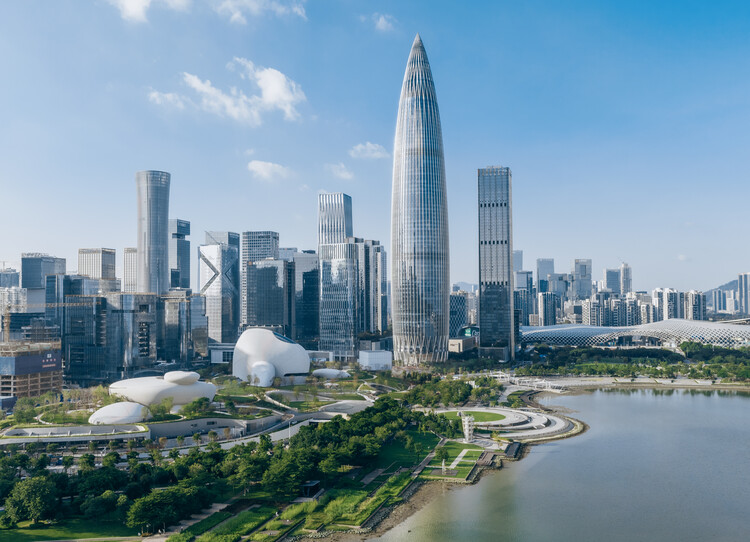
Shenzhen is China's first Special Economic Zone(SEZ), serving as a window for China's Reform and Opening-up and an emerging immigrant city. It has evolved into an influential, modern, and international metropolis, creating the world-renowned "Shenzhen Speed" and earning the reputation of the "City of Design." Architectural design stands as the most intuitive expression of Shenzhen's spirit of integration and innovation. Over the past decade (2015-2025), the development of urban architecture in Shenzhen has closely integrated with its open and inclusive urban character, ecological advantages of being nestled between mountains and the sea, and the local spirit of blending traditional culture with innovative technology, showcasing Shenzhen's unique charm and robust vitality across multiple dimensions.
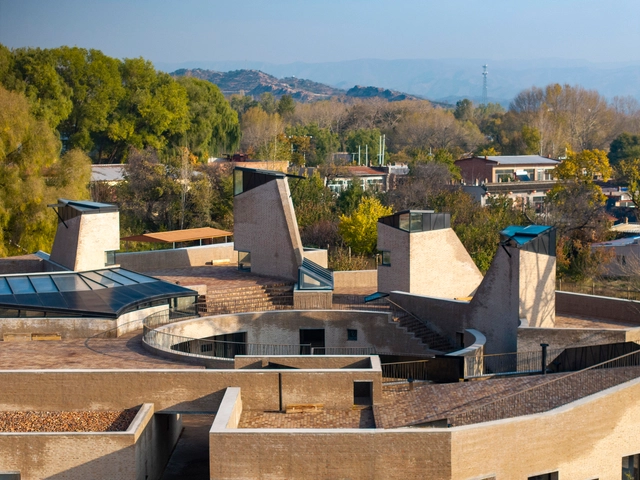
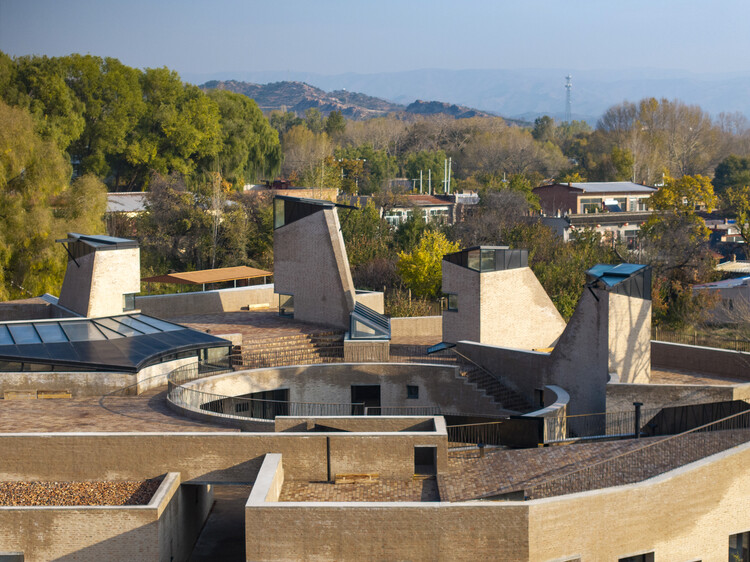
The 2025 Aga Khan Award for Architecture, one of the most prestigious honors in the field, celebrates projects that not only exhibit architectural excellence but also profoundly improve the quality of life for their communities. Among this year's winners is the West Wusutu Village Community Centre, a project in Hohhot, Inner Mongolia, by Chinese architect Zhang Pengju. In an era when rural areas often face social fragmentation and a loss of identity, this community center offers a powerful counter-narrative.
In recognizing this project, the award jury praised its ability to intervene in a sensitive yet rational manner, using design to foster inclusivity, resilience, sustainability, and overall well-being. The design achieves these goals by rejecting rigid functional zoning. Instead, a permeable circular courtyard integrates diverse community activities, organizing circulation and connecting multiple open rooms into a cohesive whole.

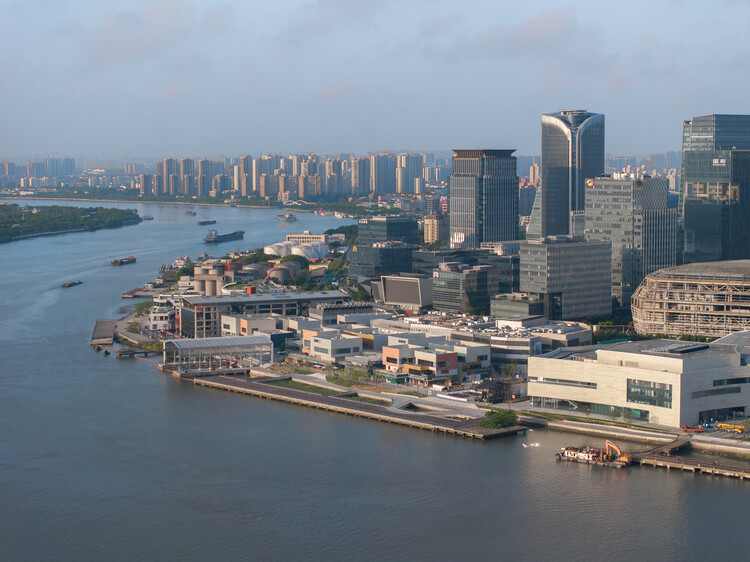
Amidst global economic adjustments and a domestic focus on high-quality development, Shanghai has implemented a strategic shift in its urban development approach—moving from 'incremental expansion' to 'connotative enhancement.' Guided by the concept of a "people-oriented city", Shanghai has elevated urban construction from mere physical space aggregation to a comprehensive endeavor aimed at optimizing functional quality, revitalizing spatial vitality, and boosting residential resilience through urban renewal initiatives. This transformation is framed not merely as a response to resource constraints but also as an intentional approach to urban development principles. Its core proposition lies in: under the policy framework of strictly controlling incremental land use, how to unleash development potential through the "reproduction" of existing spaces.
The Bi-City Biennale of Urbanism\Architecture (UABB) is a biennial cultural event collaboratively established by Shenzhen and Hong Kong. The 10th UABB will feature a sub-venue at Huaqiangbei, set to open in December 2025. Huaqiangbei, known globally as "China's No. 1 Electronic Street", will host exhibitions themed on "Future City x Technology x Art" during the 10th UABB. For this purpose, we are inviting creative ideas and proposals from individuals and organizations worldwide to energize the spatial innovation of Huaqiangbei. This call for submissions is divided into two main categories: "Creative Renovation Proposals" and "Archival Documents" submissions.

Another year, another successful ArchDaily China Building of the Year Awards! Once more, the award has proved to be the largest architecture prize centered around people's opinion. Crowdsourced, the most relevant projects of the year were nominated and selected by our readers.
The 2025 China Building of the Year Awards is brought to you thanks to Dornbracht, renowned for leading designs for architecture, which can be found internationally in bathrooms and kitchens.

Following two exciting weeks of nominations, ArchDaily's readers have evaluated over 500 projects and selected 15 finalists for the Building of the Year Award China. Architects and enthusiasts participated in the nomination process, choosing projects that exemplify what it means to push architecture forward. These finalists are the buildings that have inspired ArchDaily readers the most, which also reveal the growing trend of Chinese architecture.
Among the 15 finalists of the 2025 China Building of the Year Award, we can see a gradual shift in focus from large-scale public buildings to rural revitalization, community public spaces, exploration of new typology of school and small-scale interior spaces. People are paying more attention to their personal needs and living experiences as well as the surrounding spaces. We can also observe how different firms are responding to the needs of cities and users during the period of transformation in the real estate.
Before we get to shortlisted nominees, we want to highlight the values of this awards process — as the world's largest platform for architecture we are acutely aware of our responsibility to the profession, and to the advancement of architecture as a discipline. Since our mission is directly related to the architecture of the future—inspiring and educating the people who will design the urban fabric of the future—the trust placed in us by our readers to reflect architectural trends from regions around the whole world creates challenges that we are eager to rise to. The democratically-voted, user-centered Building of the Year Awards is one of the key pillars of our response to these challenges, aiming to tear down established hierarchies and geographical barriers. Here are the 15 finalists of the 2025 China Building of the Year Award, and the voting period will run from April 2nd to April 9th, 11:59 PM (Beijing Time), 2025. The final winners will be announced on April 10th, 2025. Click here to see the details and how to vote.