Fabian Dejtiar

Architect and Project - Team Lead at ArchDaily Instagram: @ fabe.de

BROWSE ALL FROM THIS AUTHOR HERE

MODEL: Barcelona Architectures Festival

From May 5 to 15, the first edition of Model. Barcelona Architectural Festival will take place. Co-organized by the Barcelona City Council and the Architects' Association of Catalonia (COAC), the event will serve as an open, plural, and multidisciplinary space for reflection, addressing key debates in architecture and urbanism to confront the social, political, and climate challenges of the 21st century.

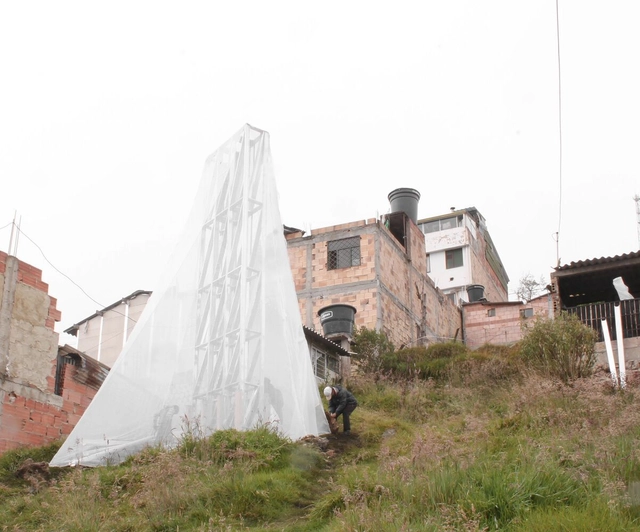
"Reversing the Pyramid", the installation by OJO Estudio for Model: Barcelona Architectures Festival

Subscriber Access | 

On May 5, the first edition of the Model. Barcelona Architectures Festival officially opened. Jointly organized by the Barcelona City Council and the Association of Architects of Catalonia (COAC), the event is led by artistic directors Eva Franch i Gilabert and Beth Galí, along with cultural researcher José Luis de Vicente. It brings us closer to experimental architecture, helping us rethink how we want to live together through new urban models and new imaginaries.

Through five temporary architecture installations located along a circuit in Ciutat Vella—starting at Plaza de Catalunya, the Sant Antoni slab, Plaza de Idrissa Diallo, Paseo de Lluís Companys, and Plaza Reial—the festival explores its five major themes under the central concept of "Regrow": Between-Classes, Between-Cultures, Between-Species, Between-Generations, and Between-Materials.

In this context, we present the installation "Reversing the Pyramid" by OJO estudio.

What makes a building beautiful?

Subscriber Access | 

Architects and designers, as well as psychologists and sociologists, recognize that aesthetics and its underlying philosophy have the power to change how we perceive the world around us. Consequently, a deeper understanding of what is beautiful has the power to reshape how people respond to their environment.

Exploring the different meanings of aesthetics in architecture—from "form follows function" to the aesthetics of the metaverse—can help us understand the potential of our physical and virtual environments on the path toward a better world.

Much has already been written on the subject, but we now want to open the debate to you, our readers. Share your thoughts on what makes a building or a city beautiful.

Leave your comments in the form below. These will be selected and published in an upcoming article.

"Occupying the Center with the Word": An Installation on Debate, Public Space, and the City at Barcelona's Plaza Real

Subscriber Access | 

From May 5 to 15, Barcelona's Plaza Real was transformed into one of the hubs for debates on architecture and the city during the MODEL Festival. The ephemeral installation "Occupy the Center with the Word"—led by the ELISAVA Barcelona School of Design and Engineering under the direction of Roger Paez, in collaboration with Manuela Valtchanova, Albert Fuster, and Toni Montes—sought to "create optimal conditions for both encounters and disagreements to take place, always through the spoken word."

"Ark of Coexistence": LEA Atelier + TAKK Build a Portable Garden in Barcelona's Ronda de Sant Antoni

Subscriber Access | 

"Arca de Convivencia" is a temporary installation designed by LEA Atelier and TAKK Architecture for the Model Festival—an event that, for ten days in May, turned the city of Barcelona into a testing ground for experimentation and debate. Located on Ronda de Sant Antoni, this mobile artifact houses a multitude of trees, plants, shrubs, and insects, reminding us of the urgent need to create public spaces that reverse the effects of global warming and foster biodiversity.

Chronotopic Memory: An Installation to Reflect on Barcelona's Past and Future Architectures

Subscriber Access | 

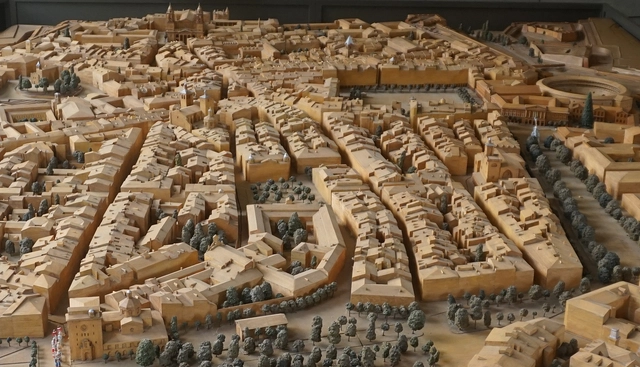
"Memoria Cronotópica" is a temporary installation by the studio FLEXOARQUITECTURA that took place on the site of Barcelona's former municipal courts during the Model Festival — an event that for ten days in May turned the city into a site for experimentation and debate.

The project sought to reflect on the logic of circularity and reuse through the documentation and juxtaposition of the site's lost architectures between the 7th and 21st centuries—from the medieval necropolis to the courthouse building, including the Fusina gardens and the Palau de Belles Arts.

Architecture can be your best calling card to the world

Subscriber Access | 

Laura Foraster i Lloret is the Secretary General of DIPLOCAT, a public-private consortium aimed at connecting Catalonia with the rest of the world and promoting initiatives that project its image abroad. Its 38 members include key public institutions as well as leading organizations from the business, social, labor, academic, and sports sectors—ranging from Futbol Club Barcelona to the University of Barcelona.

During the Model Barcelona Architectures Festival, which took over the city in May—an event already paving the way for the city's designation as the 2026 World Capital of Architecture—she joined us to discuss how architecture serves as a fundamental tool for presenting and projecting the region abroad. Read Laura Foraster i Lloret's key reflections below.

Architecture and Food: MAIO's Urban Kitchen in the Heart of Plaza Cataluña

Subscriber Access | 

Covering around five hectares, Plaza de Cataluña is one of Barcelona’s primary hubs—a gathering point for a diverse local community and tourists of all cultures and backgrounds. Here, the architecture firm MAIO designed and built an urban kitchen for the Model Festival, an event that turned the city into a laboratory for experimentation and debate for ten days in May.

"Architecture has no borders": Our readers share their thoughts on the democratization of design

Subscriber Access | 

Many of us agree with Roman Mars of 99% Invisible when he says that we "tend to not notice things that are well-designed"—yet we also agree that design is often considered a privilege for the few. Consequently, we must ask ourselves what truly constitutes democratic design, using this reflection to help define and contribute our vision toward a more equitable society.

From the perspective of architecture and design, democratization can be examined from several angles, ranging from debates on addressing everyday needs to strategies for inclusive design. At the core of these discussions lies a shared goal: finding ways to improve accessibility and livability in our daily lives.

Is it truly possible to design for everyone? And if so, how do we achieve it? We posed this question to you, our readers, in an open call. After reviewing the vast number of responses from industry professionals, students, and architecture enthusiasts, we were struck by a common thread: we not only experience design directly or indirectly in our daily lives, but we also need it to dismantle stereotypes and paradigms. Read a selection of these perspectives below.

How will we live in our cities?

Subscriber Access | 

Is there a future for our cities if we do not transition to a sustainable way of life? For some time, urban sustainability has adopted a perspective focused more on climate change than on a holistic vision that incorporates society and the way we live in community.

What new ways of living are we experiencing amidst social, economic, and ecological shifts? Ultimately, we must bring to the table examples from different parts of the world to understand the latest trends in how we live in our cities.

We want to hear from you—not only about examples of co-living, cooperatives, and any new type of social housing you consider a benchmark, but also your thoughts on the matter. Selected comments from the form below will be published in an upcoming article.

Drawn Manifestos: 99+ Imaginaries of Barcelona's Future

Subscriber Access | 

99+Imaginaris invited renowned architects from around the world to speculate on the future of Barcelona. Within the context of the Model Festival, curators Eva Franch i Gilabert and Josep Maria Montaner, alongside the design, coordination, and exhibition design by the Enric Miralles Foundation, brought together a wide-ranging series of sketches, ideas, visions, and models—from an edible Barcelona by Areti Markopoulou to a Barcelona of inflection points by Zaida Muxí.

The resulting exhibition catalog is a diverse archive of drawn manifestos—a document that allows us to review and debate future ways of living in the city. The curatorial text for 99+Imaginaris, along with the individual visions of its contributors, is presented below.

Open Question: What is good architecture?

Subscriber Access | 

Together with publisher gestalten, we recently published our first book: The ArchDaily Guide to Good Architecture. It represents a pause to reflect on the more than 40,000 projects curated over the past 15 years, drawing from their contributions to answer the ambitious question of what constitutes good architecture.

Now, it is your turn—our readers—to tackle this question. 

IAAC Lecture: Florencia Rodriguez

IAAC and Redes are pleased to announce the inaugural lecture for the second edition of the Online Master in Cities: The Near Urbanism (MOeC), IAAC's first master's program in Spanish, designed for Ibero-American professionals.

Marta Maccaglia, Anupama Kundoo, Florian Boer, and Johannes Tovatt premiere the new series "Building Visions"

Building Visions is a new architecture series by Chilean director Diego Breit-Lira that, across four episodes, features architects Johannes Tovatt, Marta Maccaglia, Anupama Kundoo, and Florian Boer. What do they have in common? They seek answers to the major questions facing our civilization today: climate change, rapidly growing cities, education, resource consumption, local community participation, and networking.

Concéntrico: A Guide to Architecture and Public Space in Logroño

Subscriber Access | 

Located in northern Spain, Logroño is a crossroads of both borders and architecture. It is not only a key stop on the Camino de Santiago and a gathering place for lovers of fine food and excellent Rioja wine, but works from its long architectural history can be found seamlessly interwoven throughout the city, often going unnoticed: from the ancient ruins on Monte Cantabria to Rafael Moneo's modern City Hall—not to mention the contemporary design of the High-Speed Rail Station by Ábalos + Sentkiewicz or the upcoming Bosonit building by Kengo Kuma in the historic center.

There is no need to worry about getting lost. Over its eight editions, the team behind the Concéntrico Festival has curated an extensive series of locations: new squares, interior courtyards, and hidden public spaces that speak volumes about the role of the urban fabric when discussing architecture in Logroño.

No One Is a Prophet in Their Own Land: A Tribute to the Master of Architecture Ricardo Bofill

Subscriber Access | 

"Domingos Libro" is hosted by Carmelo from Enorme Studio, delving into forgotten architectural publications, books, and architecture magazines from the 1960s, 70s, and 80s that hide the most fascinating stories behind them.

After a hiatus in 2022, the series returned with episode 19, titled “Always Young,” which tells the story of Ettore Sottsass Jr. Now, it presents "No One Is a Prophet in Their Own Land," a tribute to the recently deceased master of architecture Ricardo Bofill.

"We need to go beyond architecture": UNDO on Dwelling on the Margins (XII BIAU)

Subscriber Access | 

"Architecture and urbanism have the opportunity to offer solutions that involve looking beyond the discipline itself, so that the margins and boundaries of necessity lead us to seek actions outside of standard practice. Positioning ourselves on the margins allows us to see new alternatives, expand the practice, and have a perspective that is not central, but peripheral," say Anna Vergés and Guillem Augé (UNDO), curators of the XII Ibero-American Biennial of Architecture and Urbanism, whose central theme is "Habitar al margen" (Living on the Margins).

Recycled and Biocomposites: What Are the Materials of the Future

Subscriber Access | 

While the construction industry has been advancing into new fields like nanotechnology and 3D printing for years, it is still one of the most technologically lagging sectors. Many innovations remain purely experimental, and despite constant efforts to reverse this trend, we face a troubling reality: construction is one of the world's most polluting and waste-generating industries.