Miguel Lawner, winner of the 2019 National Architecture Prize, was Executive Director of CORMU during the Popular Unity government and has spent his career fighting for the right to adequate housing in Chile. Alejandro Aravena, the 2016 Pritzker Prize laureate, is a partner at ELEMENTAL. His work in social housing has made him a global icon since breaking onto the architectural scene with the Quinta Monroy project in Iquique.
Against this backdrop, it was highly compelling to hear the perspectives of two different generations. They met not only to discuss and analyze the past, present, and future of their lives and careers, but also to address the challenges surrounding access to housing in Chile.
Archivo de Ideas Recibidas is an interdisciplinary research and dissemination project that seeks to document and connect the ideas of individuals contributing to the contemporary creative ecosystem from the fields of art, design, and architecture. It is built on conversations between the team and various creators, exploring themes related to memory, academia, cultural context, key influences, and working methodologies.
Anne Lacaton, fotografía de Juan Rodríguez. Image Cortesía de Congreso Internacional de Arquitectura: La Ciudad que Queremos
September 10 marked the closing of the sixth edition of the Pamplona International Architecture Congress: “The City We Want.” Over three days,16 speakers from various disciplines shared their expertise to reflect on the global challenges facing the future of cities, addressing dimensions such as ecology, sustainable mobility, social equity, health and well-being, and the humanization of public spaces.
One of the opening keynotes on the first day was delivered by 2021 Pritzker Prize laureate Anne Lacaton of the firm Lacaton&Vassal. Her presentation emphasized housing as the core of social well-being and urban policy, and she advocated for the right to open space within the home. “Housing must be the pillar of any urban policy,” she asserted.
Archivo de Ideas Recibidas is an interdisciplinary research and dissemination project that seeks to document and connect the ideas of people contributing to the contemporary creative ecosystem through art, design, and architecture. It is built on conversations between the team and various creators, exploring themes related to memory, academia, cultural context, main influences, and working methodologies.
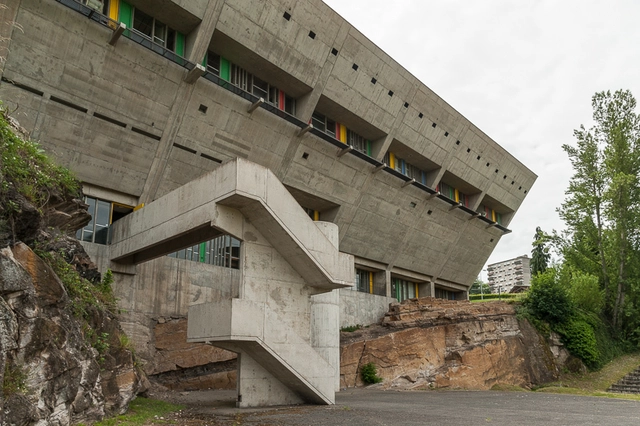
Le Corbusier was a pioneer of the Modernist Movement in architecture. Throughout his career, he undertook an array of projects all around the world. See below for 17 of his works that have been named World Heritage Sites by UNESCO, as well as many more of his other popular pieces. Hopefully, someday you get to go and see them yourself!
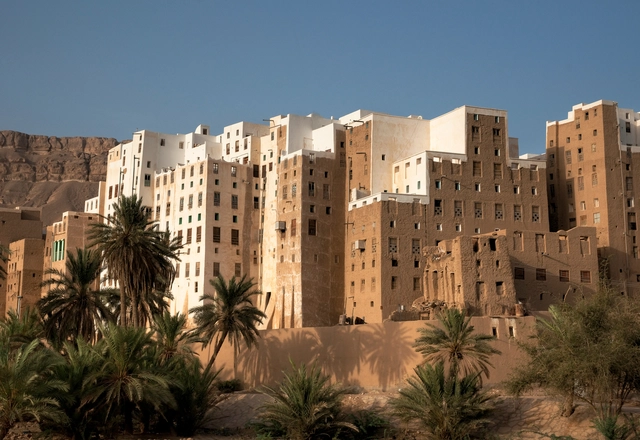
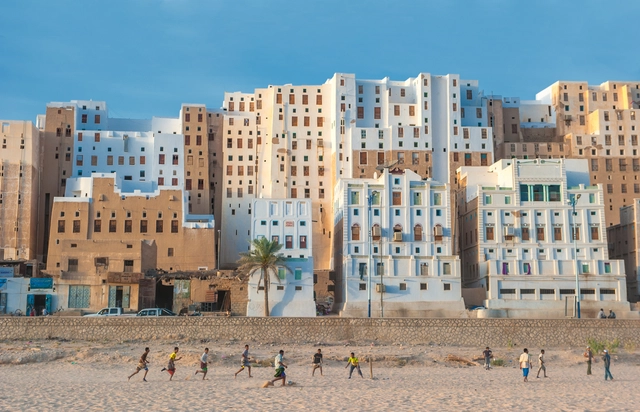
Shibam, the Manhattan of the Desert, a 500-year-old mud-brick city in eastern Yemen. Photograph by Don Whitebread. Image via Shutterstock
The construction industry's role in today's climate crisis is deeply concerning—between material production, building execution, and operations, the sector is one of the largest emitters of greenhouse gases. At the same time, urban populations are growing at unprecedented rates. Within the shaping of major cities—which consume massive amounts of energy—reducing the discipline's impact seems to rely on small-scale interests and personal initiatives rather than sweeping action from the academic, professional, or political spheres.
History has provided us with numerous construction techniques and local material uses that have proven sustainable over time. This involves the efficient use of resources that bypass major industrial processing stages and eliminate the need for long-distance transport. In some cases, at the end of their life cycle, they can even be returned to the environment, such as adobe and timber. In other instances, reclaimed materials—such as recyclable waste and debris generated directly on-site—can also be integrated. Undoubtedly, modern technology and knowledge can help optimize these materials for large-scale application in major cities. Is it possible to develop projects with low environmental impact and adapt them to dense urban contexts? Is this the future path for building materials?
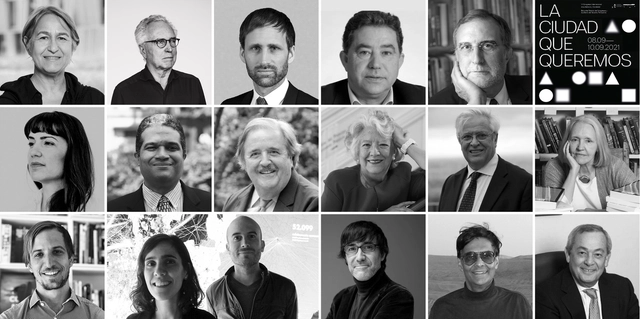
Anne Lacaton, Pablo Martínez y Mar Santamaria, Mohan Munasinghe, Francesc Muñoz, Feniosky Peña-Mora, entre otros ponentes del congreso.. Image Cortesía de Congreso Internacional de Arquitectura: La Ciudad que Queremos
From September 8 to 10, the sixth edition of the International Architecture Congress, titled "The City We Want," will take place. For the first time, the event can be followed live via the Architecture and Society Foundation's YouTube channel.
This September, the 4th edition of the Chicago Architecture Biennial opens under the title The Available City—a perfect opportunity to spark discussion on the role of architecture in urban equity.
"Domingos Libro" is hosted by Carmelo from Enorme Studio. Every two weeks, the series delves deep into forgotten architectural publications, books, and magazines from the '60s, '70s, and '80s, uncovering the fascinating stories behind them.
In this eleventh episode, titled "El Huevo" (The Egg), Carmelo discusses the 1978 book *L'Oeuf* by André Bruyère. An obsession with eggs led the French architect to propose an egg-shaped skyscraper for New York and write this book, which champions the ovoid as a fundamental form.
Videos
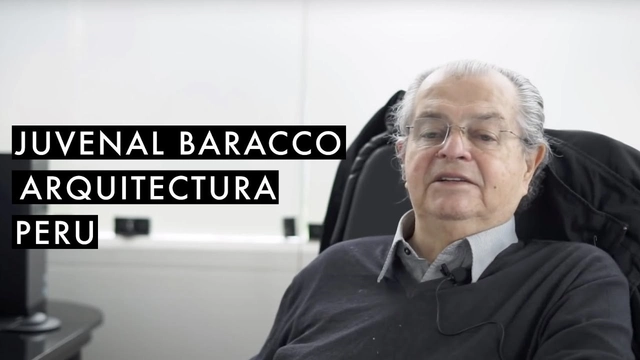
Juvenal Baracco. Image Cortesía de Archivo de ideas recibidas
Archivo de Ideas Recibidas is an interdisciplinary research and dissemination project that aims to record and connect the ideas of individuals who contribute to the contemporary creative ecosystem through art, design, and architecture. It is built on conversations between the team and various creators, exploring themes related to memory, academia, cultural context, their primary influences, and working methodologies.
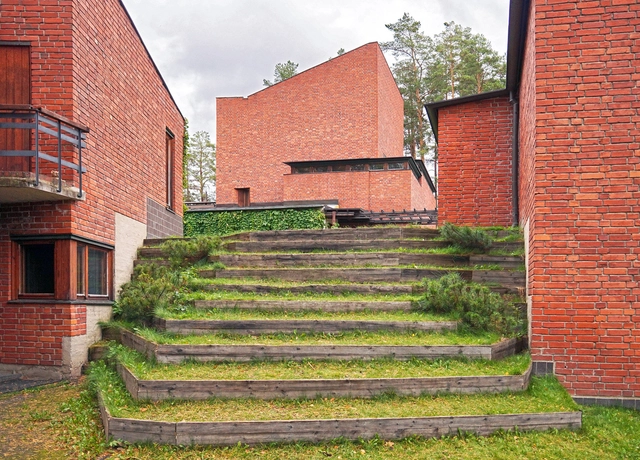
Finnish architect Alvar Aalto was a pioneer of modern architecture and design, especially in his use of organic, naturally derived materials. When he decided to embark on a career as an architect, he traveled to Helsinki, the only place where he could find academic training in the profession. His journey did not end there, however, as his work can be seen around the world. Here, we have mapped out 20 of his most notable works that must be seen up close and in-person to truly be appreciated.
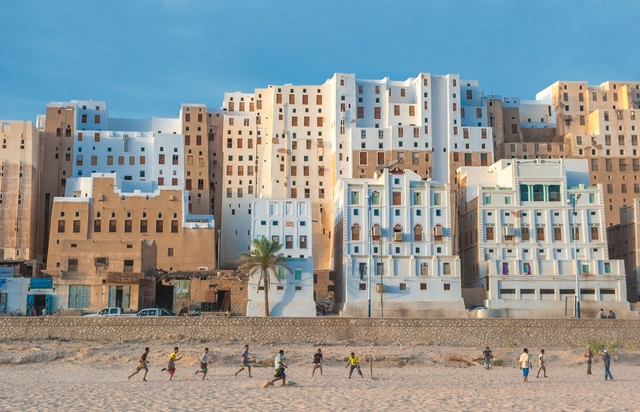
Image: javarman. Shibam, Hadhramaut Governorate, Yemen. The buildings are constructed using rammed earth. Image via Shutterstock
The construction industry's role in the current climate crisis is deeply concerning: spanning material production, construction, and building operations, the sector is one of the largest emitters of greenhouse gases. At the same time, urban populations are growing at historic rates, and when looking at the development of large cities—which are major energy consumers—it seems that reducing the discipline's impact relies on small-scale community and individual initiatives rather than broad political and professional actions.
History shows us various local techniques and materials that have proven sustainable over time through the efficient use of resources that require no heavy industrial processing and eliminate the need for long-distance transportation. In some cases, at the end of their life cycle, materials like adobe and timber can even be returned directly to the environment.
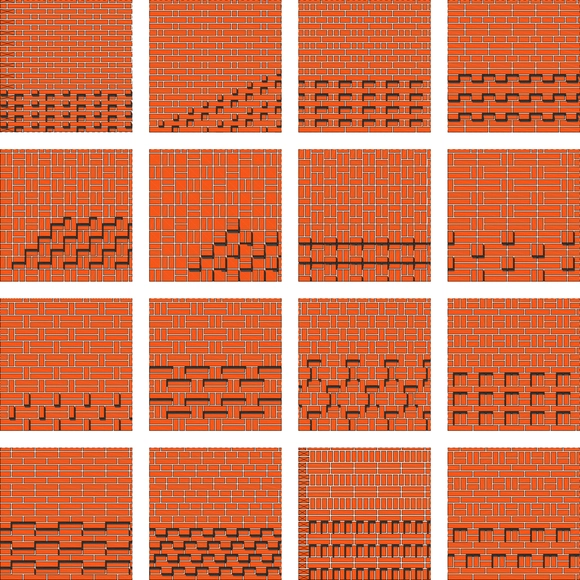
"Welcome to this strange book. With all the drawings, it might appear like a manual, but it isn't. The book is as much about joints as it is about pieces. Above all, it seeks the order that is inherent in things". These words are part of the introduction to Koen Mulder's book, "The lively surface: Masonry associations as a pattern art and tool of composition". Available in German, the 160-page manual, rigorously illustrated, presents a universe of possible pattern variations that can be created when you start designing.
We interviewed Koen to find out what inspired him to talk about this topic and to understand how he managed to gather all this information, while also figuring out the impact that this type of study can have on architecture students and architects.
A building stands out along the maritime walkway in Palma, Mallorca's capital. Designed by José Ferragut Pou and completed in 1960, the building was a poster child for the modern architectural movement sweeping the globe at that time. Today, like many of its brethren, it stands in abandoned disrepair.
Lluís Bort is the Spanish architect and photographer behind "Empty Architecture," a photographic compilation of abandoned buildings from throughout the island of Mallorca, Spain.
Image: javarman. Shibam, Hadramaut Governorate, Yemen. The buildings' construction method is rammed earth. Image via Shutterstock
The construction sector's contribution to today's climate crisis is deeply concerning: between material production, construction, and building operations, the sector is one of the largest emitters of greenhouse gases. Meanwhile, as urban populations grow at historic rates, we find that in the development of major energy-intensive cities, reducing the discipline's environmental impact seems to rely on niche interests and individual initiatives rather than large-scale actions from academia, the profession, or policymakers.
History has shown us numerous construction techniques and applications of local materials that have proven sustainable over time—relying on the efficient use of resources that require no intensive industrial processing and eliminate the need for long-distance transportation. In some cases, at the end of their life cycle, these materials can even be returned to the environment, as is the case with adobe and wood.
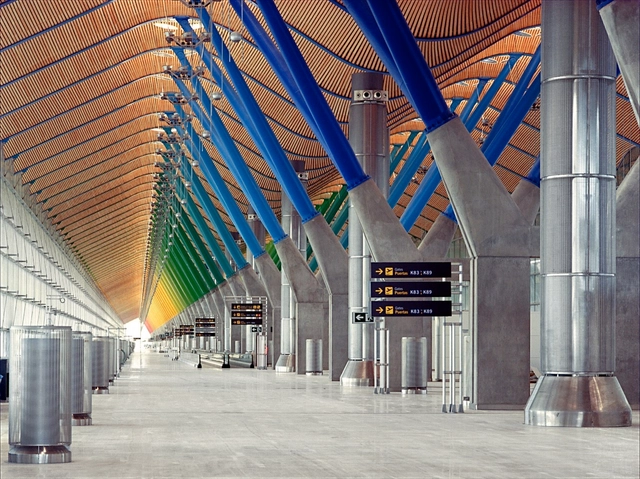
Airports require architectural solutions that not only respond to the efficiency of their spaces and circulations - both operational and passenger - but also to their connection with other transport systems and terminals.
Take a look at 10 airports/terminals and their plans and section below.
"Can we make clay form a structure that can bear loads?" John Pawson asks Alejandra Sepúlveda from Taller Barros. Together, they are working on the Ruta de la Greda (The Clay Route) in Pomaire, Chile.
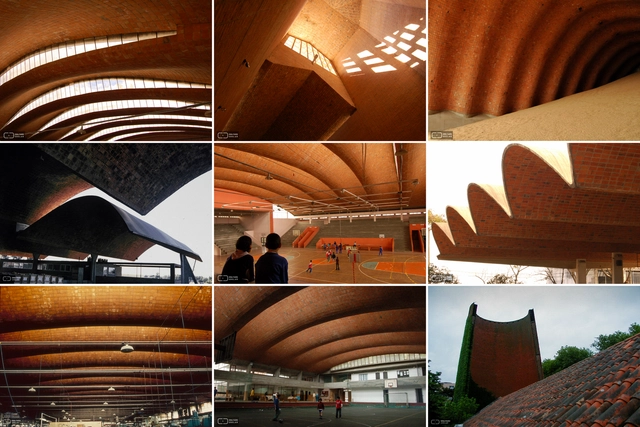
Cortesía de Servicio de Medios Audiovisuales de la Facultad de Arquitectura, Diseño y Urbanismo de la Universidad de la República
Eladio Dieste, the engineer behind "reinforced ceramic" and double-curved arches marked his spot as one of the most important figures in architecture, not only in his native Uruguay, but in Latin America and beyond. Here, we invite you to take a look at just some of the engineer's work, from his widely-recognized churches like the Church of San Pedro and the Christ the Worker Church in Atlántida- to his factories, silos, and gymnasiums, all of which form an important part of the region's architectural repertoire.
To help us in our mission to bring Dieste's work to our readers, the Audiovisual Media Service of the Faculty of Architecture, Design, and Urbanism at the University of the Republic has shared the following images as well as the Eladio Dieste page in order to provide a space to learn about his works and writings.