Fabian Dejtiar

Architect and Project - Team Lead at ArchDaily Instagram: @ fabe.de

BROWSE ALL FROM THIS AUTHOR HERE

Apply for the 2022 ArchDaily en Español Editorial Internships

At ArchDaily en Español, we recognize the need to maintain constant contact with architecture students, who will be responsible for designing and building the cities of the future. For this reason, we periodically open a call for applications to join our editorial team through our internship program.

If you currently reside in Latin America, this could be your opportunity to contribute local content to the most visited architecture platform in the world, which inspires and informs hundreds of thousands of architects globally. If you are interested, please read on.

Apply for the 2021 ArchDaily en Español Editorial Internships

At ArchDaily en Español, we recognize the need to stay in constant contact with architecture students, who will be responsible for designing and building the cities of the future. For this reason, we periodically open a call for applications to join our editorial team through our internship program.

12th International Congress on the History of Spanish Modern Architecture: Industrial Buildings

The 12th Congress on the History of Spanish Modern Architecture will take place on April 14, 15, and 16. Originally scheduled for last year, the event was postponed due to COVID-19. This edition will be held online.

The Congress is titled "Industrial Buildings: Icon and Space of Progress for Architecture at the Dawn of Modernity."

Future Fields: Jacinta Leong

When we speak of a field, we necessarily establish a measure. That reference of and about that field is currently modeled in relation to the historical events we are experiencing and the various phenomena that keep us in suspense regarding the uncertainty of what is to come.

We are seeking our next ArchDaily en Español Editor

ArchDaily is a digital project in constant evolution. It is an experiment in the documentation, discussion, and dissemination of key topics in architecture and urbanism on a scale that would not have been possible twenty years ago. Today, we are pleased to announce that our team continues to grow.

Future Fields: Julian Bleecker

When we speak of a field, we necessarily establish a measure. That reference of and about that field appears today, shaped by the historical events we are living through and the various phenomena that keep us on edge regarding the uncertainty of what is to come.

Energy Transition in Housing: Stoves, Heaters, and Electrification in Latin America

Subscriber Access | 

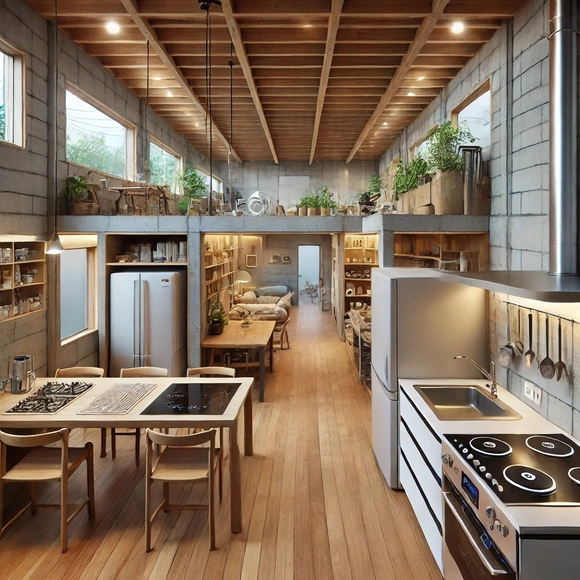
For many households in Latin America, fossil fuel- and biomass-based stoves and heaters, such as natural gas or wood, are an affordable and accessible option. However, these appliances present significant challenges: they are a source of greenhouse gas (GHG) emissions, contribute to indoor air pollution, and highlight the need for policies that promote a cleaner residential energy matrix. These challenges become even more urgent considering that 2024 was the hottest year on record, with a 1.5°C increase over pre-industrial levels driven by record GHG emissions from human activity, thereby underscoring the importance of adopting sustainable solutions across all sectors worldwide, including residential.

Europe's largest cantilevered pool is being built in Murcia, Spain

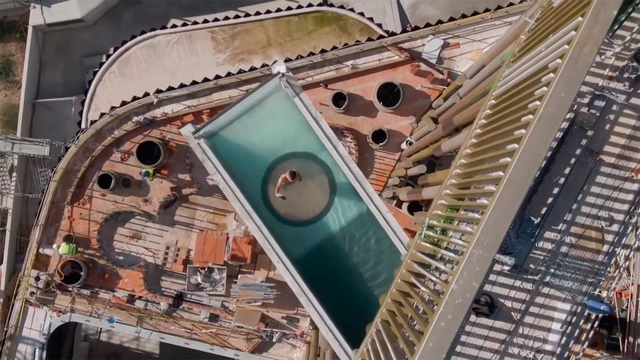
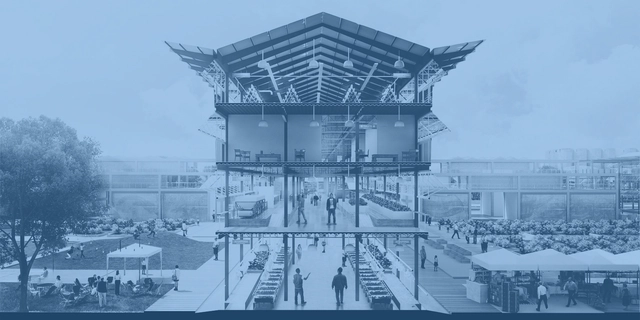
Clavel Arquitectos is behind the design and construction of Odiseo, a building designed to function as an urban oasis and leisure center in Murcia, Spain. The most striking feature from the exterior is what will be Europe's largest cantilevered pool—and the second largest in the world.

The Winners of the 2020 FAD Awards: The Best Works of New Iberian Architecture

Subscriber Access | 

The 2020 FAD Awards, one of the most important architecture accolades on the Iberian Peninsula, have announced the winning projects of their latest edition.

Construction and Demolition Waste: Are We Recycling the Right Way?

Subscriber Access | 

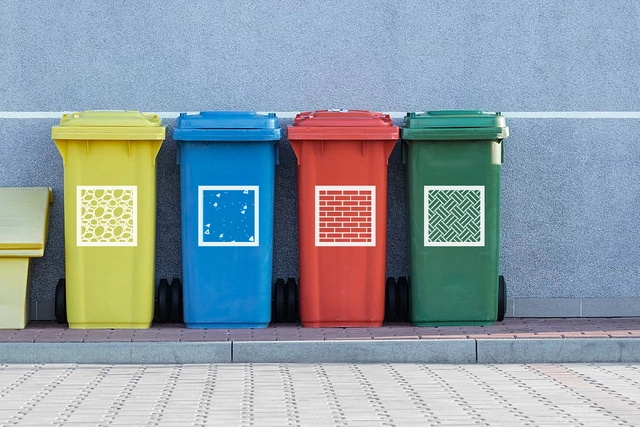
While public awareness and regulations on how to reduce, reuse, and recycle municipal solid waste (MSW) on a daily basis have gained momentum, this is not yet the case for construction and demolition waste (CDW). This waste is primarily generated from the development of new projects; the rehabilitation, repair, and retrofitting of existing buildings; and site preparation and demolition processes, spanning from the scale of a single house to an entire city. This represents not only the loss of a massive volume of concrete, brick, steel, and manufactured products, but also the missed opportunity to salvage historic relics.

We want to offer our readers the opportunity to openly share their opinions and experiences regarding the recycling of this waste. If we were all fully aware of the environmental impact generated by the extraction, production, and commercialization of materials—only for them to ultimately end up as trash—would it change the way we design? Would our practices change?

"The Ethics of Dust" by Jorge Otero-Pailos, Preserving the Invisible History of Buildings and Monuments

Subscriber Access | 

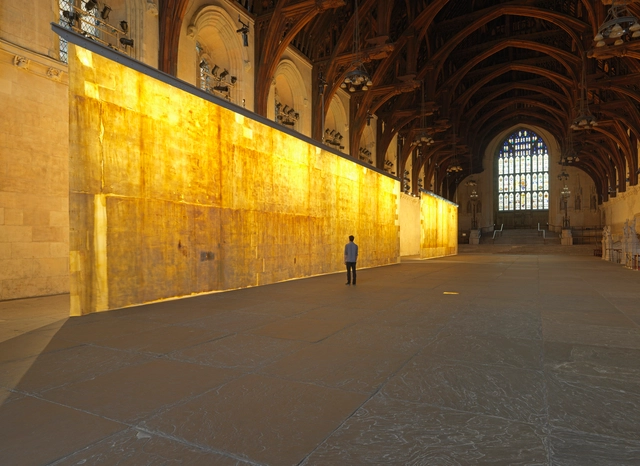
"I am interested in how we transition as people from one phase of life to another, and as cultures from one historical period to another. Transitions are often difficult, maybe even frightening." With this introduction, we can expect the work of artist-architect Jorge Otero-Pailos to offer a different perspective, particularly in how we understand the passage of time in architecture throughout history.

Below, he shares photographs of his series "The Ethics of Dust," which highlights the cleaning of dust and pollution residue from renowned historical buildings and monuments—making the invisible visible.

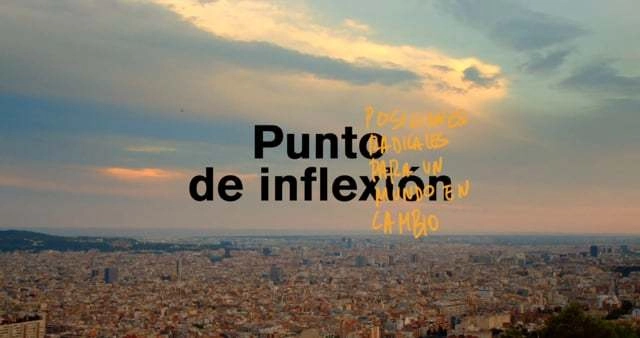
Turning Point: Radical Positions for a Changing World

Subscriber Access | 

"We are at a historic moment. Everything is changing—the way we relate, work, and build. The boundaries between the physical and the digital, the local and the global, are blurring as we move toward an uncertain horizon shaped by the climate emergency and social inequalities. In this context, the role of architecture, design, and urban planning is fundamental."

These are the opening words of a new documentary produced by the Arquia Foundation—the first in a series profiling different Spanish cities—directed by Javier Peña. The film explores Barcelona's most radical architecture through the lens of a generation of architects who emerged in 2008 in the midst of the financial crisis. It features contributions from Anna and Eugeni Bach, Maio, David Steegmann, Adrià Escolano, Vora Arquitectura, Bonell + Dòriga, Raúl Sánchez, Arquitectura G, FLEXO Arquitectura, Carles Enrich, La Col: cooperativa de arquitectos, and Harquitectes.

Exposed Materials: Trend or Necessity?

Subscriber Access | 

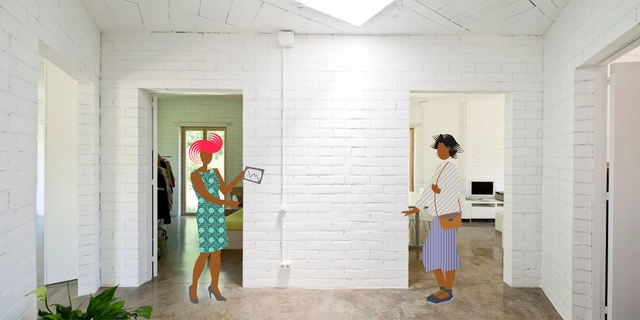
Have you ever had to convince your friends or family that an exposed brick wall can be more appealing than a plastered, white-painted one? Or that exposed building systems can offer significant advantages when it comes to maintenance? Do we connect better with a smooth backdrop for hanging art than with the textures of exposed materials?

Imagen Subliminal: Architectural photography needs to remain open to new forms of representation

Subscriber Access | 

A glance at the portfolio of Miguel De Guzmán and Rocío Romero reveals a duo that successfully captures the breadth of architectural spaces while conveying the underlying concepts. Together, they founded the Madrid- and New York-based photography and film studio Imagen Subliminal , documenting the latest developments in global architecture to allow viewers to experience the energy and creativity driving these projects.

On World Photography Day, we spoke with the duo about the evolution of their work and the role photography plays in both the current and future architectural landscape.

Adamo Faiden: "Infrastructure for the event, architecture in ordinary situations"

Subscriber Access | 
Adamo Faiden: "Infrastructure for the event, architecture in ordinary situations" - Imagem 2 de 4
Bonpland 2169 Building. Image © Javier Agustín Rojas

Adamo Faiden continues to capture widespread interest, not only for their multifaceted and passionate approaches to contemporary architecture, which consistently extend into the fields of teaching and research. Their building Bonpland 2169 in Argentina was selected by our jury of experts—meaning you, the readers—as one of the winners of the 2020 Building of the Year award.

On this occasion, we spoke with Marcelo Faiden for an in-depth conversation about the role of everyday buildings in transforming our environment, current shifts in how we live and inhabit, the purpose of practicing and teaching architecture today, and future projections for the discipline.

The best graduation projects in Central America and the Caribbean completed in 2019. Submit yours!

Subscriber Access | 

We believe that the creative output of universities in Central America and the Caribbean is immense yet often overlooked. Therefore, we feel it is essential to launch a call for submissions to showcase the best graduation projects coming out of these institutions.

Academic proposals can be profound intellectual and critical works. This call aims to prevent them from remaining tucked away, gathering dust on shelves, and losing the opportunity to spark real change in our cities and in how we live and think.

If you believe your 2019 graduation project is compelling enough to be featured on our site, and that your hard work deserves recognition from the wider community, do not hesitate to submit it using the form at the end of this article.

Bulla on landscape design: "moving from the machine to the system and from authors to teams"

Subscriber Access | 

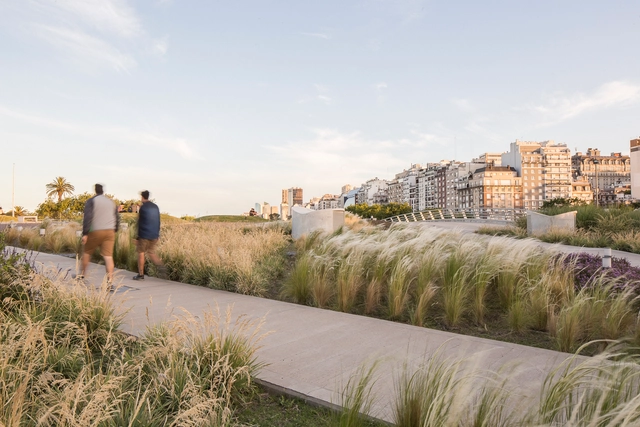
Bulla is an Argentine landscape design, urban, and territorial planning studio that has dedicated over a decade to "inserting a landscape agenda into the public and intellectual scene." To explore their beginnings, purpose, methods of working, reflecting, and exploring, as well as their vision for the future of landscape architecture in Argentina, we interviewed Ignacio Fleurquin, founding partner.

Drawn Lectures by Professor Justo Isasi: 'Stories in Lines'

Subscriber Access | 

Following the first lessons Thinking in Lines and Drawing the World, OSS (Office for Strategic Space), together with Professor Justo Isasi, Chair of Architectural Design at ETSAM (Technical Superior School of Architecture of Madrid, UPM), presents the third drawn lecture: "Stories in Lines."