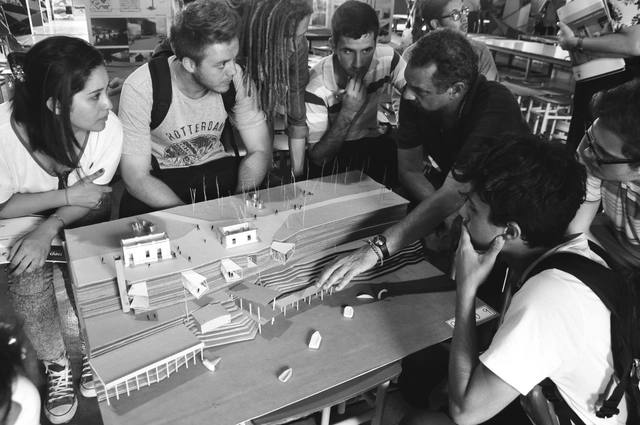
Key strategies for facing a studio presentation or exam in the first years of architecture school. Image via Facultad de Arquitectura, Planeamiento y Diseño UNR
Quacquarelli Symonds (QS) presented the 2019 edition of its annual ranking of the world's best universities in the field of architecture, in which UCL (University College London) dethroned the Massachusetts Institute of Technology (MIT) in the United States, which had led the list for four consecutive years.
Within the Ibero-American region, the list has not changed significantly compared to 2018: Spain maintains a strong presence, while Chile leads Latin America. Discover the top-ranked institutions below!
To showcase the valuable output of Argentine universities, for the third consecutive year we launched an open call inviting our Argentine readers to submit their final thesis projects, sharing the work that launched their careers as newly minted architects.
After receiving more than 60 submissions from various Argentine architecture schools and cities, our editorial team selected nine projects, focusing on those that demonstrated critical thinking toward contemporary issues, formal resolution, and representation. The selection not only recognizes those projects that delivered the best possible architecture through simple design suited to their context, program, and users, but also highlights those showing a strong commitment to human scale, mediation, transition, and new ways of approaching urban architecture. This edition's jury was composed of Fabian Dejtiar, Managing Editor of ArchDaily en Español; Mónica Arellano, Editor of ArchDaily México; and Delia Bayona, Editor of ArchDaily Perú.
Read on to explore the selected projects in detail.
Recognizing outstanding heritage practices, the fourth edition of the European Award for Architectural Heritage Intervention AADIPA has announced 15 shortlisted works in Category A (Intervention in built heritage) and 10 in Category B (Exterior spaces).
On June 13, during the 4th International Biennial of Architectural Heritage Intervention—an event organized by the directors with the support of COAC, AADIPA, and the Generalitat de Catalunya—the finalists and winners of each award category will be announced.
The Safe Cities Index (SCI) by The Economist Intelligence Unit ranks 60 representative cities worldwide based on indicators covering digital security, health security, infrastructure, and personal security.
Focusing on Latin America —and setting aside the repeated leadership at the top of the list by Tokyo, followed by Singapore, Osaka, Amsterdam and Sydney— where do this region's cities rank in terms of safety for 2019?
CityMakers is working with ArchDaily to publish a series of articles, conversations, and interviews with various actors in city co-production, who are behind the Barcelona CityMakers Lab 2019, an event taking place from October 14 to 20.
On this occasion, we feature Oriol Estela Barnet, general coordinator of the Barcelona Metropolitan Strategic Plan, who will give a MasterClass at the Barcelona CityMakers Lab 2019 addressing the concept of “a third generation of strategic urban plans: the case of Barcelona.”
The XI Ibero-American Biennial of Architecture and Urbanism (XI BIAU) recently announced the 210 selected works for its upcoming edition, which will be held for the first time in Asunción this October.
The winners of the Panorama of Works Award will be chosen from this list of selected projects, which includes the 14 Peruvian works featured below.
One of the first things I hear upon arrival is that the sixth edition of the Academic Event of the School of Architecture (EARQ) was not only organized by students, but is also part of the graduation requirements to become an architect at the Pontifical Catholic University of Ecuador (PUCE-SI). This management work, without a doubt, carries conditions that closely align with what we recognize as necessary in our discipline today.
The new edition of the Ibero-American Biennial of Architecture and Urbanism (XI BIAU) poses a different challenge. This time, along the shores of the peaceful Paraguay River, the Ricardo Brugada neighborhood, known as La Chacarita—one of the oldest in Asunción's historic center—takes center stage.
Together with the residents—who also exhibited the biennial's award-winning projects in their own private homes—national curators led 13 working groups to develop proposals for the improvement and transformation of a sector historically overlooked by the city, often associated with crime and unemployment. Some of these initiatives have already been put into practice.
Tomorrow, Chile celebrates Cultural Heritage Day, marking two decades since its inaugural edition. This year, a wide range of buildings will open to the public, featuring free tours and activities on Saturday, May 25, and Sunday, May 26.
Below, we highlight 10 unique initiatives that promise a distinct experience.
Through the Urban Development Corporation (EDU) and the Colombian Association of Architects (SCA), Medellín launched an international competition to design a space of memory and reflection on the period between 1983 and 1994, one of the most violent eras in the Colombian city. The competition jury awarded first prize to the design team of Taller Alterno, Pequeña Escala Arquitectura, and Luis Felipe Zapata Flórez.
Read more about the project below, in the words of its designers.
Inflection. Def. A change of direction in a process or movement / A bend or angle in a flat or straight object
Oneblock proposes a record that not only investigates the uses and potential of everyday objects—and their resulting actions or spaces—but presents drawing as a tool "requiring constant updating to represent, at all times and with the utmost clarity, what it truly aims to convey, responding to the needs of society at every point along the unstoppable timeline." Read below for an in-depth look at the work in the authors' own words.
Global South, resilience, buildtech, and new materials: as 2019 comes to a close, we look back on a year rich in research and reflection, approaching architecture from different perspectives to support the millions of readers worldwide who visit ArchDaily every day.
Aiming to offer inspiration, knowledge, and tools, we have published hundreds of articles on topics as diverse as your views on the built environment. With this in mind, read on for our selection of the year. Goodbye 2019, hello 2020!
Exhibited in a parallel exhibition at the 2018 Venice Biennale, the Tropi-Co-Re Housing project by SUMA Arquitectos reflects on the intersection of urban and architectural design within the low-income residential context of an equatorial/tropical climate, investigating alternative material systems for its construction, such as bamboo truss structures and folded metal plate roofs.
Read on to explore the project in detail, in the words of its designers.
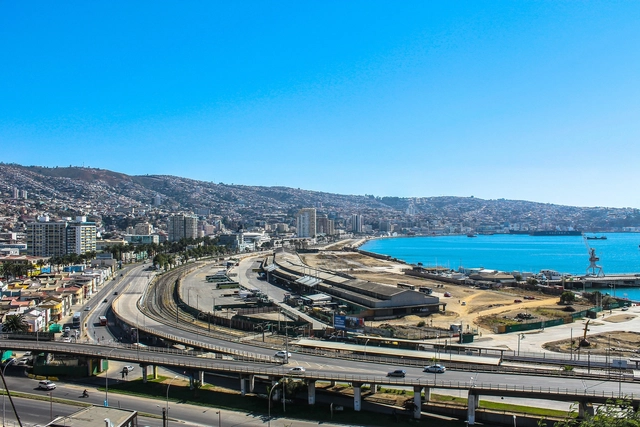
Current status of the Barón Pier. Image via Pxhere. Licensed under CC0 Public Domain
In January, more than 10,000 citizens in Chile voted to select the first, second, and third places of the Paseo del Mar ideas competition in Valparaíso, a new public space at the Barón Pier that will transform the coastal city's waterfront. "This area was the engine of the country's railway industry during a significant part of the 19th and 20th centuries. Today, however, these grounds lack the vitality of yesteryear and have been abandoned over time," the competition guidelines state.
Ahead of the Bicentennial of Peru's Independence, the Ministry of Culture, the Municipality of Lima, and Grupo Centenario launched an international architecture and landscaping competition for the design of a metropolitan park surrounding the Pachacamac Sanctuary in Lima. The call sought ideas to create a new public space featuring cultural programming and public services, aimed at protecting the sanctuary and connecting it more closely to surrounding communities. The brief proposed a circuit connecting the area's most important cultural projects: the National Museum, the Pachacamac Sanctuary Site Museum, and the Urpi Wachaq wetland restoration initiative. Discover all the winning projects below.
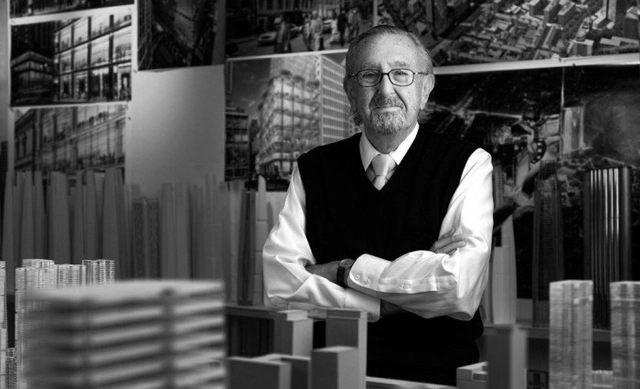
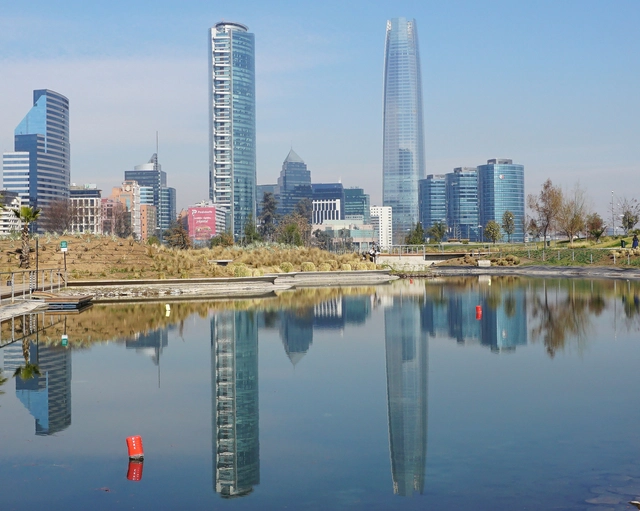
Argentine architect César Pelli, known for designing some of the world's tallest buildings, such as the Petronas Towers in Kuala Lumpur, the Torre de Cristal in Madrid, and the Costanera Center building in Santiago, Chile, passed away today at the age of 92, as confirmed on social media by Juan Manzur, governor of the province of Tucumán.
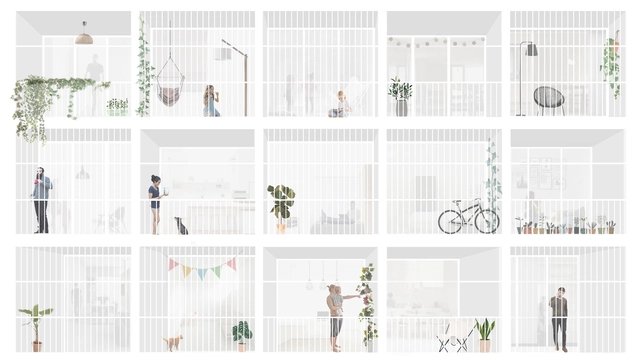
"Domestic Workspaces" by Silvia Garcia Camps brings together 46 international architecture offices through collage, revealing the intimate, domestic, and shared qualities of workspaces through the everyday objects within them. Explore a selection of these illustrations, along with her thoughts, below.


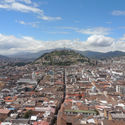

.jpg?1567177603 "Global Ranking: 40. Image © Flickr User: Eneas De Troya Licensed under CC BY 2.0")