.jpg?1438787272&format=webp&width=640&height=580)
Dearest readers: we're pleased to announce that you can now order limited edition ArchDaily t-shirts from our newly-opened online store!
Dearest readers: we're pleased to announce that you can now order limited edition ArchDaily t-shirts from our newly-opened online store!
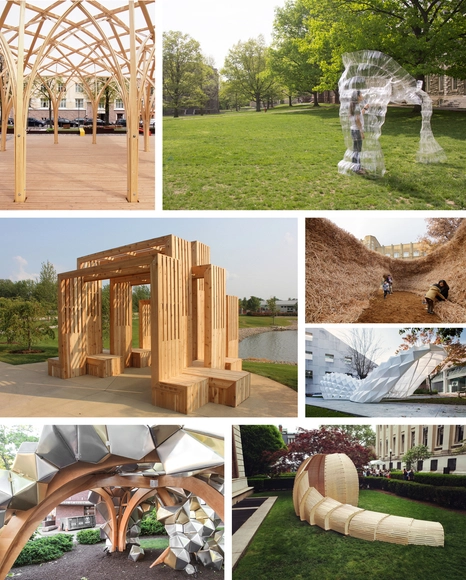
Almost two months ago we put a request out to all of our readers who were completing the academic year to send us any built work that they may have completed as part of their studies. Our hope was to display the fantastic diversity of ideas and styles that is emerging from institutions across the globe, and the response that we got was fantastic. With almost 100 submissions, we received projects from countries as far afield as Chile, the United States, Norway and Japan. We also received everything from pragmatic projects such as a chapel for a disadvantaged community in Mexico or a low-budget sidewalk parklet, to wondrously bizarre constructions such as a steel worm that connects spaces through sound and an inhabitable haystack.
With the help of our colleagues at ArchDaily Brasil and all of ArchDaily en Español, we've compiled a selection of 26 of the most interesting, elegant or unusual projects from around the world - join us after the break to see what your international peers have been up to.
PA# 39 - Bureaux ZAC Claude Bernard, Paris 19 por Pavillon-Arsenal

Our friends at the Pavillion de l'Arsenal have shared a collection of videos from their "Paris Architectures" series. Dive into these short films that document remarkable architecture around France's capital city.
This week we get a glimpse of Sauerbruch Hutton's Bureaux ZAC Claude Bernard.
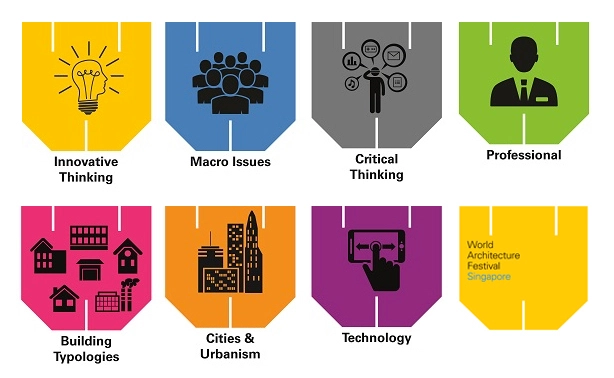
The World Architecture Festival (WAF), the world’s largest architectural festival and awards event held annually in Singapore, has announced the theme of this year's program: 50:50. The theme is inspired by Singapore’s upcoming 50th anniversary as an independent country, and will look back on how architecture and urbanism have changed during the last 50 years, as well as forward on what may change or stay the same in the next 50 years to come.

Ahead of the 125th anniversary of the birth of Russian architect Konstantin Melnikov, Photographer Denis Esakov provides a recent look at 12 of Melnikov’s projects—all of which have been standing for over 70 years. Enjoy this selection of photographs that show how some projects have aged, deteriorated or been adapted, and note Melnikov’s persistent fascination with the meeting of curvature and rectangularity.
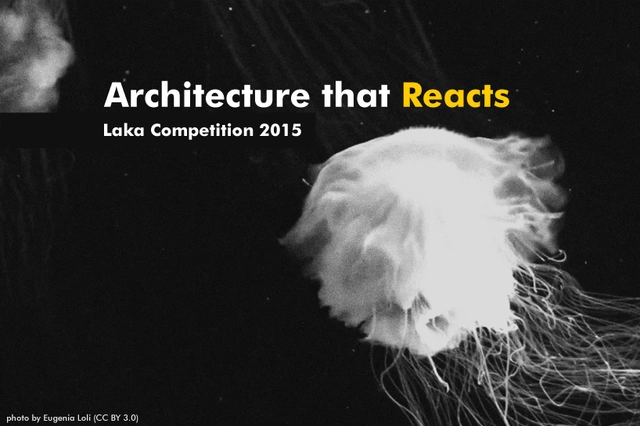
Laka Competitions invites designers from around the world to submit their ideas of ‘architecture that reacts’. That means architecture which is able to respond and adjust dynamically to the current needs and circumstances. These circumstances are often unpredictable, but their consequences can be crucial. The architecture that reacts is the architecture that lives as a living organism, since it responds to the external stimuli and it develops because of it.— to react is to live

This article is part of ArchDaily Essentials, a series of articles which give you an overview of architecture's most important topics by connecting together some of our best articles from the past. To find out more about ArchDaily Essentials, click here; or discover all of our articles in the series here.

This article is part of ArchDaily Essentials, a series of articles which give you an overview of architecture's most important topics by connecting together some of our best articles from the past. To find out more about ArchDaily Essentials, click here; or discover all of our articles in the series here.
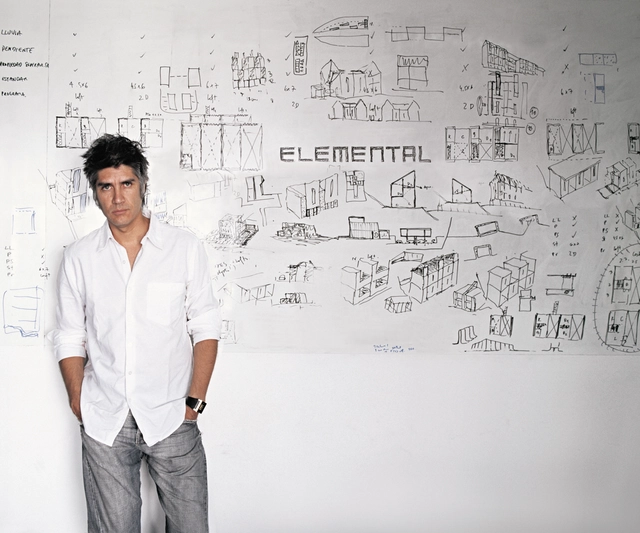
Today, in Venice, the Board of la Biennale di Venezia named Chilean architect and Pritzker jury member Alejandro Aravena as the Director of the 15th International Architecture Exhibition. Held bi-annually in the capital city of Italy's Veneto region, the 2016 edition of the Biennale will take place from May 28 - November 27, 2016.
Citing the increasing popularity and success of the previous Architecture Biennales, chairman Paolo Baratta confirmed, "after many years in which the Architecture Biennale has continued to grow, we may now consolidate the decision to make it last six months, given the steady increment in the attendance of architecture schools from all over the world who come to participate in the Biennale Sessions project, and have made the Architecture Biennale a pilgrimage destination for students and teachers from the universities of many countries, from the United States to China.”

This article is part of ArchDaily Essentials, a series of articles which give you an overview of architecture's most important topics by connecting together some of our best articles from the past. To find out more about ArchDaily Essentials, click here; or discover all of our articles in the series here.

This article is part of ArchDaily Essentials, a series of articles which give you an overview of architecture's most important topics by connecting together some of our best articles from the past. To find out more about ArchDaily Essentials, click here; or discover all of our articles in the series here.
By the mid point of the twentieth century, the clean lines of the International Style and the stripped utilitarianism of functionalism were becoming increasingly common in American and European cities. Created out of a wholesale rethink of core modernist values, Postmodern architecture came as part of a philosophical shift that was just as all-encompassing as the Modernism it sought to replace; aiming to revive historical or traditional ideas and bring a more contextual approach to design. A critical elite who never really left modernism often condemned postmodernism as tacky, regressive or pandering to popular opinion; but after something of a resurgence of modernism in recent years, what’s the value of postmodernism to contemporary thinking?
PA#47 - Fondation Jérôme Seydoux-Pathé, Paris 13 por Pavillon-Arsenal

Our friends at the Pavillion de l'Arsenal have shared a collection of videos from their"Paris Architectures" series. Dive into these short films that document remarkable architecture around France's capital city.
This week we get a glimpse of Renzo Piano Building Workshop's Fondation Jérôme Seydoux-Pathé.

This article is part of ArchDaily Essentials, a series of articles which give you an overview of architecture's most important topics by connecting together some of our best articles from the past. To find out more about ArchDaily Essentials, click here; or discover all of our articles in the series here.
The world that Modernism was born from is no longer a world that we recognize, yet Modernism - as a style and a philosophy - still dominates so much of architectural discourse today. At its brightest the movement's original utopian ideals still shine through, and the appreciation for simplicity and material still forms a hold on the popular consciousness of much of the world. But after nearly a century since the founding of the Bauhaus, the Chicago Tribune Competition, and the publication of Le Corbusier's Vers Un Architecture, many of the most basic principles of Modernism have come into question, and its most controversial contributions are being re-evaluated. How can we understand Modernism now, and how should we use it?

This article is part of ArchDaily Essentials, a series of articles which give you an overview of architecture's most important topics by connecting together some of our best articles from the past. To find out more about ArchDaily Essentials, click here; or discover all of our articles in the series here.
When the term “sustainability” is brought up in architectural discourse, everyone seems to have a different opinion on the matter. Sustainability is wrought with controversy politically, economically, socially and pedagogically, and while the definition has shifted over time, many new branches of design have developed from sustainability with the aim of driving progressive and innovative change in the world. But what exactly is sustainability, and how do we encounter it in the architectural world?

Dear ArchDaily Readers,
One of the most important pillars of our mission is to constantly improve the way that we deliver inspiration and knowledge to architects around the world. Over time, the tens of thousands of projects we have featured in-depth have grown to form a large "ArchDaily Iceberg" in which most of this invaluable architecture content accumulates below the surface. In our quest to make this information more accessible, and especially given our understanding of how we (architects) collect and organize case studies and references, we launched a modest tool in late 2010: My ArchDaily. This tool allowed you to bookmark and save your favorite projects and sort them in folders, two concepts that relate to how you use your browser and desktop.
My ArchDaily was also the authentication tool for voting in Building of the Year Award, and over the years this feature started to gain traction among our users--reaching more than 282,000 registered users as of today! But, My ArchDaily had taken a back seat to other development projects and wasn't updated until we launched our new platform a few days ago.
So now, we're happy to present the new-and-improved My ArchDaily! It was launched alongside other improvements that you may have noticed over the past few weeks. If you aren't using it already, we welcome you to start building your very own personalized architecture library and organize projects and articles using labels.
Whether you are researching specific precedents or just want to save a particularly inspiring project, My ArchDaily's seamless integration allows you to save information with one-simple click.
During our last trip to Beijing we had the opportunity to visit Li Xiaodong at his recently opened extension for the School of Architecture at Tsinghua University. Li Xiaodong has become recognized worldwide thanks to his recent projects in rural China, which are deeply connected with the landscape and local community and use a mix of traditional and contemporary techniques.
His built works are strongly connected with his academic research. As a professor at Tsinghua University he has focused on understanding Chinese architecture, co-authoring publications such as “Form Making in Traditional Chinese Architecture” and “Chinese Conception of Space." His research has led him to develop a unique style, which he calls a “new regionalism," focusing on how the local can deal with the global in this era.
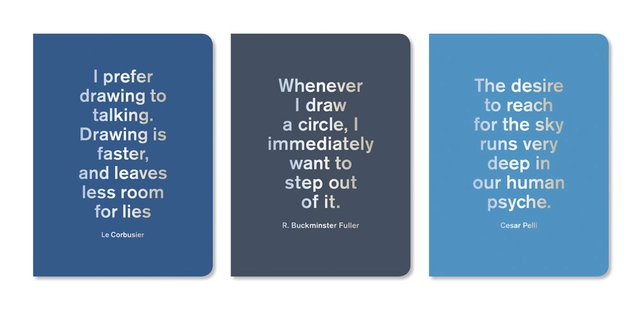
"Form ever follows function." "Less is more." Architects have long been providing us with inspirational quips and reflections on our profession. And now, thanks to our friends at Princeton Architectural Press, you can win a set a notebooks that feature the compelling words of Le Corbusier, R. Buckminster Fuller, and Cesar Pelli. The gold-stamped, gridded notebooks are a companion to Laura Dushkes' best-selling book The Architect Says.
Read on to find out how you can win a set of The Architect Says Notebooks!
PA#44 - The Paris Zoological Park, Paris 12 por Pavillon-Arsenal
Our friends at the Pavillion de l'Arsenal have shared a collection of videos from their "Paris Architectures" series. Dive into these short films that document remarkable architecture around France's capital city.
This week we get a glimpse of Bernard Tschumi Architectes' Paris Zoological Park.


