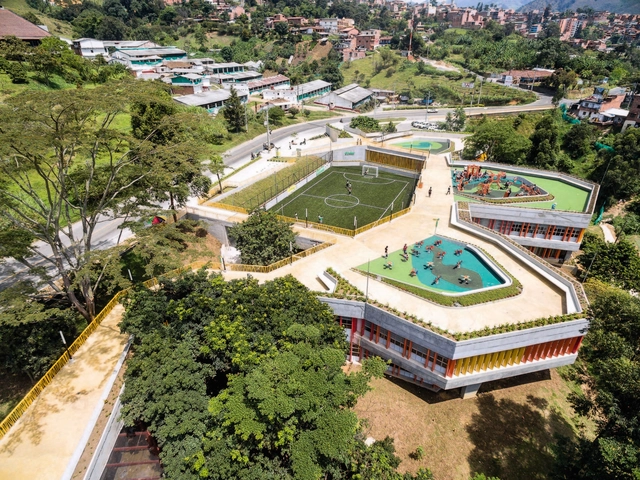
Much has been said since the then-new minister of economy, Paulo Guedes, stated that it was necessary to “take a knife” to the S System. However, these discussions have focused almost exclusively on the financial aspects of the system. To truly understand the relevance of the S System to Brazilian society—whose flagship organizations include SENAC (National Service for Commercial Apprenticeship), SESC (Social Service of Commerce), SENAI (National Service for Industrial Apprenticeship), SESI (Social Service of Industry), and SEBRAE (Brazilian Micro and Small Business Support Service)—it is far more instructive to examine the original motivations behind this vocational education system, the pedagogical and political project that drove its creation, the role of architecture in its facilities to achieve its goals, and its ongoing relevance in the fields of education and culture.



.jpg?1547587025)













.jpg?1507476262 "Casa Batlló. Image © <a href='https://commons.wikimedia.org/wiki/File:Barcelona_Casa_Batll%C3%B3_DachterrasseKamine.jpg'>Wikimedia user M.Stallbaum</a> licensed under <a href='https://en.wikipedia.org/wiki/Public_domain'>Public Domain</a>")