The Tbilisi Architecture Biennial was established in 2017 by Tinatin Gurgenidze, Natia Kalandarishvili, Otar Nemsadze and Gigi Shukakidze. TAB aims to bring together professionals from diverse disciplines united under one topic on a biannual basis. Policy makers, local public and other stakeholders will present during the event, initiating and broadening existing critical discourse on architectural and urban issues in Tbilisi and beyond.
This course covers the development, control, feasibility, and fabrication of complex geometries by associating project parameters using Grasshopper, the most advanced generative modeling software for architecture and design.
Walking provides significant benefits to the city: it is not only a sustainable mode of transport, but it also brings vitality to public space and, as various studies have shown, improves the physical and mental health of its inhabitants. For these reasons, walking should be promoted through urban planning and design, as proposed by Chile's recent National Urban Development Policy (PNDU).
MOVE CINE ARTE is a biennial international film festival dedicated exclusively to screening art films and films about art. In alignment with the Venice Architecture Biennale, the 2018 selection is dedicated to films about architecture and urbanism.
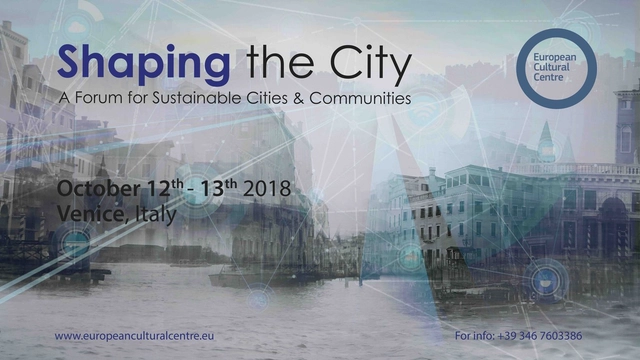
The European Cultural Centre for the Exhibition “Time-Space-Existence” in context of the 16th Venice Architecture Biennale is organizing its first conference under the title of: “ Shaping the City : A Forum for Sustainable Cities and Communities”. It includes all participating architectural schools and universities from across the globe in TSE 2018 along with other international institutions and architecture studios.
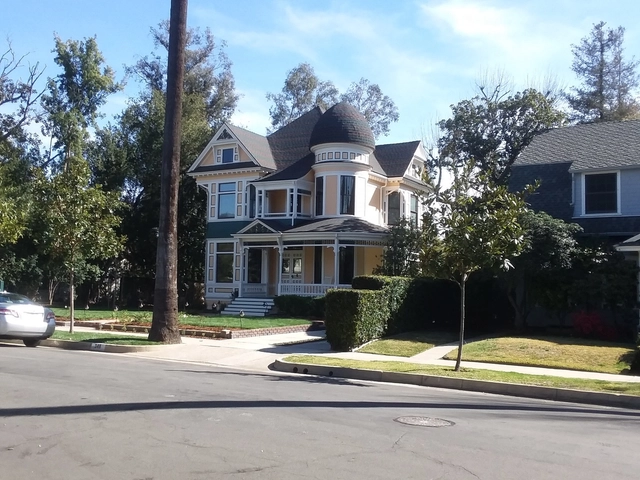
The Governor Markham Landmark District is one of the oldest neighborhoods in the City of Pasadena, and residences included in the District parallel Pasadena’s growth from incorporation as a city in 1886. Ninety-four percent of the homes were constructed between 1891 and 1933. This area became an official Landmark District in 2005 and was listed on the National Register of Historic Places in 2012, nominated by Pasadena Heritage.
The initiative was created with the aim of promoting the practice and the disciplines of architecture and art, to foster, develop and strengthen relationships between architects, designers, artists, students and the community in general. This week devoted to architecture and art will bring together more than 50 architects and artists of international prestige: Tony Fretton, Marc Dubois, Francis Kéré, Carmody Groarke, Manuel Aires Mateus, Eduardo Souto Moura, Jose Pedro Croft, Fernanda Fragateiro. This promising program is divided into three major periods throughout the day, including conferences, workshops, and exhibitions.
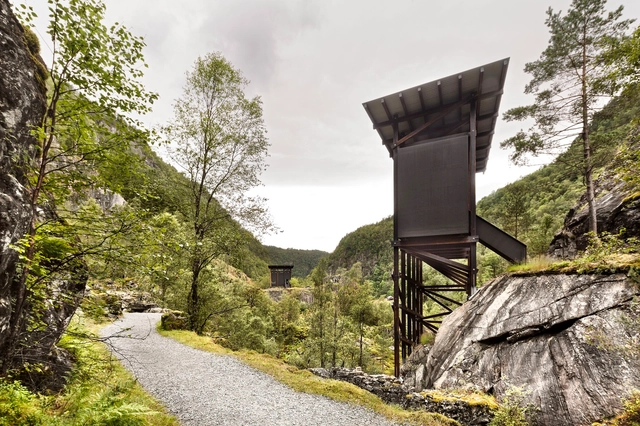
Architecture and Landscape in Norway, a photography exhibition by Ken Schluchtmann, will open this fall in the Felleshus of the Nordic Embassies in Berlin. Featuring architecture, landscapes and roads in northern light, the exhibition situates Ken Schluchtmann in a long tradition of landscape representation in Norway. Opening on October 5, 2018, the show is part of the "European Month of Photography." The exhibition will displays images taken along the National Tourist Routes in Norway.
With Den-City – Urban Landscape, Sergei Tchoban lets us feel the essence of density: façades of the buildings are pushing pedestrians, dangling street cables are covering the view of the sky, and places hum about merging of stone, glass and steel. And suddenly moments of complete silence latch on the viewer, as a thinking break from all the dust and noise.
Image: Bangladesh Friendship Centre. Credit: Aga Khan Trust for Culture / Rajesh Vora.
On September 12, join James Wescoat ASLA, Professor of Landscape Architecture at MIT, for a presentation on the growing importance of landscape architectural design in the Aga Khan Historic Cities Programme, and how it addresses the needs and aspirations of societies across the world.
This seminar will evaluate the health impacts that should be incorporated into transport projects, as well as their implications for public policy in the sector.
Architecture of the Future is the biggest architecture conference in Eastern Europe that brings together authorities, architects, engineers, developers, media – all who seek to change the city through the development of advanced technologies and the creation of iconic projects.
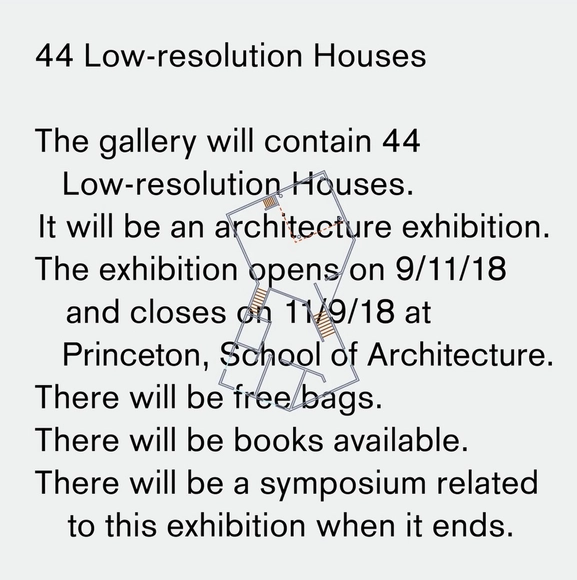
The term Low-resolution precedes Houses in order to make the exhibition-goer think about houses through this double technological and representational-aesthetic lens. All 44 houses exhibited fall into one or more of the following categories of Low-resolution: first, houses that vaguely resemble houses, using familiar house elements, such as pitched roofs, etc.; second, houses that appear to be constructed, in that you can see the construction, joints and the materials, there is a sort of cheap unfinished quality to the work; and third, houses that are composed of basic geometric primitives—squares, circles, triangles—arranged in a non-compositional or abstract manner. By these terms Low-resolution is against high-resolution architectural sophistication, gestural complex curvature, and models of architecture focused on seamlessness....
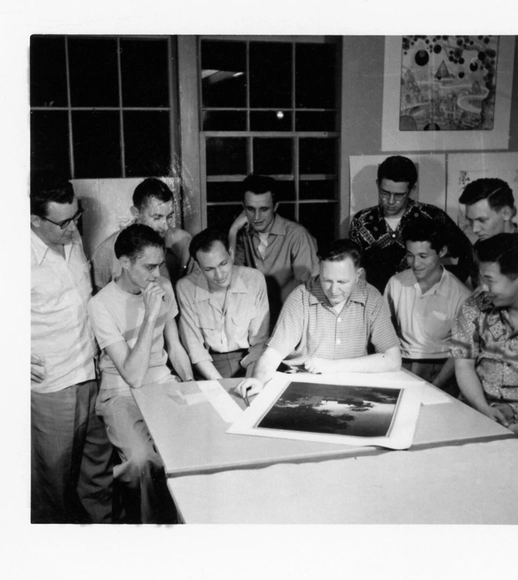
Bruce Goff confers with students in the early 1950s in Building 604 on the North Base
“A new school, probably the only indigenous one in the United States” is how the architect Donald MacDonald described Bruce Goff and Herb Greene’s influence on the University of Oklahoma School of Architecture from 1947 through the 1960s. The famous architects transformed the ways architecture was learned, taught and practiced, creating a uniquely American architectural style now represented in an archive at the University of Oklahoma Libraries and displayed in an exhibition in Bizzell Memorial Library.
Human-machine collaboration during the assembly of lightweight metal structures. (c) Gramazio Kohler Research, ETH Zurich
The advent of robotics in the creative and construction industries has led to an amazing revolution, changing not just how things are designed and made, but also transforming knowledge cultures, politics and economics that surround them. As such, the ROB|ARCH 2018 conference – hosted by the NCCR Digital Fabrication and ETH Zurich – will continue this path, developing and revealing novel insights, applications and impacts of this transformation within the scientific, creative, and entrepreneurial domains, including, for example, architecture, structural design, civil and process engineering, art and design, and robotics. A particular focus lies upon cross-disciplinary approaches and applications, providing state-of-the-art knowledge, techniques and methods of robotics not just in individual areas of exploration, but also beyond. These ideals aspire to complement the transformation processes of emerging robotic research and applications, and to redefine cross-disciplinary work in an era of global digitalisation and knowledge transfer. Key topics and issues of ROB|ARCH 2018 include autonomous control systems, advanced construction, collaborative design tools, computerised materials and structures, adaptive sensing and actuation, on-site and cooperative robotics, machine-learning, human-machine interaction, large-scale robotic fabrication and networked workflows.