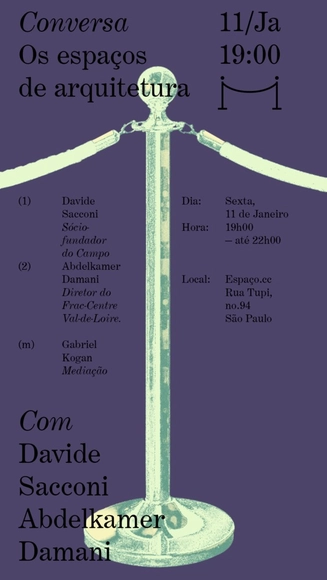
On Friday, January 11, 2019, a discussion on architectural spaces will be held with architects Davide Sacconi and Abdelkader Damani, moderated by Gabriel Kogan. The event will feature two institutions, exploring their different scales, audiences, content, and approaches, as well as potential dialogues with the Brazilian scene. The event is free and open to the public.
Architecture as a Social Tool: Lecture by Jette Hopp of SNØHETTA coupled with the Finissage exhibition "Architecture and Landscape in Norway- Photographs by Ken Schluchtmann"
The role of architecture is to create strong and sustainable identities for cities and their communities. With well-conceived design, we can help things run more fluidly, improve people’s well-being, and make life more enjoyable. Every project is a unique expression of the ethos of its users, climate, and context. A built environment can be seen as a point of departure: it is where the architecture starts to communicate, the point from where it starts to interact with the public and its users. Followed by a talk with Jette Hopp of SNØHETTA.
The opening of the exhibition "Celebratory Design Proposal" by designer Ricardo Lang will take place this Tuesday, January 8, at 7:30 p.m., at the Sala el Refectorio on the Lo Contador Campus (El Comendador 1916, Providencia).
3D-printed construction is an emerging technology gaining traction worldwide, aimed at creating more efficient, appropriate, and environmentally friendly buildings.
Eyal Weizman, director of Forensic Architecture, will lecture at the Barbican in cooperation with The Architecture Foundation discuss the group's practice combining architecture and digital forensics.
https://www.archdaily.com/908393/architecture-on-stage-forensic-architectureKatherine Allen
Videos
30 thumbs from the Murcutt Master Class - Architecture Foundation Australia
Commenced in 2001, this annual event has been attended by architects and academics from over 80 nations. The Glenn Murcutt Master Class is a two-week residential studio program held in Australia. Week one is held at ‘Riversdale’, the Arthur and Yvonne Boyd Education Centre, a magnificent rural retreat south of Sydney - an award-winning building designed by Murcutt in 1999 and described by Thomas J. Pritzker as a ‘Masterwork’. Glenn personally leads the Master Class, stays at ‘Riversdale’ with the participants and leads the program. Other tutors on the Master Class include seminal Australian architect and educator Richard Leplastrier, award winning and internationally published architect Peter Stutchbury, leading academic and practitioner Professor Brit Andresen, and Master Class Convener Lindsay Johnston, former Dean of Architecture, University of Newcastle, Australia. Week two of the 2018 Master Class will be held again in Sydney. The Master Class is open to practising architects, academics, postgraduates and some senior architecture students. There are only 32 places available.
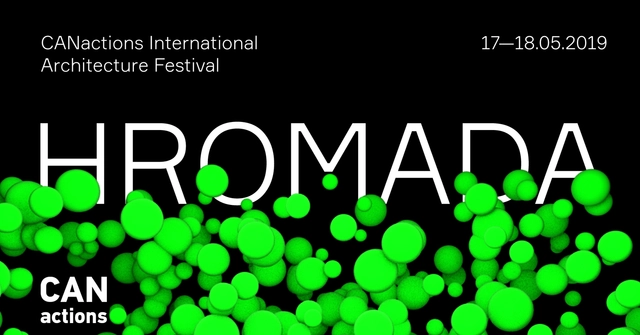
CANactions is an educational platform, aimed to enhance the creation of places and communities where people love to live and work. CANactions integrates the most relevant world experience in the sphere of architecture and urbanism to educate and inspire responsibility active change makers. For this moment CANactions is a member of Future Architecture Platform
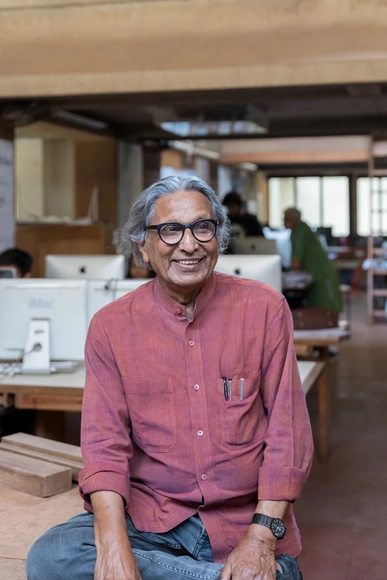
With the exhibition »Balkrishna Doshi: Architecture for the People« (30 March to 8 September 2019), Vitra Design Museum presents the first international retrospective about the 2018 Pritzker Prize laureate Balkrishna Doshi outside of Asia.
The renowned architect and urban planner is one of the few pioneers of modern architecture in his home country and the first Indian architect to receive the prestigious award. During over 60 years of practice, Doshi has realized a wide range of projects, adopting principles of modern architecture and adapting them to local culture, traditions, resources, and nature. The exhibition will present numerous significant projects
Using Sharjah as its primary field of research, the inaugural edition of Sharjah Architecture Triennial invites members of an emerging generation of architects, urban designers, planners, scholars and artists from across Middle East, North and East Africa, and South and Southeast Asia and their diaspora to respond to the unique challenges and opportunities faced by our generation.
The Alberto Cruz C. Foundation, in collaboration with the Amereida Cultural Corporation, will host a seminar focused on the architectural work of Cruz between 1954 and 1982, which transcends and complements his contribution to the academic and creative spheres.
Havana has often been referred to as a time machine — a city that transports its visitors to a distant moment and time in history. The capital city’s colorful Spanish colonial-style architecture has made it a go-to destination for photographers, architects, and people seeking life in a bygone era. From classic cars to “its overall sense of architectural, historical and environmental continuity makes it the most impressive historical city center in the Caribbean and one of the most notable in the American continent as a whole,” remarks UNESCO.
https://www.archdaily.com/906621/street-photography-tour-of-havana-cuba-with-pratt-instituteSponsored Post
An architect serving as executive director at the Metropolitan Heritage Institute, an architectural photographer with experience throughout Ecuador, an architect and human rights activist, and an architect specializing in professional demolition will be the guests at the first international session of the X FORMAS DE HACER ARQUITECTURA project in Ecuador on Thursday, November 22, at 7:00 PM at TORNO Co Creative.
Known simply as XFORMAS, this is the first international session of the project led in Chile by Fabiola González + Yair Estay (TALLER25) and Nicolás Valencia (ArchDaily), which, in Ecuador, is partnered with the local firm Rama Estudio, led by architects Felipe Donoso, Carolina Rodas, and Carla Chávez.
This discussion panel serves as a forum for dialogue, featuring prominent guests who share their experiences in the profession and architectural design. We are pleased to announce that the third edition of the Architecture and Women in Chile panel is heading south!
During the period of violence (1980-2000), the notion of public space, citizenship, and architecture underwent various physical and conceptual reconfigurations. It may be that the crisis was evidenced in the architecture, or the architecture was evidenced in the crisis. Be that as it may, the city was determined by violence and simulacrum.