Global management consultancy McKinsey & Company in 2016 noted that the construction industry was ripe for disruption. Considered one of the world’s largest sectors, the forced advancement and adoption of innovative technologies have allowed the engineering and construction (E&C) industry to persevere in the last two years. In fact, a more recent report, also from McKinsey, noted that the construction industry is more likely to emerge from the pandemic leaner, more digitised, and with a greater eye toward sustainability.
Was there ever a time when architects felt properly valued? Probably not. Certainly not since the profession became dependent on the business of America, which is business. With economic growth as the country’s prime directive through the 20th century, architects—as members of the construction industry—played their part. How? By designing buildings of all kinds that were lighter, cheaper, and quicker to erect. Architects’ values might have been social, artistic, even cosmic, but their value to society has been primarily economic.
Concrete can be found in almost any type of construction around the world. But how is it made?
During manufacturing, once in contact with water, concrete’s main ingredient, cement, binds to any aggregates present and goes through a number of complex chemical reactions. That eventually turns it into concrete, a material that is very durable and easy to work with. Despite this reliable durability, concrete can go through a number of internal processes that can lead to serious structural concerns. One of these is alkali-silica reaction (ASR), which can cause cracks in concrete and even put structures in danger of collapse over time.
Architecture is born from materials. Between structure, light, movement, and comfort, materials profoundly shape our experiences. But materials also change over time, new ones are created, and a wide range of assemblies and construction techniques are introduced. Increasingly, architects and designers are looking into the possibilities of composite materials made with natural elements.
As part of an initiative for Tequila José Cuervo, Rojkind Arquitectos presents its new and first project of the metaverse under the name "Metadestilería" (Metadistillery) which is based on a design exercise that responds to the function of objects with respect to human needs within specific contexts with the challenge of creating unique experiences through objects and architecture.
We say that with confidence knowing the city’s demographics (nearly 80 percent African-American and with one of the highest poverty rates in the United States) present unique challenges to providing economic opportunity. And we say that with certainty knowing that a pernicious history of redlining, loan discrimination, and other inequities has denied Detroit’s Black majority the kind of power and say-so in design and economic development that would produce more favorable outcomes.
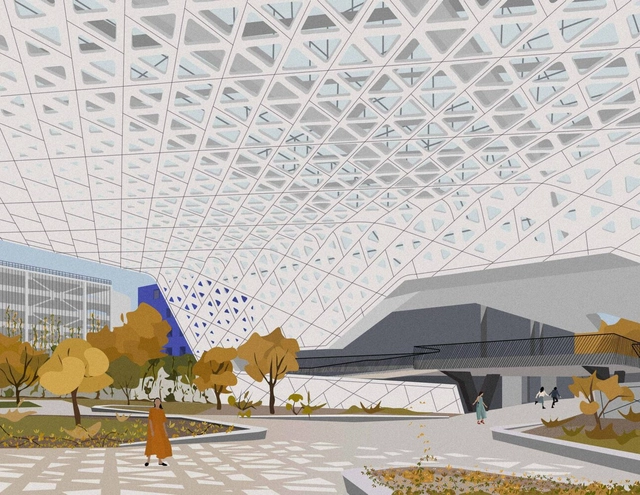
Architectural works from around the world are the primary inspiration for Erika Moreno, the creator of HUAJJE, a digital illustration project. The project was born in 2019, a year after Moreno completed her architecture degree in Tijuana. “The project started by accident; my only goal in making these drawings was to learn how to use more Photoshop tools—it was a personal challenge.” To document her process, she decided to open an Instagram account, which has since fostered an organic community that shares and supports her work. This has encouraged her to overcome her fears and even host workshops on the subject in various formats.
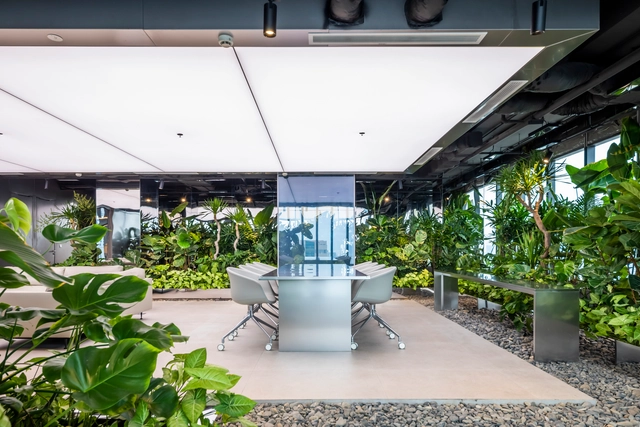
Biophilic design is capable of improving the well-being of those who use a space through reconnection with nature. When this practice is implemented in offices and workshops, this property translates into many benefits. After all, in addition to the emotional qualities that vegetation can bring, it has the ability to filter noise, lighting and allow for a milder climate, with results in team productivity and more optimized services.
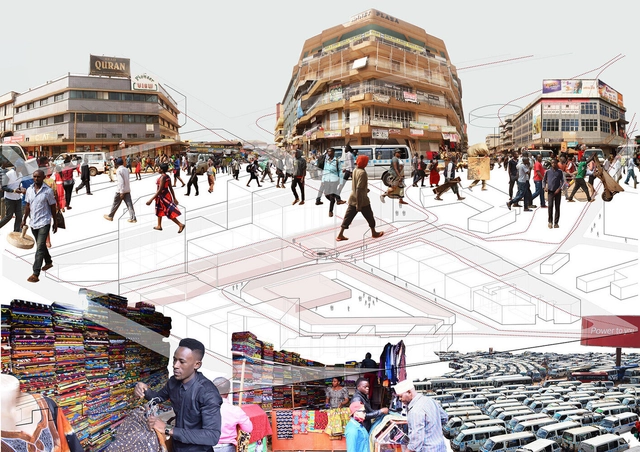
Doreen Adengo, Ugandan architect and trailblazer, passed away on July the 22nd of this year, after battling a long-term illness. She founded Adengo Architecture, a studio based out of her home city of Kampala. A designer who studied in the United States, worked in firms in New York, Washington, and London, and was teaching at Uganda Martyrs University – her legacy is nothing short of extraordinary. It is a legacy that spans disciplines and geographies – but a legacy, too, that is deeply rooted in the context of Africa, Uganda, and Kampala.
In 1969, ‘The Architects' Resistance’, a collective of students from Yale University, Columbia University, and the Massachusetts Institute of Technology (MIT), published a manifesto titled ‘Architecture: whom does it serve?’
With this manifesto, the group sought to place the practice of architecture in a broader economic, social and environmental context than the one taught in their university lecture rooms. In just two and a half pages, we find a powerful call to reclaim a more social and ecologically conscious architecture. It unambiguously denounces the role architecture played during those years as a practice in service to those in power while adding that “the architect's submission to the system begins with the belief that they possess special skills and knowledge that are inaccessible to the general public.”
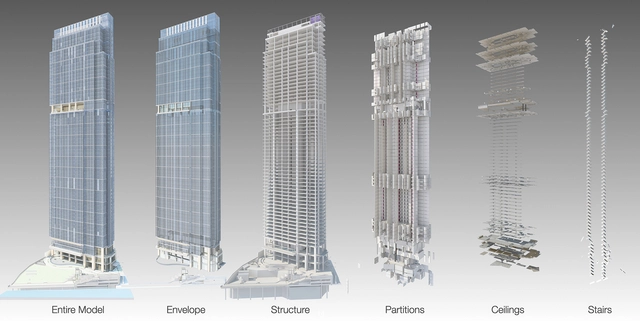
Wolf Point East Building / Pappageorge Haymes. Image Courtesy of Graphisoft
Considered the second most requested skill (behind field experience) in the industry and used by a growing number of design professionals, Building Information Modeling (BIM) has proved to be the present of architecture. But with constant new features and exciting improvements, it is also very much the future. For decades, the revolutionary software has established itself as a powerful tool with a long list of invaluable capabilities: detecting errors, reducing costs and material waste, mitigating risks, optimizing workflows and, above all, allowing for seamless, multi-disciplinary collaboration.
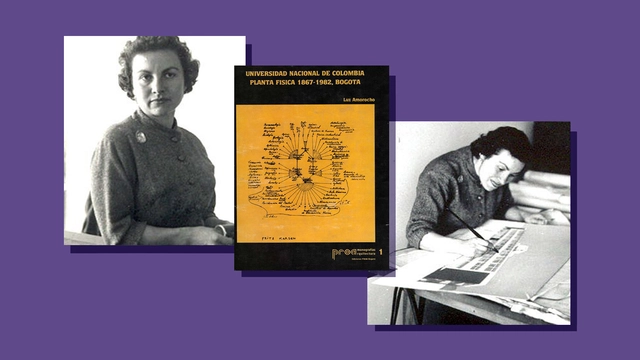
1 and 3. Via Poema del Ángulo Recto. 2. Courtesy of Perspectivas: Revista Científica de la Universidad de Belgrano
As the first female architect to graduate in Colombia, in 1945, María Luz Amorocho Carreño is a prominent figure in the country's architectural field. Throughout her career, she approached the profession from diverse fronts, ranging from teaching and public and private design to writing and criticism, most notably for the journal *Proa*. Over a career spanning more than 40 years, she steadfastly championed her ideals within a shifting context focused on achieving modernity, setting a precedent for future generations of women architects. An analysis of her work and legacy offers a window into the diverse roles of the architect, spanning from drafting and construction to research and project management.
The total energy demand from buildings has risen dramatically in recent years. Driven by improved access in developing countries, greater ownership of energy-consuming devices and increasing urban densities, today it accounts for over one-third of global energy consumption and nearly 15% of direct CO2 emissions. As the climate crisis aggravates and its consequences are more visible than ever, the architecture and construction industry must respond accordingly. It must take responsibility for its environmental impact and give priority to reducing energy consumption, whether through design decisions, construction techniques or innovative products. The key lies, however, in not sacrificing aesthetics and comfort in the process.
June is the month in which the day of Japanese immigration is celebrated in Brazil, a country that has the largest Japanese colony outside Japan, with more than 2 million people, Japanese or descendants. Since the 20th century, Japanese families immigrated to Brazilian rural regions, forming a solid colony in the interior of states like São Paulo, influencing many aspects of the local culture.
Architecture and cuisine build different relationships, depending on the local culture. When this combination results in stores, it usually enhances the experience of restaurants, cafes, bakeries, and bars.
Beyond the traditional boundaries of Scandinavian minimalism and Japanese wabi-sabi, the aesthetics from the far north and the far east have more parallels than one might think at first glance –it is not for nothing, after all, that they are so popularly combined with each other, creating the term Japandi.
Celebrating its 35th anniversary, this edition of CasaCor brings together projects by 68 renowned professionals spread across more than 10,000 square meters inside a landmark of São Paulo modernism, the Conjunto Nacional. Under the theme “Particular Infinite,” this year's exhibition focuses on the accumulation of time, on the stories already told and those we tell about ourselves. In this universe of ways of inhabiting the world, and of the traces we leave around us—from finger marks on the walls to the dust we carry on the soles of our shoes—we are always searching for something that is ours alone, inexhaustibly our own.
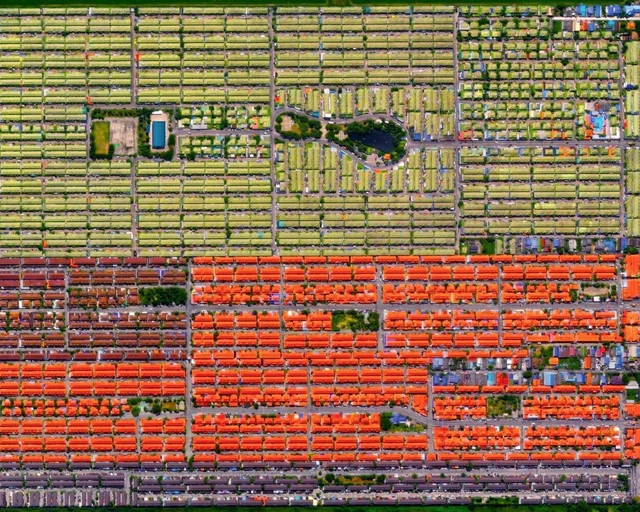
In urban planning discourse, advocacy for public transit is as widely agreed upon as it is frequently repeated. Proposals such as transit-oriented development (TOD), which advocates for coordinating urban density with transit corridors, have gained traction over recent decades. They have moved from academia into the recommendations and case studies of institutions like the World Bank, into political platforms and official documents, and are already visible in various urban interventions worldwide—from Curitiba to Toronto, and particularly in Asia.