1. ArchDaily
  2. Articles

Articles

Exploring the Industrial Aesthetic in Interiors Through Corten Tiles

 | Sponsored Content

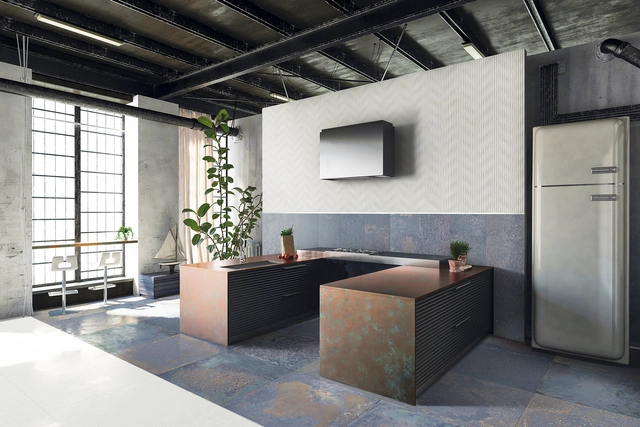
In recent decades, the industrial style has strongly attracted the attention of architects, designers and homeowners. However, few know its true origin. Following the rise of industrialization in the United States during the 1950s, many old industrial spaces, such as warehouses or factories, were abandoned in areas like New York's Soho. As a consequence, prices fell and became affordable housing alternatives for city dwellers. These new repurposed spaces were characterized by an aesthetic that mixed raw and exposed materials with modern elements and technologies, generating a strong aesthetic identity that was as rustic as it was sophisticated.

Today, industrialized-looking interiors are highly appreciated for the character of their materials, providing different shades, textures, brightness and opacity. There are, however, new materials that blend this weathered aesthetic with innovations that facilitate their installation and maintenance. Let's review the case of Aparici's Corten Tile Collection and its possible applications in different spaces of the home.

How Can AI and Data-Driven Tools Help Architects Design Compact, Healthy Cities?

Subscriber Access | 

The United Nations estimates that the world population will reach 10.4 billion by 2100. Already by 2050, 2 out of 3 people will call cities home, coming in search of the opportunities, services and amenities on offer. That puts even more pressure on urban areas given all these people will need access to water, food, public space, good infrastructure and, above all, housing. In fact, estimates suggest more than two billion homes will need to be built by the end of the 21st century to accommodate this population explosion. As cities grow, so does urban sprawl, which brings its own set of environmental and social challenges. In the face of climate change, sustainable urban development must ensure that future housing solutions –new and renovated– are built to support healthy communities, prioritizing both human and environmental well-being. In turn, cities will need to be built denser and faster, but not without meeting a long list of stringent criteria. Only this way can we avoid the negative, often overlooked, effects of uncontrolled hyper densification that give urban development a bad name.

How to Help the Victims of the Rains on the North Coast of São Paulo

Subscriber Access | 

The rainfall that hit São Paulo's North Coast during this year's Carnival was the heaviest ever recorded in Brazil within a 24-hour period. The result is an environmental tragedy that triggered a series of floods and landslides—leaving thousands homeless and confirming 48 deaths.

Federal, state, and local authorities are working together to restore services and access to the region. As some roads reopen, officials are urging tourists to leave the North Coast as quickly as possible. Over the Carnival holiday, São Sebastião hosts more than 500,000 people—a figure five times larger than the city's local population of approximately 91,600. This influx of visitors further strains emergency services and supplies.

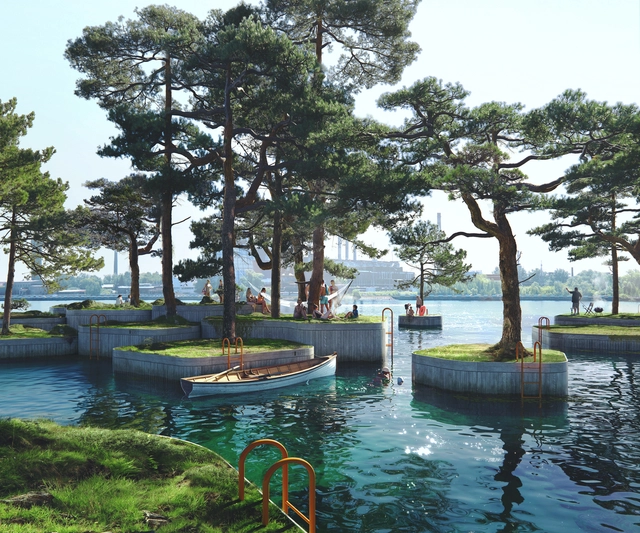
Floating Architecture: The Future Built on Water

Subscriber Access | 

You are likely familiar with the story of a man who received a divine command to build an ark to shelter his family and animals of every species, saving them from a great deluge. This flood narrative, known as the story of "Noah's Ark," is found not only in the Bible but also in the Quran and many other cultures—with the Sumerian "Epic of Ziusudra" being the oldest known flood myth, dating back to 2000 BCE. These examples show that the forces of nature, by taking center stage in religious teachings, were already recurring concerns that inspired both fear and respect in early civilizations.

Floating Architecture: The Future Built on Water - SustainabilityFloating Architecture: The Future Built on Water - SustainabilityFloating Architecture: The Future Built on Water - SustainabilityFloating Architecture: The Future Built on Water - SustainabilityFloating Architecture: The Future Built on Water - More Images+ 9

Why Are Liminal Spaces Eerie? The Case of The Backrooms

Subscriber Access | 

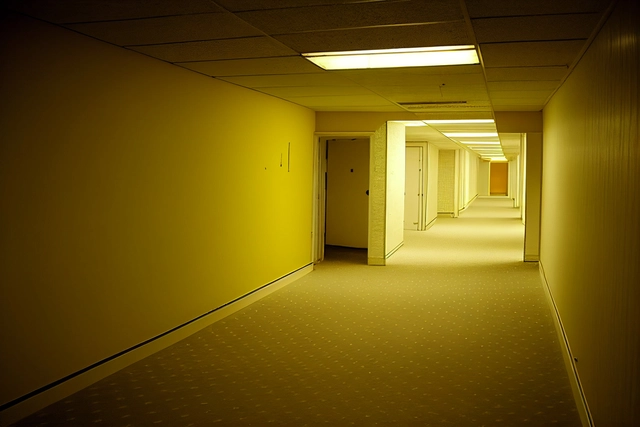
A24 and Atomic Monster have recently confirmed a movie adaptation of The Backrooms, a Youtube short horror film (expanded to a series) created by 17-year-old director and VFX artist Kane Parsons.

Based on the namesake creepypasta, The Backrooms is set in a seemingly infinite labyrinth of yellow-tinted, carpeted office spaces, bathed in fluorescent indoor lighting, like an abandoned building, in 1996. Its kitsch corporate aesthetic is reinforced by the imitation of the VHS tape recording style that allows Parsons to hide imperfections (or avoid an uncanny valley effect) of a simple 3D scenario created in Blender and edited in Adobe After Effects during the post-production stage.

3D Printed Interior with Upcycled Plastic: Reducing Waste, Enhancing Design

Subscriber Access | 

“Our planet is choking in plastic,” states the United Nations. While the man-made material has many valuable uses, our addiction to single-use plastic products has led to severe economic, health and environmental issues. Roughly one million plastic bottles are purchased every minute, and five trillion plastic bags are used every year worldwide –used just once, then thrown away. Plastics and microplastics have found their way into every corner of our natural environment, from the peaks of the highest mountains to the depths of the deepest oceans. So much so, that they have become part of the Earth’s fossil record and created an entirely new marine microbial habitat known as the “plastisphere.”

3D Printed Interior with Upcycled Plastic: Reducing Waste, Enhancing Design - Image 2 of 43D Printed Interior with Upcycled Plastic: Reducing Waste, Enhancing Design - Image 1 of 43D Printed Interior with Upcycled Plastic: Reducing Waste, Enhancing Design - Image 4 of 43D Printed Interior with Upcycled Plastic: Reducing Waste, Enhancing Design - Image 3 of 43D Printed Interior with Upcycled Plastic: Reducing Waste, Enhancing Design - More Images+ 3

You Have to Be There: 4 Retail Spaces That Buy Into Experience

Subscriber Access | 

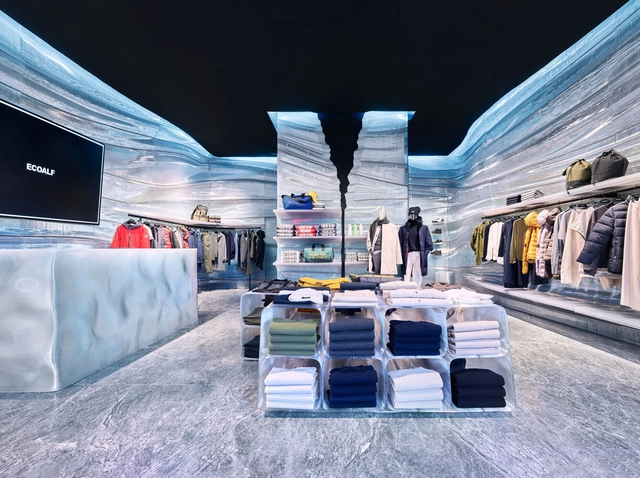
When lockdowns first hit and retailers were forced to shut up shop, many took to the digital high street instead, with those investing hardest and quickest in their online personas invariably winning the battle for our bookmarks. As the world opened again, some kept both their physical and digital presence in a hybrid model, while others chose to remove themselves from bricks and mortar altogether.

As we become more accustomed to using both models together, it’s clear that physical retail spaces can offer sensorial experiences that the digital simply can not – yet. These four projects buck the online retail trend and encourage consumers – and therefore other retailers, too – to move back into the physical, by turning the act of shopping into an exciting, invigorating, or relaxing luxury pastime, rather than a chore.

Why It Is Crucial to Discuss Parking Space Limits in Cities

Subscriber Access | 

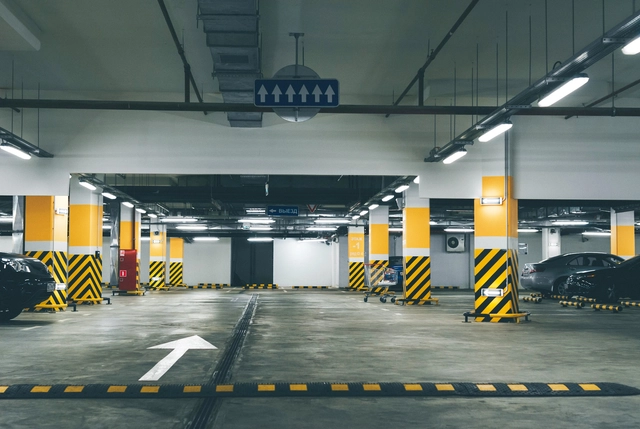
On January 13, the City of São Paulo, through the Municipal Secretariat of Urban Development and Licensing, published the draft bill for the mid-term review of the Strategic Master Plan (PDE)—the city's primary urban planning and development tool. In the draft, which is open for online public consultation and civil society feedback until February 17, the most controversial aspect involves changes to the parameters determining the number of parking spaces allowed in new residential developments near public transit infrastructure, such as subway and train stations, and bus corridors.

Brick Award 24 Honors International and Outstanding Brick Architecture

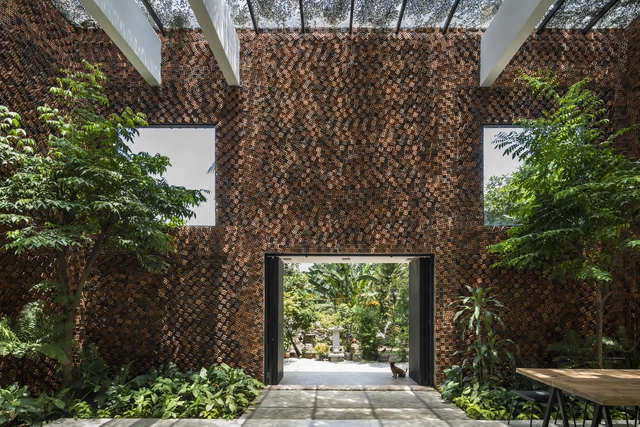
The Brick Award is an internationally established award that presents outstanding brick architecture from all around the world. Independent architecture critics, experts, architects and developers are invited to submit innovative and creative buildings and other construction works made of clay building materials. The spectrum of applications ranges from building solutions using classic clay blocks, facing bricks and roof tiles to the creative application of clay pavers and ceramic façade panels.

How to Enhance a Plain Ceiling with Decorative Ceiling Tiles

 | Sponsored Content

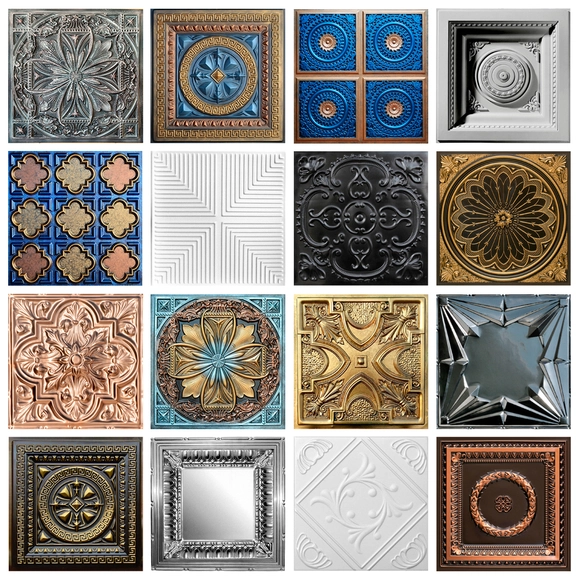
Ceilings were once a symbol of grandeur and opulence, adorning grand buildings, churches and palaces with their intricate and elaborate designs. We still find ourselves looking up in awe at these mesmerizing historical buildings, with our eyes drawn to their magnificent vaulted ceilings, remarkable truss structures or distinctive works of art depicting mythology, historical events and landscapes. Contemporary design, on the other hand, has shifted towards a sleek, minimalistic aesthetic; one where plain white ceilings have become the norm in most modern buildings. As Rasmus Wærn and Gert Wingårdh suggest in their book What is Architecture? And 100 Other Questions, “Ceilings have devolved from being the focal point of a room to being a zone for mechanical equipment.” And yet they have extraordinary creative potential.

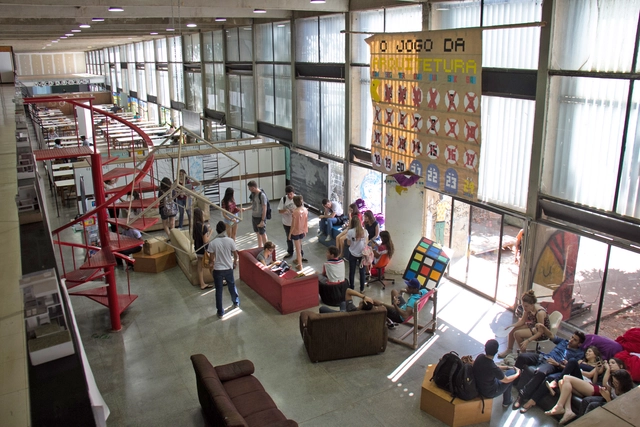
The challenges of rethinking architecture programs

Subscriber Access | 

The purpose of this article is to expand on the relevant debate proposed in Marília Matoso's piece, titled We Need to Rethink Architecture Programs, published on ArchDaily in January 2023. Indeed, rethinking architecture education is a task that is not only necessary but also urgent. However, I believe this discussion is inseparable from debates about the profession itself and how we educate future professionals. Rather than simply attempting to formulate definitive answers, I think it is important to raise further questions that contribute to our collective reflection.

São Paulo needs a congestion charge

Subscriber Access | 

Over the last two decades, the reach of public transit and ridership in one of the world's largest cities, São Paulo, have grown, reducing the share of trips made by car. Yet, despite exceptionally strict restrictions on certain cars and trucks during business hours, congestion—as conventionally understood—remains virtually unabated.

Technology in Architecture: Design Trends and Innovation in Construction

Subscriber Access | 
Technology in Architecture: Design Trends and Innovation in Construction - Imagem 1 de 4
AI-generated image via Midjourney with the prompt: "artificial intelligence and 3d printing and robots and automation and algorithms and metaverse and augmented reality, all applied in architecture". Image © Midjourney AI / Fabian Dejtiar

While the architecture and construction industry has been advancing in new fields for years, it remains one of the most lagging in terms of automation and efficiency. And indeed, while many of these innovations never progress past the experimental stage, we face a sobering reality: the sector is one of the largest producers of pollutants and waste worldwide. How can we reverse this trend?

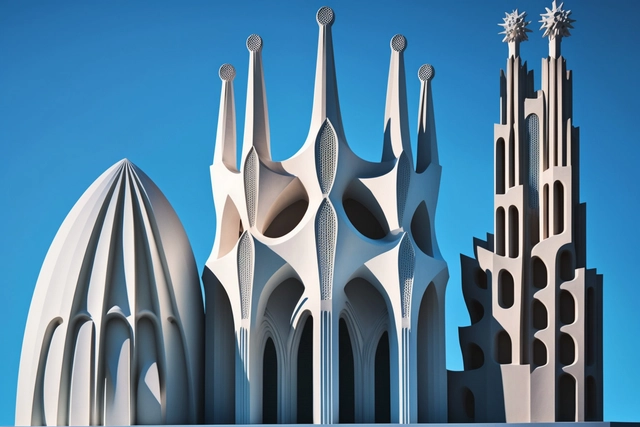
Copyrights for Architectural Imagery in the AI Era

Architecture is a referential discipline. From ziggurats, machines for living, to contemporary biophilic high-rises designs, it is impossible to know whether ideas are genuinely novel or whether they have been conceptualized before. Artificial intelligence has ignited the conversation on intellectual property (IP) even more. As millions generate unique graphic work by typing keywords, controversies have arisen, specifically concerning protecting creative work and the Copyright of architects in their creations. Therefore, understanding the scope of what is protected helps determine whether licenses are sufficient, whether trademark registration's long road is worth it; or perhaps a graphic piece cannot be protected and belongs to the public domain.

Historical Archive of Cologne: How Terrazzo Floors Contribute to a Warm and Inviting Ambiance

Subscriber Access | 

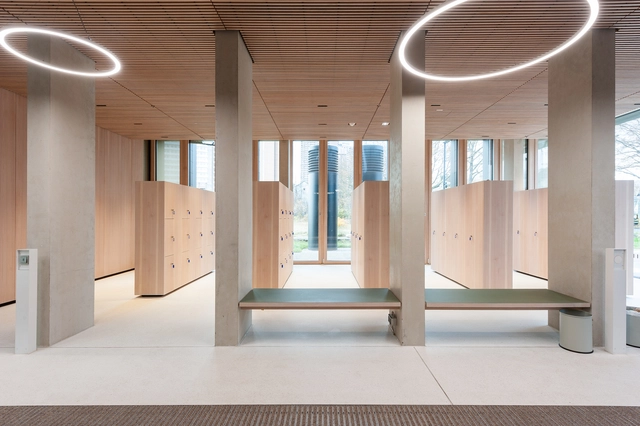
Selecting materials for an architectural project is an art form in itself. From the ruggedness of stone to the transparency of glass, materials and their unique qualities can set the tone, influence the mood and define the atmosphere of any interior. They have the power to transform a cold, sterile room into a warm and inviting sanctuary or a modern and sleek environment. Functionality and comfort are also closely tied to material selection; for example, durable, low-maintenance materials like terrazzo are an ideal choice for high-traffic areas, while the softness of carpet or fabric can provide a sense of coziness in hospitality settings.

Materials Innovations: What is Structural Engineered Bamboo (SEB)?

Subscriber Access | 

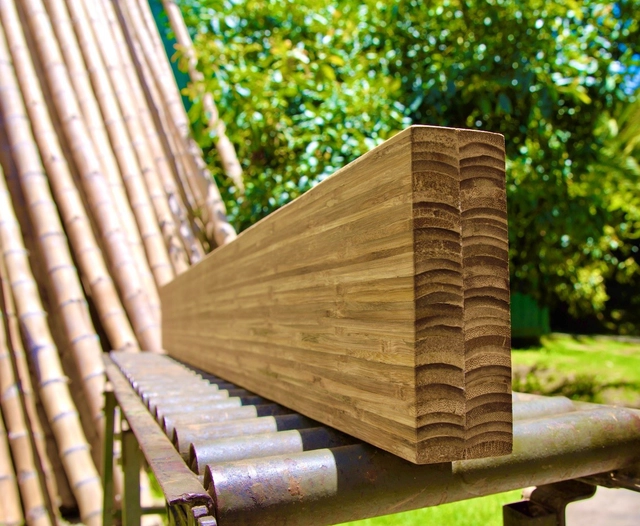
Pretentious as it may sound, we can say with certainty that bamboo is one of the most promising materials for the future of the construction industry. Neil Thomas, principal engineer at atelier one, says that if we were to design an ideal building material, it would look a lot like bamboo. This is because it grows very fast, is present in many countries around the world, has a highly efficient cross-section, and has impressive load-bearing strength. But beyond its structural use in its raw form, bamboo is also a material that allows a high level of processing and can be laminated for flooring, fixtures and, as we will see in this article, for Structural Engineered Bamboo (SEB) structures, which are very similar to Engineered Wood. We spoke with Luke D. Schuette, founder and CEO of ReNüTeq Solutions, LLC, a company in St. Louis, Missouri, that has been working with this structural material technology.

Sordo Madaleno Arquitectos presents "Urban Transformation," an exhibition showcasing 85 years of practice.

Subscriber Access | 

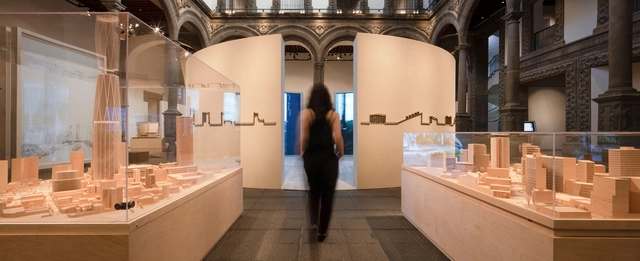
Today, February 17, the exhibition "Urban Transformation: Sordo Madaleno Arquitectos" opens at the Palacio de Cultura Citibanamex - Palacio de Iturbide in Mexico City. Organized in collaboration with the Banco Nacional de México, through Fomento Cultural Citibanamex, A.C., and the Fundación Sordo Madaleno A.C., the exhibition chronicles the firm's 85-year history. It constructs a narrative drawn from more than 450 projects, presenting a curated selection of 62 architectural works built in Mexico and abroad to serve a variety of programs.

How can cities transition toward a circular economy?

Subscriber Access | 

With 55% of the world's population living in cities, the concept of circular economy is increasingly prominent in discussions on architecture and urbanism. The goal of circularity is to reduce the environmental impact of the current production and consumption model through the efficient use of material resources and waste reduction. But how can this idea actually be applied to cities?