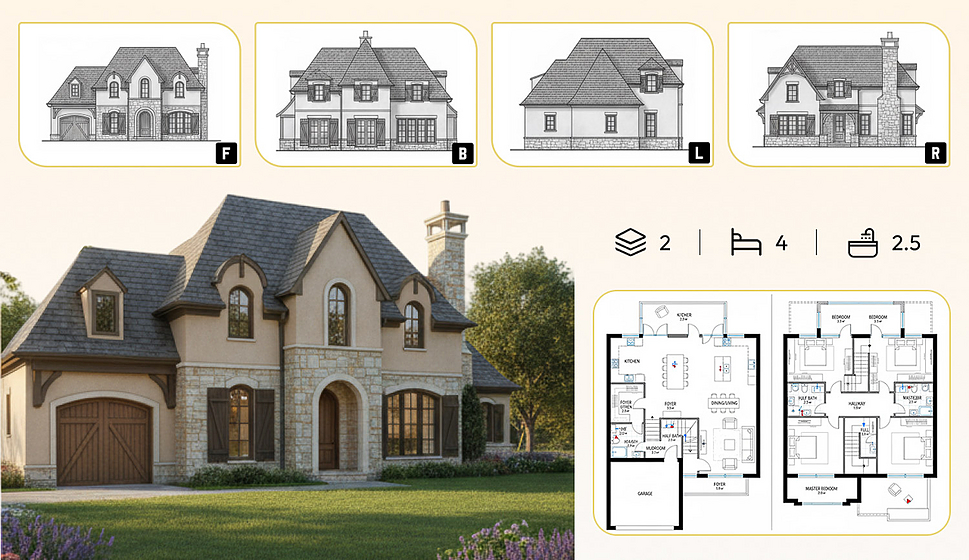
This guide covers a workflow that moves from project parameters to generated floor plans, 3D perspective views, exterior design exploration, and site context visualization, using AI tools in place of preliminary CAD and rendering work.
This guide covers a workflow that moves from project parameters to generated floor plans, 3D perspective views, exterior design exploration, and site context visualization, using AI tools in place of preliminary CAD and rendering work.

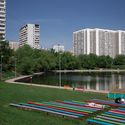
What are the characteristics of preservation-worthy architecture? In his book "Belyayevo Forever: A Soviet Microrayon on its Way to the UNESCO List," Kuba Snopek finds uniqueness in the seemingly generic Belyayevo microrayon, and argues that in spite of its pattern-book design it is worthy of protection. In this excerpt from the book's first chapter, Snopek examines Belyayevo's predecessor - the Ninth Quarter of Cheryomushki, which was constructed in the 1950s as an experiment that would transform Soviet housing policy - finding it to be a place which challenges our preconceived notions about architectural heritage.
A foreigner’s first contact with Moscow might begin with Google Earth. Its virtual tour through Russia’s capital starts with a view of its radial-concentric plan: loops of circular roads radiating from the Kremlin are cut through with the straight lines of prospects (avenues) and streets leading from the center towards the outskirts. This general scheme is familiar to any European architect: many other cities have circular boulevards, straight avenues and ring roads.
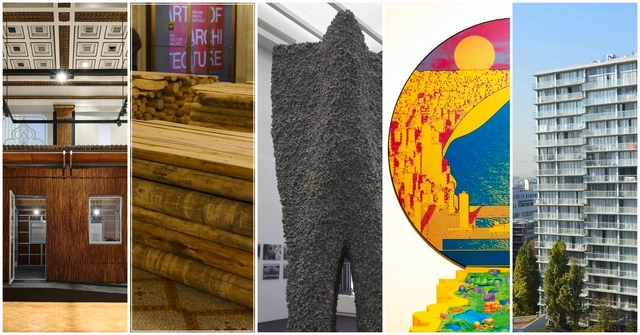
At the Chicago Architecture Biennial, the theme selected by directors Joseph Grima and Sarah Herda was deliberately wide in scope, with the expectation that more than one hundred exhibitors would each bring their own perspective on what is “The State of the Art of Architecture.” But where does that leave one of architecture's most widely adopted missions of the 21st century: sustainability? In this article, originally published on her blog Architectstasy as “Chicago Architecture Biennial: The State of the Art of Sustainability,” Jessica A S Letaw delves into five projects that take on sustainability in the context of Chicago's biennial.
At North America's inaugural Architecture Biennial in Chicago, “The State of the Art of Architecture,” architectural firms and practices from all six inhabited continents have been invited to display their work. Spanning all sizes and kinds of projects, the Biennial is showcasing solutions to design problems from spiderwebs to social housing.
US buildings use around 40% of all the country’s energy consumption. It is a disconcerting truth that even if every new building starting construction tomorrow were to be net-zero energy and net-zero water, we’d still be on a crash course, draining more naturally-available resources than our one planet can permanently sustain. In this environment, architectural designers have a special responsibility to educate themselves about innovative sustainable design techniques, from those that have worked for thousands of years to those that, as the Biennial’s title hopefully suggests, are state of the art.
So what does the Biennial have to say about sustainability? Five projects on display demonstrate different approaches at five different scales: materials, buildings, resources, cities, and the globe.
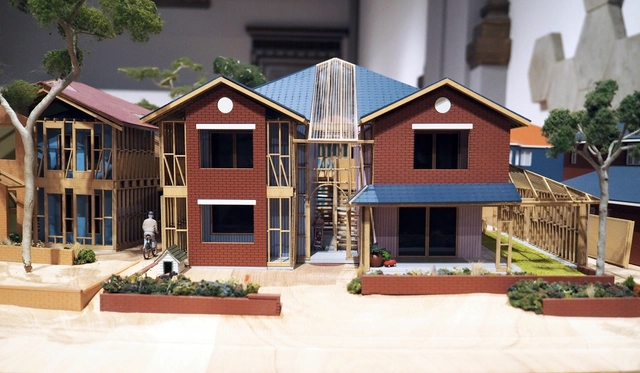
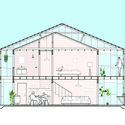
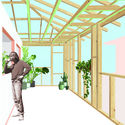
In the classic film The Wizard of Oz, Dorothy and friends manage to obtain a visit with the great and powerful wizard, who appears to them as an enormous, grotesque head, surrounded by smoke and flames, with a booming voice and a hostile demeanor. But when Toto pulls back the curtain, the wizard’s true nature is revealed, and it is only then that he is able to help the gang get the help for which they journeyed many miles down the yellow brick road. In architecture today, suburban houses share many of the characteristics of the wizard’s illusion: large, stand-offish and intimidating. But what if there is a more benevolent architecture hidden behind the smoke and flames? This is the thesis of Australian firm Otherothers' Offset House, on display now at the Chicago Architecture Biennale.
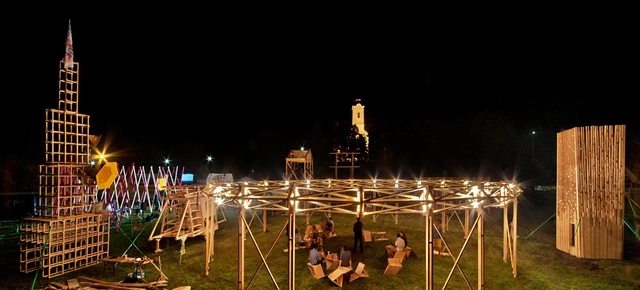
Set in the depths of rural Hungary, Hello Wood has emerged from the landscape for its 2015 edition, entitled 'Project Village'. Since 2010, the Hungarian-led collective of architects, designers, students and artists have gathered from around the world to create temporary wooden installations. Now in its sixth year, Hello Wood was realized with the help of 150 volunteers from 30 countries, and co-curated by Johanna Muszbek, with the shared vision to build a series of community-driven pavilions. Together the teams created fifteen unique wooden pavilions, each centred on a different component of the architecture of a village.
The latest video by French architect and filmmaker Vincent Hecht visits Hiroshi Nakamura’s Ribbon Chapel in Onomichi, Japan. Built in 2013, the 80 square meter wedding chapel features two spiraling stairways that wrap around the building, connecting at the top to form a viewpoint. Watch the video above for a closer look at the stunning chapel.
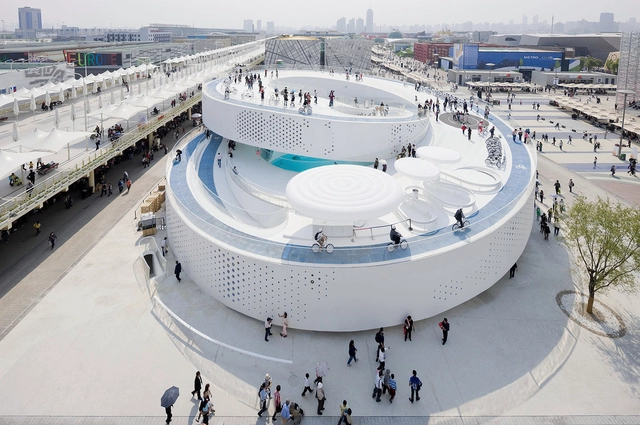
In recent years, the ever-increasing profile of Bjarke Ingels and his firm BIG have been hard to miss. For an office that is barely 10 years old, the number and scope of their projects is astonishing; to cope with demand, the firm has grown to employ almost 300 people. This growth, though, did not happen by accident. In this article, originally published on DesignIntelligence as "The Secret to BIG Success," Bob Fisher speaks to the firm's CEO and Partner Sheela Maini Søgaard in order to uncover the business plan behind the BIG phenomenon.
BIG may be the most appropriately named firm on the planet.
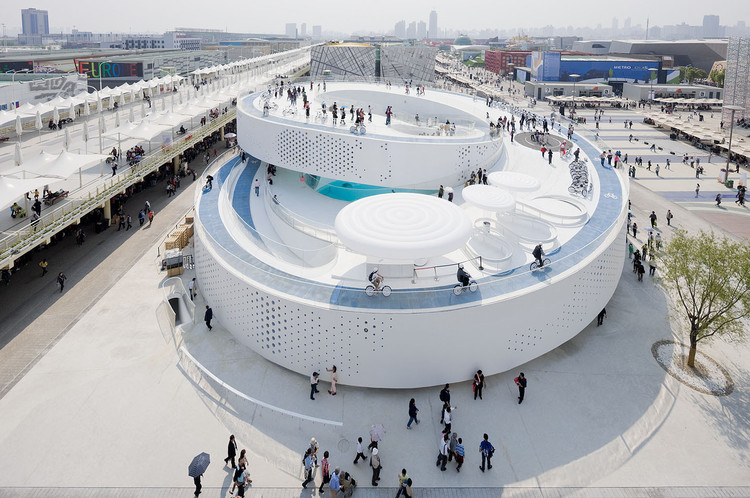
The Bjarke Ingels Group (BIG) seems to have an outsized impact in all it does. The Copenhagen-based design firm turns conventions and assumptions upside down and combines contrasting possibilities in outrageously bold, imaginative and playful ways. Projects like Via at West 57th Street in New York City and the Amager Bakke Waste-to-Energy Plant in Copenhagen are prime examples: the first a pyramid-shaped apartment building that defies the forest of rectangular towers around it, and the second a power plant that doubles as a smoke ring-blowing ski slope.
The world has taken note. Whether in praise or criticism, the architectural, cultural and business media tend to strike a heroic tone when describing the firm’s work: radical, ambitious, bold, confident. In short…BIG.
.jpg?1447120055&format=webp&width=640&height=580)
Over the past quarter-century, EMBT has emerged as one of the most influential practices in Spain, remaining as thought-provoking under the sole direction of Benedetta Tagliabue as it was before the tragic death of her inspirational husband and co-founder Enric Miralles. In this installment of his “City of Ideas” column, Vladimir Belogolovsky visits Tagliabue at the firm's studio in Barcelona to talk about the role of experimentation and curiosity in their work.
In the mid-1980s, after literature had long been held hostage by postmodernist irony and cynicism, a new wave of authors called for an end to negativity, promoting a "new sincerity" for fiction. Gaining momentum into the 1990s, the movement reached a pinnacle in 1993 when, in his essay E Unibus Pluram: Television and U.S. Fiction, pop-culture seer David Foster Wallace, a proponent of this "new sincerity," made the following call to action: “The next real literary ‘rebels’ in this country might well emerge as some weird bunch of anti-rebels, born oglers who dare somehow to back away from ironic watching, who have the childish gall actually to endorse and instantiate single-entendre principles... These anti-rebels would be outdated, of course, before they even started. Dead on the page. Too sincere. Clearly repressed. Backward, quaint, naive, anachronistic. Maybe that’ll be the point. Maybe that’s why they’ll be the next real rebels. Real rebels, as far as I can see, risk disapproval. The old postmodern insurgents risked the gasp and squeal: shock, disgust, outrage, censorship, accusations of socialism, anarchism, nihilism. Today’s risks are different. The new rebels might be artists willing to risk the yawn, the rolled eyes, the cool smile, the nudged ribs, the parody of gifted ironists, the ‘Oh how banal.'"
Architecture, ever in debt to the styles and ideas of other art forms, could learn a thing or two now from the resuscitation of American fiction at the turn of the millennium. It too is enduring an identity crisis, mired by pessimism and uncertainty - a reality made painfully clear this past January when a New York Times Op-Ed by Steven Bingler and Martin C. Pedersen, How to Rebuild Architecture, divided camps and made the design world fume. In the editorial, the authors spoke vehemently of an architectural profession that has become mired by egos and been disconnected from public needs. Things quickly got ugly, critics wrestled with critics and subsequently the public got involved. What no one seemed to take into account is that this type of hounding is at the core of the problem. In its current landscape the discipline has struggled with its past, been deferential to its present, and wrestled with the uncertainty of its future. In a moment when we have become addicted to despondency, can anyone win?
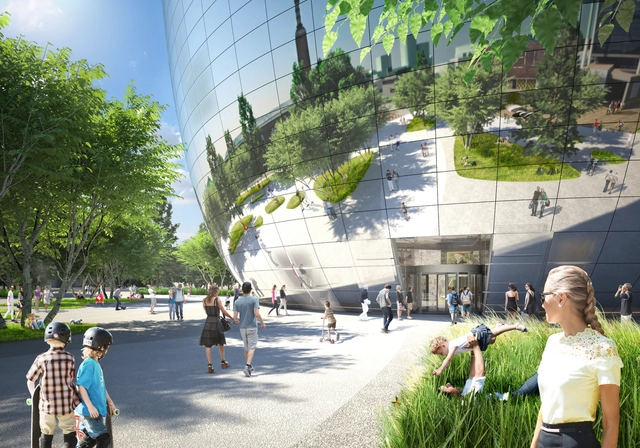
Rotterdam will soon have a new cabinet of curiosities to add to its collection of architectural icons. For many years the city's Museum Boijmans van Beuningen, originally established in 1849, has required a safer space to house its world-class collection of painting, sculpture and prints – a collection which is said to have a total value of €7billion ($7.5billion). Last week the Municipality of Rotterdam voted in favour of the building’s construction and, with zoning approved, "the world’s first fully accessible art storage facility" is now slated to open its doors in 2018.
After the Bolsheviks secured power in Russia in the late 1910s and eventually created the Soviet Union in 1922, one of the first orders of business was a new campaign, Novyi bit (new everyday life), which sought to advance many of the most hallowed causes of their newly minted socialism. The initiative’s great success came from the bold designs of Constructivist artists such as Alexander Rodchenko, Vladimir Mayakovsky, and Lyubov Popova. Using a high-contrast visual language and a combination of words and symbols, the graphics were arresting and comprehensible in a post-tsarist country that was largely illiterate, and became some of the most recognizable examples of twentieth century graphics and political propaganda.
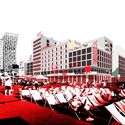
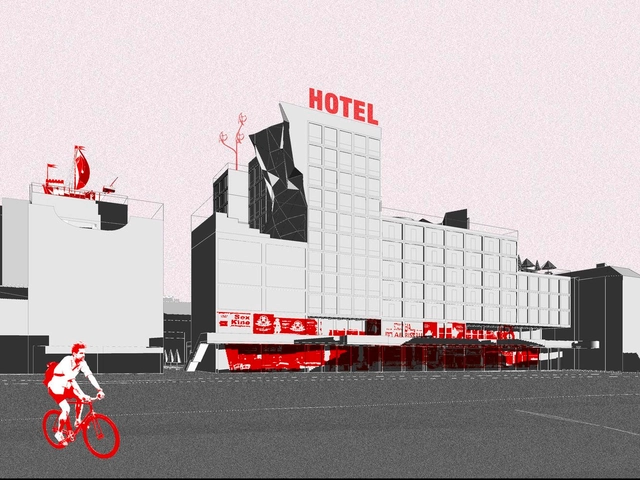
It's hard not to see the connection between the styles of the Constructivists and the unusual graphics created by NL Architects in association with BeL (Bernhardt und Leeser) Sozietät für Architektur BDA for their competition-winning proposal for Hamburg’s St. Pauli neighborhood, consisting of an urban plan of housing and other amenities at the former site of Esso Häuser on the Spielbudenplatz. And, while this stylistic connection may not have been intentionally drawn by the architects - the inspiration for the graphics is not mentioned in the four-page project description - it is oddly appropriate for this particular development.
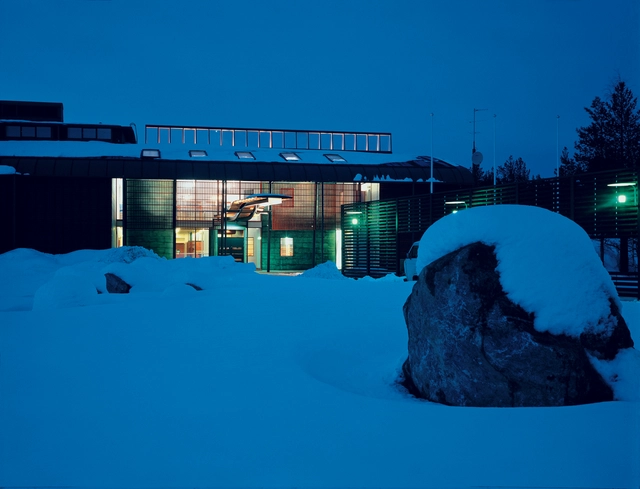
Few people in the architectural world have done more than Juhani Pallasmaa to make the complex ideas of phenomenology accessible to the uninitiated; his book "The Eyes of the Skin," for example, is recommended reading for students in countries the world over. In this interview, originally published in the October issue of Indian Architect & Builder which featured the theme of "the power of the hand," Pallasmaa talks about his similar approaches to designing and writing, and the early childhood experiences that led him to become a phenomenologist.
Indian Architect & Builder: Your practice is widely multidisciplinary; can you tell us a little about your academic journey towards the establishment of your practice?
Juhani Pallasmaa: In my country, Finland, it has been customary for students of architecture to work in architecture offices during their studies, usually from the second year onwards. I entered the Helsinki University of Technology (currently the Aalto University) in the fall of 1957. A year later, I was fortunate enough to be invited to work at the Museum of Finnish Architecture, established a year earlier, as an exhibition assistant. The Museum eventually became my real university, and also gave me the opportunity to travel the world designing exhibitions of Finnish architecture in thirty cities around the world.

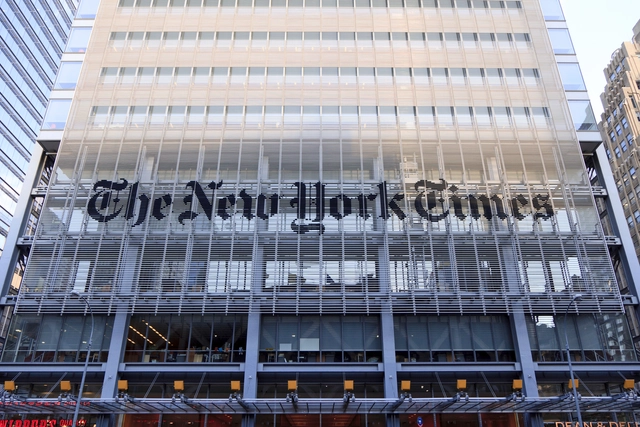
Graphic designers are the masked superheroes of the design world. They shape the way people interact with everyday objects, often at a subconscious level, and create identities for events, services and businesses. Michael Bierut, with his familiar designs for Saks 5th Avenue, New York City parking signs, Verizon, Billboard, and most recently, Hillary Clinton’s much talked-about campaign logo, is a prime example of a man looking out for public aesthetic good. Now, with the release of his book, "How To use graphic design to sell things, explain things, make things look better, make people laugh, make people cry, and (every once in a while) change the world," and a retrospective exhibition of his works coming to a close this weekend at the School of Visual Arts, Bierut’s mask has been lifted.
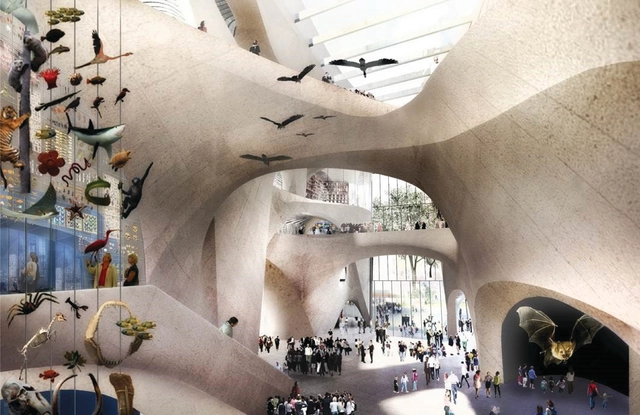
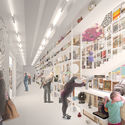
A conceptual design by Studio Gang was unveiled today as the preferred expansion to the American Museum of Natural History (AMNH) in New York. The proposed building, named the Richard Gilder Center for Science, Education, and Innovation, aims to host an array of public exhibition space as well as become a premier "active scientific and educational institution" that enhances connections with the existing Museum and encourages exploration amongst its users.
“We uncovered a way to vastly improve visitor circulation and Museum functionality, while tapping into the desire for exploration and discovery that are emblematic of science and also part of being human,” said Jeanne Gang, founder of Studio Gang. “Upon entering the space, natural daylight from above and sightlines to various activities inside invite movement through the Central Exhibition Hall on a journey towards deeper understanding. The architectural design grew out of the Museum’s mission.”

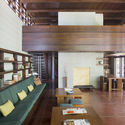
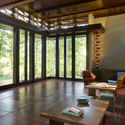
Architecture and art have had a long and complicated relationship. Many people consider architecture to be “the mother art,” while others believe the burdens of program and pragmatism prohibit architecture from the realm of pure artistry. But what happens when architecture is displayed alongside art? Next Wednesday, November 11th, Crystal Bridges Museum of American Art in Bentonville, Arkansas is primed to open Frank Lloyd Wright’s Usonian-era Bachman-Wilson house to the public. It is the first Wright home to be relocated to an art museum property, accompanying the museum's Moshe Safdie-designed building within a short walk of artworks by Norman Rockwell, Donald Judd and Andy Warhol. These unique juxtapositions open up new conversations about the goals of preserving buildings as well as chances to contemplate architecture’s place within art history.
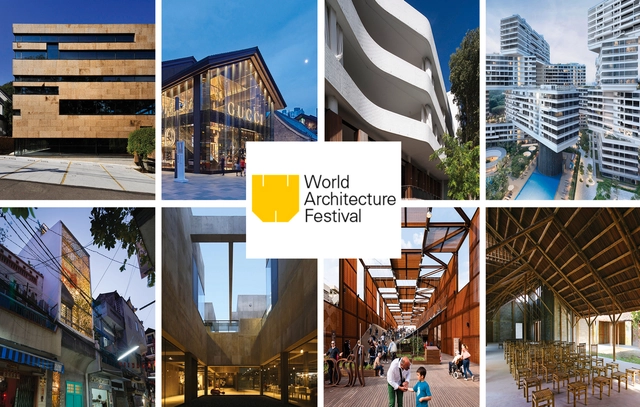
OMA/Buro Ole Scheeren, Populous, and a21 studio are among the first set of category winners of The World Architecture Festival’s (WAF) 2015 awards. Announced today during the festival’s opening, the winners of the categories will go on to compete on Friday for the title of the World Building of the Year 2015.
Held at the Marina Bay Sands in Singapore from November 4-6, this year’s festival is centered on the theme 50:50, in honor of Singapore’s upcoming 50th anniversary as an independent country. In addition to hosting the world’s largest architectural awards program, WAF also features three days of conferences, architect-led city tours, documentary screenings, live crit presentations and networking opportunities.
View the full shortlist here, and see which 14 built and future projects took home awards after the break.
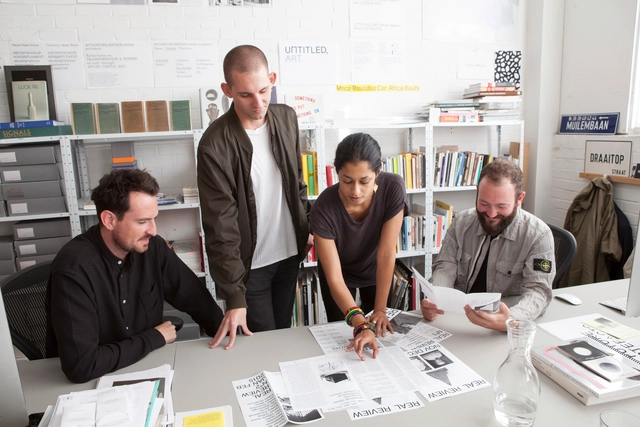
Last month a Kickstarter campaign launched by the Real Estate Architecture Laboratory (REAL) reached its funding target: the Real Review, an independent bi-monthly magazine which intends to "revive the review as a writing form" to a general readership within the architectural sphere, will soon be a reality. ArchDaily sat down with editors Jack Self and Shumi Bose to discuss how the project came into being and what this—the flagship publication of REAL—will look like when its first issue is published in early 2016.
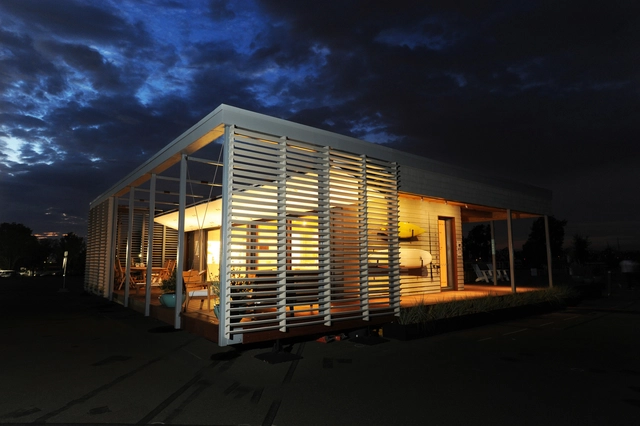
With the close of the seventh Solar Decathlon competition last month in Irvine, California, we couldn't help but reflect on our own experience in the 2013 competition as leaders of Start.Home - Stanford University's first entry into the US Department of Energy (DOE)'s biennial net-zero energy home competition which ultimately placed fifth. With the advantage of two years of hindsight, we can now clearly see that our experience in the Decathlon has had incredible educational value to us, not only as students of architecture and engineering, but also as leaders and future professionals in interdisciplinary projects.
However, echoing recent sentiments on ArchDaily, we feel it is unclear whether the Solar Decathlon still has any of the other values it set out to have; namely to showcase cutting-edge renewable and sustainable technology in residential building design to industry and the public. In fact, as the competition looks ahead with uncertain governance and sponsorship, without some serious reexamination of its fundamental goals the Solar Decathlon may be facing its own setting sun. How did the Solar Decathlon reach its current state of irrelevance? More importantly, how should it innovate to see a new dawn in the coming years?
In an exclusive half-hour interview with Lord Norman Foster, Monocle's editor-in-chief Tyler Brûlé discusses matters of urban planning and "big-thinking emerging economies" with "one of the world’s most innovative and revered architects." Foster, who turned eighty years of age this year, has been the recipient of some of the world's most prestigious architecture awards – from the Pritzker Prize, the Stirling Prize, the AIA Gold Medal and the Prince of Asturias Award (Spain). Over the years, Foster's practice have become world-renowned experts in high-density transit design (namely, airports) – a focus of Brûlé's questioning.









.jpg?1447120320 "Santa Caterina Market, Barcelona. Image © Alex Gaultier")

.jpg?1447120055)