How to visualize architectural concepts in SketchUp using D5 Lite for faster design exploration.
How to visualize architectural concepts in SketchUp using D5 Lite for faster design exploration.

In Mark Foster Gage’s essay “Rot Munching Architects,” published in Perspecta 47: Money, the Assistant Dean of the Yale School of Architecture strove to find meaning in the current design landscape. Taking the essay title from a larger stream of expletives spun across the facade of the Canadian pavilion as part of artist Steven Shearer’s installation at the 54th Venice Art Biennale in 2011, Gage found truth in the vulgarities, arguing that - in a very literal sense - “architectural experimentation has left the building” as the discipline has been made impotent under the hostage of late capitalist ambition.
Last summer, when Brooklyn Bridge Park unveiled 14 proposals as finalists for two residential towers at the park's controversial pier 6 site, you could be fooled into thinking that design is alive and well. A caveat of the park’s General Project Plan (GPP) was to set aside land for retail, residential and a hotel development, in order to secure funding and achieve financial autonomy. The plans had already fueled a decade of legal battles and fierce opposition from the local community, with arguments ranging from the environment, to park aesthetics, to money-making schemes, but last year a bright outcome appeared a possibility, when the park unveiled the competing plans including those by Asymptote Architecture, BIG, Davis Brody Bond, Future Expansion + SBN Architects, WASA Studio, and of particular interest, O’Neill McVoy Architects + NV/design architecture (NVda).
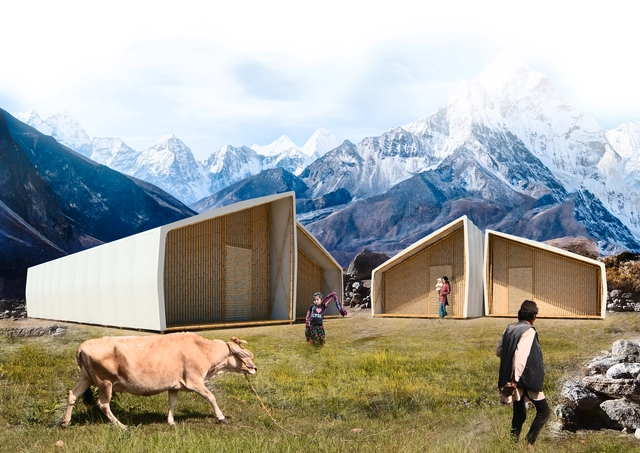
Disaster can strike a community at any minute. Following the most costly earthquake in their history in April, hundreds of thousands of Nepalese residents were rendered instantly homeless. To help these people reorganize and get back to a familiar way of life, Barberio Colella ARC has designed a temporary structure using local materials “to make a house that can be built quickly, lightweight and compactly, durably and economically.”

ArchDaily is continuing our partnership with The Architectural Review, bringing you short introductions to the themes of the magazine’s monthly editions. In this introduction to the October 2015 issue, Editor Christine Murray uses their recent school awards as incentive to discuss the plight facing London schools and (in timely fashion) asks "are we going to battery farm our children now?"
My son’s postwar school won’t win any awards for its design. I’d like to think that’s why they plan to demolish it. But the school faces a more sinister fate.
Hackney has its eyes on rising land values in this fast gentrifying London borough. It plans to demolish three primary schools, carving up the plots to build private homes for sale on designated education land. New schools will be rebuilt on a fraction of the original sites, some with twice as many pupils squeezed in.

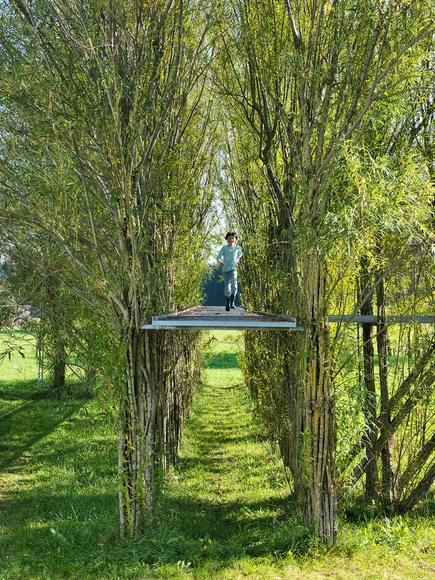
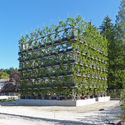
Timber buildings are regularly praised for their sustainability, as carbon dioxide removed from the atmosphere by the trees remains locked in the structure of the building. But what if you could go one better, to design buildings that not only lock in carbon, but actively absorb carbon dioxide to strengthen their structure? In this article, originally published by the International Federation of Landscape Architects as "Baubotanik: Botanically Inspired Biodesign," Ansel Oommen explores the theory and techniques of Baubotanik, a system of building with live trees that attempts to do just that.
Trees are the tall, quiet guardians of our human narrative. They spend their entire lives breathing for the planet, supporting vast ecosystems, all while providing key services in the form of food, shelter, and medicine. Their resilient boughs lift both the sky and our spirits. Their moss-aged grandeur stands testament to the shifting times, so much so, that to imagine a world without trees is to imagine a world without life.
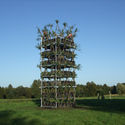
To move forward then, mankind must not only coexist with nature, but also be its active benefactor. In Germany, this alliance is found through Baubotanik, or Living Plant Constructions. Coined by architect, Dr. Ferdinand Ludwig, the practice was inspired by the ancient art of tree shaping.

'Defiance' manifests itself in many forms: riots in Baltimore, makeshift housing in Rwanda, Pink Floyd in Venice and plants growing where they ought not sprout. To defy the norm is an act of rebellion and in architecture, doubly so. In the third issue of LOBBY, the burgeoning magazine from London's Bartlett School of Architecture, the notion of defiance and its incarnations are investigated in a collection of essays, interviews and discussions with leading and emerging thinkers in urbanism and architecture. From Swiss master Mario Botta to Carme Pinós, former partner to Enric Miralles, this latest LOBBY investigates the act of defiance as a core tenet of architectural practice.

With its hundreds of churches, Rome has a developed a rich history of domes. Inspired by this heritage, Jakob Straub has photographed the city's most remarkable rotundas from the ancient Pantheon up to Pier Luigi Nervi's modern sports arena. His neutral photo perspective, taken looking upwards from the center of the rotunda, opens a new view for the underlying concepts where the architecture yearns for the firmament. For Elías Torres, these “zenithal-lit” spaces constitute an important method for daylight architecture, where the exterior is also transformed into a fascinating distant reality.
Torres has analysed numerous strategies for lighting architecture effectively with daylight from above. In his book “Zenithal Light,” illustrated with an abundance of striking photos, he came to the conclusion that “Amongst the representations of the sky in the interior of architecture, the one that depicts the sun shining from above with a circular form has been the favoured one for many cultures.”
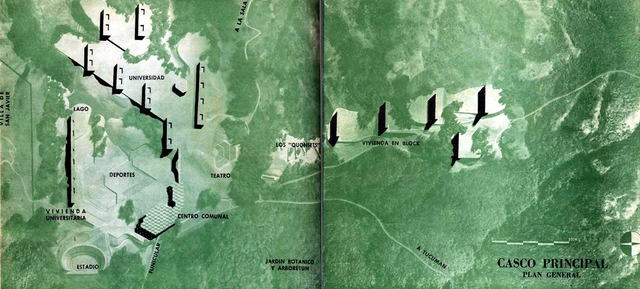
ArchDaily is continuing our partnership with Radical Pedagogies, an ongoing multi-year collaborative research project led by Beatriz Colomina with a team of PhD students of the School of Architecture at Princeton University, presenting a series of paradigmatic cases in architectural education. In this article, Horacio Torrent (Full Professor at Pontificia Universidad Católica de Chile School of Architeture) presents the example of the Institute of Architecture and Urban Studies of the National University of Tucumán in Argentina, led by Jorge Vivanco with a group of invited Italian professors. The Institute's key radical approach was in the real materialization of their architecture, including actual commissions and clients, with the university's own campus being the most important of these projects.
In 1947, Italian professors Ernesto Rogers, Cino Calcaprina, Luigi Piccinato, Enrico Tedeschi and civil engineer Guido Oberti were invited to teach at the School of Architecture, Universidad Nacional de Tucumán. Jorge Vivanco, the school’s Dean, contacted the group of professors after attending the 6th Congrès internationaux d’architecture moderne (CIAM) in Bridgwater, England. Vivanco also appointed the Argentinian architects Eduardo Sacriste, Horacio Caminos, Hilario Zalba, José Le Pera, Rafael Onetto, and Jorge Bruno Borgato. Together, these professors took part in one of the most radical and short-lived experiences in architectural teaching in Latin America at the time.

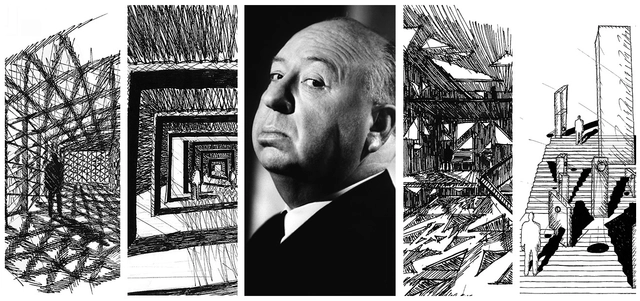
Since the 2007-2008 academic year, the Ethics class at the School of Architecture (UIC Barcelona, Spain) has analyzed the cinematographic works of Alfred Hitchcock through the lens of architectural planning. In the following analysis by the class's two professors -- art theorist and historian Alfons Puigarnau and architect Ignacio Infiesta -- space is thought of as scenography, and the visual strategy is analyzed in relation to the script and the soundtrack with the intention of creating a deliberate atmosphere of suspense.
Geared for third year architecture students, this class studies the film director's vision as if it were one of the instruments guiding an architect's design. It's part of an analogy between the camera lens, which uses light, and the architect's pencil, which makes use of outlines. In fact, Hitchcock always emphasized the visual over the dialogue [1].
Learn more about the work of the students at the School of Architecture UIC after the break.
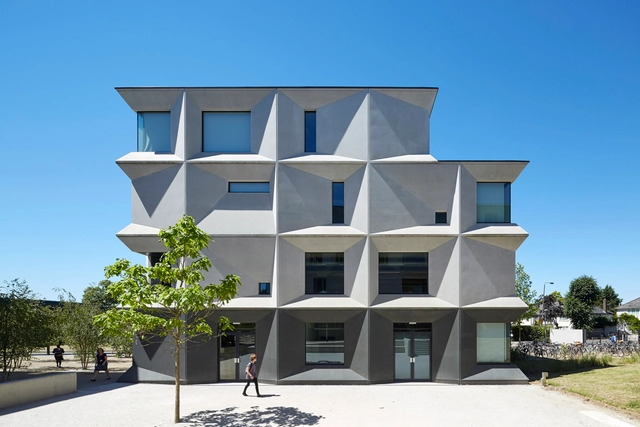
Another year, another RIBA Stirling Prize winner that seemingly nobody expected. In spite of being the unanimous favorite of the RIBA's Stirling Prize jury, Allford Hall Monaghan Morris (AHMM)'s Burntwood School won out over the BBC people's choice, MUMA's Whitworth Gallery and ArchDaily readers' own favorite, Heneghan Peng Architects' Greenwich University (although AHMM came in second place with 21% of the vote), as well as Reiach and Hall's Maggie's Lanarkshire, Níall McLaughlin's Darbishire Place, and RSH+P's NEO Bankside.
But despite the apparent surprise, was AHMM's Burntwood School a suitable winner of British architecture's highest award? Read on to find out what the critics thought.
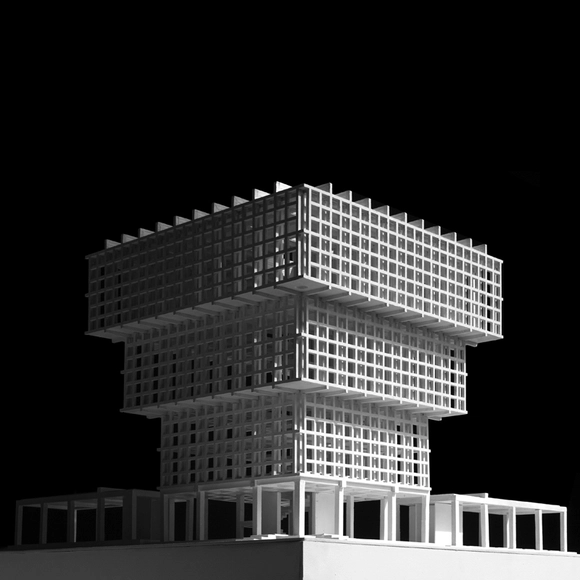
Pezo von Ellrichshausen has unveiled the designs for Chile's new LAMP museum. To be located in the city of Concepción, the museum will host a collection of 2,000 paintings, 500 sculptures and 1,800 books of Chilean artist Eduardo Meissner and painter Rosemarie Prim. The museum will take shape at the foot of the Caracol hill in the city’s Ecuador park, with construction expected to start in 2016.
While the architects describe the project as “a generic spatial structure for a specific condition,” Meissner wrote in an open letter that “the collection will occupy a diaphanous and convincing new building, full of flowers, birds, maidens and spheres, replete with life and air. A building that I imagine floating, with you inside, facing the Biobío river.”
Learn more about the proposal after the break.

For most students of architecture, the first few years of learning involve a demanding crash course in architectural jargon. From learning terms as obscure as "gestalt" to redefining your understanding of ideas as simple as "space," learning the architectural lexicon is one of the most mind-bending processes involved in becoming a designer.
This challenge is clearly a universal experience as well: when we asked our readers last month to suggest their picks for the "weirdest words that only architects use," we were inundated with suggestions - including 100 comments on the post itself and over 400 comments on our first Facebook post. Perhaps even more striking, though, was the fact that in all of these comments, there was remarkably little overlap in the words and phrases people were suggesting. The huge variety allowed us to select a list of 150 words - just a fraction of the total suggested.
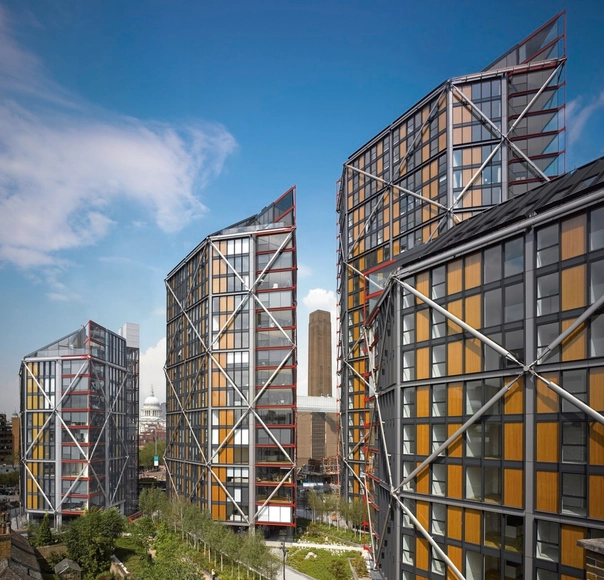
In the past two weeks on ArchDaily there have been plenty of stories to provoke discussion: from the Stirling Prize (or more accurately the protests over the shortlisting of RSH+P's NEO Bankside) to the Solar Decathlon, and from Santiago Calatrava's European Prize for Architecture to Perkins+Will's appointment to design a new "airport city" in Istanbul.
In the second of our new series highlighting the best recent comments on our stories, our readers had discussions on politics in architecture, color in kindergartens and urban development in Turkey. Read on to find out what they had to say.

In a Los Angeles Times article last December, “The future is in the past: Architecture trends in 2014,” acting critic Christopher Hawthorne sought to make sense of a year that included Koolhaas’s Venice Biennale, Smiljan Radic’s Serpentine Pavilion, and periodicals like Log 31: New Ancients and San Rocco 8: What’s Wrong with the Primitive Hut? Through these examples and others, Hawthorne concluded that it was a year of overdue self-reflection, where in order to determine architecture’s future it was necessary to mine the past.
Building on these precedents, Hawthorne predicted that after years of baroque parametricism, in 2015 architects would use last year’s meditations on history as a practical foundation for new projects and proposals. An example of this can be found in the work of Michael Ryan Charters and Ranjit John Korah, a duo who recently shared the top-five prize for the CAF led ChiDesign Competition (part of the Chicago Architecture Biennial) for their project Unveiled. In a brief that called for “a new center for architecture, design and education,” and with lauded jurors including Stanley Tigerman, David Adjaye, Ned Cramer, Monica Ponce de Leon, and Billie Tsien, Charters and Korah proposed what could casually be summarized as a terracotta framework over a multi-story crystalline form of wooden vaults, but is actually something much more complex.
.jpg?1445011714&format=webp&width=640&height=580)
October has become a busy month in the design world. If you’re living in the United States, New York specifically, it means Archtober: a portmanteau that means the city is flooded with architecture activities, programs and exhibitions, piled onto an already rich design calendar. One of these events is the New York Architecture & Design Film Festival, which started on Tuesday night and runs through Sunday October 18th, and will screen 30 films from around the world in 15 curated, themed programs.
This week, I was able to visit the festival to absorb the atmosphere and speak to the festival's director Kyle Bergman, to learn the ins and outs of this year’s festival, how things got started, and where it will go in the future.
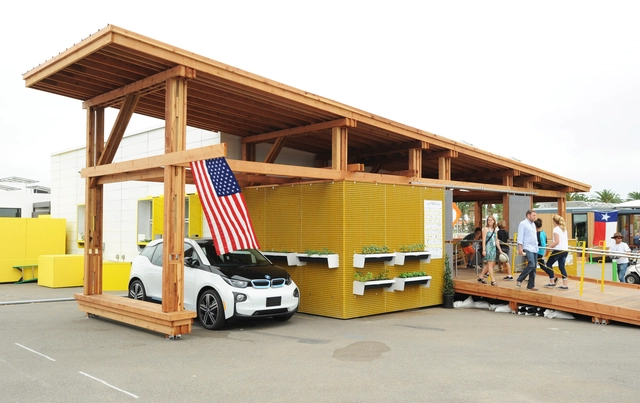
Is the Solar Decathlon Still Relevant? The short answer is “yes,” but probably not for the reasons the United States Department of Energy intended.
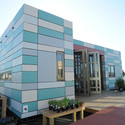
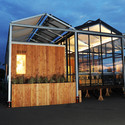
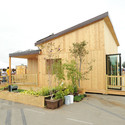
The Solar Decathlon, currently underway at Orange County Great Park, in Irvine, California, “challenges collegiate teams to design, build, and operate solar-powered houses that are cost-effective, energy-efficient, and attractive.” The overall goal of the competition is to demonstrate the viability of solar power to the public, while also providing the participating students with hands-on design, engineering, and construction experience. When the first Solar Decathlon took place in 2002, the viability of solar power was anything but certain, and the venue on the National Mall in Washington DC gave credence to the pursuit of energy efficiency and renewable energy sources.
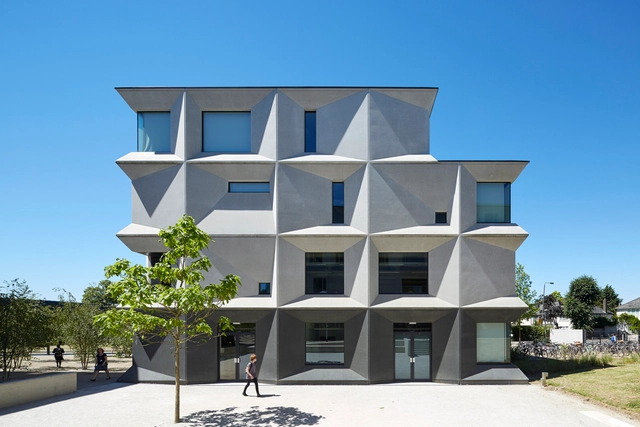
Allford Hall Monaghan Morris (AHMM) has won the top prize in British architecture, the RIBA Stirling Prize for their Burntwood School. Beating out competition from Rogers Stirk Harbour + Partners (RSH+P), Niall McLaughlin Architects, Heneghan Peng Architects, McInnes Usher McKnight Architects (MUMA) and Reiach and Hall Architects. Announced by RIBA president Jane Duncan, the selection was reported to have been a unanimous decision among the judges, with the school described as "a grown-up building to inspire grown-up behavior."

Managing your own architecture firm is hard, and while pretty much every architect starts with a strong idea of the type of firm they want to be, without constant care it can be easy to get sucked into doing jobs you need to do to keep the lights turned on, rather than the jobs you wanted to do from the start. In this article, originally published by Archipreneur as "9 Creative Business Development Strategies For Architects and Designers," Sabrina Wirth explores the ways you can not only keep work coming in, but make sure it is the right type of work too.
Whether you’re a large architecture firm or a small, boutique design studio, everyone needs a plan for generating new business. The prospect of working on RFPs (Request For Proposals) and RFQs (Request For Qualifications) to win a place on the shortlist, however, is daunting and something very few people look forward to.
Fortunately, it’s not the only path to attracting new projects. In fact, the most effective business development strategies involve more time spent on proactive relationship-building (before the project is made public), and less time on responding to RFPs and RFQs, which are available to anyone.
Below are 9 strategies that can help you define a good business development approach to get you ahead of the competition and win more clients and projects:

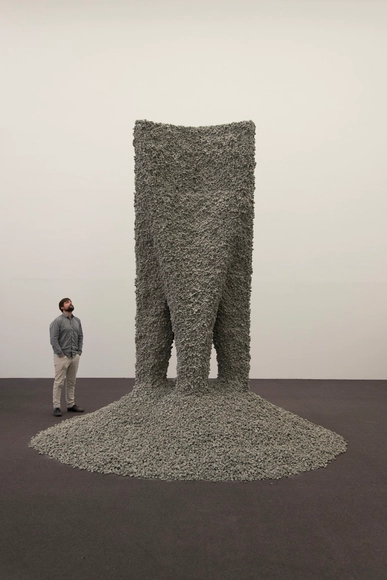
As everyone knows, if you stack layer upon layer of small stones atop one another, what you eventually get is a pile of stones. It's among the least dramatic phenomena in the whole of nature; add string though, and the whole process is transformed. That's the idea behind Rock Print, an installation at the Chicago Architecture Biennial created by Gramazio Kohler Research of ETH Zurich and Skylar Tibbits of MIT's Self-Assembly Lab, which uses just these two elements to create a dramatic four-legged column that is self-supporting and can be quite literally unraveled into its constituent parts after use.







.jpg?1445550937 "Test field with inosculations. Image © foto chira moro")