-
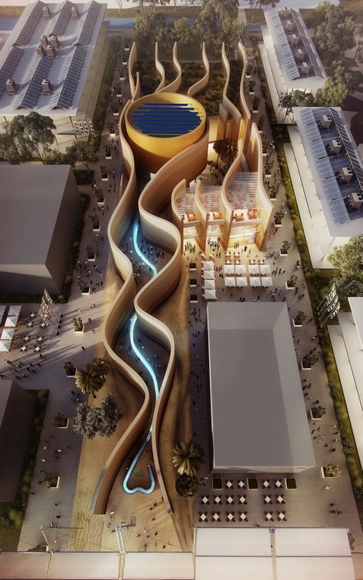
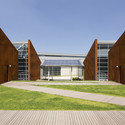
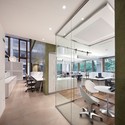
Architects: gglab + Paulo Flores


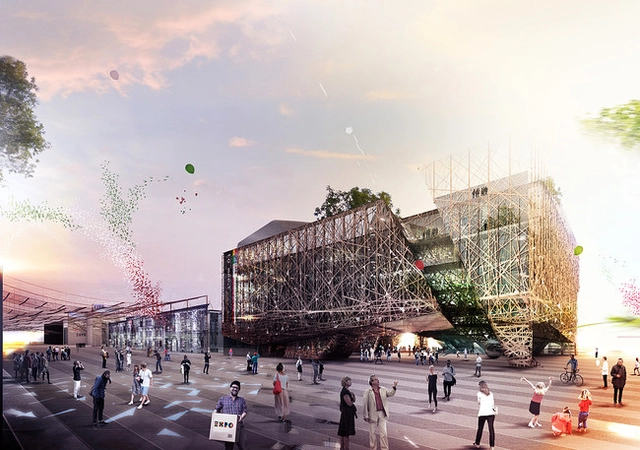
The Bureau of European and Eurasian Affairs (EUR) of the Department of State requests proposals from private U.S. individuals, firms, associations and organizations for the fundraising, construction, development, organization, and management, and disassembly and removal of a USA Pavilion/exhibition at Milan Expo 2015, which is set to open with an eco-themed fair on May 1, 2015. The USA Pavilion will be situated on a 2790 square meter plot with a building footprint no more than 70% of the plot size on a site northwest of Milan, near the Massimiliano Fuksas-designed Fiera Milano convention center. Proposals are expected to include ‘a food demonstration or exhibition’ to emphasize the ‘Feeding the Planet, Energy for Life’ theme. Submissions are due no later than September 15. For more detailed information, please visit here.
.jpg?1372298154&format=webp&width=640&height=580)
Designed by B2 Architecture, their first prize winning design for the Instant House @ School Competition is an oasis for children that breaks down the rigorosity with the help of organic and playful shapes. Located in a strictly orthogonal urban context, in the street of Via Ugo Betti in Milan, the building and its surroundings will create a bridge between the neighborhood and the children by orienting itself to the main directions of the site. More images and architects’ description after the break.


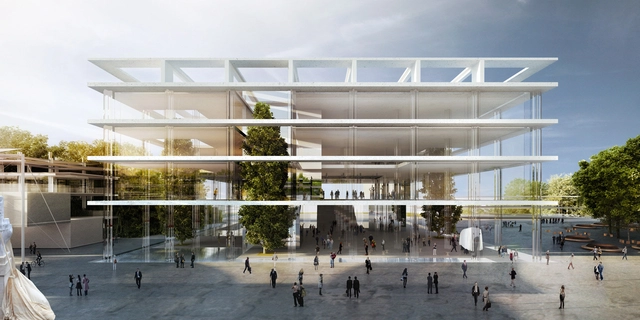
MenoMenoPiu Architects + BE.ST Architect shared with us their proposal for the Italian Pavilion Expo 2015. Titled 'The Slabs', their design consists of a light cage where the technical innovation is embedded within the structure: revolutionary glass columns sustain traditional slabs clad in marble. Simple and elegant in its structural system, marble and glass are intertwined to express the Italian architectural tradition of proportion and elegance. More images and architects' description after the break.

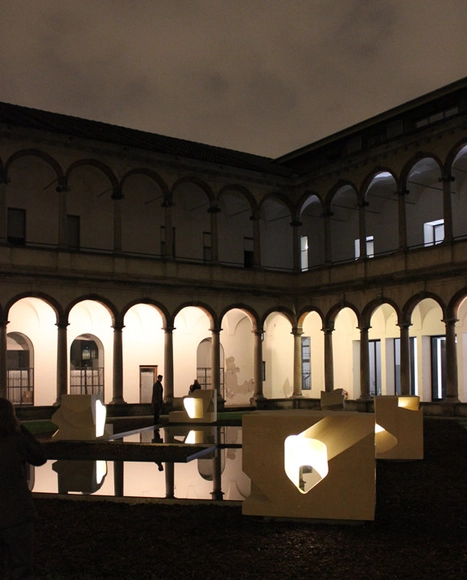
As part of INTERNI’s Hybrid Architecture Exhibition event, Steven Holl Architects will be opening their 'INVERSION' installation tomorrow, April 9th, in Milan. In addition, Steven Holl will deliver a lecture in the Aula Magna of the Università degli Studi di Milano at 10am. Shown in the Cortile 700 of the Università degli Studi di Milano, the installation features six void-cut, 21 million year old limestone blocks, which frame a sheet of water. The process, beginning with a 5”x7” watercolor sketch in New York City, which is transformed into a 3D file and then sent to Lecce, required no working drawings. More information on their installation after the break.

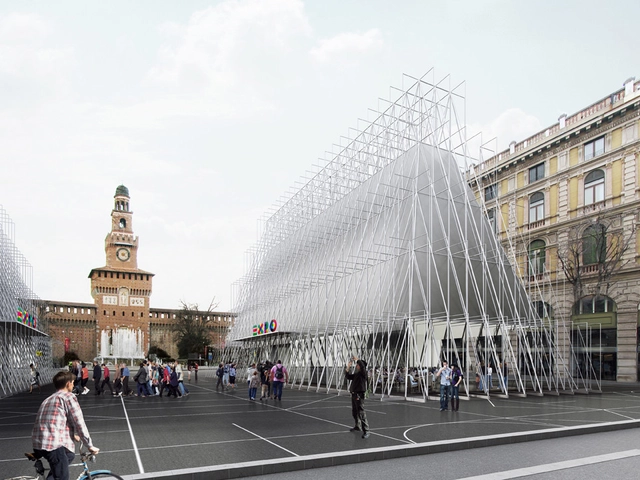
The winning proposal in the Info Point competition at Milano EXPO 2015 by Scandurrastudio aims to be an impressive void; a square and two pavilions. Featuring a great open space, a central square between two booth-like pavilions, the gate to EXPO 2015 will offer an ideal opportunity to talk about growth and evolution, while marking the time before the opening event. More images and architects’ description after the break.


CityLife Milano is an ambitious commercial and residential development on Milan's historic former trade fair grounds: the Fiera Milano. On the surface, over half of CityLife Milano will be covered with upwards of 168,000 square meters of landscaped parkland dedicated to pedestrians and bicycles. This lush, pedestrianized space will be centered around a grand new piazza - 'piazza delle tre torri' - shaped by a trio of towers and surrounded by a cluster of residences, all designed by three world-renowned architects. As previously mentioned, Arata Isozaki and Andrea Maffei has contributed the Isozaki Tower, which is planned to become the tallest skyscraper in Italy at 202 meters and built alongside the curved, 150 meter Libeskind Tower. To complete the triad, Zaha Hadid has designed a twisting, glazed tower, which will rise 170 meters into the skyline.
More on the Hadid Tower and surrounding development after the break...

Looking to redefine the relationship between students, buildings and the city of Milan, Bocconi University challenged architects world-wide to design a “campus for the third millennium”. Although first prize was awarded to SANAA’s courtyard-centric complex formed by a series of undulating figures, OMA’s proposal provides an interesting twist to intercity university campuses.
Formulating a composition of objects that “represents a three-dimensional re-learning of humanistic values”, OMA’s Bocconi Urban Campus proposal sets the stage for Homo Economicus. Two clusters of independent buildings - an “extroverted” new school of management and the “introverted” a-frame student housing tower - are centered around a public amphitheater topped by a canopy of “architectural” umbrellas. While the thirteen story tower shelters the more intimate campus programs and acts as a backdrop to the boisterous new school, all spaces remain permeable to the activities of the surrounding city and establish the most appropriate and stimulating connection.
More photos of OMA's proposal after the break...