Matheus Pereira

BROWSE ALL FROM THIS AUTHOR HERE
↓

Eladio Dieste and the Importance of Experimentation on the Construction Site

Subscriber Access | 

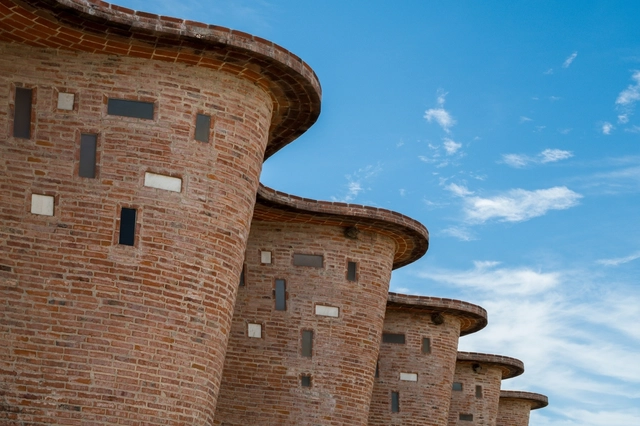
Born in Artigas, Uruguay, in the second decade of the twentieth century, Eladio Dieste became an exceptional builder, with most of his work located in Montevideo, the capital of his home country, and its adjacent cities. However, his work gained broader international recognition posthumously, after the Massachusetts Institute of Technology (MIT) celebrated it in 2005 through the theoretical work of Stanford Anderson. Trained as an engineer, his relationship with the construction site and in situ experimentation allowed him to push materiality and structural possibilities to their absolute limits.

With a practice deeply connected to the relationship between materiality and the construction site, he developed a rich architectural output based on studies of thin ceramic shells, which he termed reinforced ceramics. Alongside this construction technique, Dieste found that ceramic bricks offered the essential structural resolution he sought. The material possessed excellent structural properties—highly resistant to compression, quick to build with, and easy for local labor to handle—while the addition of steel reinforcement allowed it to resist tension and bending. Consequently, he found in brick the ideal medium for the plasticity and structural design he envisioned, enabling him to span large distances with slender self-supporting structures anchored only at their ends. Free of central supports, these structures unified walls, floors, and ceilings into a single cohesive body.

But what makes Eladio Dieste such a remarkable builder?
Exhibition Design Guide: What to Consider When Setting Up an Exhibition

Subscriber Access | 

Have you ever wondered how an exhibition design is conceived? Or how it coordinates the staging of the displayed content?

Historically, what we know today as a museum began as a place to gather pieces and objects organized by typology. This is evident when looking at images of the so-called cabinets of curiosities or wonder rooms, which organized a vast array of rare objects and species (animal, plant, and mineral) brought back from the great explorations of the 16th and 17th centuries.

Centuries later, these collections began to gain traction, and former palaces transformed their hallways into long, continuous galleries, to which only their guests and residents had access. Later, in the 19th century, the emergence of pavilions dedicated primarily to the display of artifacts brought us closer to the modern concept of museums. We regularly publish various museum projects. But beyond their architecture, have you ever noticed the crucial role that exhibition design plays? Below, we outline some of the key concepts of exhibition design.

Winners Announced for the Vila dos Mellos Competition Organized by Escola da Cidade

The winners of the Vila dos Mellos Competition, promoted by Escola da Cidade, have been announced. Aiming to select five model single-family residential designs featuring rationalized construction for the Vila dos Mellos Condominium—a development that plans for the construction of 101 homes—the competition specified that each lot would receive one of the five winning designs, chosen at the discretion of the new owner.

Sérgio Ferro: teaching, criticism, and fine arts

Subscriber Access | 

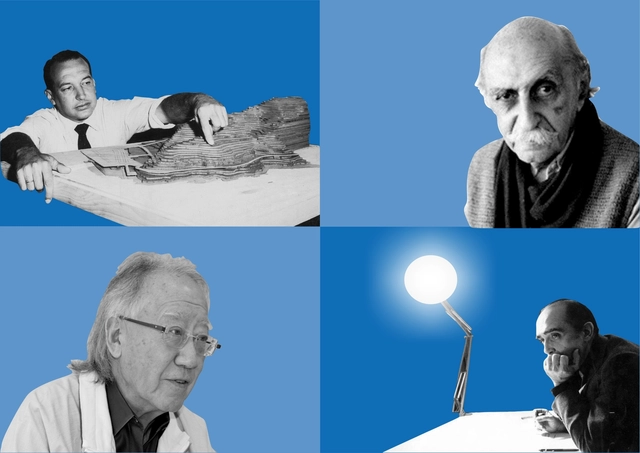
Today, July 25, Sérgio Ferro celebrates his 80th birthday. Born in Curitiba, he graduated in Architecture and Urbanism from the University of São Paulo (FAU-USP) in 1962, where he was invited by João Batista Vilanova Artigas to join the faculty between 1962 and 1970, teaching Art History. In academia, he also taught at the University of Brasília (UnB) from 1969 to 1970. A multidisciplinary intellectual, architecture is only one of his many facets; he is also an accomplished visual artist.

Geodesic structures: how they work and where they can be applied

Subscriber Access | 

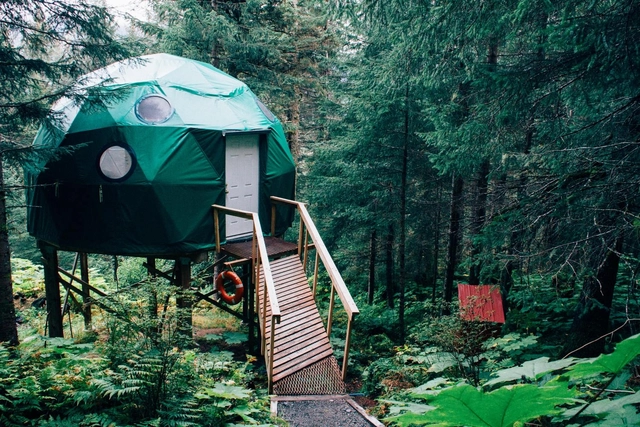
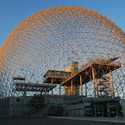
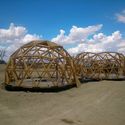
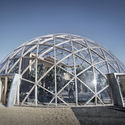
It is highly unlikely that you made it through architecture school without seeing or even helping to build a geodesic dome. These structures are defined by a mesh composed of a network of polygons—usually steel, wood, or bamboo triangles—that, when materialized in three dimensions, form spaces. By connecting the edges (struts) and rendering the structure three-dimensional, this model achieves strength and structural lightness through the uniform distribution of its dead load to the ground. From a technical and structural standpoint, this dome is composed of a series of similar struts that form a hemispherical surface based on triangles. Within this complex composition, strength and lightness are achieved through the uniform distribution of forces.

Geodesic structures: how they work and where they can be applied - Image 1 of 4Geodesic structures: how they work and where they can be applied - Image 2 of 4Geodesic structures: how they work and where they can be applied - Image 3 of 4Geodesic structures: how they work and where they can be applied - Image 4 of 4Geodesic structures: how they work and where they can be applied - More Images+ 8

Historical Heritage: What Are Tangible and Intangible Assets

Subscriber Access | 
Historical Heritage: What Are Tangible and Intangible Assets - Featured Image
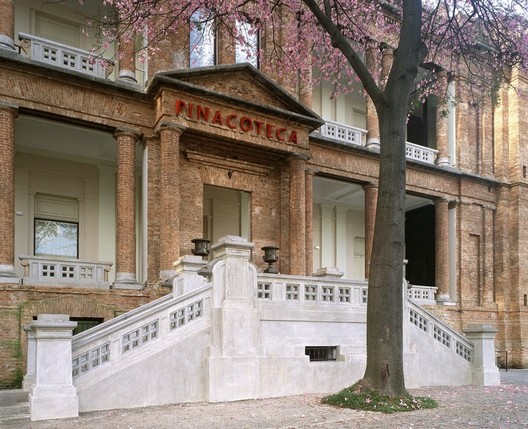
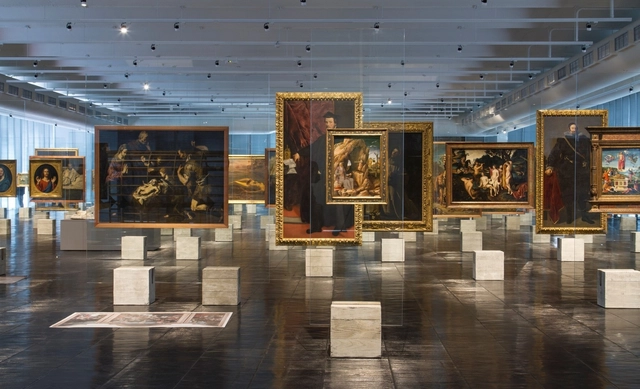
Pinacoteca do Estado de São Paulo. Image © Nelson Kon

Today, August 17, is National Historical Heritage Day, a date that honors the efforts to preserve assets of cultural, historical, and artistic significance across Brazil. This date coincides with the birth of historian and journalist Rodrigo Mello Franco de Andrade, who played a crucial role in founding the National Institute of Historic and Artistic Heritage (IPHAN). Established in 1937, IPHAN is the agency responsible for promoting and organizing the preservation of Brazil's National Cultural Heritage, aiming to “protect and promote the country's cultural assets, ensuring their endurance and enjoyment for present and future generations.” [1]

Young Talents of Portuguese Architecture

Subscriber Access | 

Marked by refinement and purity of design, Portuguese architecture historically maintains a sharp relationship between the built object and the territory in which it is situated.

Names like Álvaro Siza Vieira, Eduardo Souto de Moura, and Fernando Távora remain the primary references when considering Portuguese architectural production. However, beyond these great masters, a group of young firms established over the last ten years has demonstrated strength and relevance in shaping this new output. In this landscape, new attributes are emphasized: an aesthetic and constructive sensibility rooted in modern minimalism—yet questioned and renewed in accordance with contemporary social and philosophical parameters; the merging of hybrid fields, from art and product design to architecture and urbanism; and an increasingly collaborative process based on collective ideas.

“Experimenting Le Corbusier” Exhibition - Reinterpreting Modern Canons

Subscriber Access | 

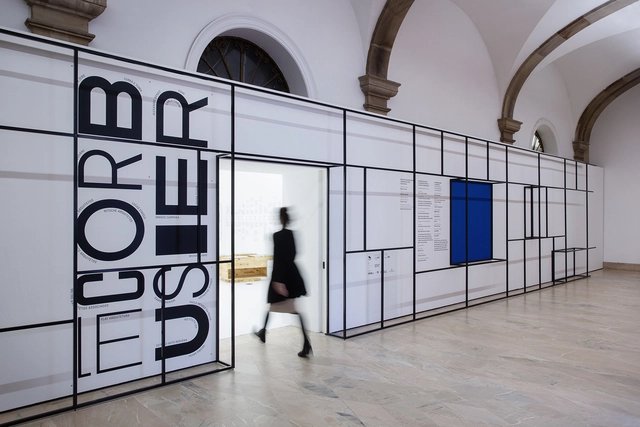
Opened last Saturday (16) at the Museu da Casa Brasileira in São Paulo, the exhibition “Experimenting Le Corbusier – Contemporary interpretations of modernism”—curated by Pierre Colnet and Hadrien Lelong of design publisher Cremme, with exhibition design by the São Paulo-based office MNMA Studio—seeks to foster a reflection on the implications of the Franco-Swiss architect's work for the architectural, urban, ideological, and social development of Brazilian modernism.

Featuring 20 guest artists—architects, designers, and visual artists—who developed various works and research based on the canons of the architect's work, the exhibition seeks to operate through the “transdisciplinarity of art,” as noted by Mariana Schmidt, the partner-architect responsible for the exhibition design.

Documentary "Sesc 24" presents the building's construction and urban changes in São Paulo

Subscriber Access | 

Opened in August 2017 and setting attendance records, Sesc 24 de Maio—the second-to-last branch of the network to open, succeeded by Sesc Avenida Paulista—was designed by Paulo Mendes da Rocha in partnership with the office MMBB Arquitetos, who retrofitted a former department store, remodeling its interior spaces within the existing structure and creating a new central structure to support the rooftop swimming pool.

Iconic works of architecture as everyday objects

Subscriber Access | 

A few months ago, architect Filipe Vasconcelos shared his digital collages with us, exploring the similarities between architecture and objects. He creates scenes in which buildings are recontextualized in situations completely removed from their original contexts and uses.

Our most liked Instagram photos of 2018

Subscriber Access | 

2018 was a busy year for ArchDaily Brasil. We had the opportunity to publish a wide range of content—articles, news, and projects—specially curated for you, our daily reader. Beyond our platform, our Instagram account served as a daily hub for sharing content through stories, IGTV, and, above all, the dozens of photographs shared each week.

With nearly 150,000 followers on our Brazilian profile (@archdailybr) who follow us daily and show their support for the best architectural photography of projects by Brazilian and Portuguese architects, we decided to put together a year-end roundup of the 15 most-liked photos. Check out the list below!

Playlist: New Year's Eve - ArchDaily Brazil

Subscriber Access | 

We have finally reached the last day of 2018, a year marked by a series of architectural trends, novel proposals presented in competitions, biennials, and architecture fairs, and above all, punctuated by a sea of projects reflecting the concerns of architects proposing new directions for the discipline. Now, after 365 days of many surprises for the world of architecture, it is time to celebrate and give thanks for another year—and what better way to welcome 2019 than to the sound of great music? With this in mind, our editorial team has curated a special selection: featuring the moving sounds of Coldplay and John Lennon, festive beats from Bruno Mars and Alok, and Brazilian classics by Elis Regina and João Gilberto.

Check out the full New Year's Eve playlist below.

Like Father, Like Son: 20 Architects Who Followed Their Fathers' Profession

Subscriber Access | 

In any profession, it is common for children to follow in their parents' footsteps, motivated by the environment they grew up in and inspired by a passion for the craft. Architecture is no exception. Growing up surrounded by sketches, floor plans, and coffee seems to spark the desire to pursue the same career.

In celebration of Father's Day, observed in Brazil this coming Sunday, August 12, we have compiled a list of architects who followed in their fathers' footsteps. Read on below:

The history of São Paulo's famous sidewalk design

Subscriber Access | 

In the constant ebb and flow of those moving through the city of São Paulo, you have likely noticed the distinctive graphic pattern repeated across various sidewalks. The classic pattern behind the modules that graphically form the map of the state of São Paulo was created in 1966 by architect and artist Mirthes dos Santos Pinto. It all began in the 1960s when then-mayor João Vicente Faria Lima launched a competition to design the city's new pavement. Mirthes, who at the time worked as a drafter for the São Paulo Municipal Works Department, created a stylized map of the State of São Paulo. Using square modules of black and white geometric tiles, the design alternated between solid colors and diagonally split tiles to create a continuous pattern.

The architecture of radio and TV towers and antennas

Subscriber Access | 

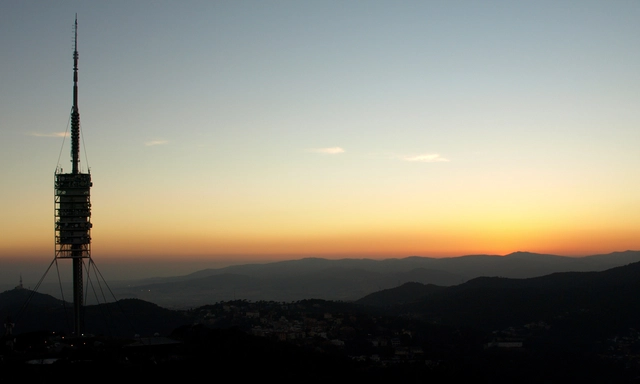
For optimal and wider propagation of TV and radio frequencies, antennas must be positioned in strategic and, above all, elevated locations. When the local topography is unfavorable, the construction of broadcasting towers and masts becomes essential. Yet, beyond serving a crucial function, these structures stand as visual landmarks, offering an extraordinary opportunity to transform urban infrastructure into pieces of unique aesthetic value. Renowned architects and their teams have designed radio and television towers that marry rigorous structural engineering with the plastic inventiveness of their chosen design solutions. We have selected a brief collection of television and radio transmission towers. See them below:

9 Portuguese-language podcasts about architecture and cities

Subscriber Access | 

Media and technology have been revolutionizing content creation across diverse niches, and architecture is no exception. YouTube channels, television shows, and specialized playlists on architecture and urbanism are just a few examples. Over the last few years, however, podcasts have emerged as a powerful alternative. Unlike other media, podcasts are an audio-only format shared across a wide range of platforms—from specialized websites to blogs. Today, there are countless listening options available, both Brazilian (as listed below) and international, as previously published by ArchDaily.

Finding specialized podcasts can be a daunting task. To help, we have gathered a list of nine Brazilian podcast channels for you to listen to. Put on your headphones and check them out:

The transformation of landfills into parks

Subscriber Access | 

Today, it is estimated that in Brazil alone, 30 million tons of waste are deposited annually in landfills, with São Paulo alone sending 14,000 tons of solid waste to these sites every day. [1] Unsurprisingly, landfills occupy vast tracts of land that continue to expand, posing a critical challenge for nearly every city. But what can be done once landfills reach capacity and close? Is it possible to breathe new life into these mountains of waste? What are the possibilities and necessary precautions?

Milton Santos and his legacy in urban studies

Subscriber Access | 

Today's Google Doodle, featured on its homepage in Brazil, honors Milton Santos, a world-renowned Brazilian geographer widely celebrated for his pioneering work bridging geography and urbanization studies in developing countries. With a prolific career, Santos left a vast intellectual legacy, now compiled on a website created by his family. Organized into biographies, books, articles, research, and audiovisual materials, it keeps alive the legacy of this key figure in the fields of geography and urban studies.